


Science Controversies

Coronavirus mystery: Why aren’t there more cases in Africa?
Experts still don’t know why so few cases of the new coronavirus have been reported in Africa, despite China – ...

Promising cancer-fighting tactic—using nanoparticles—runs into a potential glitch
The challenge of chemotherapy is to kill off the tumor cells without doing too much harm to healthy ones. The ...

Infographic: Track the global spread of the coronavirus
The numbers for COVID-19 cases and deaths are changing rapidly. The following charts only provide an approximation of the current ...

Viewpoint: Developing countries begin rejecting anti-GMO ‘fearmongering’ to reap benefits of biofortified crops
Gene and genome editing for crops has been presented as a reasonable solution to create healthier, more plentiful food but ...

Viewpoint: Promise of genomics and precision medicine a ‘wave of hype without substance’
An undeclared civil war is breaking out in biomedicine. On one side is precision medicine, with its emphasis on tailoring treatments ...

Eliminating HIV by 2030 a real possibility, but ‘we’re not getting off to the right start’
During his State of the Union address in February, President Donald Trump reiterated a promise he had made a year earlier: By ...
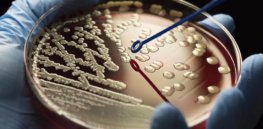
Battling antibiotic resistance by stopping evolution
One of the ways that bacteria evolve to become "antibiotic resistant" is by picking up free-floating genetic material from their environments. They ...

Viewpoint: Embracing biosimilars will drive down prices, increase access to drugs
The biosimilar category holds incredible promise, and the market for these products is on an upward trajectory. But it’s been ...

CRISPR pioneer Jennifer Doudna on why we need human gene-editing regulations
In this episode of Reset, host Arielle Duhaime-Ross talks with Jennifer Doudna about the promise and peril in CRISPR’s future, what’s ...

Tracking the coronavirus—and failed containment efforts—by digging through its genome
In the unprecedented outbreak of a new coronavirus sweeping the world, the germ’s genetic material may ultimately tell the story ...

‘The Invisible Man’ and science: You’d probably go blind while your DNA falls apart
True invisibility, the type wherein the body itself is actually rendered transparent (unlike the kind portrayed in the recent movie, ...

Promises and pitfalls of treating aging like a disease
Over the years, the movement to classify aging as a disease has gained momentum not only from longevity enthusiasts but ...

Infographic: Which 3D printed organs are closest to being transplantable?
No one has printed fully functional, transplantable human organs just yet, but scientists are getting closer, making pieces of tissue ...

There was an opioid epidemic 130 years ago. Can it teach us anything about today’s crisis?
The 1890s and 1990s were both characterized by unopposed amplification of the benefits of opioids, the transformation of physicians into ...

Russia strikes deal to accelerate development of 30 gene-edited crops, animals by 2027
Russia’s oil giant Rosneft and the Russian government will join forces to develop gene-editing technology, according to a government decree ...
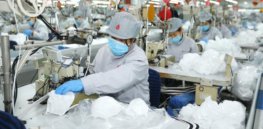
35 drugs in the race for a coronavirus treatment
As the world scrambles to monitor and contain the COVID-19 outbreak, drug companies are racing to develop or repurpose treatments ...

FDA Feed Your Mind project offers ‘science-based’ answers to questions about GMO safety, regulation
The U.S. Food and Drug Administration (FDA) launched a new education initiative called “Feed Your Mind” to help consumers better ...

Viewpoint: 4 ways the FDA must evolve to deal with fast-moving technologies and health threats
As we look toward the FDA of the 2020s that can achieve further progress in addressing urgent health threats and ...

We have standards in place to keep junk science out of criminal trials: ‘They aren’t working’
While it’s now widely accepted that some forensic disciplines, like microscopic hair comparison, are junk science, evidence from similarly subjective ...

Bipartisan Accurate Labels Act takes aim at ‘misleading, unnecessary and confusing’ food marketing, authors say
Legislation introduced by Reps. Adam Kinzinger (R., Ill.) and Kurt Schrader (D., Ore.), the Accurate Labels Act, would provide clear, ...

‘Disaster for public trust in vaccines’: African malaria study conducted without patient consent
A scathing opinion piece in the BMJ is accusing the World Health Organization of conducting a pilot program in Africa ...

Is the quest for profits getting in the way of ending the HIV epidemic?
Four decades after the HIV epidemic began, there’s finally hope it might end. Indeed, “Getting to Zero” — meaning zero ...

Once promising autism drug Abilify linked to heart problems, substantial weight gains
It has been 11 years since the U.S. Food and Drug Administration (FDA) approved aripiprazole for children with autism. The ...

Bill Gates: AI, gene editing could help us reach global health goals ‘exponentially’ faster
Microsoft co-founder Bill Gates has been working to improve the state of global health through his nonprofit foundation for 20 ...

Better tracking of coronavirus infections could be possible through experimental antibody test from Singapore
In what appears to be a first, disease trackers in Singapore have used an experimental antibody test for COVID-19 to ...

Stealth technology could offer ‘secure, selective and precise’ delivery system for cancer drugs
Earlier this year, researchers assembled an intelligent and autonomous nanostructure entirely out of DNA that delivered and released a cancer drug. Cancer ...

Viewpoint: Someone created a synthetic cousin of smallpox: Where are the alarm bells?
In 2017, the virologist David Evans made headlines when he used synthetic biology to recreate the extinct horsepox virus, which ...
