


Daily Human Digest

Early intervention: Sequencing fetal DNA could identify genetic disorders
A new test allows doctors to diagnose genetic disorders in fetuses early in pregnancy by sequencing small amounts of fetal ...

Sleep deprived brains might be more susceptible to Alzheimer’s
A sleep-deprived brain is awash in excess amounts of not one but two proteins whose bad behavior is implicated in ...

Tectonic ‘Origins’: Book examines how Earth’s hills and valleys jumpstarted evolution
In this age of worldwide climatic deterioration, many authors have documented what we are doing to our planet. Lewis Dartnell ...

Why Silicon Valley’s food-depriving ‘productivity hacks’ could be dangerous
Twitter’s CEO, Jack Dorsey, doesn’t eat for 22 hours of the day, and sometimes not at all. Over the weekend ...

Examining the link between autism and gender noncomformity
Traits associated with autism and gender variance co-occur even among typical children, a new study suggests. The finding may ease ...

Are thin people just lucky to have ‘skinny’ genes?
Scientists say they have discovered the secret behind why some people are skinny while others pile on the pounds easily ...

Regenerating tissues and limbs: What we can learn from the the amazing axolotl salamander’s genome
Saving the salamander that Nature called “biology’s beloved amphibian” takes on a special significance given the animal’s remarkable traits. Axolotls are neotenic, ...
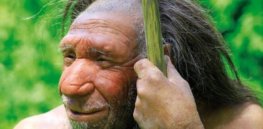
Tracking Neanderthal DNA in modern humans: There’s been little change in 45,000 years
Neanderthals, modern humans’ closest evolutionary relatives, have been extinct for thousands of years. But due to interbreeding between the two ...

DNA ancestry tests are not ‘crystal balls’—they’re approximations
Identical twins have virtually identical DNA. So you’d think if a set of twins both sent in a DNA sample ...

Inside the cave where Neanderthals and Denisovans may have shared a home
Mysterious ancient hominids known as Denisovans and their evolutionary cousins, Neandertals, frequented a southern Siberian cave starting a surprisingly long ...

Precision medicine for dogs? Silicon Valley startup wants to make it happen
When pet dogs are diagnosed with cancer, they typically get surgery, chemotherapy, or radiation — that is, of course, if ...
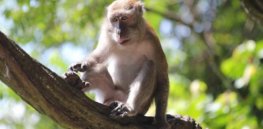
‘Software’ differences between monkey, human brains could explain our susceptibility to mental illness
Neuroscientists have for the first time discovered differences between the ‘software’ of humans and monkey brains, using a technique that ...

Viewpoint: Biologist Craig Mello knew about the CRISPR babies. Why his silence was ‘not acceptable’
The Associated Press reports that Nobel laureate and biologist Craig Mello was aware of a pregnancy in China involving gene-edited ...

Improving CRISPR gene editing of human cells with an ‘off switch’
For all its gene-editing prowess, mechanistically CRISPR is a bit like a power tool with a broken “off” switch. Hear ...
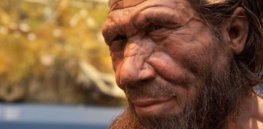
Were humans superior to Neanderthals? Or just luckier?
Prof Clive Finlayson, director of the Gibraltar Museum, explains why some old assumptions about the intellectual capabilities of our evolutionary ...

How long can bacteria live? 500-year experiment could provide answers
In the year 2514, some future scientist will arrive at the University of Edinburgh (assuming the university still exists), open ...

Some of us may have ‘divine healing’ poop for treatment of gut disorders
Scientists often seem to be on a quest for sacred chalices or sterling ammo. But a group of microbiologists has ...
‘Russian blues’: How language shapes the way our brains perceive the world
Does the language you speak influence how you think? This is the question behind the famous linguistic relativity hypothesis, that the grammar ...

Rodent-targeting gene drive could be delivered through CRISPR
Scientists are getting closer to creating a genetic pest-control measure against rodents. Female mice engineered to carry a genetic cut-and-paste machine ...

Could ‘aggressively’ attacking high blood pressure prevent cognitive decline?
Some five million Americans live with dementia, most often Alzheimer’s disease. And it’s almost certain that as the general population ...

Autism, attention deficit disorder share ‘significant’ genetic links, sibling study shows
Children who have an older sibling with attention deficit hyperactivity disorder (ADHD) are at an increased risk of having autism, ...

Have addictive personalities aided human evolution?
We’re so inundated with bleak facts about addiction that it may be hard to perceive any silver lining. It’s nearly ...

Ancestry results for identical twins illustrate flaws in consumer genetic testing
One set of identical twins, two different ancestry profiles. At least that's the suggestion from one of the world's largest ...

How climate change could skew the gender ratio
Global warming will have a variety of effects on our planet, yet it may also directly impact our human biology, ...

First clinical trials for controversial ‘3-parent’ fertility treatment begin
[A] 32-year-old Greek woman, who’d previously undergone two operations for endometriosis and four unsuccessful cycles of IVF, once again returned ...

Understanding the ‘little brain’ could be key to treating autism, addiction
For about two centuries the scientific community believed the cerebellum (Latin for “little brain”), which contains approximately half of the ...

Japan approves stem-cell therapy for spinal cord injuries—but does it even work?
Japan has approved a stem-cell treatment for spinal-cord injuries. The event marks the first such therapy for this kind of ...
