


Daily Human Digest
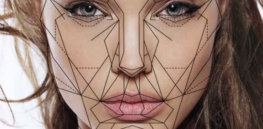
Sculpted by our genes: Figuring out which facial features are ‘strongly heritable’
Examining 3-D face models of nearly 1,000 female twins, researchers have found that the shapes of the end of the ...

Can quantum mechanics explain human consciousness?
Despite all the research we’ve done, we still know relatively little about how the human brain works, and we know ...
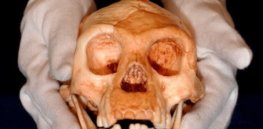
‘Hobbit’ origins? It’s unlikely that tiny species evolved from ancestor of modern humans
Researchers who studied the bones of Homo floresiensis, a species of tiny human discovered on the Indonesian island of Flores ...
When genetics has no answer: Heart disorder patients gain knowledge, but no help
Getting a better understanding of a disease can open all sorts of possibilities for better treatments, even ones tailored to ...

Have patients been forgotten in the quest to build private BRCA variant databases?
Databases on life-threatening genetic mutations -- including the BRCA variants linked to breast cancer -- are maintained by corporations for ...
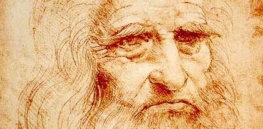
Cracking da Vinci’s DNA code: 2 discovered bones open possibilities
Italian researchers say that they have found two “relics” belonging to Leonardo da Vinci, which may help in sourcing the ...

Why you can tell the difference between fake laughter and the real thing
Most of us will laugh at a good joke, but we also laugh when we are not actually amused. Fake ...
Two halves better than one: Why our brain evolved to be symmetrical
The human brain evolved to have two halves — and a new review of previous research suggests that this dual ...
Babies might avoid deadly infections by receiving gut microbe transfers
In research published in Science, an international team of researchers found that a bacterium known as Clostridia helped mouse pups ...

Does gene editing change who we are as ‘humans’?
DNA-based technology’s entry into the mainstream has been picking up lately.... But rapid advances mean it is becoming increasingly feasible ...

Could it be possible to slow, or even rewind, our body’s aging clock?
Ageing in humans (and animals) can be seen as either an inevitable process of wear and tear or as an ...

Dad genes: Being a good father may be genetic
[A] team of Harvard researchers has located specific DNA segments that influence paternal behaviors, the closest scientist have come to finding the “dad genes” ...

Why does pancreatic cancer often hit so hard and usually kill its victims so quickly?
Pancreatic cancer. When news of this type of diagnosis is mentioned, those two words strike fear and dread in most ...

Epigenetics Around the Web: Evolution of instincts — How ‘real’ is behavioral plasticity?
A researcher's decision to broadcast his controversial hypothesis about the evolution of instincts is irresponsible, and a study throws cold ...

Why so many biotechnology start-ups, like Theranos, fail
Two years after the $9 billion start-up “unicorn” Theranos crumbled, Silicon Valley still appears to be struggling to learn its ...

I’ll do it tomorrow: Procrastination may have evolved as survival mechanism
If you like to put things off or surf the internet instead of getting work done, you might be able ...

Creative people perceive the world and process images differently
If you’re the kind of person who relishes adventure, you may literally see the world differently. People who are open ...
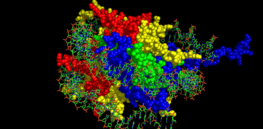
Tangled in mystery: How 6 feet of DNA squeezes into nearly every cell of our body
[Leonid Mirny, a biophysicist at the Massachusetts Institute of Technology in Cambridge,] argues that DNA is constantly being slipped through ring-like motor ...

Designer muscles: How gene doping could change sports
[Editor's Note: Adam Piore is an award-winning journalist and author of the new book The Body Builders: Inside the Science ...

Why do people with autism tend to repeat themselves? It may be genetics
April is Autism Awareness Month and even MIT scientists are getting in on the action with compelling new genetic research...[R]esearchers ...

DNA glowing in 3D: We can now track genes moving in real time using CRISPR
Mazhar Adli, of the University of Virginia School of Medicine’s Department of Biochemistry and Molecular Genetics, has developed a way to ...
Consuming healthy fats lowers nonfatal heart attack risk for certain genotypes
[A recent study] analyzed data from 1932 case subjects who had suffered a nonfatal [heart attack] and 2055 control subjects living ...

Status climb with caution: Social mobility may take a toll on our DNA
'Moving on up' is a cherished American value (and important in other societies, too). But there could be a cost ...

Herzegovinians dethrone Dutch as tallest men in world
At a towering 183.8 cm (just over 6 feet tall), Dutch men are widely hailed as the tallest in the ...

Could alien life be made from silicon instead of carbon?
Science fiction has long imagined alien worlds inhabited by silicon-based life...Now, scientists have for the first time shown that nature ...

Behold the octopus: Problem solver, tool user and now, gene editor
The more we learn about octopuses and squids, the more mysterious they become. The ability to edit their own RNA ...
In-vitro screwup: What happens when your baby has someone else’s DNA?
It’s a nightmare scenario straight out of a primetime drama: a child-seeking couple visits a fertility clinic to try their ...
