


Daily Human Digest

Dogs of Chernobyl: What exposure to chronic, low-level radiation does to a species
Dogs roam the ghost town of Pripyat within the Chernobyl exclusion zone in Ukraine. Scientists have identified genetically distinct populations ...

The science of mental acuity: Why some people defy aging
There’s something to the adage that age is only a number. Scientists increasingly are distinguishing between chronological and biological age ...

Medication abortion has emerged as major legal front in US battle over abortion access. Here’s what might happen
Since the Supreme Court’s Dobbs ruling on June 24, 2022, four new cases have been filed in federal courts specifically regarding aspects of the FDA’s ...

2 billion people have impaired vision. Here’s how CRISPR might lead to a cure
See how researchers are uncovering the mechanisms of retinal degeneration and identifying new targets for therapeutic intervention ...

Viewpoint: Human gene editing research prioritizes speed, profit, and breakthroughs. Is that in sync with fundamental ethical values?
He Jiankui, the Chinese scientist who announced in 2018 that he had edited the DNA of embryos to make them ...

Why human brains aren’t cut out for modern workplaces
The modern workplace was not designed with the human brain in mind. This disconnect can make it difficult for us ...

World’s most premature twins: Canadian siblings born 18 weeks early are healthy one year later
A Canadian brother and sister born at 22 weeks have been named by Guinness as the world's most premature twins ...
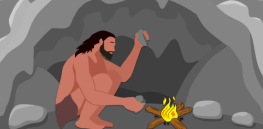
Neanderthals disappeared 40,000 years ago. What were they like?
What were Neanderthals really like—and why did they go extinct? These ancient hominids, who disappeared 40,000 years ago, were once ...

Here’s how humans could explore the universe — without warp speed travel technology
The field equations of Einstein’s General Relativity theory say that faster-than-light (FTL) travel is possible, so a handful of researchers ...

110 years old and going strong: BioAge start-up uses AI to understand supercentenarian genetic factors that might help us live longer
The biotech industry niche focused on aging is expected to reach a market value of $65 billion over the next ...

Why do we feel fear or hatred toward robots?
AI was created to be helpful, but not all people see it that way. Scientists share why humans have an ...

Homo futuris: How climate change shaped early human evolution — and how it might impact the future evolution of our species
Scientists know from the study of tree rings, layers of ice in glaciers, ocean sediments, coral reefs and sedimentary rocks ...

Unregulated peptides are the latest weight loss and energy-boosting fad. What’s the science?
As influencers share stories of physiological transformations, more people are seeking out experimental treatments: ‘If I can be a superhero ...
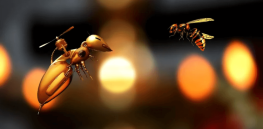
Understanding animal behavior: Researchers use artificial Intelligence (AI) to analyze animal brains
Scientists at the University of Michigan have developed an open-source, user-friendly, artificial intelligence driven software called LabGym that automatizes animal ...

Naked evolution: Why humans don’t have fur
Scientists don't definitively know the reason behind this change from thicker, coarser fur to these light vellus hairs, and they ...

Biocomputers: Human brain cells may run computers of the future
A “biocomputer” powered by human brain cells could be developed within our lifetime, according to Johns Hopkins University researchers who ...

Next generation medicine: Will the people who most need gene therapy and gene-editing tools have access to them?
One of greatest risks of gene editing tools ‘is that the people who would benefit most will not be able ...
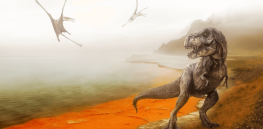
Podcast: Why modern-day animals are so much smaller than dinosaurs
Researchers think they understand how some dinosaurs grew so large. NPR's Eyder Peralta talks with Michael D'Emic, paleontologist at Adelphi ...

From a ‘chemical soup’ to complex life: Understanding the beginning of evolution of life on Earth
Did evolution occur before life even existed? New research illuminates the ancient processes from which the first life arose on ...

Your brain could be controlling how sick you get — and how quickly you recover
Scientists are deciphering how the brain choreographs immune responses, hoping to find treatments for a range of diseases ...

‘Animals are very smart, but not in the same way as us’: Explaining differences between human and animal intelligence
Why aren't animals as smart as humans? ASK A RESEARCHER: "Fire may have made human brains larger," researcher says ...

Are society’s biggest conflicts linked to our ‘inherent tribalism’?
Over the past several years, the conflicts we see around us — particularly political ones — are blamed on humanity’s ...

Keto and low-carb, high-fat diets linked to heart disease in new study
A low-carb, high-fat “keto-like” diet may be linked to higher levels of “bad” cholesterol and double the risk of cardiovascular ...

4 theories about how the world as we know it might end
Humans have a macabre fascination with end of the world theories — will humankind go out with a bang or ...
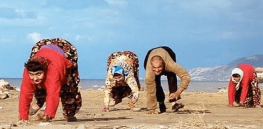
Video: Is there such a thing as ‘backward evolution’? Turkish family that walks on all fours under study by scientists
The Ulas family live in rural southern Turkey. In total, 19 children live with their parents, seven of whom are ...

How the human brain changes over a lifetime
How does the brain age across the lifespan? New studies offer clues. Our brains are built to change over our ...

Podcast: ‘Adoption, Twins and the Genetics of Personality’ — Childhood adoption study informs nature vs nurture debate
Social scientists have long sought to better understand how and why different behavioral traits develop in different individuals. The question ...
