


Science Literacy Project Daily Digest

HeridiGene: How the world’s largest DNA-mapping study is saving lives
The world’s largest initiative to map the DNA of an entire population will benefit patients for years to come, but ...

Viewpoint: The US was a leader in 20th century forced sterilizations. Roe v Wade debacle highlights America’s long history with regulating women’s bodies
More than 60,000 people were sterilized in the U.S. in the 20th century on the basis of eugenics — the ...

Would you pay $300 for a 3D-printed steak? One day you may be able to print your own meat for a fraction of the cost
Would you eat lab-grown steak? A recent study from the Good Food Institute — a nonprofit thinktank — indicates that about 40% ...

‘Splatometer’: Here’s how scientists are trying to understand the environmental implications of the sharp drop of dead bugs on windshields
Experts say the lack of insect innards on our summer windshields is just one symptom of a broader decline in ...

Manipulating nature: Should rats implanted with human brain cells be treated differently than unaltered test rodents?
A few months after they’d been implanted, the human cells made up around a sixth of the rats’ brains and ...

Reading comprehension genes: 27 newly-identified genetic variants tied to dyslexia
It is estimated that about 10% of the UK population, about 6.3 million people, are dyslexic. Previous research has suggested ...

‘So much more than cave-dwelling thugs with clubs’: Neanderthal DNA gives us a look into ancient family life
One of the things that makes us special as a species is our ability to form communities, but we humans ...

The Song of the Cell: Oncologist Siddhartha Mukherjee’s new book explains the mystery of how the body’s smallest unit affects everything from IVF to COVID
“The Song of the Cell,” the latest work by the Pulitzer Prize-winning oncologist, recounts our evolving understanding of the body’s ...

‘Fuel of the future’: South Africa factory uses renewable energy to create ‘green’ ammonia
Ammonia is also used to manufacture explosives for the mining industry and is a key ingredient in many pharmaceutical and ...
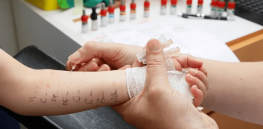
Allergy epidemic: Up to 10% of children have food intolerances. Where did they come from?
Food allergies are becoming increasingly common, in children and in adults. Yet it’s surprisingly difficult to get a handle on ...

Viewpoint: ‘A book is not judged by whether it was written by a typewriter, pen or computer’ — Italian farmer and policy wonk on why Europe needs sensible gene-edited crop regulations
Agriculture today is facing very serious challenges for which new tools are needed. The planet's population is increasing while arable land ...

Viewpoint: Kenya needs hundreds of thousands more tons of corn to feed the country’s population. Lifting the GMO ban is a great first step
I don’t know much about Kenya’s new president, William Ruto, but I already like his approach to agriculture. In the ...

High blood pressure medication only works for 1 in 4 people. Genetics may help explain why
Nearly half of American adults have high blood pressure, according to the Centers for Disease Control and Prevention’s most recent ...

IVF-born Black babies are four times more likely to die than White babies. Why?
It has been well-known in research that Black babies are about twice as likely to die as White babies before ...

First large-scale long COVID study finds nearly half of survivors experience lingering symptoms
Ask anyone who has experienced the lingering maladies of the pandemic, and they’ll tell you long covid is no figment ...

‘Just because we can do it, should we?’ How CRISPR co-creator Jennifer Doudna is furthering the discussion over the ethics of human genome editing
In 2012, Jennifer Doudna, then a relatively unknown biochemist at the University of California Berkeley, published a paper with Emmanuelle Charpentier ...

With organic demand outstripping supply, USDA commits $300 million to help convince farmers to grow organic
Over the decades, something unexpected happened — demand for organics started increasing so fast that it began outstripping the supply produced ...

A ‘dazzling, eggplant-colored’ genetically-modified tomato slated for US rollout. Here are its prospects in Australia
Last month, the US Department of Agriculture issued a statement on a dazzling eggplant coloured fruit ...

Targeting sustainable farming: Here’s how much money low and middle-income countries are missing out on if they reject genetically-modified crops
GM crops produce higher farm incomes plus reduced land tillage practices and lower insecticide use, bringing substantial environmental benefits. While ...

Rice paddies in the desert? How China is creating productive farmland and growing ‘seawater rice’ using heat-tolerant biotech crops
In a bid to finally ensure that nobody ever needs to go hungry in China again, researchers there have been ...

Why did so many girls experience early puberty during the pandemic? (The virus might not be to blame)
Among the laundry list of health problems COVID has inflicted on the world's population, one of the more perplexing could ...

Hair-straightening products connected to uterine cancer, especially in Black women
Scientists are uncovering new details in the connection between using certain hair straightening products, such as chemical relaxers and pressing ...

‘Obesity is way more complex than we thought’: Risk of being overweight likely influenced by what happened in the womb
Obesity can seriously compromise a person’s physical and mental health. It is definedTrusted Source as “abnormal or excessive fat accumulation ...

Kaftrio miracle: How a new suite of genetically-tuned drugs are challenging cystic fibrosis – and opening door for victims to have children
Today, the full DNA map is commonly used in developing new drugs and other healthcare solutions. Genetic sequencing has become ...

Carbon removal breakthrough: Genetic tools that have created climate resilient crops could capture carbon dioxide as well
To understand just how powerful genetic tools can be in agriculture, take a look at [Pamela Ronald, a plant geneticist ...

If you want cell-based meat pioneered in the Netherlands, you should… head to Singapore? Outdated regulations hold back Europe’s slaughter-free cultivated meat industry
Singapore’s regulatory landscape, diverse population, and openness to emerging technologies have created an attractive test ground for cultured meat. Dutch ...

Getting over GMO food fears: Inside Japan’s slow but progressive march towards embracing genetic modification
Japan has been conducting studies on GM food crops including soybeans and rapeseed since 2006, and the latest 2020/2021 report ...
