


Science Literacy Project Daily Digest
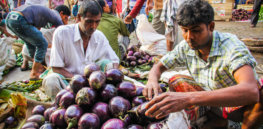
Bangladesh could double crop production by 2030 with help of GM technology, experts say
USAID and International Food Policy Research Institute (IFPRI) hosted [a virtual] event to learn from stakeholders about challenges, prospects, and ...

Viewpoint: ‘Organic crops are healthier than GMOs,’ and 6 other anti-science myths we should forget
As much as we hate to acknowledge it, many of the once-viable ideas that are swimming around in the memory ...

Cosmetics poised to be reformulated with lower toxic chemicals in the wake of new California law
[A California ban of toxic chemicals in cosmetics], signed by Gov. Gavin Newsom at the end of September, covers 24 ...

What does it take to run a 2-hour marathon? (It’s in the genes, and East Africans have them)
Elite runners need a specific combination of physiological abilities to have any chance of running a sub-two-hour marathon, new research shows ...

Kevin Davies’ ‘Editing Humanity’ explores the CRISPR revolution and the ethical dilemmas that await us
We cannot rewind the tape of life to see how we might have been and whether humans are inevitable products ...

Going vegan? Switching to a plant-based diet to improve your health? You are almost 50% more likely to suffer bone fractures
Vegans and vegetarians may be at greater risk for bone fractures than meat eaters, according to a large, longitudinal study published [November ...

‘We can’t rule out new solutions’: German Greens poised to reconsider skepticism of crop biotechnology?
[T]he world is looking to research laboratories like Mainz, Cambridge and other cities, where vaccines are being developed these days ...

Plant-based meat: Wholesome food, science experiment—or both?
Makers of plant-based meat deal with a constant balancing act between promoting their products as simple, wholesome food and also ...

Viewpoint: Health risks of GMOs never materialized, so activist groups now misinform about biodiversity impact of GM crops
[A]fter 20 years without presenting a single proven case of harm from biotech crops, [the anti-GMO activists'] argument has collapsed ...

Japan poised to approve first gene-edited food, tomato that fights high blood pressure
Current genome-editing technologies are more efficient than ever before, making it possible to modify genes as if editing sentences on ...

Cancer breakthrough replacing chemotherapy? Israeli scientists use CRISPR gene editing to snip DNA and kill killer cells
The CRISPR Cas-9 gene editing system allows scientists to make precise alterations to DNA, and gained creators Jennifer Doudna and ...

Alzheimer’s hotspot map: Where it’s most prevalent and why that matters
An emerging body of research is identifying counties and neighborhoods with higher prevalence of Alzheimer’s disease, which affects 5.8 million ...

Plants are evolving to look like their surroundings to protect themselves from scavenging humans
Fritillaria delavayi grows on the rocky alpine slopes of China’s Hengduan Mountains, and for more than 2,000 years its dried ...

‘We have to be profitable’: French winegrowers protest costly glyphosate weedkiller restrictions
Three hundred winegrowers gathered in Narbonne [on Dec. 8] at the call of the winegrowers’ union and the FDSEA. They ...

We know the birthplace of humanity was in Africa but we still don’t know where
Pinpointing the place from which we steadily evolved into the strange, upright, over-sized brain creatures we are today would help ...
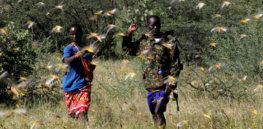
High-tech solutions emerge to help quell Africa’s catastrophic locust outbreak – the worst in decades
[Masters student Amoah Idun and his team] glue a 150mg tracking device to a chosen [locust’s] thorax, looking like a ...

Infographic: Crop biotech boosts farm productivity $225 billion, improving lives of millions globally
More than 25 years have passed since the first biotech crops were introduced. Since then, genetically modified crops using biotechnology ...

Gene-edited, pollen-free cedar tree could help allergy sufferers breathe easier in spring
It is said that 30% of people are suffering from pollinosis [hay fever]. Research on producing pollen-free Sugi [Japanese red cedar] ...

Many Americans have ‘Native American DNA’. What does that mean?
Whether or not you have “Native American DNA,” it’s important to understand what it means — and doesn’t mean — ...

Viewpoint: Why we shouldn’t be scared of human gene editing
[G]ene editing is not something to be scared of, and we must spread the word. It is a tool that ...

France will pay farmers to give up popular glyphosate weedkiller after proposed ban fails
France will give financial aid to farmers who agree to halt use of glyphosate, the farm ministry said on [Dec ...

Giant dinosaurs trace their evolution to global warming during the early Jurassic period 180 million years ago
Sauropods were truly amazing animals, and included the largest land-living animals known, with body lengths of up to 40 meters ...

With sugar output down nearly 25%, UK beet farmers pressure government to lift ban on neonic pesticides
Sugar beet processor British Sugar said that just over two months into the beet harvesting campaign, white sugar production is ...

Antioxidants: Magic bullets for health and longevity—or marketing gimmick?
Antioxidants are chemical compounds that can be a vitamin, mineral, enzyme, or one of thousands of other naturally occurring plant ...
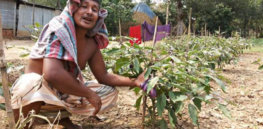
GM eggplant helps farmers reduce pesticide use and increase profits, study finds
Bangladeshi farmers significantly reduced pesticide use and increased their profits by growing genetically modified (GM) eggplant, a new study confirms ...

Cell-cultured ‘chicken bites’: Cruelty-free meat produced in a lab without slaughtering an animal approved for sale for first time, in Singapore
[C]ultured meat, produced in bioreactors without the slaughter of an animal, has been approved for sale by a regulatory authority ...

Critical defense against Alzheimer’s: Deep sleep
Research is increasingly linking insomnia to dementia, the umbrella term for a range of conditions that cause a decline in ...
