


Science Literacy Project Daily Digest

Disease-resistant banana genes could accelerate effort to save Cavendish from extinction
Significant progress has been made in accelerating the development of banana varieties with resistance to the Fusarium fungus. Fusarium causes ...

Drugs tailored to your personal genomics: New partnership between 23andMe and GlaxoSmithKline
The California-based [23andMe] is now focused on a partnership with pharma giant GlaxoSmithKline to discover new drugs using data culled ...

Can we use DNA to sketch the faces of criminals?
Most labs studying DNA phenotyping look for relationships between changes to individual letters of a person’s genetic code, known as ...

Ostrich Paradox: How our inability to process risk is crippling responses to COVID
The question is… Why do some take the threat of the virus more seriously than others? Your risk of contracting ...
Glyphosate-tainted honey? New Zealand honey industry rejects ‘sensationalized’ coverage of pesticide safety report
The New Zealand honey industry has refuted recent claims of its products being unsafe for consumption in the wake of ...
Venus shows signs of life. Here’s what it means
We have only had the briefest of glimpses of a barren landscape from the two Russian landers that made it down to ...

‘Air-derived protein’? Biotech startups aim to challenge traditional farming with precision fermentation
Feeding the world with protein made from air or industrial exhaust with minimal use of water and land, and without ...

Brain hunger: The hunt to understand loneliness
Kay Tye set out to answer a question that has taken on new resonance in the age of social distancing: ...

IF – intermittent fasting: How and why it works
IF comes in three main flavors: alternate-day fasting, when people alternate between feast days (eating normally or a little extra) and ...

Asians and Blacks dramatically under-represented in medical research, distorting drug therapy effectiveness
A 2018 analysis of studies looking for genetic variants associated with disease found that under-representation [of minorities] persists: 78% of ...

Here’s why children learn languages more easily than adults
Previous brain scanning research and the clinical findings of language loss in patients who suffered a left hemisphere stroke have ...

Could lab-grown sushi save rapidly declining fish populations?
[A]according to the Global Aquaculture Alliance, 3.1 billion people around the world now rely on fish and seafood for a ...

Anti-glyphosate cancer plaintiff attorney gets two-year prison sentence for $200 million extortion scheme
A federal judge on [September 18] sentenced Virginia attorney Timothy Litzenburg, 38, to two years in prison for attempting to ...

Webinar: GLP’s Jon Entine, science communicators address agricultural biotechnology misinformation
The Council for Agricultural Science and Technology (CAST) released a new paper, The Importance of Communicating Empirically Based Science for Society. In ...
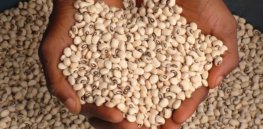
Burkina Faso renews commitment to GM crops with Bt cowpea
Burkina Faso scientists and farmers say their country has not abandoned crop biotechnology, despite challenges that prompted it to shelve ...

Best defense against Alzheimer’s: Deep, restorative sleep
[A] study, recently published by investigators at the University of California (UC), Berkeley, suggests that defense against Alzheimer’s disease is ...

Pediatrician on her personal awakening as mother of a transgender daughter
Being a pediatrician and mother of three, I didn’t think there were many parenting scenarios that could catch me unprepared ...

Like milk and cheese? How lactose tolerance spread through Europe 4,000 years ago
The human ability to digest the milk sugar lactose after infancy spread throughout Central Europe in only a few thousand ...

What can stop COVID? How do pandemics end?
The promise of a vaccine for COVID-19 is inching closer to reality, with some candidate vaccines already approaching the last big hurdle ...

Could food of the future come from ‘microbial protein factories’ instead of plants and animals?
Could a suite of microscopic microbial protein factories (yeast, bacteria, fungi, algae) give plants and animals a run for their ...

Growing GMO crops in national wildlife refuges a boon for the environment, biologists say
The path has been cleared for genetically engineered crops, called GECs, to be used again on national wildlife refuges in ...

Will coffee go extinct? Deadly fungus threatens one of the world’s favorite beverages
In the midst of the coronavirus pandemic, talking about a plant disease might seem frivolous. But around the world, 100 ...

Plagued by chronic illnesses, elderly blacks dying at alarming rate
They are perishing quietly, out of sight, in homes and apartment buildings, senior housing complexes, nursing homes and hospitals, disproportionately poor, frail and ...

The mystery of the human butt
Take a look around the animal kingdom. Even our closest living relatives among the great apes (chimpanzees, bonobos, and gorillas), ...

Craving to catch the last rays of summer? It’s likely in your genes
[P]eople’s behaviour towards seeking sun is complicated by a genetic predisposition, and this needs to be taken into account when ...
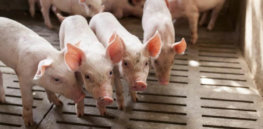
CRISPR bacon: Disease-resistant pigs could save pork producers billions of dollars annually
Chinese scientists have produced a pig species that can resist three major infectious diseases plaguing the animal using gene-editing technology, ...

Bees ‘scent trained’ to effectively pollinate sunflowers boost seed production up to 57%
Scientists in Argentina have trained honeybees to more effectively pollinate sunflowers — a method they believe can also be applied ...
