


Science Literacy Project Daily Digest

Viewpoint: Clif Bar is ‘concern trolling’ competition with its organic food propaganda
Clif Bar published an open letter [March 6] to their “largest competitor” in the New York Times. The letter asks ...
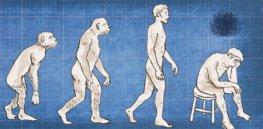
‘Good Reasons for Bad Feelings’: Understanding evolution’s role in anxiety, depression and making us human
[In] the thought-provoking Good Reasons for Bad Feelings, [evolutionary] psychiatrist Randolph Nesse offers insights that radically reframe psychiatric conditions. In his ...

Do these fossilized ‘tracks’ mean life gained mobility 600 million years earlier than we thought?
On February 11, Abderrazak El Albani, a sedimentologist at the University of Poitiers in France, published a study in Proceedings of the National ...

FDA lifts 2016 import ban on GMO AquAdvantage salmon, confirms fish safe to eat
The Food & Drug Administration announced [March 8] that it will be deactivating a 2016 import alert that prevented genetically ...

Court-mandated release of unpublished glyphosate studies could ‘reinvigorate’ EU’s Monsanto Roundup controversy
An EU court ruled [March 7] that European lawmakers must be given access to scientific studies examining the safety of ...

Researchers petition UK officials to launch disease-resistant potato field trials
The Sainsbury Laboratory, Norwich [in the UK], has applied to [the Department for Environment, Food and Rural Affairs] Defra for ...

Crime scene conundrum: Your DNA can wind up on something you never even touched
A 10-second handshake could transfer a person’s DNA to an object that the person never touched. In handshaking experiments, people ...

As trade talks progress, China may slow already lengthy approval process for US biotech crops
China may agree to buy more U.S. agriculture commodities and lift onerous trade barriers in the ongoing talks, but unless ...

Do you crave sweets when you’re stressed? Blame it on your brain
Although our brain accounts for just 2 percent of our body weight, the organ consumes half of our daily carbohydrate ...
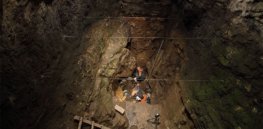
Who were the Denisovans? This Siberian cave could offer answers
Samantha Brown didn’t have high hopes when she opened the ziplock bag containing some 700 shards of bone. It would ...

Sequenced nematode genome could help win ‘arms race’ against devastating soybean pest
Iowa State University researchers overcame the quirks of the soybean cyst nematode’s DNA to sequence its genome, paving the way ...

‘Genetic crapshoot’: Two studies suggest clinical use of CRISPR hampered by off-target editing
The version of CRISPR whose selling point has been its precision suffers, ironically, from the same shortcoming that has dogged ...

Biotech experts say gene-edited plants will yield greater benefits than GMOs or conventional crops
Here we present the results of an expert survey on the added potential benefits of genome-edited crops compared to those ...

Popular autism ‘signaling imbalance theory’ challenged, suggesting new drugs ‘may have little value’
An analysis of four mouse models negates certain assumptions underlying the “signaling imbalance theory,” a popular hypothesis about autism’s origins ...
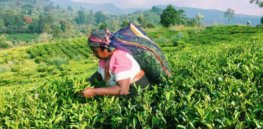
Viewpoint: Sri Lanka’s glyphosate-kidney disease scare illustrates why science, not politics, should dictate public health policy
On Feb. 4, the [American Association for the Advancement of Science (AAAS)] announced that “two public health researchers who battled powerful ...

Stem cell therapy ‘sold as a miracle cure’ linked to 17 bacterial hospitalizations
Over the past year, at least 17 people have been hospitalized after being injected with products made from umbilical cord ...

Why it might be possible for children to inherit their parents’ morals
A new baby is often welcomed with speculation about whether they got their eyes and nose from mom or dad, ...

African biotech scientist challenges activist opposition to Bt pest-resistant cowpea, Nigeria’s first GMO crop
Cowpea is one of the most important indigenous African legumes in Nigeria due to its ability to grow in drought-prone ...

UN report warning of ‘disappearing’ biodiversity raises unjustified alarms about food security, agronomist argues
The Food and Agriculture Organization of the United Nations has just published a voluminous report, The State of the World ‘s Biodiversity for ...

Infrared vision? We’ve now given it to mice and humans could be next
[Researchers Tian Xue and Gang Han] modified the vision of mice such that they were able to see near-infrared light ...

First case of dicamba, 2,4-D herbicide resistance detected in hard-to-control Palmer amaranth weed population
Kansas State University (KSU) weed scientists have confirmed a Palmer amaranth population that resists the synthetic auxin (Group 4) herbicides ...

Why growing up poor could hurt your brain in old age
In 2004, a study titled “The Long Arm of Childhood” found that whether children were rich or poor could influence their health ...
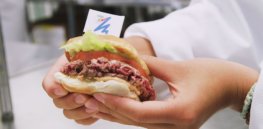
While Americans are ambivalent about plant-based ‘clean meat’ protein alternatives, Chinese and Indians are enthusiastic
Would you eat a burger grown from animal cells rather than a whole cow? What about a plant-based burger, once ...
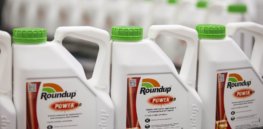
Roundup lawsuit: Plaintiff takes the stand against Monsanto in first federal glyphosate-cancer trial
Edwin Hardeman, the first person to challenge Monsanto’s Roundup in a federal trial, testified [March 5] that he sprayed the ...

Dear Anheuser-Busch, stop scaring people about alleged dangers of corn products to sell Bud Light
Anheuser-Busch caused quite a farm controversy with its Bud Light Super Bowl commercials. Remember, Bud Light bragged in those commercials ...

RNA-based pesticides are coming, but how will they affect the ecosystem?
New research shows how a new kind of genetically engineered pesticide moves through and degrades in the soil. This new generation ...

Far from ape-like: Neanderthals walked upright, just like us
Neanderthals walked with an upright posture just like modern humans, according to a new analysis. Over the years, reconstructions of ancient ...
