


Science Literacy Project Daily Digest

Germany agrees to ban GMO crops, phase out glyphosate herbicide ‘as soon as possible’
After a week of talks, German coalition negotiators agreed on the cornerstones of their new programme. But when a new government ...
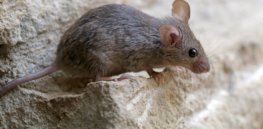
Autism researchers focus on ‘retired’ line of mice with missing gene
Nearly 20 years ago, a new strain of mice debuted in a California laboratory. The mice were missing a gene ...

Cultivation without domestication: Unlike modern farmers, ancient civilizations grew crops that ‘spread like weeds’
Plant domestication, the theory runs, comprises a long history during which humans select traits advantageous to farming practice. Qualities such as seed ...

Former Novartis chief Joseph Jimenez discusses breakthroughs in gene therapy, future of CRISPR in medicine
Editor's Note: Novartis CEO Joseph Jimenez retired in January after eight years in the top job at one of the ...

Neonicotinoid insecticide may increase honeybee survival when manure bacteria is present, lab study finds
Recent studies of honeybees and bumblebees have examined combinatory effects of different stressors, as insect pollinators are naturally exposed to ...

‘Like a mobile phone’: The genome sequencer that fits in your pocket
Scientists have used a device that fits in the palm of the hand to sequence the human genome. They say ...

CRISPR shows promise in treating Duchenne muscular dystrophy
Scientists have successfully tweaked the DNA in human heart cells to correct mutations that cause a deadly disease. If the ...

Cargill tries to balance science and its embrace of Non-GMO label
About 9 months ago Cargill sent out a tweet that unintentionally offended, and profoundly offended, thousands of North American farmers ...

Consumers more concerned about GMO crops’ environmental impact than health worries, German study finds
[H]ealth risks were generally perceived to be lower for bioenergy than food whenever full commercialization was pursued. Furthermore, full commercialization ...

Why autistic children are less likely to engage socially
[C]linicians and scientists have proposed a variety of theories to explain why kids with ASD tend to be less socially ...
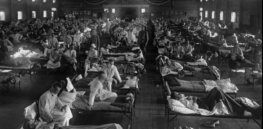
What might the next flu pandemic look like?
If humanity is lucky, the next flu virus with pandemic potential will unfold somewhere quick to catch and contain the threat—a ...

Viewpoint: Congress should scrap burdensome regulations on GMO crops used for biofuel, fiber
Editor's note: This letter was signed by University of Minnesota College of Food, Agriculture and Natural Resources graduate students Matthew Ott, Leanna Leverich, ...

Ancient Eurasian DNA helps untangle humanity’s twisted family tree
Advances in ancient DNA sequencing are shedding light on the genetic links between our Stone Age ancestors and modern humans, ...

Indian farmers no closer to gaining access to GMO mustard 8 months after recommended approval
On May 11, last year, the GEAC, [India's] apex authority for assessing the safety of genetically modified (GM) crops, declared ...

Viewpoint: How the EU’s protectionist anti-GMO trade policy hurts US farmers
Editor’s note: Bernard Goldstein, MD is a professor emeritus and dean emeritus at the University of Pittsburgh Graduate School of ...

In vitro fertilization planning: How many eggs do you need to freeze?
[W]hen you freeze a batch of eggs, that's no guarantee any or all of them will make it through the ...

Video: Are GMO crops and organic farming necessarily at odds?
GMO vs Organic... The ultimate food fight right? Not really. Lots of GMOs could be grown organically, and lots of ...
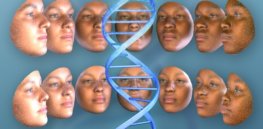
Viewpoint: Racism rather than ‘race’ better explains racial disparities in addiction and other diseases
[T]he assumption that health disparities are caused by race rather than racism permeates more subtly in the practices of many ...

Super bananas and red-fleshed apples: Under-the-radar GMO wonder foods
Thanks to GM crops, farmers have been able to upscale production of vital crops to feed our growing world. It ...

Are atheists smarter than religious people?
Of course, there are examples of extremely intelligent individuals with strong religious convictions. But various studies have found that, on ...
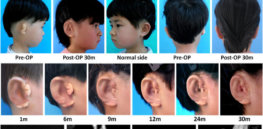
Replacement ears for children grown from their own cells in Chinese lab
Chinese scientists say they’ve accomplished something that’s long been a goal in the world of regenerative medicine—giving someone a new, ...

Sperm donor children can sometimes track down their once-anonymous dads using consumer DNA tests
There was a time when a man could anonymously donate sperm to a couple or woman trying to conceive and ...

Trace amounts of neonicotinoid insecticides found in 70 percent of Great Lakes stream samples
Pesticides thought to harm some kinds of bees are turning up in Great Lakes tributaries at unexpected times of the year ...

How Asian consumers and farmers are tiptoeing into using GMO crops
High costs, back-breaking work and unpredictable yields compelled Rosalie Ellasus to give up on corn farming.... ... But Rosalie changed ...

5 ways CRISPR will revolutionize the future
1. CRISPR Could Correct The Genetic Errors That Cause Disease. [...] In summer 2017, scientists at the Oregon Health and Science University used CRISPR ...

USDA and FDA to coordinate and streamline regulations of GMO and gene-edited crops and animals
U.S. Agriculture Secretary Sonny Perdue and FDA Commissioner Scott Gottlieb, M.D. announced at the White House [Jan. 30] a formal ...

Why approved Chinese-developed GMO rice that boosts yields, reduces pesticide use not available to country’s farmers, consumers
In 2009, two insect-resistant genetically modified rice lines (Huahui-1 and Bt-Shanyou -63) were granted biosafety certificates by the Ministry of ...
