


Science Literacy Project Daily Digest
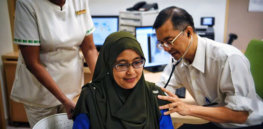
This may explain why women are more likely to develop lupus
Every year, 16,000 cases of lupus are reported in the United States — 9 out of 10 of them in women. Scientists ...

Harnessing evolution for space travel: Using biomimicry to recreate life on Mars
[E]volution has had billions of years of trial and error to produce species that are well adapted chemically and physically ...

Gene therapy setback? Animal deaths in treating muscular dystrophy spark new concerns over high doses
An influential scientist involved in gene therapy’s biggest setback, the death of a study volunteer 19 years ago, has issued a ...

Glory of plants in 3D: CRISPR gene-editing, imaging technology unlock genetic secrets
Advances in imaging technology — allowing researchers to peer inside plant structures in 3D — mean that biologists are seeking ...

GMO insect-resistant Bt tomatoes could control leaf miner pest, reduce insecticide use
Editor's note: Anne Frary is a professor in the department of molecular biology and genetics at the Izmir Institute of ...

You might soon be able to sell your DNA in cryptocurrency
[I]f a new startup is successful, you will soon be able to spit in a cup, upload your genetic code ...

How the EU decides to regulate CRISPR gene-edited crops will have ‘huge impact’ on US, rest of world
Most gene editing techniques should not come under the Europe Union’s strict regulatory regime for genetically modified organisms, according to ...

What was CRISPR before humans ‘discovered’ it for use in gene editing?
[T]here is a less sequins-and-glitter side to CRISPR that’s just as alluring to anyone thirsty to understand the natural world ...

Canada approves genetically engineered non-browning Fuji apples
Following the lead of the U.S. Department of Agriculture, Canadian federal agencies have approved the marketing of the non-browning Arctic ...

How heritable is autism? Twins research suggests we may be vastly underestimating it
An analysis of DNA variants suggests the heritability of childhood behavior problems, including autism traits, is about 6 percent, researchers ...

Coffee causes cancer? That may be California’s next required food warning label
California coffee shops may soon be forced to warn customers about a possible cancer risk linked to their morning jolt ...

‘Genetic nurture’: Parents’ genes affect how they raise their children
A new paper [January 26] in Science suggests a fascinating new twist on this interaction between our genes and our environment. Our ...

New Zealand anti-GMO group challenges recommended approval of Golden Rice to fight vitamin-A deficiency in Asia
Campaign group GE Free NZ wants regulator Food Standards Australia New Zealand (FSANZ) to review its draft approval for Golden ...

Search and destroy: CAR-T cell therapy could give patients HIV immunity
A UCLA-led research team has created blood-forming stem cells that can carry a gene that allows the body to produce cells ...
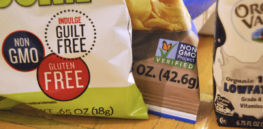
Former agriculture secretary Tom Vilsack: Non-GMO, gluten-free labels fan consumer fears
Editor's note: Tom Vilsack is the former US Secretary of Agriculture and Governor of Iowa, and currently serves as CEO and President ...

Virus-resistant CRISPR pigs could save pork producers $600 million per year
To pig farmer Thomas Titus, new scientific techniques could bring better disease resistance for his herd, saving baby pigs and potentially ...

Will South American powerhouses Brazil and Argentina regulate new breeding techniques (NBTs) as GMOs?
New breeding techniques, or “NBTs” as they have come to be known, are a set of innovative tools that can ...

Viewpoint: Why ‘having a public conversation’ about gene editing could hinder advances
[I]t has become clear that [gene editing] technologies aren’t on the far-flung horizon; they’re at our front door. A recent article ...

Evolution of modern human behavior linked to the rounding of our brains
In a study published [January 24] in Science Advances, researchers from the Max Planck Institute for Evolutionary Anthropology announced that the earliest Homo sapiens did ...

Namibia opens first GMO research lab with goal of reducing food imports
Namibia will now be able to trace the history of genetically modified organisms' products on the local market. The National Commission ...

Facts not fear: Science Moms’ documentary debunks common food myths about GMOs, organic farming
Editor's note: Sally Kuzemchak, MS, RD, is a registered dietitian, educator, and mom of two In the new documentary, Science Moms, they ...

South African economist: Fall armyworm outbreak shows why Africa should embrace GMO crops
Editor's note: Wandile Sihlobo is an Agricultural Economist and Head of Agribusiness research at the Agricultural Business Chamber (Agbiz) in ...
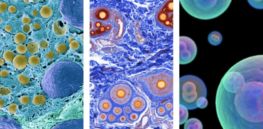
Human Cell Atlas: The quest to build biology’s periodic table
Realizing the need and potential for an atlas of all human cells, two scientists, Aviv Regev and Sarah Teichmann, have ...
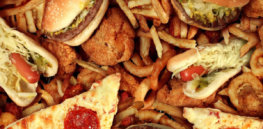
Genetic ‘switch’ could slow spread of cancer in patients with high-fat diets
In a set of papers published in the journals Nature Genetics and Nature Communications, researchers at Harvard Medical School and the Cancer Center at ...

How gene-edited crops could spell the end of the infamous term ‘GMO’
Political and social controversies, as well as complications of plant breeding, intellectual property, and regulation, have compromised the promised impact ...

Brazil’s higher-protein GMO soybeans hurting US exports to China
U.S. soybean growers are losing market share in the all-important China market because the race to grow higher-yielding crops has ...

Time-lapse video: Gene-silenced non-browning Arctic Apple vs conventional fruit
It can sometimes be a challenge to demonstrate the impact of the non-browning trait. But seeing is believing, so take ...
