


Science Literacy Project Daily Digest

CRISPR gene editing could boost crop yields and nutrition, but public acceptance remains wild card
The process of producing better food, protecting the environment and improving animal health is advancing at a seemingly breakneck pace ...
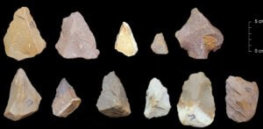
Stone artifacts in India spark new questions about when and how humans developed tools
Sometime around 400,000 years ago human ancestors went on an innovation bender. No longer content to make do with only the large ...

German coalition pledges GMO ban, phase out of glyphosate, expansion of organic farming
Germany’s draft coalition deal includes a goal of ending use of the weed-killer glyphosate within the country but gives no ...

Do cell phones cause cancer? Long-awaited study offers mixed results, no definitive answer
The long-awaited results of a $25 million National Institutes of Health study on the effects of cellphone radio-frequency radiation exposure on animals is ...

Parasitic dodder plant steals crops’ water and nutrients. Could gene editing stop it?
A parasitic plant called dodder can silence the expression of genes in the host plants from which it obtains water ...

Europe should embrace new breeding techniques to make farming more sustainable, says EU agriculture committee chair
The vice-chair of the European Parliament’s agriculture committee has argued that Europe should embrace innovative biotechnologies to boost food production ...

Boys’ and girls’ brains are different as early as 1 month of age
On average, men and women differ psychologically in small but reliable ways, such as in personality, interests, and cognitive performance, but the basis ...

Precision CRISPR repairs blindness in mice, could herald human treatments
In genome-editing, the challenge for CRISPR-wielding scientists is to edit only one of the two copies, or alleles, of every ...

Despite GMO cotton controversy, Burkina Faso still open to GE crops, sterile mosquitoes to combat malaria
Agriculturalists in Burkina Faso say their country is still open to using the tools of biotechnology, despite the decision to stop ...
Stem cell breakthrough could improve cow health, milk production and more
After decades of effort, scientists have finally managed to derive embryonic stem (ES) cells from cows and keep them in ...

Searching for sleep: Genome mining project looks for insomnia links
In a genetic study of unprecedented size, scientists have searched for inherited causes of insomnia in the DNA [of] 1,310,010 ...

Advances in crop microbiome research could revolutionize agriculture
Editor's note: Davide Bulgarelli is a principal investigator at the University of Dundee in the UK. His research aims at understanding the ...
The regenerating axolotl: What can we learn from its giant genome?
Scientists have decoded the genome of the axolotl, the Mexican amphibian with a Mona Lisa smile. It has 32 billion ...

Chasing the ‘Fountain of Youth’ through stem cells
Editor's note: The following is part of a Q&A interview with Vittorio Sebastiano, a research professor of reproductive biology at ...

GMO label doesn’t deter European companies’ interest in new soybean oil with less saturated fat
DuPont Pioneer's soybean oil Plenish has been approved for the EU and, despite having to label on pack it as ...

International organic farming group IFOAM declares opposition to CRISPR gene-edited crops
IFOAM (International Federation of Organic Agricultural Movements) has published a position paper on the new genetic engineering techniques. The aim is provide ...

Speech mystery: Language relies on brain pathways that predate human beings
New research has identified the brain systems involved in language learning and discovered that these systems pre-date the human species ...

Fish genes in tomatoes? The GMO lie that just won’t die
Editor's note: Mary Mangan, Ph.D., received her education in microbiology, immunology, plant cell biology, and mammalian cell, developmental, and molecular biology ...

House science committee to consider cutting US funding for IARC cancer agency
The House Science, Space and Technology Committee [Tuesday, Feb. 6] is likely to consider whether Congress should cut off millions ...

Rwandan scientists debate potential pros and cons of allowing farmers to grow GMO crops
[G]enetically modified organisms (GMOs), which scientists argue are primed to revolutionise agriculture and livestock, have attracted criticism and skepticism from ...

‘Cancer causing’ BRCA genes are often misunderstood
Some of the first genes identified as risk factors for cancer, the BRCAs (BReast CAncer genes) are really about much ...

Viewpoint: US may be losing CRISPR race against China, but FDA regulations are worth it
[H]ow did China edge out the United States to become the first to use CRISPR in humans? American researchers were, ...

Farmers in four states sue Monsanto, BASF and Dupont over dicamba herbicide damage
Farmers in the heartland have filed at least 11 lawsuits in federal court over the last two years against the ...
Managed honey bees can harm wild pollinator species
There is widespread concern about the global decline in pollinators and the associated loss of pollination services. This concern is ...

Forecasting the flu is a challenge. Here’s why
[F]or the third week in a row, flu activity remains widespread in 49 states, according to the latest CDC data ...

Did life begin in water—or some other liquid?
[W]hile water is an indispensable solvent for all known life forms that exist today, water also inhibits the formation of ...
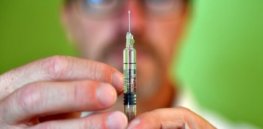
‘Cancer vaccine’ shows promise in mice; human trial next
A combination of a tiny segment of DNA and a specific antibody injected into a solid tumour has been shown ...
