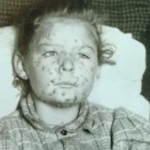
Racial health differences caused by society, not genetics

It is no secret that a longer life is a white privilege in the U.S. In 2011, the Centers for Disease Control and Prevention (CDC) reported that white men lived more than four years longer than black men, and white women lived more than three years longer than black women. The main reason for the racial mortality gap is heart disease. “There’s a huge number of years of life lost because some people have the black life expectancy and not the white life expectancy,” Kaufman said. “It’s killing people prematurely on the basis of race.”

To understand if there is any genetic reason for these deaths, Kaufman’s team reviewed six years of genome-wide studies of cardiovascular disease. Having crawled across the genome for every possible variant that could trigger deadlier disease, they only found three that fit the bill—and two of them suggested that whites, not blacks, should be on the suffering side of the disparity. “We’re spending a huge amount of money on these studies,” he said, “but if you are interested in understanding disparities, all this money that’s been spent has come up with basically nothing.”

Maybe this finding isn’t entirely earth-shattering. After all, it is almost universally agreed that race is a social construct. In 2005, only two years after the sequencing of the human genome, the editors of Nature Biotechnology put it like this: “Pooling people in race silos is akin to zoologists grouping raccoons, tigers, and okapis on the basis that they are all stripey.” Perhaps, then, the better question is: Why do we continue to search for a connection between race and genetics to explain health disparities?


Read full, original article: Genes Don’t Cause Racial-Health Disparities, Society Does

{{ reviewsTotal }}{{ options.labels.singularReviewCountLabel }}
{{ reviewsTotal }}{{ options.labels.pluralReviewCountLabel }}
{{ options.labels.newReviewButton }}
{{ userData.canReview.message }}

Related Articles

Infographic: Global regulatory and health research agencies on whether glyphosate causes cancer

Infographic: Global regulatory and health research agencies on whether glyphosate causes cancer

Does glyphosate—the world's most heavily-used herbicide—pose serious harm to humans? Is it carcinogenic? Those issues are of both legal and ...

Most Popular

ChatGPT Image May 26, 2026, 08_42_17 AM (1)
Viewpoint: Greenpeace and poison: How environmental advocacy groups rely on compliant (and often ignorant) journalists to spread disinformation and spark litigation
Screenshot 2025-07-30 at 10.48
Can gene editing eliminate Down syndrome? Scientists have done it in lab-grown cells
Screenshot-2026-05-28-at-1.36.28-PM
Viewpoint: Can mRNA research survive the Trump administration?
Screenshot-2026-06-02-at-11.59.11-AM
Magnifica Humanitas: Pope’s encyclical broadside against AI naivete and overreach
Screenshot 2025-11-18 at 3.45
Viewpoint—GMOs and sustainability: Why buying organic foods is the least environmentally-sensitive food choice—without offering any health benefits
ChatGPT-Image-May-26-2026-07_51_21-AM-2
Viewpoint: There are more than 1,000 chemicals in a cup of coffee—including many substances that can cause cancer. Why isn’t it banned?
ChatGPT-Image-Jun-2-2026-11_39_58-AM
Viewpoint: Who is RFK, Jr.’s newly-appointed CDC senior counselor, Sara Brenner — Vaccine skeptic and self-proclaimed “MAHA mom”
Picture1
Sounds we can’t hear — the hidden planetary signals behind science, fear, and misinformation
ChatGPT Image May 28, 2026, 08_16_38 PM
Viewpoint: Why the EPA mismeasures cancer risk of chemicals and what should be done to fix it
glp menu logo outlined

Get news on human & agricultural genetics and biotechnology delivered to your inbox.