Romantic relationships may have evolved due to menopause

The GLP aggregated and excerpted this blog/article to reflect the diversity of news, opinion and analysis. 

Menopause is one of the oddest features of human reproductive biology. Not the hot flashes or the forgetfulness, but the fact that older women lose the ability to have babies. Now researchers say that once it appeared, menopause may have had a ripple effect on human mating that helped create the human pair-bond.

According to a new paper in PNAS this week from a team led by University of Utah anthropologist Kristen Hawkes, menopause could be the evolutionary gateway to romance. The origins of menopause are pretty mysterious: most animals, including other primates and human males, can keep on making babies as they age.

Hawkes is one of a group of scientists who think grandmothers are the key: early humans who gave up childbearing and helped feed and care for their grandchildren wound up with more descendants, outcompeting their babies-till-old-age cousins. This “grandmother hypothesis” is still controversial: behaviors don’t fossilize, so it’s hard to find definitive evidence for or against it. But proponents believe that grandmothering, and the longer lifespan that came with it, could have had widespread effects on human social systems.
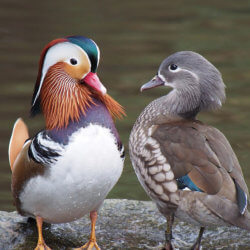
If early human societies had more fertile males than fertile females, then as lifespans got longer, the pool of older males competing for younger, fertile females got larger. Eventually, Hawkes says, males that held on to the mates they already had wound up fathering more children than the males who kept looking for someone new.

Read full, original post: Menopause May Be the Evolutionary Origin of Romantic Relationships – And Cheating

Related Articles

Infographic: Global regulatory and health research agencies on whether glyphosate causes cancer

Infographic: Global regulatory and health research agencies on whether glyphosate causes cancer

Does glyphosate—the world's most heavily-used herbicide—pose serious harm to humans? Is it carcinogenic? Those issues are of both legal and ...

Most Popular

ChatGPT-Image-Mar-10-2026-01_39_01-PM
Viewpoint—“Miracle molecule” debunked: Why acemannan supplements don’t work
ChatGPT-Image-Sep-30-2026-01_11_07-PM
How U.S. teamed with Russia to block global human AI weapons oversight
ChatGPT-Image-Sep-21-2026-03_15_09-PM
Viewpoint: Chipotle-inspired lesson: 10,000 sick customers suggest that processed foods can be safer than fresh ones
ChatGPT-Image-Sep-29-2026-12_16_42-PM
Social media influencers are driving food misinformation across Europe
Screenshot-2026-09-29-at-11.06.43-AM
Astrology, homeopathy, vaccine rejectionism, creationism: Why pseudoscience thrives as science advances
generated-1790707585414
Facts & Fallacies podcast: America's health care system is broken. A doctor explains how to fix it
Screenshot-2026-09-28-at-1.16.38-PM
Defying public perceptions, U.S. cancer deaths plunged 35% since 1991
ChatGPT-Image-Sep-23-2026-02_36_39-PM
Viewpoint: After firing the entire National Science Board, Trump reshapes funding initiatives. Here’s the good and the bad.
ChatGPT-Image-Jun-18-2026-04_15_29-PM
Viewpoint: Kennedy’s ‘bad science’: MAGA embrace bolsters HHS secretary’s influence and popularity
Screenshot-2026-09-17-at-1.07.08-PM
'We are dangerously addicted to antidepressants': Should we heed RFK Jr.’s sobering warning?
Screenshot-2026-09-16-at-10.27.33-AM
Viewpoint: SCOTUS poised to address First Amendment tension between mandatory vaccines, children’s health and religious freedom 
glp menu logo outlined

Get news on human & agricultural genetics and biotechnology delivered to your inbox.