What does “organic” actually mean?

Screen Shot at AM

The GLP aggregated and excerpted this blog/article to reflect the diversity of news, opinion and analysis.

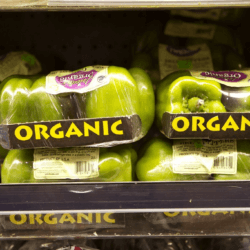
What does organic actually mean? It’s tricky, because the word “organic” refers to both a movement and a regulatory label. Meanwhile, most of us just want to know if organic means “better”: if it’s healthier, more sustainable, and, in short, worth the money.

My unsatisfying answer: It depends. I equivocate here because the organic rules are more about process than outcomes. Instead of governing results — i.e. defining organic by the nutritional content of food, or environmental quality measurements on farms — the rules mostly govern the tools used in food production.

If farmers and environmental scientists were to design the perfect system, it might not be strictly organic. For instance, in some situations it would make more environmental sense to use a little synthetic pesticide than to spray the oils, copper, and sulfur that the organic program allows. Using compost and manure is really good for soils. But we also have to use some synthetic fertilizer if we want to shrink our agricultural footprint. None of this is simple.
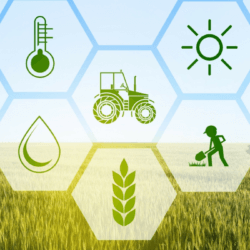
Any adequate analysis of agricultural sustainability should try on both pairs of ideological sunglasses. It seems to me that the industrial partisans — looking through the rose-colored glasses of ever-improving efficiency and technological progress — have at times been blind to inefficiencies at the ecosystem level (dead zones in lakes and oceans, greenhouse gas emissions). Likewise, organic partisans — looking through the dark glasses of environmental decline and technological failure — have at times been blind to imperatives for land-use efficiency (there really is a lot of evidence that we can preserve more biodiversity by farming more intensively), and to the true humanitarian improvements that have come with industrialization.

Read full, original post: What does “organic” actually mean?

{{ reviewsTotal }}{{ options.labels.singularReviewCountLabel }}
{{ reviewsTotal }}{{ options.labels.pluralReviewCountLabel }}
{{ options.labels.newReviewButton }}
{{ userData.canReview.message }}

Related Articles

Infographic: Global regulatory and health research agencies on whether glyphosate causes cancer

Infographic: Global regulatory and health research agencies on whether glyphosate causes cancer

Does glyphosate—the world's most heavily-used herbicide—pose serious harm to humans? Is it carcinogenic? Those issues are of both legal and ...

Most Popular

Screen Shot at AM
Facts & Fallacies Podcast: Right-wing politics bad for your health? Separating speculation from science
ChatGPT-Image-Jun-13-2026-11_51_39-AM
Viewpoint: COVID lab leak? Misguided backers of the lab leak theory refuse to give up
drug look like ozempic
Six key health insights from taking weight-loss drugs
ChatGPT Image Jun 3, 2026, 03_54_37 PM
Viewpoint: “Turn on, tune in, drop out”—Kennedy embraces the Timothy Leary psychedelic revolution
ChatGPT-Image-Jun-14-2026-09_41_44-AM-2
Viewpoint—‘The gleeful efficiency of an arsonist’: Administration’s health and science research cuts are ‘sabotaging’ America’s future
Screenshot-2026-06-14-at-9.14.26-AM
‘Humanitarian catastrophe’: Trump’s USAID shutdown could help drive nearly 23 million deaths — including 5.4 million children — by 2030, Lancet study warns
ChatGPT-Image-Jun-11-2026-01_15_03-PM
Selective Pressure, Selective Silence
ChatGPT-Image-Mar-10-2026-01_39_01-PM
Viewpoint—“Miracle molecule” debunked: Why acemannan supplements don’t work
ChatGPT Image Jun 3, 2026, 03_14_43 PM
Viewpoint: How Earthjustice became the poster child for the abuse of special interest activist funding
ChatGPT Image Jun 12, 2026, 02_32_14 PM
‘Have you asked your doctor?’: AMA launches campaign to counter health misinformation
Screenshot-2026-06-14-at-9.53.54-AM
Is the World Cup a perfect storm for the spread of infectious diseases?
Screenshot-2026-06-05-at-2.12.30-PM
Some plants can poison you. So how did humans figure out what is safe to eat?
Screenshot-2026-06-11-at-3.40.06-PM
'Toxin' detox: A gastroenterologist weighs in on $71 billion health trend
glp menu logo outlined

Get news on human & agricultural genetics and biotechnology delivered to your inbox.