Resistance genes found making bacteria impervious to all antibiotics

The GLP aggregated and excerpted this blog/article to reflect the diversity of news, opinion and analysis.

Well that’s ironic. As if to mark World Antiobiotic Awareness Week, antibiotic resistance just got a whole lot scarier. Resistance genes identified in China suggests we could soon see bacteria that are resistant to every known type of antibiotic, and these genes have already been found in bacteria infecting people.

Until now, a type of bacteria known as Gram negative have remained susceptible to one particular class of antibiotics, called polymyxins. These have become known as “last resort” antibiotics, increasingly used to treat infections that resist every other kind.

In 2012, the World Health Organisation classified colistin, the most widely used polymyxin, as being critically important for human health. But that didn’t stop farmers around the world, especially in China, from using large quantities of colistin to fatten up pigs and chickens.
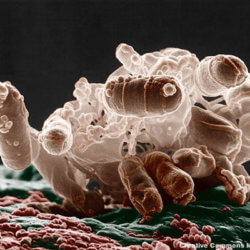
Now Yi-Yun Liu at the South China Agricultural University in Guangzhou and colleagues have discovered the first known resistance gene for colistin that is able to move freely from one bacterium to another.

Alarmingly, they found that this gene is already widespread in southern China, turning up in 15 percent of meat samples and 21 percent of animals routinely tested between 2011 and 2014. Even worse, this resistance gene has already started to appear in human infections. Out of 1,322 blood, urine and other samples from hospitals in two states of Southern China, the team found the gene in 16 cases.

Read full, original post: Bacteria now resistant even to ‘last resort’ antibiotics

Related Articles

Infographic: Global regulatory and health research agencies on whether glyphosate causes cancer

Infographic: Global regulatory and health research agencies on whether glyphosate causes cancer

Does glyphosate—the world's most heavily-used herbicide—pose serious harm to humans? Is it carcinogenic? Those issues are of both legal and ...

Most Popular

ChatGPT-Image-Mar-10-2026-01_39_01-PM
Viewpoint—“Miracle molecule” debunked: Why acemannan supplements don’t work
Screenshot-2026-09-17-at-1.07.08-PM
'We are dangerously addicted to antidepressants': Should we heed RFK Jr.’s sobering warning?
Screenshot-2026-09-03-at-10.51.20-AM
Viewpoint: Why do online health lies outlive the evidence that debunks them? Read "Everyone Else Is Lying to You"
ChatGPT-Image-Sep-23-2026-01_52_03-PM
Viewpoint: 4 very real AI doomsday scenarios
ChatGPT-Image-Sep-2-2026-02_03_32-PM
How much of a problem is AI’s water use?
Screenshot-2026-09-22-at-11.40.28-AM
After Idaho criminalized abortion providers in 2022, one-third of obstetricians fled. Health care advocates are making rural health the case for repealing the ban
Screenshot-2026-09-23-at-3.15.09-PM
Anti-GMO activists in Pakistan rev up their campaign of dire warnings
ChatGPT-Image-Aug-26-2026-12_46_16-PM
Viewpoint: The fake controversy over whether combining childhood vaccines is dangerous— a debate science resolved 25 years ago
ChatGPT-Image-Sep-22-2026-10_32_46-AM
There has been a slew of recent reports of food recalls and foodborne outbreaks. Do we face an escalating problem?
Screenshot-2026-09-23-at-11.55.01-AM
How can we know if social media bans actually help teens?
Screenshot-2026-09-17-at-12.00.30-PM
Investigative group ProPublica finds links between ectopic pregnancy deaths and abortion bans
Screenshot-2026-09-10-at-12.20.19-PM
'Jet fuel didn't melt the steel': 9/11 conspiracy theories debunked
glp menu logo outlined

Get news on human & agricultural genetics and biotechnology delivered to your inbox.