Is Post Foods using non-GMO labeling to ‘scam customers’?

The GLP aggregated and excerpted this blog/article to reflect the diversity of news, opinion and analysis.

At this time, I’d like to give a special grade, A+, to Post Foods Canada in consumer deception. Well done Post Foods, you’re chosen to use non-GMO labelling to mislead consumers about your products and actual GM foods.

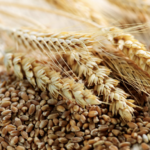
Last August, I wrote a blog on Post Foods’ dubious use of non-GMO certification when the only ingredient listed is wheat. Such a marketing practice should be viewed with skepticism as there is NO GMO wheat sold or approved in Canada or anywhere else on the planet for that matter. . . .

. . . .

Post Foods knows full well that there is no GMO wheat in the market, their marketing of non-GMO verification was a strategic business, a corporate decision to capture consumers seeking GM-free products and for many corporations, this is done purely for marketing reasons. Evidence of this is the labelling of non-GMO salt, all salt is GM free, in fact, all salt is free of any genetic material, it’s a mineral! Obviously, Post Foods believes it is acceptable to misinform consumers about their products. . . .

This raises the issue that food companies recognize that consumers typically know little about GM crops or food and they can use this lack of knowledge to their marketing advantage. An American food company executive has said the following about non-GMO labelling, “[if it] doesn’t say non-GMO on it, chances are somebody will bypass that”. Non-GMO labelling on a product where there is no GMO product in the market misleads and scams consumers.

Read full, original post: Post Foods ‘A+’ in Scamming Consumers

{{ reviewsTotal }}{{ options.labels.singularReviewCountLabel }}
{{ reviewsTotal }}{{ options.labels.pluralReviewCountLabel }}
{{ options.labels.newReviewButton }}
{{ userData.canReview.message }}

Related Articles

Infographic: Global regulatory and health research agencies on whether glyphosate causes cancer

Infographic: Global regulatory and health research agencies on whether glyphosate causes cancer

Does glyphosate—the world's most heavily-used herbicide—pose serious harm to humans? Is it carcinogenic? Those issues are of both legal and ...

Most Popular

ChatGPT Image May 10, 2026, 08_16_59 PM 2
Overmedicalization? RFK Jr.’s antidepressant crackdown raises conflict questions over his fee stake in Wisner Baum, the tort firm built on suing drug makers
Picture1-5
Science Disinformation Gap: The transatlantic battle over social media and censorship
ChatGPT-Image-Apr-13-2026-02_20_22-PM
Viewpoint: Misinformation infodemic? Why assessing evidence is so challenging 
Picture1-14
When superbugs threaten vulnerable children: Can AI help solve antibiotic resistance?
Screenshot-2026-05-08-at-3.40.33-PM
Seeds of power: China turns to genetic engineering to become global superpower
Farmers can talk to plants

Farmers are a major source of misinformation—about farming
S
As vaccine rejectionism spreads, measles may be taking a more dangerous turn
Screenshot 2026-05-08 at 3.01
Transforming farming and nutrition with AI and robotics? Larry Ellison’s half-billion-dollar Hawaii greenhouse dream goes bust
Screenshot-2026-04-20-at-2.26.27-PM
Viewpoint — Food-fear world: The latest activist scientists campaign: Cancer-causing additives
Screenshot-2026-05-01-at-1.29.41-PM
Viewpoint: What happens when whole grains meet modern food manufacturing? Labels don’t tell the whole story.
ChatGPT-Image-May-8-2026-01_41_33-PM-3
Viewpoint: Surge of climate misinformation traced to right wing and anti-wind activists 
Screenshot-2026-04-12-135256
Bixonimania: The fake disease scam that AI swallowed whole
glp menu logo outlined

Get news on human & agricultural genetics and biotechnology delivered to your inbox.