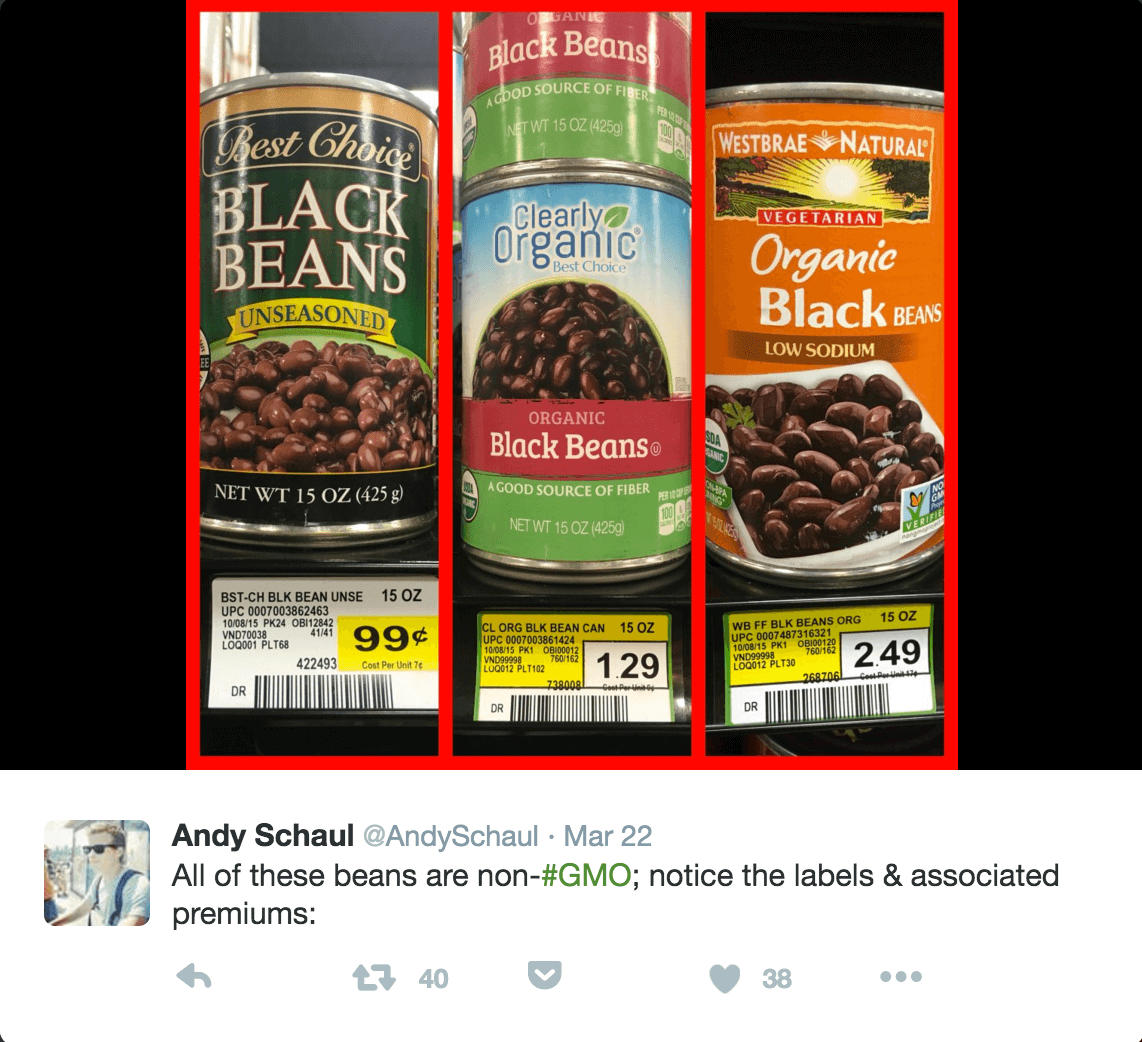
Anyone who has been to the supermarket recently can attest to the fact that prices of organic foods at the supermarket are generally much higher than conventional (either non-GM or GM) foods, often by as much as 50 percent. Much of this increase comes from the inputs necessary to grow organic foods, including more land to grow crops, labor-intensive processes like tilling and weed removal, and using high volumes of organic-approved pesticides.
But a new player, the non-GMO Project label (not to be confused with the USDA organic label) is also beginning to change the landscape of food pricing—from organic to GMO.
Non-GMO versus Organic
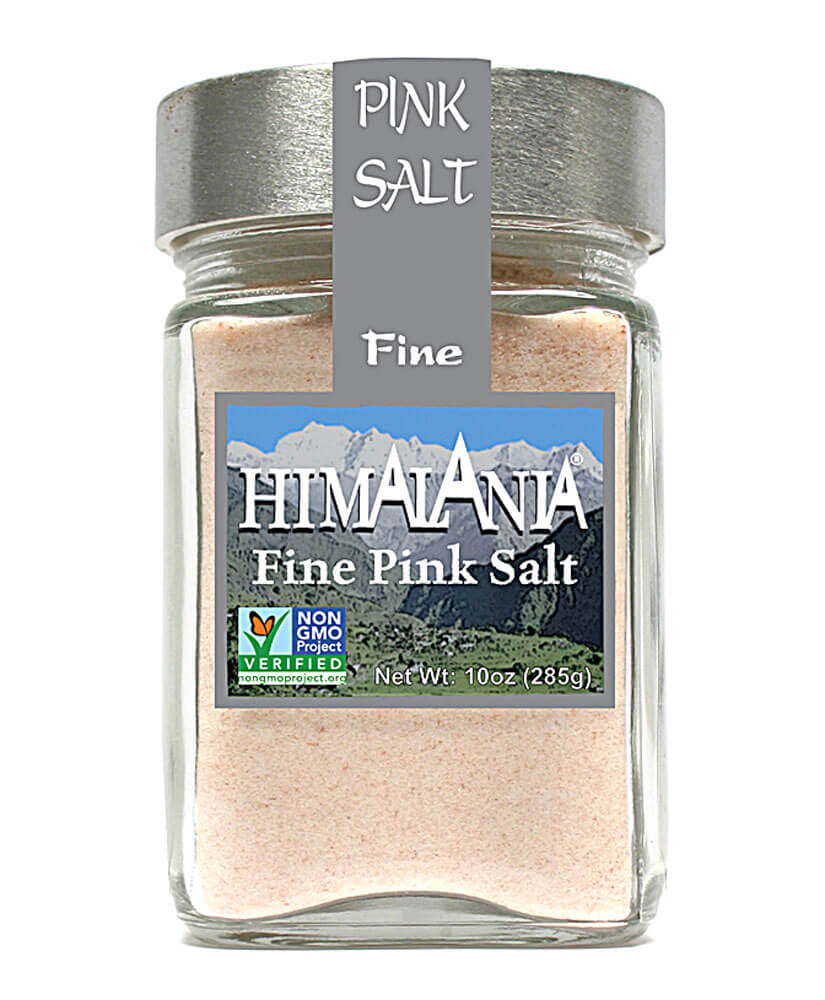 The Non-GMO Project, is a non-profit that is based in Bellingham, Washington. It requires submitters to demonstrate how their food is produced without genetic modification—which is easy for, say, salt, which has no genes or genetic material to speak of but harder for living organisms like corn. The non-GMO Project has a tolerance level of GM of less than 0.9 percent (the same as European Union countries). This is rather different from the USDA’s National Organic Program, which doesn’t have as strict a threshold for GM, and also requires submitters to show that they aren’t using prohibited pesticides or fertilizers, and are using other techniques approved for organic farming. So, a product could be non-GMO, but not be organic.
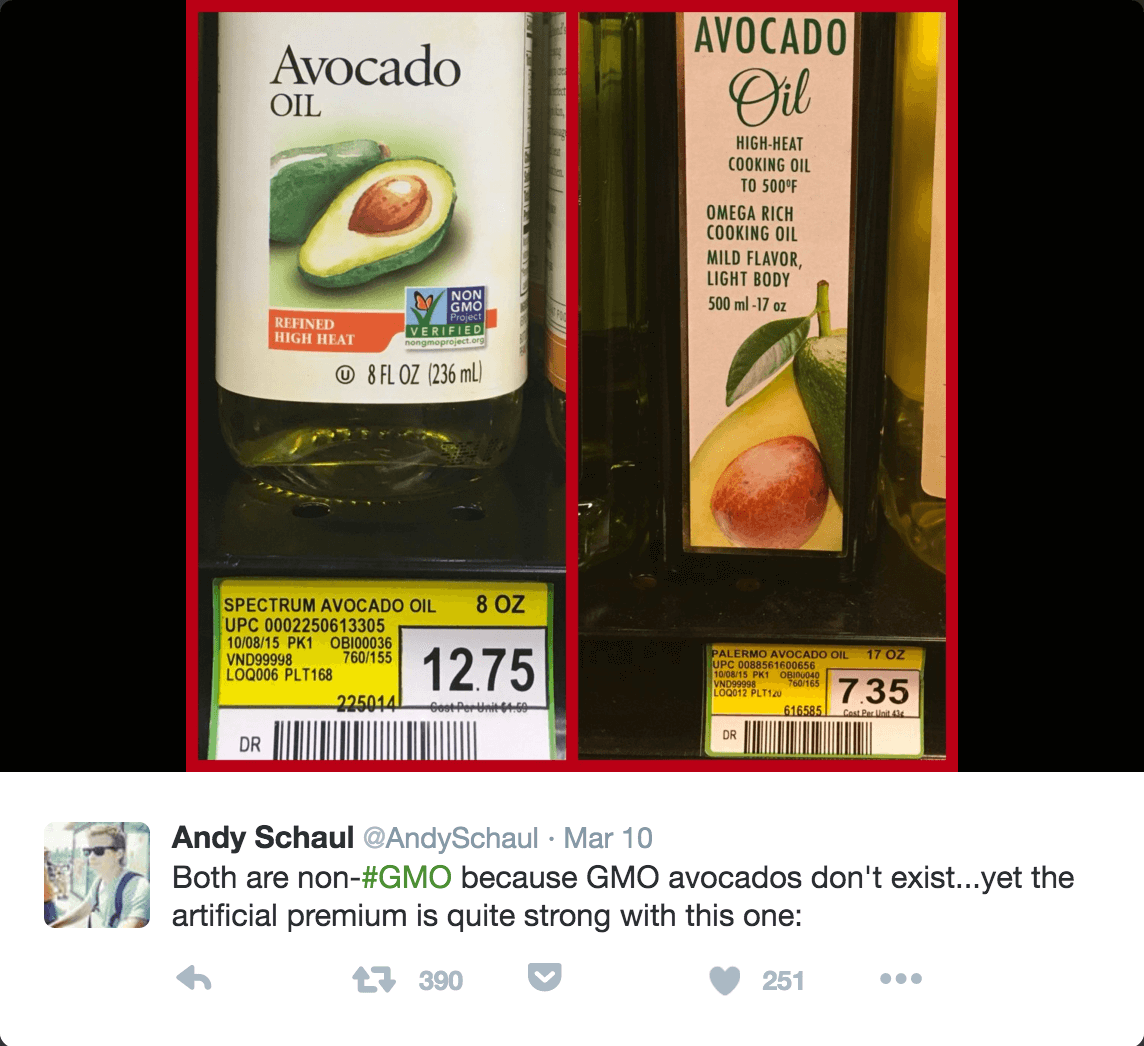
Most shoppers (about 67 percent, according to a recent survey by the NPD group) say they aren’t willing to pay more for non-GMO food, about 11 percent of those surveyed said they would be willing to pay more. In a country as large as the United States, that 11 percent may be enough to profit from. For example, a search of avocado oils from AvoHaus showed a 250 ml bottle of organic non-GMO Project certified avocado oil was $15, while a conventional extra-virgin avocado oil bottle of the same size was $12.50. An 8 oz bottle of Non-GMO Project avocado oil was selling for $12.75, while a conventional bottle of avocado oil was selling for $7.35 for 17 oz—interestingly there are no GMO avocados.
Switching to macaroni and cheese, Andy Schaul, global insights manager at Monsanto, Tweeted a picture of a 6 oz box of organic mac and cheese for $2.49, next to a 5 oz box of an organic non-GMO version of the same product that cost $3.35. For other retailers, however, the price of non-GMO (but not organic) might be cheaper than organic versions.
While prices—especially retail prices—can come from a lot of sources (transportation and processing costs, marketing activity, regional differences in price and cost), the price premium of this new product helps illustrate how costs of crop development move from farm to table, no matter how the crop was farmed. Depending on general crop prices and efforts by certain manufacturers to cash on in current farm economics, the non-GMO label could outstrip “organic” on costs to consumers.
In some ways, Non-GMO already is outstripping organic. From 2013 to 2015, Non-GMO sales rose 70 percent every year, totaling about $13 billion in sales for 2015. Meanwhile, food that has the USDA Organic seal (and thus is 95 percent or more organic) totaled $11 billion by November 2015.


Farming price pressures
Farmers are becoming more attracted to non-GMO crops, even more than organic. A large reason for this is price. While inputs for organic and non-GMO maybe higher, the prices for certain crops (like corn, soy and wheat) are very, very low. These low prices, the result of improved agricultural practices (including genetic modification, reduced pesticide use and advanced machinery) are making farmers look for alternatives that pay them more per unit of crop.
 Terry Daynard, a Guelph, Ontario, farmer and former associate dean at the University of Guelph, wrote in his blog that last year, he received $11 per bushel of soybean, compared to $10 per bushel in 1983. But in constant (1983) dollars, that means last year he only got $5 per bushel. “If I’d grown organic soybeans in 2015, I would have received about 2.5 times that or normal soybeans and my cost of production would have been equally high.”
A number of other farmers in Canada and the US Midwest have moved away from biotech seeds, mainly because of price. Prices for corn and soybeans have fallen 50 percent for corn and 35 percent for soybeans over the past two years, which has forced a number of growers to look to organics and non-GMO varieties for higher profits.
John Ruelle, senior vice president of SunOpta, a Toronto, Ontario-based firm that is the first to get USDA certification for operating GMO-free, says that Non-GMO has a distinct price advantage over organics, at least in the short run:
We didn’t have a ton of interest from growers to grow specialty crops when corn was at $8 a bushel. To be a certified organic producer you have to go through three crop cycles in order to get the land certified. You can do non-GMO next year.
With low food prices, the difference between $3, $8 and even $11 a bushel isn’t going to affect consumers, especially affluent ones. But, as Terry Daynard pointed out, “many Canadians aren’t affluent,” which is true in every other country on the planet. “If government and food industry actions reduce availability of lower-cost foods, many low-income families will suffer. That’s unfortunate and perhaps unethical, too.”
Andrew Porterfield is a writer, editor and communications consultant for academic institutions, companies and non-profits in the life sciences. He is based in Camarillo, California. Follow @AMPorterfield on Twitter.