Comparing conventional vs. organic: Don’t judge sustainability by yield alone

[T]wo colleagues and I published a paper in PLOS ONE titled “Commercial crop yields reveal strengths and weaknesses for organic agriculture in the United States.” The article presents an analysis of USDA crop yield data to compare organic and conventional farms in the US. . . .

. . . .Our paper [was used by Alex Berezow at the American Council on Science and Health] to support a questionable conclusion regarding sustainability:

[The lower yield in organic agriculture] violates the very notion of sustainability. An inefficient food production system that cannot feed everybody is, by definition, not sustainable.

. . . .
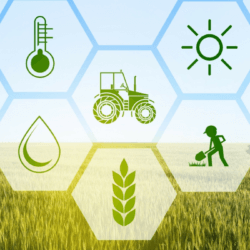
Evaluating “sustainability” is difficult. . .  yield is important, but so is biodiversity, economics. . . environmental impacts. . . Producing . . . food in a way that destroys the environment is obviously unsustainable. Protecting the environment to the extent that . . . people go hungry is also . . . the answer lies . . . between these two extremes. . . . [W]e need to continue increasing realized crop yields to feed the world population, especially in developing regions where the conventional yield gap is greatest. But dismissing the benefits of organic agriculture simply because it yields less than conventional farming (which also don’t come even close to maximizing yield) seems . . . unscientific . . .

The GLP aggregated and excerpted this blog to reflect the diversity of news, opinion and analysis. Read full, original post: How much yield is enough?

Related Articles

Infographic: Global regulatory and health research agencies on whether glyphosate causes cancer

Infographic: Global regulatory and health research agencies on whether glyphosate causes cancer

Does glyphosate—the world's most heavily-used herbicide—pose serious harm to humans? Is it carcinogenic? Those issues are of both legal and ...

Most Popular

ChatGPT-Image-Mar-10-2026-01_39_01-PM
Viewpoint—“Miracle molecule” debunked: Why acemannan supplements don’t work
ChatGPT-Image-Sep-2-2026-02_03_32-PM
How much of a problem is AI’s water use?
ChatGPT-Image-Sep-10-2026-01_44_53-PM
Viewpoint: Why medical and health nonsense spreads so casually on pop culture media
ChatGPT-Image-Aug-26-2026-12_46_16-PM
Viewpoint: The fake controversy over whether combining childhood vaccines is dangerous— a debate science resolved 25 years ago
ChatGPT-Image-Sep-22-2026-10_32_46-AM
There has been a slew of recent reports of food recalls and foodborne outbreaks. Do we face an escalating problem?
ChatGPT-Image-Sep-18-2026-01_38_09-PM
Microsoft exec: AI is a ‘doom loop’ scraping the ‘largest theft of labor in human history'
Screenshot-2026-09-17-at-12.00.30-PM
Investigative group ProPublica finds links between ectopic pregnancy deaths and abortion bans
Screenshot-2026-09-16-at-3.14.20-PM
19%: Plunging support for Trump-RFK, Jr. measles vaccine safety oversight
ChatGPT-Image-Sep-23-2026-11_47_32-AM
Facing pressure from Trump administration, fewer hospitals offer medical treatment for transgender minors
ChatGPT-Image-Sep-21-2026-03_41_02-PM
Viewpoint: Does IQ really measure intelligence? BBC gets it wrong.
Screenshot-2026-09-16-at-2.26.42-PM
Viewpoint: How to ecologically damage America’s forests: Ban glyphosate
ChatGPT-Image-Sep-17-2026-11_03_54-AM-2
AI sparks a bioweapons race
ChatGPT-Image-Sep-17-2026-12_28_43-PM
Vitamin D, omega-3 fish oil and glucosamine supplements could cause brain damage 
glp menu logo outlined

Get news on human & agricultural genetics and biotechnology delivered to your inbox.