
How will CRISPR be deployed in the battle against weeds?

Screen Shot at AM
[Editor’s Note: Weeds are one of the biggest threats to crops. Farmers use more weed killer than any other kind of pesticide. Recently, Monsanto acquired the rights to use the gene editing tool CRISPR to genetically engineer crops. Faye Flam writes in BloombergView about the age old battle against weeds and asks whether CRISPR will lead to increased use of weed killers.]

Tom Adams, Monsanto’s vice president for biotechnology, said the company could employ gene editing to endow plants with resistance to drought, viruses, fungi or insects. But there’s no known way to engineer a corn plant that can kill weeds directly…. So herbicides are still part of the package.

And although the new technology offers efficiency and flexibility, it doesn’t prevent weeds from evolving resistance. … Chemicals work well for a year or so, but then nature fights back with resistant weeds, and the farmers respond with more chemicals.

. . . .

Increasing use of herbicides is not only expensive for farmers, it raises concern among some scientists because the chemicals can get suffused through the environment. … “We should be taking a critical look at technologies that enable increased reliance on pesticides,” [Iowa State University biologist Michael Owen] said. That includes CRISPR.
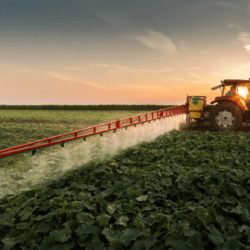
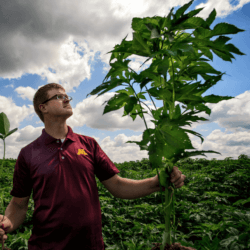
For [some] scientists … the way to win the war on weeds is to diversify tactics. For them, that means combining limited herbicide use with a variety of techniques, including tillage, crop rotation and planting of certain cover crops….

The GLP aggregated and excerpted this blog/article to reflect the diversity of news, opinion and analysis. Read full, original post: Farmers Have Tech. Weeds Have Evolution.

Related Articles

Infographic: Global regulatory and health research agencies on whether glyphosate causes cancer

Infographic: Global regulatory and health research agencies on whether glyphosate causes cancer

Does glyphosate—the world's most heavily-used herbicide—pose serious harm to humans? Is it carcinogenic? Those issues are of both legal and ...

Most Popular

ChatGPT-Image-Mar-10-2026-01_39_01-PM
Viewpoint—“Miracle molecule” debunked: Why acemannan supplements don’t work
ChatGPT-Image-Sep-10-2026-10_36_07-AM
Viewpoint: Even lousy scientific articles can shield authors when they hype dubious health claims and products
sorghum farmers in kenya FARMERS TREND
Here are all the ways CRISPR gene editing is transforming Africa’s staple crops—and there’s a lot more innovation to come
ChatGPT-Image-Sep-30-2026-01_11_07-PM
How U.S. teamed with Russia to block global human AI weapons oversight
ChatGPT-Image-Sep-29-2026-12_16_42-PM
Social media influencers are driving food misinformation across Europe
ChatGPT-Image-Sep-21-2026-03_15_09-PM
Viewpoint: Chipotle-inspired lesson: 10,000 sick customers suggest that processed foods can be safer than fresh ones
Screenshot-2026-09-28-at-1.16.38-PM
Defying public perceptions, U.S. cancer deaths plunged 35% since 1991
Screenshot-2026-10-01-at-11.21.27-AM
Vaccine hesitancy, like malaria, surges globally, topping 35% in some countries
Screenshot-2026-09-17-at-1.07.08-PM
'We are dangerously addicted to antidepressants': Should we heed RFK Jr.’s sobering warning?
generated-1790707585414
Facts & Fallacies podcast: America's health care system is broken. A doctor explains how to fix it
ChatGPT-Image-Sep-2-2026-02_03_32-PM
How much of a problem is AI’s water use?
glp menu logo outlined

Get news on human & agricultural genetics and biotechnology delivered to your inbox.