Five new genetic links to autism found

autism FB

Five novel genetic variants have been linked to autism spectrum disorders (ASD), according to a new study. The research, released as a preprint by biorxiv.org last week, involved a genome-wide association study of more than 46,000 people and marks the first time that individual variants have been linked to the conditions. Some significant variants were also found to be linked to other neurological disorders, such as schizophrenia.

ASD is generally considered to be a collection of heritable, heterogeneous neurodevelopmental phenotypes. The broadness of conditions covered by the classification contributes to the fact that, at present, autism spectrum disorders are thought to be diagnosed in more than 1% of the population. Despite the prevalence of ASD, however, previous studies have been unable to identify genomic variants that could explain the highly heritable nature of the conditions.

Not only could this work help us to improve our understanding of autism spectrum disorders, it also demonstrates that large genome-wide association studies are an effective avenue for studying these types of conditions. The team hope that their work will encourage similar research by other groups.

The authors concluded, “We have established a first compelling set of common variant associations in ASD and have begun laying the groundwork through which the biology of ASD and related phenotypes will inevitably be better articulated.”

The GLP aggregated and excerpted this blog/article to reflect the diversity of news, opinion, and analysis. Read full, original post: Novel Genomic Variants Linked to Autism

Viewpoint: Biggest ‘bee apocalypse’ myth? There isn’t one

bee cover e
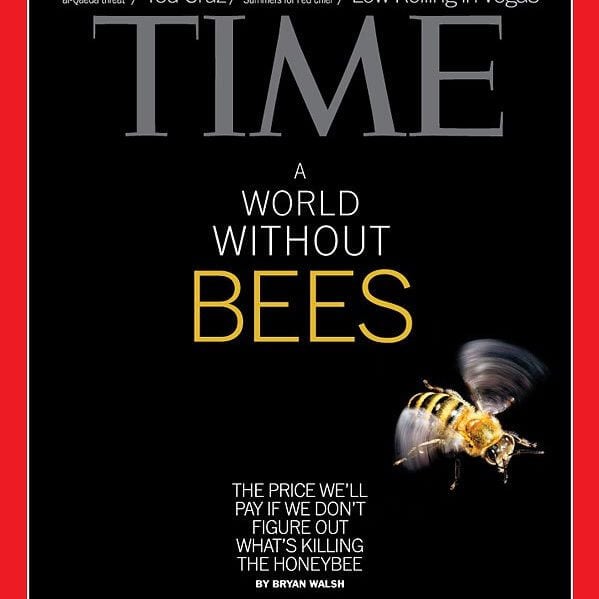
[D]espite panicked claims of an apocalypse, managed honeybee colonies in the United States have actually been rising since 2008. In fact, as of April 2017, U.S. honeybee colonies are at their highest levels in more than 23 years! According to University of Sussex Professor Dave Goulson, perhaps the foremost expert on bees, the trend is the same globally.

Herein lies the biggest myth of the “bee apocalypse”: that there actually is one. Fret not, bees aren’t going extinct anytime soon. Our food supply is not imminently imperiled.

Now, this doesn’t mean that bees aren’t facing tough times right now. Just because domesticated honeybees, which are raised like livestock, are in greater abundance, that doesn’t mean that their wild counterparts – around 20,000 species of them – aren’t threatened.

Pesticides could be another contributor to the decline of wild bees. Insecticides called neonicotinoids are regularly vilified here. Many lab studies reveal detrimental effects on bees, but these damages do not always show up in real-world field studies. On the whole, there does seem to be some harms from overexposure. For example, neonicotinoids may make bees slightly more susceptible to parasites or interfere with their classic “waggle dance,” a key way that bees communicate.

The GLP aggregated and excerpted this article to reflect the diversity of news, opinion and analysis. Read full, original post: The Biggest Myth About the “Bee Apocalypse”

Can we solve the patent issues that threaten CRISPR research?

A F A F A D E C F

[Editor’s note: Lawrence Horn is President and CEO of MPEG LA, which provides licenses for standards and other technology platforms.]

Although recent reports of its success in the laboratory are promising, the larger challenge confronting CRISPR may be access to the underlying patent rights. To develop CRISPR technologies, commercial developers must fight or license their way through an intellectual property labyrinth that is the definition of inefficiency.

In recognition that CRISPR is too important to be left at risk of endless patent battles and splintered licensing regimes, key CRISPR patent holders including the Broad Institute of MIT and Harvard have responded affirmatively to a public call for the creation of a global pool license.

Companies the world over – and their customers – will reap great benefits from the transparency of a pool license and the ability to license the necessary patents in a single transaction on fair and predictable terms. At the same time patent owners will be rewarded for their innovation with the opportunity to maximize return and minimize risk on their investments by making their technology accessible to many rather than just a few.

A patent pool in which rights holders make these decisions in concert with the market is preferable to governmental or judicial intervention. It also appears to be their most practical option and one that would bring good will and responsible stewardship to biotechnology innovation.

The GLP aggregated and excerpted this blog/article to reflect the diversity of news, opinion, and analysis. Read full, original post: Amazing gene-editing technology needs a pass on patent minefields

Video: World’s tiniest tape recorder made with CRISPR and built from microbes

worldssmalle
[H]ere’s a use for the bacteria we bet you’ve never considered: Scientists at Columbia University Medical Center have created the world’s smallest tape recorder out of e.coli.

Researchers turned Escherichia coli into little recording devices that can not only record their interactions with the environment but time-stamp the events, too, according to a Columbia University press release. The state-of-the-art recording device is from modified pieces of DNA called plasmids. One plasmid was turned into an audio tape of sorts that would create more copies of itself in response to an external signal, which also activated a separate recording plasmid that would insert itself into the process (like a nosy aunt) and serve as a time stamp to the process.

The results were published recently in Science, and the breakthrough comes courtesy of CRISPR–the gene-splicing Nobel Prize bridesmaid. Per the research, the CRISPR-Cas adaptation system naturally copies snippets of DNA of invading viruses so that the immune system can respond more effectively to future invaders. In a statement, researcher Harris Wang, said the “CRISPR-Cas system is a natural biological memory device.”

The technology is still being developed, so for now, CRISPR recordings probably won’t disrupt the recent resurgence of the cassette tape.

The GLP aggregated and excerpted this blog/article to reflect the diversity of news, opinion, and analysis. Read full, original post: Researchers use CRISPR to create the world’s tiniest tape recorder

Number of genetically engineered crops could balloon thanks to new technique using pollen DNA

Pollen Count hero e d ba fill x
[T]he war over GM crops, though intense, has so far been restricted to a small number of battlefields – corn, soybean, tomatoes and canola, for instance – due to the limited list of plant species scientists have been able to successfully modify.

Now the stage may be set for a massive expansion in the theatres of conflict. A team of mostly Chinese scientists has announced a new technique, called pollen magnetofection, which they say overcomes the obstacles of traditional plant-transformation methods and clears the way to genetically modify “almost all crops”.

Almost all current GM methods involve regenerating a new plant from a single transformed cell using complicated in vitro culture processes. The alternative approach taken by Xiang Zhao, of the Chinese Academy of Agricultural Sciences in Beijing, and colleagues is to first manipulate the DNA of pollen, then use this pollen to fertilise a plant’s ovary and directly generate transgenic seeds.

The team details its methods in the journal Nature Plants.

The GLP aggregated and excerpted this article to reflect the diversity of news, opinion and analysis. Read full, original post: GM plant species numbers set to dramatically increase

CRISPR and agriculture: Technology improving crop yields, nutrition and stress tolerance

rice genetics

The present study reviews agricultural applications related to the use of CRISPR systems in plants from 52 peer-reviewed articles published since 2014. Based on this literature review, the main use of CRISPR systems is to achieve improved yield performance, biofortification, biotic and abiotic stress tolerance, with rice (Oryza sativa) being the most studied crop.

China and the U.S.A. are ranked first with 22 (42%) and second with 10 articles (19%), respectively. Europe, which includes the U.K., Sweden, France, Hungary, Germany, Austria and Belgium, had 9 articles (17%).

Since 2013, considerable progress has been made in plant genome editing thanks to CRISPR/Cas systems. This technology has allowed straightforward, cost-effective and efficient gene editing compared with previous technologies, including zinc finger nucleases (ZFNs) and transcription activator-like effector nucleases (TALENs), making it accessible to many researchers. However, this emerging method is still developing and scientific efforts must continue to be made in order to obtain a mature technology and to realize the full potential of the technology.

[T]he use of this system already represents an emerging market, with CRISPR/Cas applications spanning a wide range of industries including research, agricultural and biomedical. The agricultural applications described in this literature review represent only the very first, initial uses of this exciting technology, and we can expect many more valuable opportunities for agriculture in the near future.

F large
Relative importance of the different applications of CRISPR systems in terms of the number of articles (2014–2017)

The GLP aggregated and excerpted this article to reflect the diversity of news, opinion and analysis. Read full, original post: Use of CRISPR systems in plant genome editing: toward new opportunities in agriculture

Podcast: CRISPR co-creator Jennifer Doudna addresses ethics of human genome editing

legacy doudna e

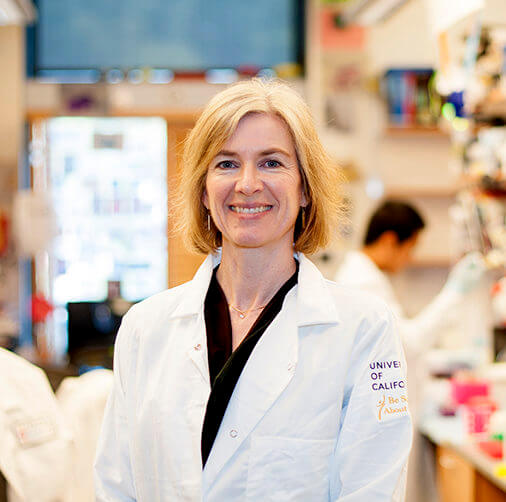
In this episode of the Waking Up podcast, Sam Harris speaks with Jennifer Doudna about the gene-editing technology CRISPR/Cas9. They talk about the biology of gene editing, how specific tissues in the body can be targeted, the ethical implications of changing the human genome, the importance of curiosity-driven science, and other topics.

Jennifer A. Doudna is a professor in the Chemistry and the Molecular and Cell Biology Departments at the University of California, Berkeley, investigator with the Howard Hughes Medical Institute, and researcher in the Molecular Biophysics and Integrated Bioimaging Division at the Lawrence Berkeley National Laboratory. She is internationally recognized as a leading expert on RNA-protein biochemistry, CRISPR biology, and genome engineering. She is the author (with Samuel Sternberg) of A Crack in Creation: Gene Editing and the Unthinkable Power to Control Evolution.

The GLP aggregated and excerpted this blog/article to reflect the diversity of news, opinion, and analysis. Read full, original post: Humanity 2.0

Evolutionary tradeoffs: How DNA works so living things have a ‘competitive advantage’ to survive

maxresdefault

Evolution is a game of trade-offs. Every trait an organism inherits may have benefits and drawbacks; what matters to natural selection is whether the trait is positive or negative on balance. But in a recent study, researchers described a balancing act that seems more counterintuitive than most: Bacterial cells prioritize transcription — the process of making RNA transcripts of genes as the first step in protein production — over repairing double-strand breaks in their DNA.

Last month, [researchers Susan Rosenburg, Christophe] Herman and their team published the results of their research in Nature: They found, using a series of experiments and intricate controls, that transcription can trump DNA repair in E. coli.

“In a normal growing population,” [genetics professor Robert] Lloyd said, “the requirement of repairing DNA breaks would not be as great as the need to secure a competitive advantage against other species.” If the cells had evolved under extreme conditions that were more likely to break DNA, “they would have evolved different mechanisms to deal with that, and the efficiency of gene expression would no longer be the first concern.”

“This is not so much a conundrum as it is an inevitable advantage,” Lloyd said — a classic example of an evolutionary trade-off.

The GLP aggregated and excerpted this blog/article to reflect the diversity of news, opinion, and analysis. Read full, original post: Bacteria Sacrifice DNA Repair for Better RNA

Salmon may soon be fed GMO canola high in omega-3 fatty acids

fishfeed e

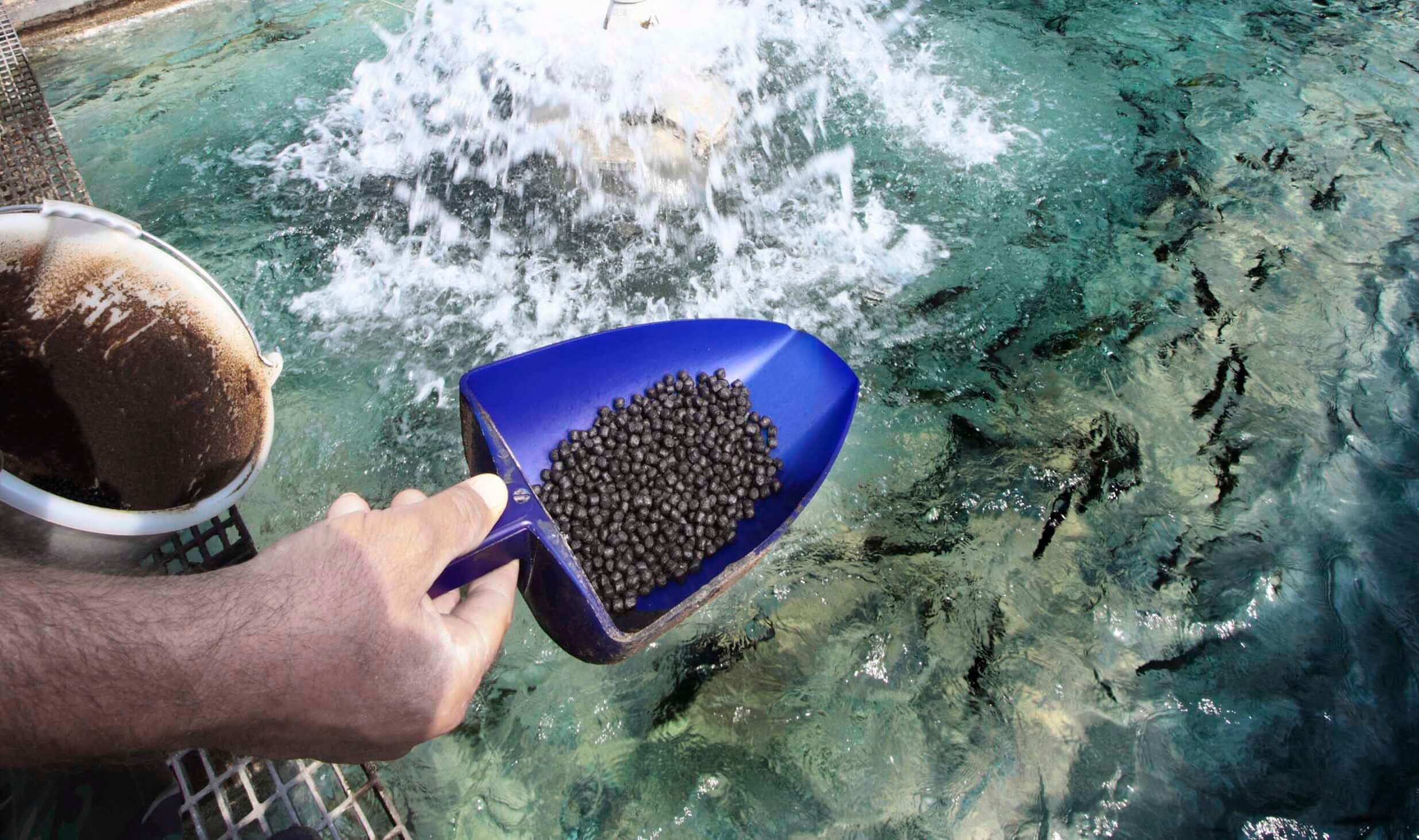
The omega-3 canola oil, which is extracted from rape plants that have been genetically modified to produce the key fatty acid DHA, is produced by Nuseed in Australia. Analysis by NIFES found no DNA traces of genetically-modified rapeseed, giving hope that it might not be classed as a GM product.

Nofima is currently undertaking the trials on salmon in both freshwater and seawater facilities on land, in which increasing amounts of the canola oil were added to the feed. A parallel trial has been carried out on fry in warmer water in Australia, to test the omega-3 sources at different growth rates, to detect any effects that occur with rapid growth in early life.

The salmon given feed containing oil from the GM crop were analysed for growth, composition and health and had the same fillet omega-3 levels as salmon fed with fish oil. Gene expression analyses showed that effects depended on the amount of oil, not the type of oil.

The GLP aggregated and excerpted this article to reflect the diversity of news, opinion and analysis. Read full, original post: Promising feed trials for GM canola

Glyphosate, Monsanto and Europe: How science and reason almost lost out to hysteria and emotion

monsanto x

The glyphosate saga is a fascinating case study in how easily politics can derail science. In watching the glyphosate issue evolve I found myself gradually becoming more and more aghast at how quickly and thoughtlessly evidence-based policymaking was thrown away in European centers of power.

I don’t want to over-hype it, but it felt a little like mob rule. You can still burn the witch in Europe — if the witch is called Monsanto.  Over glyphosate Monsanto was stitched up good and proper, as we say in England.

But no one feels comfortable being in the position of defending a company with a reputation as terrible as Monsanto, so despite the obvious perversion of both science and natural justice, the activists very nearly got away with it.

All in all this was a textbook case of how science and reason so easily lose out to hysteria and emotion, especially when you can find a good pantomime villain. This was never about glyphosate as a chemical. It was about glyphosate as a symbol, a symbol for opposition to Monsanto, pesticides, GMOs and a modern farming system which populist factions of different political stripes, led by the Greens, now love to hate.

The GLP aggregated and excerpted this article to reflect the diversity of news, opinion and analysis. Read full, original post: Europe still burns witches — if they’re named Monsanto

Insecticide resistance threatens to derail malaria control in Africa

MEDEX TBVietnam CROP original original

The largest genetic study of mosquitoes has found their ability to resist insecticides is evolving rapidly and spreading across Africa, putting millions of people at higher risk of contracting malaria.

British scientists who led the work said mosquitoes’ growing resistance to control tools such as insecticide-treated bed nets and insecticide spraying, which have helped cut malaria cases since 2000, now threatens “to derail malaria control” in Africa.

[R]esearchers sequenced the DNA of 765 wild Anopheles mosquitoes taken from 15 locations across eight African countries. Their work, published in the journal Nature on [November 29], created the largest data resource on natural genetic variation for any species of insect.

Analyzing the data, the scientists found that the Anopheles gambiae mosquitoes were extremely genetically diverse compared with most other animal species. This high genetic diversity enables rapid evolution, they said, and helps to explain how mosquitoes develop insecticide resistance so quickly.

The genome data also showed the rapid evolution insecticide resistance appeared to be due to many previously unknown genetic variants within certain genes.

“Global efforts to tackle malaria through effective vaccines, insecticides and the best drug combinations require urgent, united action by scientists, drug companies, governments and the WHO,” [said immunobiology expert Michael Chew].

The GLP aggregated and excerpted this blog/article to reflect the diversity of news, opinion, and analysis. Read full, original post: Insecticide resistance spreads in Africa, threatens malaria progress

‘New Girl’ is no farm girl: Zooey Deschanel misinforms on organic food, farming

zooey

In Zooey Deschanel’s third “Your Food’s Roots” video, part of a five episode educational series presented by media company Attn:, the host and her guests aim to set the record straight about organic vs. non-organic foods

In the video, the New Girl sitcom star chats about the “difference between organic and not organic,” while Daphne Bradford, a tech educator who teaches local students how to grow organic fruit, makes organic fig jam. … “Organic, you know it’s all you, all original, everything with no pesticides and no artificial this, and grown in the soil that’s really been amended and taken care of,” Bradford explains. One of the most common misconceptions about organic farming is that it doesn’t use pesticides. … The list of pesticides allowed in organic farming is shorter than the list conventional growers use. But substances allowed in organic agriculture aren’t less toxic, nor are they better for the environment or for consumers.

Though organic food is prohibitively expensive for some, Deschanel argues that “growing your own organic produce is actually pretty simple,” and purports to share with viewers how to do it.

The GLP aggregated and excerpted this article to reflect the diversity of news, opinion and analysis. Read full, original post:  Zooey Deschanel Makes Several Glaring Mistakes About Organic Food In Her New Docuseries

Genetic Literacy Project’s Top 6 Stories for the Week – Dec. 4, 2017

GLP Top Thumbnail Dec


  1. EU re-approval of glyphosate herbicide dodges farming economic woes—for now | Andrew Porterfield
  2. Have humans or any of Earth’s creatures stopped evolving? | 
  3. French scientist calls for inquiry into IARC’s ‘misbehavior’ on glyphosate cancer study |  
  4. Viewpoint: Zen Honeycutt’s ‘inexcusable’ attack on orange growers betrays science 
  5. Brain addiction: Why stopping drug use is so difficult
  6. Does air pollution reach the womb, eventually leading to heart disease and shorter lives? | 

To stay up to date on all the news in human and agricultural genetics, subscribe to our daily and weekly email newsletters in the top right corner of this page, and follow us on Facebook and Twitter.

How our autistic ancestors helped shape human evolution

autism
[W]hen we talk about the autism spectrum – we are all “a bit autistic” – and we all fit somewhere along a spectrum of traits. And we know through genetic research that autism and autistic traits have been part of what makes us human for a long time. Research has shown that some key autism genes are part of a shared ape heritage, which predates the “split” that led us along a “human” path.

[A]ncestors with autism played an important role in their social groups through human evolution because of their unique skills and talents. Going back thousands of years, people who displayed autistic traits would not only have been accepted by their societies, but could have been highly respected.

Many people with autism have exceptional memory skills, heightened perception in realms of vision, taste and smell and in some contexts, an enhanced understanding of natural systems such as animal behaviour. And the incorporation of some of these skills into a community would have played a vital role in the development of specialists.

[I]t’s no wonder that including autism [in our evolutionary past] – something which is still seen as a “disorder” by some – is considered to be controversial.

The GLP aggregated and excerpted this blog/article to reflect the diversity of news, opinion, and analysis. Read full, original post: How our autistic ancestors played an important role in human evolution

Mom was right: Teenagers’ brains can’t process what’s important and what’s not

ada a acea d a f c c XL e

Adults are generally pretty good at being able to tell when a situation is worthy of extra time or concentration. Research has found that, when potential rewards or losses are higher, for example, adults will perform better on tasks. But this doesn’t seem to be the case for adolescents.

Catherine Insel, at Harvard University, and her team asked adolescents between the ages of 13 and 20 to play a game while lying in an fMRI brain scanner. In some rounds of the game, participants could earn 20 cents for a correct response, while an incorrect one would cost them 10 cents. But in rounds with higher stakes, correct responses were worth a dollar, and wrong answers lost the participants 50 cents.

The team found that while the older volunteers performed better in the high stakes rounds, the younger ones didn’t – their performance didn’t change in line with whether the stakes were low or high. And the older the volunteers were, the more improved their performance was. “Interestingly, the ability to adjust performance according to the stakes at play emerged gradually across adolescence,” says Insel.

The findings explain why some adolescents are so nonchalant when it comes to risky behaviours, says Kathrin Cohen Kadosh, at the University of Surrey, UK.

The GLP aggregated and excerpted this blog/article to reflect the diversity of news, opinion, and analysis. Read full, original post: Teenage brains can’t tell what’s important and what isn’t

Viewpoint: How to choose the right consumer genetics test to map your family tree

test

Every so often, someone asks me which [genetics] test I recommend. And my answer boils down to one question: What do you want to get out of the test? Let’s compare three direct-to-consumer tests: AncestryDNA, 23andMe, and National Geographic’s Geno 2.0 test.

If you’re looking at this test as a science experiment, using it as a way to get involved in research, or viewing it as a chance to learn about your genetic health risks, then [23andMe’s test] is a fit for you.

If the idea of tracing your family tree through the generations and connecting with distant relatives gets you excited — but you’re less interested in health information — [AncestryDNA is] the test for you.

For what you get, the [Geno 2.0] doesn’t have nearly the range that other ancestry tests have. And when not on sale, it’s more expensive. National Geographic, however, says the revenue funds nonprofit “conservation, exploration, research, and education” efforts.

Each company has its own methods, algorithms, and data, which is why the reports differ. Because the three main direct-to-consumer genetics tests are around the same price, you should go with the one that will answer your most pressing questions.

The GLP aggregated and excerpted this blog/article to reflect the diversity of news, opinion, and analysis. Read full, original post: I’ve taken AncestryDNA, 23andMe, and National Geographic genetics tests — here’s how to choose one to try

GMO sugar beets help farmers reduce herbicide, water and fuel use, improve soil

image

You could say sugar-beet sugar runs through the blood of Luke Adams.

“I grew up a sugar beet farmer,” Adams said. “My parents grew sugar beets, so I’m second generation sugar beet farmer, third generation farmer here in Idaho.

He said he has seen the changes in growing firsthand, from irrigation to GPS harvesting. It’s all helped his job get easier.

But nothing has helped quite like the genetically modified seed. Adams said growers are spraying less herbicides, using less water and diesel, and they have better soil.

On top of all that they have a lot more beets. Before genetically modified seeds, growers would yield anywhere from 25 to 30 tons of beets per acre. Now it’s closer to 45 tons per acre.

“Still with real high sugar content,” Adams said.

“They went from having to spend an inordinate amount of time and effort and resources controlling weeds in sugar beets to it becoming very simple for them,” [said Don Morishita, a weed scientist at the University of Idaho].

The GLP aggregated and excerpted this article to reflect the diversity of news, opinion and analysis. Read full, original post: How genetically engineered sugar beets impact the farmer, the factory and you

‘Unmitigated disaster’: South Australian farmers enraged by government’s GMO crop ban

Co W yUkAQ CY

South Australia’s farmers are unlikely to have access to genetically modified (GM) crops until at least 2025 after a bill to extend the moratorium on GM crops, put forward by the Greens, passed the SA Upper House by a single vote….

It is expected proponents of the ban will now have enough numbers to get a similar motion through the Lower House, which will see a six year extension of the GM moratorium, meaning South Australia will continue to be the only mainland state that bans the use of GM crops.

South Australia’s grains industry leaders are furious at the decision.

“This is an unmitigated disaster for South Australian agriculture and grain growers,” said Wade Dabinett, Grain Producers South Australia.

“We have had this moratorium in place for ten years – how is it that we have a piece of policy in place where there has not been one piece of work done that provides data to justify why it should be in place,” Mr Dabinett said.

“Other Government bodies, such as the Productivity Commission have said the moratorium need to go, citing a number of factors, yet the SA Government has moved to extend the moratorium.”

The GLP aggregated and excerpted this article to reflect the diversity of news, opinion and analysis. Read full, original post: SA Government move on genetically modified crops enrages grain growing community

What foods have pesticide residues? When do the chemical traces pose dangers?

Screen Shot at AM

What sounds more appealing, a serving of alfalfa sprouts with a trace of glyphosate or some fresh, organic castor beans with a touch of natural ricin? Or maybe a cup of raw, organic almonds that may have a hint of naturally occurring cyanide? Before answering, consider the potency and effects of each toxin and the quantity that ends up on your plate.

“Bad” molecules are not created equal and biological effects always come down to one factor: dosage—that’s what decides whether a compound actually produces toxic effects in the short-term, or long-term effects, such as cancer.

The example of castor beans is extreme, since ricin is one of the most potent naturally occurring poisons, but it illustrates a point. The Washington, DC-based lobbying organization known as the Environmental Working Group (EWG) highlighted a published report concerning glyphosate use, which concluded the following:

Genetically engineered herbicide-tolerant crops now account for about 56% of global glyphosate use. In the U.S., no pesticide has come remotely close to such intensive and widespread use. This is likely the case globally, but published global pesticide use data are sparse. Glyphosate will likely remain the most widely applied pesticide worldwide for years to come, and interest will grow in quantifying ecological and human health impacts. Accurate, accessible time-series data on glyphosate use will accelerate research progress.
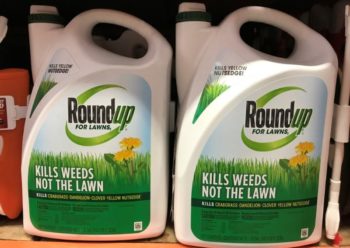
roundup xCommonly known as Roundup, glyphosate has been a target of GM critics, who have blamed the compound for a plethora of ailments, from cancer, to autism, gluten sensitivity, and ‘leaky gut’ syndrome, based mostly on correlation graphs in fringe journals. In 2015, the World Health Organization’s International Agency for Research on Cancer (IARC) classified glyphosate as “probably carcinogenic”, but various scientific and professional organizations have questioned the quality of the studies that IARC had used in its evaluation. In October 2015, the United States Environmental Protection Agency (EPA) criticized IARC for using incomplete data, and concluded that glyphosate is safe the way it is currently used.

Glyphosate is an inhibitor of the enzyme 5-enolpyruvyl-shikimate synthase (EPSPS). Plants and some microorganisms use EPSPS in the synthesis of the aromatic amino acids: tryptophan, phenylalanine, and tyrosine. Animals don’t have EPSPS, which is why tryptophan and phenylalanine are essential (we need them in the diet) for us (tyrosine is not essential, because we can make it from phenylalanine). But the lack of EPSPS also means that glyphosate does not interfere with protein synthesis in our cells, and this specificity is what makes glyphosate useful as an herbicide.

As for concerns that glyphosate could have more chronic effects by affecting EPSPS in gut bacteria, or affecting human cells through other mechanisms of action, this has to be considered in terms of quantities of the herbicide that actually ends up on people’s plates. The EWG article correctly reports that usage of glyphosate has increased substantially, but the Environmental Projection Agency (EPA) has set limits—limits that err on the side of safety (one tenth the quantity of a harmful dose of a substance is permitted).

It may be significant therefore that EWG has ranked several foods in terms of being dirty, or contaminated, with pesticides as follows: Strawberries, Apples, Nectarines, Peaches, Celery, Grapes, Cherries, Spinach, Tomatoes, Bell Peppers, Cherry Tomatoes and Spinach.

dirty dozen xApparently, the ranking is based on concentrations of pesticides detected in these crops, strawberries having the most—as if to imply that more is worse and less is better. In fact, more of a toxic agent IS worse than less—but only the levels being compared are above the threshold of toxicity, which was not the case here. In 2014, in its Pesticide Data Program (PDP), the EPA tested all of the dozen products on EWG’s dirty list. The U.S. Department of Agriculture’s (USDA) Agricultural Marketing Service (AMS) Deputy Administrator, Dr. Ruihong Guo, explained the results:

Each year, the Pesticide Data Program uses rigorous sampling and the most current laboratory methods to test a wide variety of domestic and imported foods.  Again, the resulting data in this year’s report give consumers confidence that the products they buy for their families are safe and wholesome.

The USDA also reported:

The 2014 PDP Annual Summary shows that over 99 percent of the products sampled through PDP had residues below the EPA tolerances. Residues exceeding the tolerance were detected in 0.36 percent of the samples tested.

This work covered all 12 of the so-called “dirty dozen”, suggesting there’s no need to worry about residues of pesticides of any kind in strawberries. Interestingly, the EWG article admits that “you can definitely remove a substantial amount of those surface pesticides through careful washing and light scrubbing”. But, washing aside, does this reasoning on residue levels also apply specifically to glyphosate? One perspective on this comes from looking at how an analysis of glyphosate in wine was handled by one organization.

Sobering or drunken perspectives?

The activist organization Moms Across America organized testing of products, including wine, for evidence that they contain glyphosate. For glyphosate, EPA limit comes out as a certain number or parts per million (ppm). How does this compare with the Moms Across America findings? It turns out that it differs by three orders of magnitude; the brand of wine with the highest levels was a certain 2013 batch of conventional Cabernet Sauvignon, showing glyphosate levels of 18.74 parts per BILLION (ppb).

wine xNow, this was roughly 28 times the level found in a certain brand of organic wine—a difference that the Moms Across America Report placed at center stage, implying that perhaps the organic wine must be less toxic. That might be logical if only the 18.74 ppb level were anything close to the danger level, but the danger level is thousands of times higher, so the factor of 28 between the two brands is not meaningful. Based on these results, when it comes to glyphosate, all of the wines were found to be safe. Unless one drinks an enormous amount of wine—many thousands of bottles—glyphosate is not a health concern, and drinking wine in such quantities raises the issue of toxicity from another chemical, namely alcohol. Wine from any grapes—organically or conventionally grown—is not as toxic as castor beans or raw almonds that have generated significant cyanide levels, but it’s somewhat toxic, and it’s major toxin, alcohol, may not be something that opponents of GM-grapes would like to see drop down to lower levels.

Quite different from glyphosate, alcohol in quantifies that many human beings ingest regularly, has incontrovertible negative effects on human health, including liver disease, heart disease, and several cancers. With respect to the latter disease category, estimates based on studies to date are that 5.8 percent of all cancer deaths are attributable to alcohol, which raises the question of what activist groups will choose as the next product to test for dangerous levels of glyphosate –tobacco perhaps?

David Warmflash is an astrobiologist, physician and science writer. BIO. Follow him on Twitter @CosmicEvolution.