The USDA’s National Organic Program completed more complaint reviews and investigations that it received in 2017. It finished work on 462 reviews and investigations while receiving 379 incoming complaints during the fiscal year 2017 ending last Sept. 30.
…
Organic sales topped $68.8 billion on the steady growth of about 5 percent a year. More than eight out of ten households made organic purchases. And 4.1 million acres out of 915 million acres of U.S. farmland was reportedly dedicated organic production on about 15,000 farms.
However, the National Organic Program’s (NOP) weak controls over organic imports, again came under scrutiny from USDA’s Office of Inspector General, putting the integrity of the USDA organic label at risk. The OIG found produce shipments of all kinds are fumigated at the border with pesticides to prevent pests from entering the U.S. And, a weak import certificate system imposed by NOP in 2012 has not prevented organics for getting the same treatment.
…
“Fraudulent certificates may have been created and used without the knowledge of the operator or the certifying agent named in the certificates,” according to NOP.
“The posting of the fraudulent certificates does not necessarily mean that the named business or certifying agent was involved in illegal activity. If a business named on the fraudulent certificate is certified, its certifying agent, identified in the list of certified operations, can provide additional information and verification to the organic trade.”
A judge has granted Dannon’s motion to dismiss a high-profile false advertising lawsuit alleging shoppers were misled by its ‘all-natural’ claims on dairy products from cows that may have eaten GM feed.
In a complaint against Dannon led in New York last year, plaintiff Polly Podpeskar alleged that reasonable consumers would not expect yogurts labeled ‘all-natural’ to use milk from cows likely fed a diet containing genetically engineered soy or corn.
The case has been watched closely given how widely ‘natural’ claims are used on dairy products from cows that may have consumed GM feed.
…
In its motion to dismiss the case, however, Dannon (now part of DanoneWave) said no reasonable consumer would follow Podpeskar’s “daisy-chained” logic.
…
[It argued:] “The mere consumption of genetically modified food simply cannot affect the genetic makeup of the organism consuming it.”
Moreover, the logic deployed in the lawsuit “has not been adopted by the FDA and has been rejected by both courts and Congress,” argued Dannon, which also noted that federal GMO labeling legislation signed into law last year by President Obama does not extend GMO labeling to products made from milk or meat from animals fed GM feed.
Whether you’re a night owl or a morning lark rising effortlessly each day with the sun, your sleep habits are regulated by circadian rhythms. These internal clocks control just about every aspect of our health, from appetite and sleep to cell division, hormone production and cardiovascular function.
Like many who study the intricacies of circadian biology, I’m optimistic that one day we’ll be able to design drugs that synchronize our cellular clocks. Bosses frowning on tardy arrivals could soon become a thing of the past.
Our internal clocks
Nearly every cell in your body contains a molecular clock. Every 24 hours or so, dedicated clock proteins interact with one another in a slow dance. Over the course of a day, this slow dance results in the timely expression of genes. This controls when particular processes will occur in your body, such as the release of hormones like sleep-promoting melatonin.
Why are heart attacks and strokes two to three times more common in the early morning? Chalk that up to our internal clocks, which coordinate an increase in blood pressure in the morning to help you wake up. Why should teens listen to their parents’ pleas to go to bed? Because human growth hormone is secreted only once a day, linked to sleeping at night.
Nearly every biological function is intimately linked to our internal clocks. Our bodies are so finely tuned to these cycles that disruptions caused by artificial light increase our risk of obesity, chronic inflammatory diseases and cancer.
The timing of meals can also impact your health: When you eat may be more important than what you eat. Several years ago, a study looked at the feeding behavior of mice, which are nocturnal animals. When the mice ate a high-fat diet during their nighttime active phase, they stayed relatively trim. Those who nibbled on the same diet throughout the day and night became morbidly obese. Ongoing studies may soon show how this translates to human eating habits.
What’s more, some 1,000 FDA-approved drugs target genes that are controlled by our internal clocks. That means the time of day that drugs are administered could matter. For example, some cholesterol-fighting statins are most efficient when taken in the evening so they can best hit their target, the HMG-CoA reductase enzyme.
Clock care 101
Our internal clocks are individually encoded, with most people falling in the middle range of a 24-hour cycle, but there are many outliers – including night owls – whose clocks are out of sync.
One in 75 people are predicted to have the “night owl mutation” in clock protein CRY1, delaying sleepiness until the wee hours. Not only does this make it harder for night owls to wake up in the morning, but their longer-than-a-day internal clocks puts them in a perpetual state of jet lag.
For night owls, the sleep cycle is largely beyond their control. But for the rest of us, there are steps we can take to rest easier and improve our health.
The clocks in individual cells are synchronized by the brain. The light that streams into the eye helps the brain’s “master clock” stay in harmony with the day/night cycle. That’s why, when you travel to another time zone, your internal clock no longer matches up with the solar cycle. It takes about a week to sync up to a new local time.
Bright artificial light at night tells the master clock that it’s still daytime, leading cellular clocks to race to keep up. That’s why seeing too much bright light at night can give you jet lag without going anywhere. One recent study found that simply viewing e-readers at night for a few hours can cause worse sleep and less alertness the next day.
You can minimize disruptions caused by artificial light by practicing good “light hygiene.” Expose yourself to plenty of bright light during the day and minimize your exposure to artificial light after dusk. These steps will help your internal circadian clock stays in sync with the light/dark cycle, promoting good sleep patterns and overall health.
What makes you tick?
As we learn more about how circadian rhythms work, we’ll be better able to design therapeutic treatments that harness life’s natural rhythms.
In my lab, we study the complex molecular mechanisms that govern circadian rhythms. By looking at how CRY1 interacts with other clock proteins, we hope to understand how inherited mutations can wreak havoc on circadian rhythms. The night owl mutation in CRY1 appears to make it grab onto its partner proteins more tightly, like a bad dance partner who doesn’t know when to move on. When CRY1 doesn’t release its partner with the right timing, it delays the timing of everything controlled by the clock.
If we could understand these mechanisms better, it would set the stage for new drugs that could bring relief to a significant portion of the population. Perhaps we could shorten night owls’ internal clocks back to about 24 hours, helping them go to sleep at a “normal” time.
Given the complicated nature of biological timekeeping, there are likely many more genes that influence circadian timing. Imagine tailoring the timing of dosages to each patient’s circadian cycle, maximizing a medication’s impact while minimizing exposure to side effects. Picture patients checking their watch before popping a pill to treat high blood pressure or lower cholesterol. Ideally, one day our Fitbit-type devices will monitor our circadian rhythms, giving us precise real-time measures of our biological functions.
This may sound far-fetched, but it’s not that far off. Scientists are now searching for biomarkers that could be measured in blood to figure out internal clock timing.
Carrie L. Partch is an Associate Professor of Physical & Biological Sciences, at the University of California, Santa Cruz
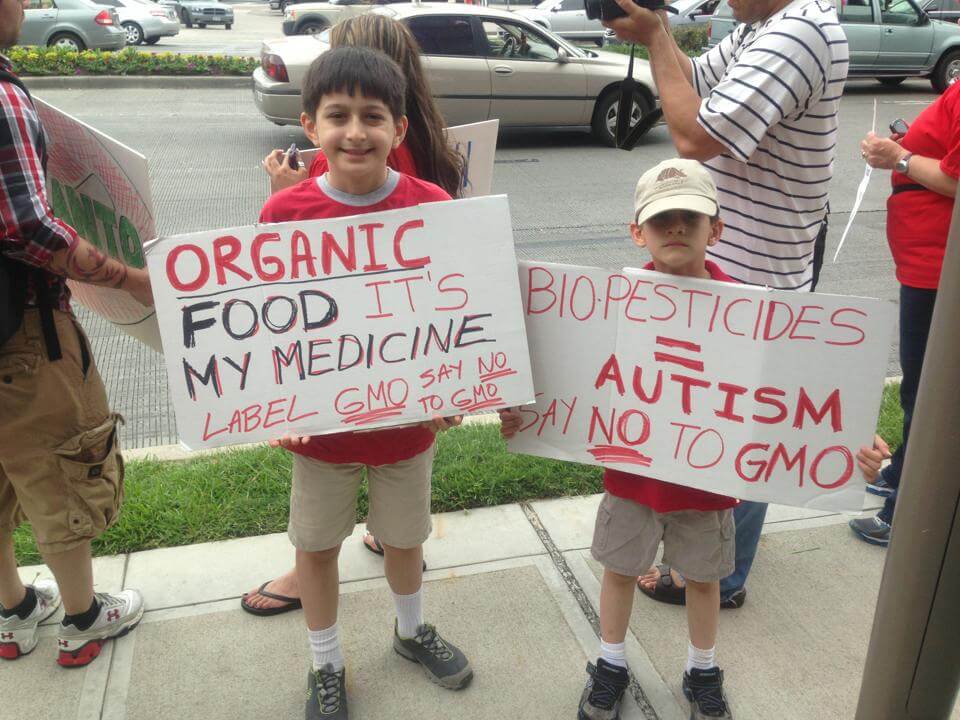
How many times have we heard that healthy living means switching to organic food? Not a day seems to go by when the media isn’t humming with some scandal, risk or public health crisis involving our potential exposure to synthetic chemicals. Autism, leaky gut, obesity, celiac, cancer … all of this is due, apparently, to us finding 7 parts per billion of glyphosate residue in our bread. We are assured that these problems will all magically disappear once we join the “Buy Organic” bandwagon.
But is the organic food industry lobby, a diverse body of interest groups, food companies, foundations and gurus, lying?
Lies, damn lies and marketing!
In a recent blog, I tried to show how the “organic” label is merely used for marketing purposes and has no added value other than to make vulnerable, wealthy people feel better about their consumption. For this blog, I will ignore some of the consequences of succumbing to the organic marketing hype (increased stress organic farming causes on global food security, environmental degradation and public health pressures) and simply ask: As marketing goes on all around us, should we give it much thought if every opportunist slaps the word “organic” on their food as if it were to mean something?
David Zaruk, who writes under the alias The Risk Monger
Well … call me sentimental, but for me, the truth matters and I don’t think we should tolerate zealots who tell lies.
It is not so much of an issue that the entire organic business model is built on a marketing trick, but that their pro-organic message is built on a lie … actually at least twelve lies … often repeated and spread without remorse or reflection. Activists in the organic food industry lobby have made a career out of lying about the benefits of their organic label (or lying about the risks of eating conventional food).
The organic activists and operators lie in the morning, they lie at lunch, they’re lying straight through the afternoon and into the evening. These little shits probably lie in their sleep, and the next morning they get up and they tell these lies again. They are paid to lie and probably are no longer aware of it. When a court of law tells them to stop lying, they simply move on and tell lies somewhere else.
I find that behaviour morally reprehensible, because:
the organic food industry lobbyists are telling these lies to scare consumers (and pay good money for lower quality food);
these lies make farmers who work to supply safe abundant food look evil;
these lies paint university plant biologists who engage with the public as corporate shills;
these lies destroy the public trust in our regulatory system and safety in the food chain.
Simply put, these habitual lies harm all that is good about science and the progress it has made in saving lives with agri-technology.
This summer several readers on social media contacted me expressing how fed up they were with the rampant spreading of so many lies about conventional farming. Members of their families and friends were sharing posts on social media based on pure lies. They wondered whether there was a good, easy-to-read resource in which to refer these innocent retweeters in order to counteract the damage of the pro-organic slur campaigns.
Consider these twelve common lies about pesticides as my modest contribution.
Lie #1: Conventional farmers don’t care about their soil; only organic farmers do
All farmers care about the quality of their soil and work to preserve it. During a Voice of Farmers event I had organised last year, Farmer Olly Harrison explained how it had taken a thousand years for his soil to reach its present state, and he was not going to risk losing it with poor soil management practices. That is why Farmer Olly and millions of other conventional farmers are practicing reduced or zero-till farming to protect the soil. Conservation agriculture is defining a movement led by farmers seeking the best means to not only protect soil from degradation, but also to improve it.
No-till farming and complex cover crop applications have succeeded with the use of herbicides like glyphosate, allowing farmers to terminate cover crops and drill seeds without disturbing the soil. During a tour of a Conservation Agriculture farm in the UK, I learnt how multiple cover crops can feed nutrients and aerate soil while preserving moisture and biota. I know first-hand from my childhood how farmers are always working to develop better techniques, and agri-tech tools available today, like glyphosate, are allowing farmers to take soil preservation to a higher level.
Conventional farmers care just as much (or possibly more) as organic farmers about the quality of their soil
Organic farmers, without the use of herbicides, are restricted from efficient cover cropping and soil nutrient management. Often they have to till the fields to reduce weeds or terminate cover crops. This not only leads to an increase in CO2 emissions (released from soil and tractors), but also reduces moisture, disturbs soil biota and leads to an increase of soil erosion (from wind and water runoff). Many one-time organic farmers have contacted me saying they were forced to decertify from organic after seeing the consequences to their land from soil erosion. Other non-herbicidal techniques they have tried, like flame weeding or continuous matting have proven to be less effective and anything but sustainable.
I find it obscene that the organic lobby not only spreads the lie that only organic farmers are concerned about their soil, but that they are succeeding in their efforts to ban glyphosate and make true soil protection through conservation agriculture practices much more difficult.
Lie #2: Conventional farmers douse or drench their produce in pesticides
We have to be aware of the scaremongering vocabulary used by activists and pro-organic lobbyists – their arguments are emotion-laden rather than fact-based so words like contamination, toxic or poison take on non-scientific lives of their own. One of the most offensive images activists present is that our food is doused or drenched in pesticides – that chemicals are literally dripping off our produce on the shelves.
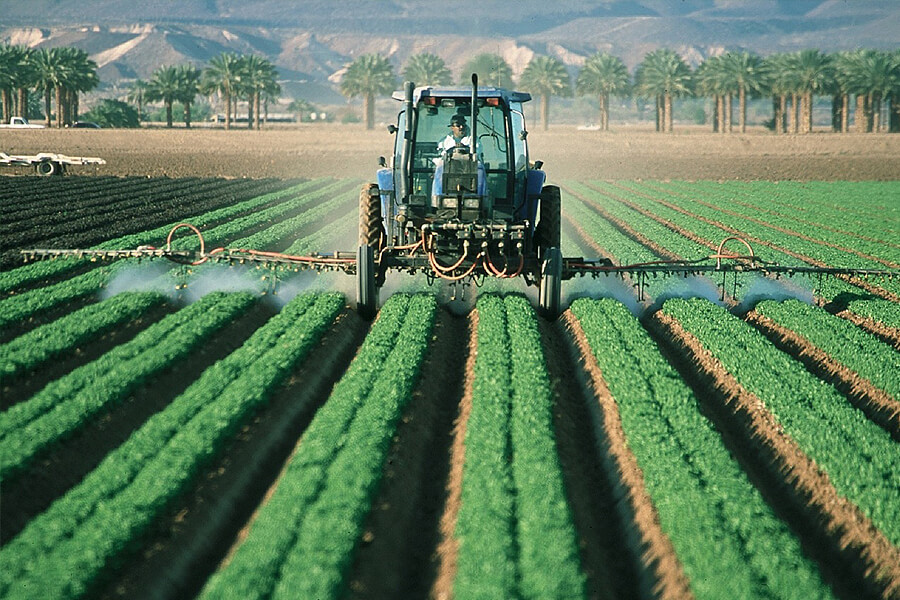
I am actually impressed at how low the level of pesticides applied on our farms has become. This fiction that we are swimming in glyphosate boggles the brain. To treat an acre of farmland, you would need the equivalent of two soda cans of herbicides (most of the spray is water). But when opportunistic liars use words like drenched or doused, it is easy to imagine how vulnerable people without technical knowledge would react.
Farmers and plant biologists are finding ways to further reduce the pesticide dose levels through better spray nozzle technologies (on our farm in Canada in the 1970s, we used to have a high-pressure spray gun that would knock me off my feet), precision farming and seed treatments that avoid foliar spraying entirely. The NGOs are trying to ban seed treatments as well!
Not good enough! Activists still spread lies about how our food is drenched, doused and dripping chemicals out of factory farms and industrial agriculture. Using colourful language that misleads and creates fear is, in my books, lying.
Lie #3: Regulators are in the pocket of big industry and don’t even check if pesticides are safe
“Exist to Discredit” organisations like Corporate Europe Observatory or US Right to Know have no scientific or research credentials but rather try to undermine trust in authorities through ad hominem attacks on scientists or administrators who had, at any point in their career, been involved in projects that had engaged industry. These wolves do not read registration documents or evaluate the quality of the science behind government authorisations (that involves too many words and is too “sciency”), but rather trawl Google for evidence of scientists’ links with industry. That a scientist may have advised industry or even been employed by a company a decade ago does not discredit his or her present work or imply that the regulators are in the pocket of corporations (no matter how many times you repeat it).
As for the claim that regulators do not check if pesticides are safe – this assault on the public trust of authorities is as malicious as it is naïve. Crop protection companies need to submit thousands of pages of data (usually over a period of around ten years) in order to register a new pesticide on the market and then must meet strict compliance demands and requests for further data to keep products on the market.
Corporate Europe Observatory, who revel in claiming companies don’t provide data, were granted access to thousands of pages of research on glyphosate submitted to EFSA, only to then cry out that there was too much and they couldn’t machine read the documents or use Google to find the few ‘gotchya’ parts. The hypocrites never came back with their own evaluation on the state of industry compliance but continue to feed the “we just don’t have data” lie.
Lie #4: Organic farmers do not use pesticides or if they do, they are nice and gentle (and they only use a little)
Several years ago, I published a blog that got some attention on social media. I was shocked to see how many people refused to accept that organic produce also had pesticide residues. A UK study showed that 95% of consumers bought organic because they believed they were not ingesting pesticides. The organic lobby had done a good job making consumers afraid of conventionally farmed produce, but said nothing about their own farmers using toxic substances to protect organic food from insects, weeds and mold.
I identified the pesticide industry’s moral dilemma: if they fought back and played dirty like the organic food industry lobby, they would only make frightened people more afraid of the safety of our food supply; if, however, they stick to their ethical code of conduct and stay silent and respectful of their competition, then the power of social media to spread the organic lobby’s lies would eventually put them out of business and create chaos in global food security. Seeing the offensiveness of the organic lobby lies, from the Coop’s now banned Organic Effect campaign to Chipotle’s sick marketing scam scarecrow video to the use of children in Only Organic’s New MacDonald clip, I decided to bust that bubble of naivety. My Dirty Dozen blog has since opened the debate about what pesticides organic farmers are using, how tested they are and how toxic they are.
Organic products are still sprayed with pesticides, some of which are more dangerous than those used in conventional farming.
What I have noticed is that the organic lobby has been forced to come clean about the reality of their use of pesticides, but like all pathological liars, the bullshit is just spread more finely. First, they claim that organic pesticides are not as toxic as synthetic pesticides. This is ridiculous on so many levels – if a farmer has a pest or a fungus infestation, then they need something toxic and at the sufficient level (or they use more of it). Some organic-approved toxins like copper sulphate or azadirachtin are much more toxic to human health and the environment than synthetic compounds that achieve similar results.
Then the organic lobby try to argue that organic farmers may only apply certain amounts of chemicals in a season and at certain times, but there is no evident enforcement and the exceptions are so huge as to make this an honours promise. By the way, conventional farmers also have limits (called maximum residue levels) that are routinely controlled.
Finally, the organic lobby applies a form of categorical ambiguity with many activists denying that some of the nastier chemicals (rotenone, nicotine sulphate) are permitted, but then the lobby does not have a clear international list. Rather they will argue that this substance is not allowed for organic farming unless you are growing this or that produce in certain regions.
By creating ambiguity, I suppose you are not actually lying … you are just intentionally avoiding the need to be honest! Bottom line is that the organic food industry lobby has done its best to stop regulations on organic food. IFOAM attempted to scuttle the review of the EU Organic Food regulation – it is better not to talk about how organic should be regulated.
Lie #5: Growing food naturally is always better and more sustainable
Not everything natural is good. Ebola is natural. So is E. coli.
A recent study by the German BfR on public perceptions of risks conclude that people are much more concerned about risks from synthetic substances than natural ones. Our narrative today is built on the assumption that nature does things properly (by design?), and humanity, in all its imperfections, makes a total mess of any interventions it may attempt on nature (OK, never mind things like medicine, vaccines, shelter, food processing, transportation …). So only farming according to nature’s plan should be allowed. I have been told many times on social media that we have a lot we can learn from the Amish!
This, of course, is religion and not science (no matter how much agroecologists pretend to wear white coats). A scientist will look at all possible solutions to a problem and arrive at the most practical, efficient means. A religious person starts with a law or set of restrictions, and works from that. So anyone saying that all food must be grown using only natural inputs (fertilisers, pesticides, seeds…) is limiting the options for more efficient and sustainable agriculture.
We can see so many ridiculously unsustainable measures that the organic lobby prescribes in order to honour this religious, naturopathic taboo:
health and environmental consequences of opting for copper sulphate instead of more benign synthetic alternatives;
countless hectares of productive land wasted to grow chrysanthemums to produce natural-based pyrethrum pesticides when synthetic equivalents would suffice;
wasted opportunity of the organic lobby rejecting the benefits of new plant breeding techniques which could increase food yields without pesticides;
soil erosion and increased CO2 emissions from repeated tillage for organic farming weed control when it is evident that conservation agriculture with herbicides protect soil much more efficiently.
I could go on, and I usually do, but it is safe to say that the religiosity of these naturopaths is far from sustainable. That they promulgate lies and fear about non-natural practices is regrettable and should be treated in the same manner that we consider other dangerous and manipulative cults who lie to maintain dogmatic purity.
Lie #6: You can feed the world without agri-tech
There are so many weak manipulations to this wishful thinking. My favourite is that food waste is so substantial that we could feed the world even with 40% lower organic agricultural output if we just stopped wasting food. The logic behind this fiction is that food waste is simply that inexpensive slimy head of lettuce I carelessly left at the bottom of my fridge. Depending on the region though, around half of fruit and vegetable food waste is pre-consumer waste – food left in the fields. Much of it grew in a spoiled state that would not survive the trip to market.
If we were to switch to organic, with the higher prevalence for insect and fungal deformities, do we seriously think this waste-free food of the future will have a longer shelf-life? To the contrary, without the technologies used in food packaging and preservation, in the ideal organic world, we could expect both lower food production and higher waste rates. Sweet!
Agroecologists argue that their perfect world would produce higher nutritional values and better yields but to get there, first we need to abandon our present agricultural practices. Spoken like a true preacher! Without data, an idealist can provide all sorts of promises, but hope has never put food on my table. For agroecology to even feed its farming practitioners, an enormous amount of subsidies would be required.
Then there are the urban roof-gardens and window box farmers. These are warm, educational and provide for nice feel-good stories in The Ecologist or Mother Jones, but outside of a few side salads for local communities, I don’t see the prospect of feeding the world in this manner. What it does do is convince the innocent that farming without agri-tech is easy (Look at my window-box – no weeds!).
To be honest, I have to admit there are two ways we can feed the world without agri-tech. First, we could force the global population to adopt a vegan diet. As soy yields would collapse, vegans would have to compromise and allow for the consumption of insects (preferably genetically modified for protein enrichment and higher growth rates). As well, and there are Neo-Malthusian groups seriously looking into this, we would need to exercise a radical global depopulation process (three billion sounds like a nice benchmark). Perhaps as we will all become protein deficient (really? Not even cheese?), birth rates will decline naturally, but that will likely not be fast enough. A certain number of global famines will need to be tolerated.
There, see! Whoever said the Risk-Monger didn’t provide proactive solutions? Whom do we throw off the planet first? (Definitely not those heroic vegans!)
Lie #7: Integrated Pest Management excludes the use of pesticides
Any farmer will tell you that they would prefer not to use pesticides – it costs money, takes time and entails risks. Integrated Pest Management (IPM) is a call for farmers to try different measures in dealing with pest outbreaks. Insecticides are one tool in the farmers’ toolbox and as research continues to improve on other measures, it is hoped that pest outbreaks will diminish and reduce the need for insecticides.
We have to be vigilant, though, against this bias that anything is better than insecticides or that IPM’s goal is to move to organic farming. Recently introducing nematodes were recommended as an alternative for a certain pest treatment until it was discovered that these nematodes were infecting and hoovering up wintering bumblebee nests. I would rather see a wider use of neonicotinoids than to adopt this organic farming practice into IPM.
Lie #8: The over-reliance on herbicides is leading to an explosion of super-weeds
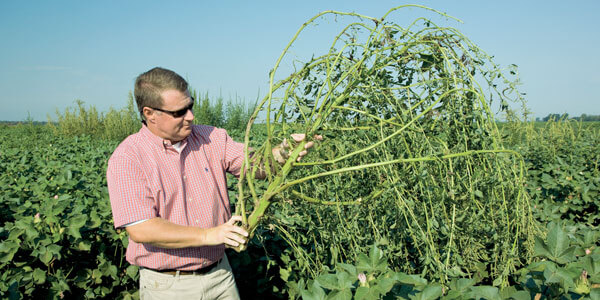
Let’s start with the obvious: organic farming leads to an explosion of super-weeds. There have been recent cases in the US of authorities coming in and applying herbicides on organic farms where endemic weed infestations were spreading to neighbouring farms. Organic lobbyists like to cry foul (once again, that the authorities are in the pocket of the chemical industry), but this is the moral equivalent of the irresponsible parent bringing a baby with a highly contagious virus to a crowded creche. Keeping weeds under control is a serious business for farmers – if you lose to the weeds, you lose the land (no matter how much activist stirrers like Vandana Shiva praise super-weeds like amaranth).
The reality is that nature is one nasty beast and like the problem with antibiotic resistance, weeds evolve and some are showing signs of resisting existing pesticides. That does not mean that we should ban herbicides like glyphosate but farmers are working on finding a balance between different types of chemicals and other weed control strategies. What would be helpful would be to have an openness to authorising more herbicides (but that so ain’t gonna happen in our present European chemophobic, hazard-based regulatory climate).
The problem is not as urgent as the Chicken Littles portend. Almost 15 years ago, Marion Nestle had predicted an immanent super-weed Armageddon. To the contrary, we should marvel that, after four decades, glyphosate still maintains such a high efficiency at such low doses with very low toxicity.
The organic lobbyists spreading these super-weed lies provide no viable alternatives. Smaller farms, mulching and more hand weeding are not credible solutions. Unless we get millions of children back into the fields during the summer “weeding” vacations or change our attitudes towards immigration, lower the minimum wage and relax labor standards, these alternatives are sheer nonsense. Some weeds might be nice in a salad, but these cosmopolitan zealots have no idea what the consequences of their lies about super-weeds would entail.
More organic will mean more weed issues.
Lie #9: Pesticide drift is a major issue
Farmers know full well never to spray in windy conditions for the obvious reasons of loss of efficiency, cost and the remote possibility of drift. Couple that with the developments in nozzle precision and research into precision farming and it is clear that farming practices are moving towards using less pesticide volumes locally targeted.
Aerial pesticide spraying was banned in the EU in 2009.
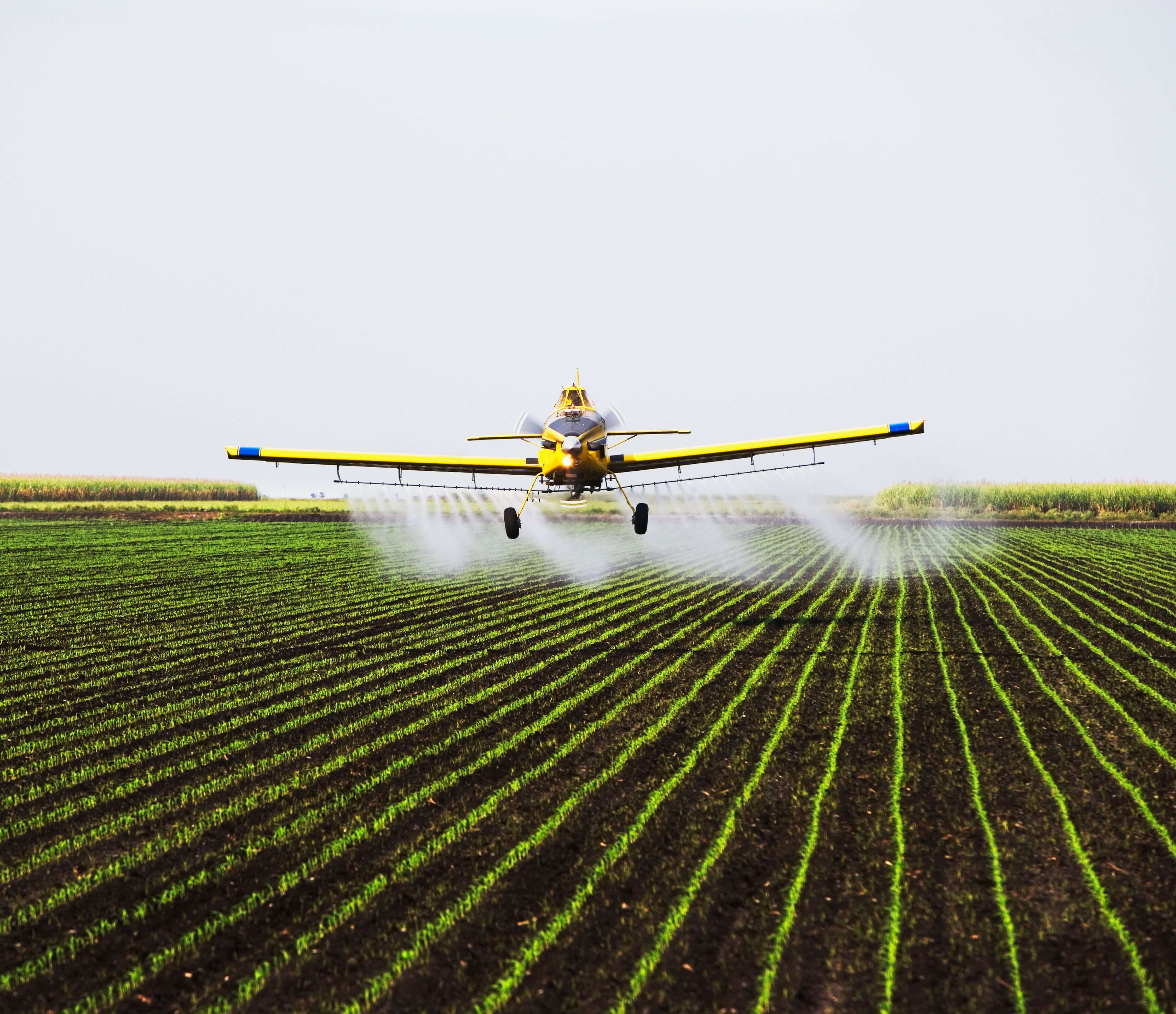
Organic lobbyists love to present an image of aerial spraying (crop dusting) to raise alarm bells. These liars know full-well that aerial spraying is banned in the EU.
The recent claims of dicamba drift in the US and potential volatilisation have sparked debate on contributing factors and may require further training on mitigating procedures during application. The same issues of crop injury arose when glyphosate was first introduced. Meanwhile, the activists just maliciously label it “drift” and are sharpening their knives for a regulatory assault on dicamba post-glyphosate.
Lie #10: Our present agricultural model was built on the need to reapportion toxic chemicals after WWII
This is one of the more insidious associations that anti-chemical activists try to build – that a farmer spraying his crop is the moral equivalent to Nazis gassing Jewish Holocaust victims. This reprehensible communication trick was recently amplified when Bayer moved to take over Monsanto. I understand the panic the activists felt when faced with the loss of a money-spinning fear factor like the Big Bad Monsanto Wolf, but reminding us that Bayer was providing chemicals like Zyklon B during the second World War, was, well, disgusting and disgraceful.
For the record, the German Nazi party promoted ecological practices long before those enlightened American NGOs adopted the noble responsibility of saving the world.
Built into the bias of these lies about the re-application of nerve agents on our food is the naïve belief that chemists are incapable of developing new products or discontinuing production of existing chemicals. If this were the case, why weren’t we spreading mustard gas across our fields after World War I? Almost every episode of the recent “GMOs Revealed” lobbumentary repeated this lie that the chemical industry pushed pesticides because they needed a new market after we were forced to stop using them for genocide. This argument makes no sense (and I wish I were making this up) and was only created by malicious opportunists seeking to hurt the good people who grow our food.
The reality is that the post-war world was suffering and there was a concerted effort to increase agricultural production and efficiency as part of the Marshall Plan (after major crop failures in 1946-48). That man developed better fertilisers and found the means to combat locusts, malaria and famine is indeed a dreadful thought. Let’s tell stories of how farmers who use pesticides are modern-day genocidal maniacs instead. Shameless!
Lie #11: Large chemical companies lobby to remove regulations
In the last two decades, Europeans have seen the creation of a new professional class: career regulator (experts who have studied governance and policy in university, go straight into government upon graduation and have a native calling to regulate). In a trust-deficient environment, the benign regulator is presented as the protector of the vulnerable population, while industry, the big bad wolf in this story, is out to stop the regulator, pollute and poison the population for greed and power. What a lovely Hollywood script.
In recent battles against TTIP, activists like Corporate Europe Observatory perpetuated this myth by trying to scare Europeans that a free-trade deal with the United States would allow industry to take governments to court and, gulp, sue them for regulating. The fact that CEO and their cabal attack and take these regulators to court just makes their scaremongering all more hypocritical!
Governments, in the 1980s and 90s used to prefer not to regulate, favouring industry voluntary commitments and own initiatives. So how did we shift into this Nanny-State world of regulatory dragnets on each and every human activity? Well, let’s think out of the box. Could it be possible that big companies adapted to this New World Order and have come to welcome more cumbersome regulations?
Imagine that a small company or lab were to develop a novel new seed or crop protection product which could benefit farmers and better protect the environment. Would they have the resources, manpower and network to sustain a ten-year regulatory odyssey costing millions of euros to register the product (before getting a single penny back)? Of course not. The regulatory maze demanded by the innocent NGOs serves the big corporations just fine, keeping the competitive field down and making innovative upstarts more vulnerable to takeovers. Now, as the regulations are making compliance to keep existing pesticides on the market more costly, even the big corporations are having problems competing (hence the recent wave of consolidation in the pesticide industry). See insights during the Q&A from an event by Bruce Ames and Henry Miller (after 1:38.20).
What companies do not want, clearly, are regulations that create an unfair competitive playing field. More than a decade ago, I was one of those arguing that REACH was going to handcuff the European chemical industry and give advantages to producers outside of the EU. This is one more reason why trade agreements are important and why sad little groups like Corporate Europe Observatory exhibit so little understanding about trade and regulation.
To argue that big companies do not want regulations is not only a lie, it is quite naïve.
Lie #12: Pesticides are a main cause of cancer
Apparently Googling the word “cancer” gives you cancer. Our obsession with exposure to carcinogens (fuelled by the immediacy of social media to multiply and amplify the suffering of cancer victims within our personal networks) has created an opportunity for the organic lobby to perpetuate the lie that synthetic pesticides give you cancer (giving campaigns emotional outlets like photos of child cancer victims). So NGOs are now signing long term contracts with shady labs to test food for chemical residues to produce instant (and instantly profitable) fear campaigns; fly by night hacks are setting up urine test businesses for traces of glyphosate; and, heaven help us all, the detox industry is thriving with the abundance of cancer woo percolating around Facebook and twitter! Indeed that 6ppb of glyphosate residue in your oatmeal may not take any years off your life Carey, but worrying about it certainly will!
The Risk-Monger spent the summer rereading and meming Bruce Ames’ writings on the highly unlikely risks to cancer from synthetic chemicals. I discovered that if you really want to plant a bee in an activist’s bonnet, stick Bruce Ames in his or her face! This highly respected and honoured toxicologist (and founder of the Ames Test which activists abuse to promote chemophobia) is full of vitriol for the activists’ campaigns against synthetic chemicals. Simply put, compared to the natural carcinogens that a plant produces to protect itself, the 0.01% of the synthetic toxins used on plants are insignificant.
There are more toxins found in a single cup of coffee than we would get from the pesticide residues from an entire year of fruit and vegetable consumption. There are in fact 1000+ natural chemicals in that cup of coffee, we have only tested 22 of them and 17 have been found to be carcinogenic to rats (… so don’t feed your rats coffee!).
What upsets Ames most about the cancer fearmongering from these lying activists is that it is doing the opposite. People are eating less fruit and vegetables out of fear, and as organic marketing increases, prices will go up, making the best means to fight cancer (at least five servings of fruit and veg a day) even harder for all but the elitist, smug foodie part of the population to achieve. This is worse than merely lying to promote a lifestyle; this is wilfully harming large parts of our population. Why are these organic lobbyists not thrown in jail for this?
Many in the organic industry lobby may not like that I have called you liars (and cancer-causing thugs). I understand that – you prefer to label industry as lying cancer-causing thugs and don’t think twice about it. If you are offended by this article, it is a good indication that you have a high opinion of yourself and your food choices (and think less of others who would dare confront your choices). In other words, you are a smug elitist.
You might be able to claim that you are innocent or justified in rejecting five or six of my accusations:
maybe you were not the ones likening farmers to Nazis gassing Holocaust victims, but you tolerate them within your tribe;
maybe you know a conventional farmer that does not follow best practices (sure, and no organic farmers cheat?);
maybe you accept that organic farmers also use pesticides, but you don’t correct others who spread that fiction).
Fine, believe what you want about yourselves, but that means you are still openly lying on six or seven other points. Hardly the paradigm of virtue, are you? A bit more self-honesty, a bit more reflection and a lot more humility and then just maybe I’ll stop insulting you!
David Zaruk has been an EU risk and science communications specialist since 2000, active in EU policy events from REACH and SCALE to the Pesticides Directive, from Science in Society questions to the use of the Precautionary Principle. Follow him on Twitter @zaruk
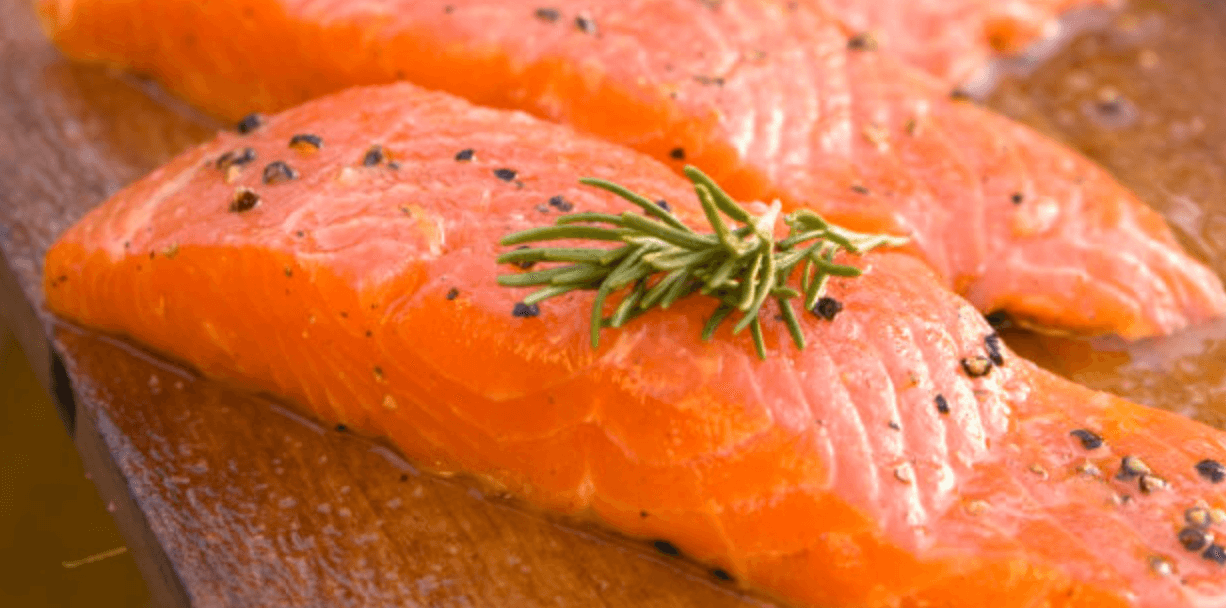
If you love Atlantic salmon, what you are eating is almost certainly farm-raised, despite what the label might say. The mislabeling fraud may be as high as 69%, according to a Time survey.
Many consumers believe they are ‘missing out’ in taste by not consuming wild fish, but more and more salmon lovers accept the fact that we need to buy farm fish to restore the ocean’s bounty because of a history of overfishing. They are focused on the benefits of sustainable fishing and the healthy advantages of salmon—it’s a great source of heart-healthy omega-3 fatty acids. Las Vegas chef Rick Moonen, a champion of sustainability, is one of many high-profile chefs who have switched to farmed salmon.
Which makes the current campaign by some Canadian environmentalists attempting to demonize what is widely considered the most sustainable salmon on the market—a fish genetically tweaked to grow twice as fast with no negative ecological consequences—particularly disturbing. It’s also highlighting the ongoing pitched battle between organic fundamentalists, who proliferate in the old-line environmental movement, and more science-and technology-embracing environmentalists.
Extinction crisis
Atlantic salmon reproduce in the coastal rivers of northeastern North America, then migrate along the Canadian coast and as far north as Greenland. But with only a few thousand fish returning to the rivers of Maine and the Canadian Atlantic provinces every year, these populations are near extinction.
There are a number of sustainable responses to the ongoing crisis. You can add salmon to the rivers. Two months ago, members of the Fundy Salmon Recovery project in New Brunswick began releasing what would end up being 1000 fish. Of the 800 salmon released into the wild the previous year, 16 returned.
“That might not sound like a large number, but 16 fish would total more than multiple years put together on most Inner Bay of Fundy rivers,” said Fundy National Park ecologist Corey Clarke.
Atlantic salmon farms have proliferated, often in the Pacific Northwest or in cages off Norway, Scotland and Chile. Some have been mired in scandal because of poor farming conditions, threats of disease or lax controls.
Much of our salmon is imported from other countries where sustainability regulations are lower. Between 2009-2016, the US imported more than 857,000 metric tons of salmon, most of it of the Atlantic species, brought in by massive planes and often with a high carbon footprint.
Now there is a new solution, that’s both sustainable and safe. And it has anti-biotechnology activists in a dither.
AquaBounty, which has its fish farm in Panama, sold 5 tons of genetically modified salmon into the Canadian food market in a matter of days in June this year. At present, only its limited capacity is holding back sales, but new production facilities are in the pipeline for 2018.
Although the salmon made it through labyrinthal regulatory systems in the US and Canada, it’s not yet sold in the US because it is in a political vise wielded by Senator Lisa Murkowski. She knocked the FDA for approving the fast-growing fish two years ago.
Demonstrating her science bonafides and non-ideological view of the first approved GM fish for sale, Murkowski calls the salmon a “Frankenfish.” She is blocking the final greenlight, demanding the US government issue labeling guidelines before allowing AquaBounty’s salmon into commerce. The Alaska Republican wants to protect sales of Pacific salmon, although experts say the farmed Atlantic and wild harvest Pacific salmon species don’t compete on American plates.
Sustainability advantages
The AquAdvantage Salmon offers a range of sustainability and economic benefits. The GM salmon contains the growth-hormone gene from a Chinook salmon, the largest Pacific salmon species, and a “promoter” sequence of DNA from an antifreeze protein gene from an Ocean Pout. The promoter is the “on switch” that keeps the fish’s cells making growth hormone year-round.
Constant hormone release allows it to grow more quickly—16 to 18 months — half the time as compared to conventional farmed salmon in the ocean, which grows in spurts in the spring and summer months, reaching market sizes in 31 to 36 months.
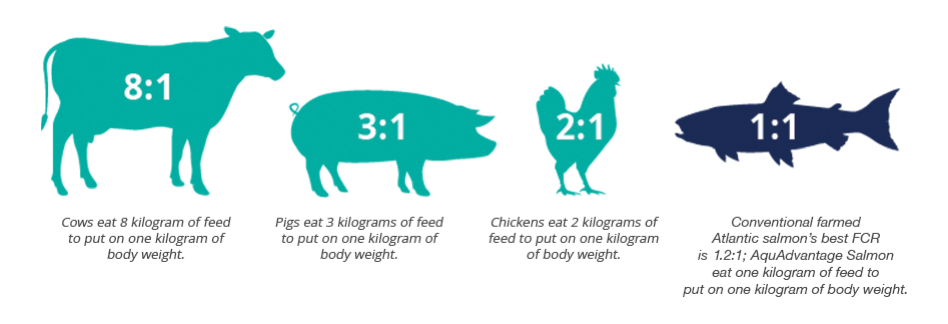
Their faster growth means AquAdvantage salmon also consume 25% less feed in their lifetime than conventionally farmed salmon. Conventionally farmed salmon are fed 1.2 pounds of feed for every pound of salmon that ends up on our dinner plate.
Salmon farming in general is very efficient in developing economically sustainable food in competition with beef, pork and chicken. But, AquaBounty’s version, because it consumes less feed, is off the charts, based on data reviewed by the FDA.
It was developed using a land-based closed-containment system that recycles >99% of the production water and enables optimal production without antibiotics or other chemicals to control disease and parasites.
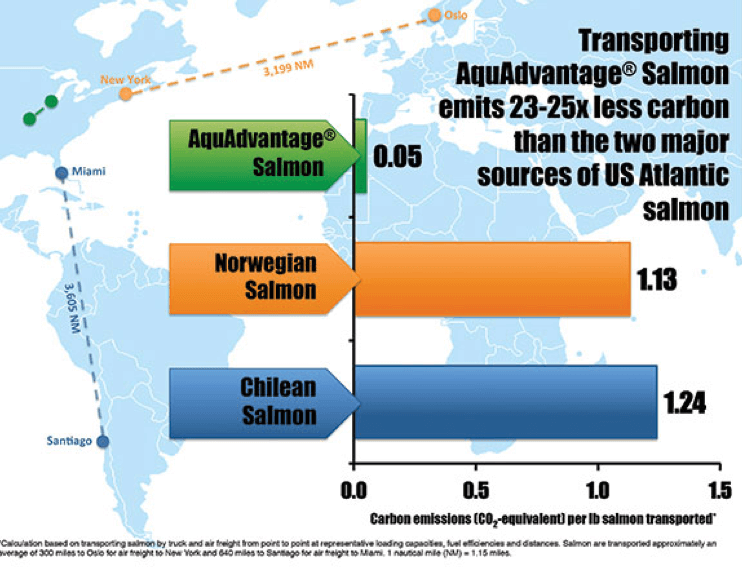
The carbon-release environmental costs of transporting the two major fish-farmed sources of US Atlantic salmon will be cut by as much as 25 times because the salmon can be farmed close to major consumer markets and won’t have to be flown in.
‘Informed choices about what consumers eat’
As the fish winded through the approval process in Canada and the US, anti-GMO lobby groups launched vicious attacks. Food and Water Watch claimed the salmon contains higher levels of a hormone that could cause cancer and has higher allergic potency. Additionally, it detailed its concerns about animal health and the environment, claiming the salmon might escape and impact biodiversity. The US and Canadian government environmental assessments dismiss such claims as exaggerated or outright wrong.
Friends of the Earth has had a long-running campaign to intimidate retailers from offering the salmon for sale, starting as far back as 2013:
The goal is to make sure there is not an available market for genetically engineered seafood. People don’t want it, and markets are going to follow what people want.
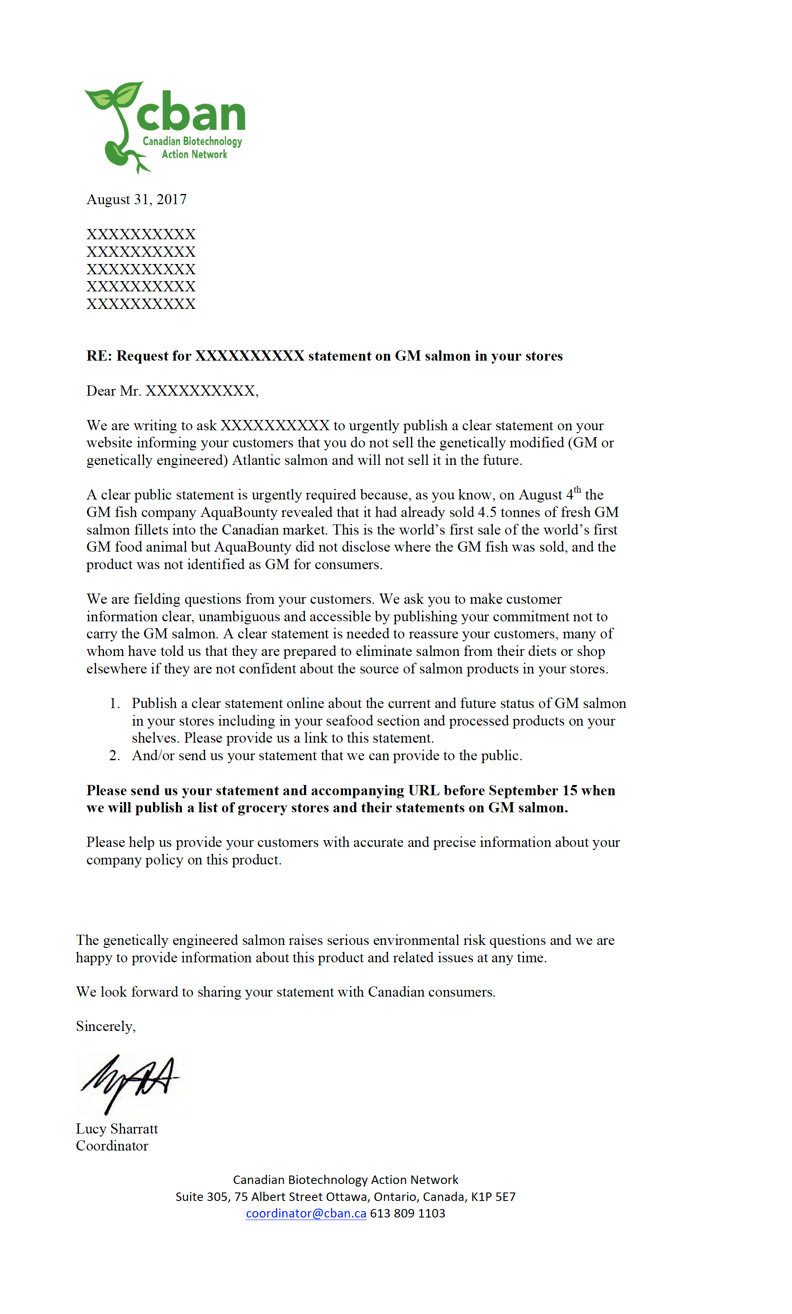
To ensure that they inform consumers about what they should want, FoE has recently teamed with the Canadian Biotechnology Action Network in threatening major Canadian retailers unless they refuse to offer the salmon, and demanding a link to a website statement acquiescing to the demand.
“Click here to see if your grocery store has rejected GM salmon,” CBAN writes. Its website is a collection of scientific misinformation and exaggerated concerns reviewed and rejected over almost two decades of assessments by independent government agencies in two countries. Here is a copy of the demand letter.
CBAN is now separately demanding that all retailers commit to never carrying GM salmon regardless of the proven sustainability benefits. They have organized an international campaign targeting IGA, Costco, Loblaw, Metro and other chains, with the goal of preventing customers in Canada, and eventually the US access to the fish—and killing momentum for global sales. They claim their goal in preventing sales is so consumers can have “informed choices about what they eat.”
The letter finishes with: “Please help us provide your customers with accurate and precise information about your company policy on this product.”
There is a very real threat here: do as we demand by this date or we will publicly shame you online and on social media until you comply with our demands.
Contrary to what the anti-biotech/pro-organic NGOs stated in their press releases, the top food retailers across Canada and the U.S. did not make public statements of their own free will that they have no plans to sell the genetically engineered salmon. Rather, the retailers made a pragmatic business decision to get the NGOs off their backs so that they did not have to deal with the media and public relations issues that would surely follow if they chose to ignore the activist demands, or even pushed back at them.
For example, after an aggressive letter-writing campaign organized by advocacy groups in 2015, COSTCO publicly adopted a policy posted on its website declaring it “does not intend to sell genetically modified salmon.” Now even that is not enough for CBAN, FoE and other fringe groups. “Even if they do not sell GM salmon to date, this could change in the future without a clear policy on it,” CBAN writes in a mass email to it supporters.
The intimidation tactics used by CBAN and FoE work, history shows this time and time again, which is why they use it. Grocers just want to sell groceries and keep customers coming back to their stores. Anything that disrupts this routine is a threat, and can be painlessly dealt with by throwing a financially inconsequential new product under the bus.
What are the real motivations of CBAN and other anti-biotech advocacy groups?
Both CBAN and FoE have been waging campaigns against biotechnology for many years in the guise that they are speaking for consumers. Nothing could be further from the truth. Both NGOs are pro-organic foods and promote the benefits and values of that sector on their websites and in their communications and activism campaigns. If you visit the CBAN website, you can clearly see that they are pro-organic by examining the composition of their members and steering committee.
Similarly, on the FoE website there is a strong statement of support for organic farming. So, when they say that they are speaking for Canadian or American consumers, they are really only speaking for themselves and using “consumer concerns” as a cover to push an agenda.
What consumers are not aware of is that the campaign against AquaBounty specifically and biotechnology generally have nothing to do with food safety, nutrition and transparency, and everything to do with the economics of market shares. Long ago, the organic foods industry realized that to attract customers willing to pay more for their products they had to demarket (or ‘delist’, in grocer terms) the products of their competition, that is, conventional food products and those derived from biotechnology.
Consumers are pawns in a battle for market share being waged by organic food interests and ideological NGOs. AquaBounty is a lightning rod for the attacks by CBAN and FoE because, if AquAdvantage Salmon reaches consumers and they enjoy eating it, the organic movement could suffer a landmark setback—a successful GMO brought to market by a small independent company that brings measurable benefits, economic and environmental, to a large number of people.
It is ironic that CBAN is always clamoring for transparency from government and the biotech sector, but have hidden from consumers the real agenda they are pursuing—to remove all precision bred plant and animal products from grocery stores. Genetically modified products threaten the growth of the organic foods sector because they can be grown using fewer resources in a more environmentally sustainable way. They also cost less than the high-priced organic food products that use more resources and are less environmentally responsible to produce.
Jon Entine, executive director of the Genetic Literacy Project, has been a journalist for more than 40 years, as a writer, network television news producer and author of seven books—four on genetics and risk. BIO. Follow him on Twitter @JonEntine.
Sufferers of malnutrition in the global south could soon find help from an unlikely source: a humble potato, genetically tweaked to provide substantial doses of vitamins A and E, both crucial nutrients for health.
Dubbed the “golden potato,” boosted levels of provitamin A carotenoids — which are found naturally in carrots and sweet potatoes — give the new tuber its yellow-orange flesh, and are converted into vitamin A by digestive enzymes when eaten.
The potato, created in a lab in Italy and studied at Ohio State University, is the most recent staple crop to be genetically transformed into a colorful superfood, joining such creations as antioxidant-rich purple rice and beta-carotene-enhanced golden rice.
…
A single serving of the golden potato could provide up to 42 percent of a child’s recommended daily intake of vitamin A and 34 percent of their recommended vitamin E intake, according to a recent study….
…
“Universities and other research labs regularly put out press releases saying they have developed a GM crop that will help feed people,” [Glenn Davis Stone, a professor of anthropology and environmental studies at Washington University] told Seeker. “Lycopene-enhanced tomatoes, sorghum with more digestible protein, iron-enhanced cassava, vitamin-E-enriched canola, and so on.”
“The biotech industry has shown no interest in commercializing these crops,” he added. “These potatoes will never be commercialized.”
The amount of close and comforting contact that young infants get doesn’t just keep them warm, snug, and loved. A new study says it can actually affect babies at the molecular level, and the effects can last for years. Based on the study, babies who get less physical contact and are more distressed at a young age, end up with changes in molecular processes that affect gene expression.
…
[P]arents of 94 babies were asked to keep diaries of their touching and cuddling habits from five weeks after birth, as well as logging the behaviour of the infants – sleeping, crying, and so on.
Four-and-a-half years later, DNA swabs were taken of the kids to analyse a biochemical modification called DNA methylation.
…
The researchers found DNA methylation differences between “high-contact” children and “low-contact” children at five specific DNA sites, two of which were within genes: one related to the immune system, and one to the metabolic system.
…
Of course it’s well accepted that human touch is good for us and our development in all kinds of ways, but this is the first study to look at how it might be changing the epigenetics of human babies.
[Editor’s note: Read the full study (behind paywall)]
Read full, original post: Babies Who Get More Cuddles Have Their Genetics Changed For Years, Study Shows
Scientists and researchers from major labs are putting their minds and grant dollars into gene editing tools like CRISPR, which enables humans to modify genetic code.
…
A newer biotechnology, gene drives, actually allows scientists to re-program an organism’s genome so that the changes introduced will be propagated in future generations. The promise of these synthetic biology tools is huge for problems such as malaria and invasive species control.
But scientists are also calling for greater thought and reflection as we make changes that could have unforeseen consequences on organisms and ecosystems. Host Frank Stasio talks with Todd Kuiken, senior research scholar for the Genetic Engineering & Society Center at North Carolina State University, about who should have access to gene editing tools and how the international community might continue to regulate them.
In a feature article published in the open access journal eLife, an international team of experts led by Dr Bonnie Wintle and Dr Christian R. Boehm from the Centre for the Study of Existential Risk at the University of Cambridge, capture perspectives of industry, innovators, scholars, and the security community in the UK and US on what they view as the major emerging issues in the field.
…
The report is intended as a summary and launching point for policy makers across a range of sectors to further explore those issues that may be relevant to them.
Among the issues highlighted by the report as being most relevant over the next five years are:
Artificial photosynthesis and carbon capture for producing biofuels
If technical hurdles can be overcome, such developments might contribute to the future adoption of carbon capture systems, and provide sustainable sources of commodity chemicals and fuel.
Enhanced photosynthesis for agricultural productivity
Synthetic biology may hold the key to increasing yields on currently farmed land – and hence helping address food security – by enhancing photosynthesis and reducing pre-harvest losses, as well as reducing post-harvest and post-consumer waste.
Don’t get me wrong. I fully recognise the current need for Irish tillage and grassland farmers to use the herbicide. The fact is there is no viable alternative currently on the market.
But is this not the core issue? Surely our farming leaders should be telling the agrochemical companies that it is time for them to come up with a more bio-friendly glyphosate alternative. And this work must start now.
Simply repeating the mantra that all the scientific evidence points to glyphosate being a totally safe product gets the farming industry so far.
…
The public at large is sceptical about the use of glyphosate. And they are not going to change their minds.
Monsanto first identified the use of glyphosate as a herbicide almost 50 years ago. Since then, an entire revolution in crop management has been rolled-out on the back of GM maize and soya varieties that are glyphosate-tolerant.
…
Taking such a stance now might also make it easier to get the current re-authorisation further extended, should this need to be the case in 2022.
But to take the view that we simply hold what we have now, and not contemplate change for the future, is an act of total folly.
At the end of the day, consumers will ultimately have their way when it comes to the future use of glyphosate. And Irish agriculture should wake up to this reality.
Every living thing on Earth stores the instructions for life as DNA, using the four genetic bases A, G, C, and T. All except one, that is. In the San Diego laboratory of Floyd Romesberg—and at a startup he founded—grow bacteria with an expanded genetic code. They have two more letters, an “unnatural” pair he calls X and Y.
…
The bacterium is termed a “semi-synthetic” organism, since while it harbors an expanded alphabet, the rest of the cell hasn’t been changed. Even so, Peter Carr, a biological engineer at MIT’s Lincoln Laboratory, says it suggests that scientists are only beginning to learn how far life can be redesigned, a concept known as synthetic biology.
“We don’t know what the ultimate limits are on our ability to engineer living systems, and this paper helps show we’re not limited to four bases,” he says. “I think it’s pretty impressive.”
…
The practical payoff of an organism with a bigger genetic alphabet is that it has a bigger vocabulary—it can assemble proteins with components not normally found in nature. That could solve some tricky problems in medicinal chemistry, which is the art of shaping molecules so they do exactly what’s wanted in the body, and nothing that isn’t.
Scientists at the Department of Energy’s Oak Ridge National Laboratory have identified a common set of genes that enable different drought-resistant plants to survive in semi-arid conditions, which could play a significant role in bioengineering and creating energy crops that are tolerant to water deficits.
Plants thrive in drylands by keeping their stomata, or pores, shut during the day to conserve water and open at night to collect carbon dioxide. This form of photosynthesis, known as crassulacean acid metabolism or CAM, has evolved over millions of years, building water-saving characteristics in plants such as Kalanchoë, orchid and pineapple.
…
Scientists are studying a variety of drought-resistant plants to unlock the mystery of CAM photosynthesis. For this work, the ORNL-led team sequenced the genome of Kalanchoë fedtschenkoi, an emerging model for CAM genomics research because of its relatively small genome and amenability to genetic modification.
The team investigated and compared the genomes of K. fedtschenkoi, Phalaenopsis equestris (orchid) and Ananas comosus (pineapple) using ORNL’s Titan supercomputer.
…
They identified 60 genes that exhibited convergent evolution in CAM species, including convergent daytime and nighttime gene expression changes in 54 genes, as well as protein sequence convergence in six genes.
Without even thinking about it, the survival instinct is for ever on, which is why, says Brunel University’s James Carney, a Wellcome Trust fellow in the medical humanities, we are suckers for scary headlines about health. You know the ones: “Processed meat gives you cancer” or “Toxic plant killer could give you Parkinson’s disease.”
…
“One of the problems is that the media takes each of these things as if it comes from nowhere, in a vacuum,” says Aaron E Carroll, pediatrics professor at Indiana University School of Medicine.
…
This month, it was reported that the American Society of Clinical Oncology had warned even light drinking could cause cancer. “Like, oh my God, they just announced alcohol causes cancer,” faux-gushes Carroll. “But that’s just not what happened. The studies they refer to have existed for years. Scaring people sells. People are afraid of cancer, and when they read the news, it’s as if we just figured it out what causes cancer, but it’s not true.” The path to calmly digesting stories of the health bogeymen lies in acquiring basic scientific literacy.
…
Carney points out that the No 1 killer of children in the US is cars, yet people still love cars. When it comes to assessing risk, we need to be less subjective and more statistically savvy.
Salk Institute scientist Joanne Chory, one of the world’s preeminent plant biologists who is now leading the charge to combat global warming with plant-based solutions, has been awarded a 2018 Breakthrough Prize for her pioneering work deciphering how plants optimize their growth, development and cellular structure to transform sunlight into chemical energy.
The prestigious award, founded in 2013 by Silicon Valley luminaries Sergey Brin and Anne Wojcicki, Mark Zuckerberg and Priscilla Chan, and Yuri and Julia Milner, honors top achievements in life sciences, physics and mathematics.
…
Because plants are rooted in the ground, they must constantly adapt their shapes and sizes to an ever-changing environment. Chory has spent more than 25 years deciphering the mechanisms that allow plants to achieve this flexibility in form, pioneering the use of molecular genetics to study how plants respond to their environments and producing major discoveries surrounding how plants sense light and make growth hormones.
“Joanne has had a major influence on the field of plant biology. The breadth of her contributions to our knowledge of the genetics and molecular pathways that govern plant life cannot be overstated—these fundamentally influence all our lives,” says Elizabeth Blackburn, Nobel laureate and president of the Salk Institute.
As a whole, Manhattan’s rats are genetically most similar to those from Western Europe, especially Great Britain and France. They most likely came on ships in the mid-18th century, when New York was still a British colony.
…
When [researcher Matthew] Combs looked closer, distinct rat subpopulations emerged. Manhattan has two genetically distinguishable groups of rats: the uptown rats and the downtown rats, separated by the geographic barrier that is midtown. It’s not that midtown is rat-free—such a notion is inconceivable—but the commercial district lacks the household trash (aka food) and backyards (aka shelter) that rats like. Since rats tend to move only a few blocks in their lifetimes, the uptown rats and downtown rats don’t mix much.
When the researchers drilled down even deeper, they found that different neighborhoods have their own distinct rats. “If you gave us a rat, we could tell whether it came from the West Village or the East Village,” says Combs. “They’re actually unique little rat neighborhoods.” And the boundaries of rat neighborhoods can fit surprisingly well with human ones.
…
The point of all this, ultimately, is to help New York manage its rat problem, which is annoying as well as a genuine public-health hazard due to rat-borne diseases.
Environmentalist groups said on Monday [Dec. 4] that Germany and the European Union had broken the rules when assessing the safety of the weed-killer glyphosate and that they would try to bring legal actions against the institutes involved.
Global 2000 and the Pesticide Action Network (PAN) said they had registered legal complaints with prosecutors in Vienna and Berlin, with lawsuits in France and Italy to follow. It was not clear how long it would take for the complaints to proceed, particularly as one body is pan-European and the other domestic, meaning they would potentially go through different courts.
The European Food Safety Authority (EFSA), one of the institutes named, denied the groups’ allegations that it had improperly approved glyphosphate, which EU member states last week cleared for use for another five years after a heated debate over whether it causes cancer.
The groups said EFSA and Germany’s BfR risk assessment institute had used material in their reports on whether glyphosate was safe without making clear it came from the weed-killer’s developer Monsanto.
In the fall of 2013, Charlotte Lindqvist got a call from a film company making an Animal Planet documentary about the yeti, the mythical apelike creature that roams the Himalayas.
…
Lindqvist said yes because she is a geneticist who studies bears, and the rare Himalayan brown bear is one possible origin of the yeti legend.
…
The results of that unusual collaboration were published Tuesday in the Proceedings of the Royal Society B. Lindqvist and her colleagues used DNA to identify nine “yeti” samples. These include: a thigh bone found by a spiritual healer in a cave that turned out to be from a Tibetan brown bear; hair from a mummified animal in a monastery that turned out to be from a Himalayan brown bear; a tooth from a stuffed animal collected by Nazis in the 1930s that turned out to be from a dog. The rest of the samples turned up five more Tibetan brown bears and an Asian black bear.
…
“When I had to reveal to them that okay, these are bears, I was excited about that because it was my initial motive to get into this,” says Lindqvist. “They obviously were a little disappointed.”
Over the last century there was an incredible rise in the number of seed companies, driven primarily by the profitability of hybrid seeds in regional markets. After the 1980’s, there has been great consolidation in the seed markets, resulting in about a dozen companies selling the vast majority of seeds. The field is dominated by the “Big Six”, several companies that had broad portfolios, that purchased smaller companies in the last decades’ consolidations. The consolidation continues, as large companies are buying each other, concentrating technology and resources in a few corporate hands. Prof. Sylvie Bonny from INRA discusses the concerns and impacts of consolidation, as presented in her recent review in Sustainability.
The Netflix series “Stranger Things,” although terrific, might ditch the clichéd doctor-scientist in charge and get themselves a developmental biologist, stat. The disseminated beast that is invading, sliming, and gobbling the residents of a small Indiana town reminds me of one of my favorite organisms, the cellular slime mold.
Demogorgon
Set in the early 1980s, the story opens with four boys in a basement in Hawkins, Indiana, imagining confronting the demon prince from Dungeons and Dragons, the monstrous Demogorgon. Biking home, Will Byers is abducted by one. It has oozed through a portal beneath a nearby government lab from an alternate universe the kids come to call the Upside Down.
Anyone raised on the horror movies of the 1950s and 1960s, and/or the coming-of-age stories of the 1980s and thereabouts would love this show. It’s the creation of twins Ross and Matt Duffer.
Influences
At first, the series brings to mind Stand By Me, which the actors read for auditions, and The Goonies. But it’s much more.
Will’s frantic mother Joyce (Winona Ryder, Kim from 1990’s Edward Scissorhands) is modeled after the Richard Dreyfus character in Close Encounters of the Third Kind. And Will’s obsessive drawings that mirror the passageways of the Upside Down are akin to Dreyfus’s fashioning in mashed potatoes a model of the Wyoming mountain, Devil’s Tower, that leads him to the aliens.
The Demogorgon echoes 1958’s The Blob, the gut-bursting 1979’s Alien, and it’s mode of communication through crackling phone wires and static-riddled TVs, 1982’s Poltergeist. Sprinkle in some E.T., The Exorcist, and Carrie. But Stranger Things is so imaginative that I can’t readily explain or refute the biology, as I usually can. With Wayward Pines, which the Duffer brothers also wrote, the precedent of a split humanity in H.G. Wells’ The Time Machine was clear. Still, in Stranger Things, the Duffers have an opportunity to showcase some real, amazing science in the next two seasons.
First, a synopsis (I’m omitting a lot). Spoiler warning.
From one Halloween to the next
In season one, Joyce and chief of police Jim Hopper look for Will, as a bald girl in a hospital gown and “011” tattooed on her forearm escapes from the lab and befriends Will’s buddies. Then the walls of Will’s home ooze slime, Eleven’s telekinetic powers emerge, and we meet evil head doctor/scientist Martin Brenner (Matthew Modine). At a party, socially awkward teen Barb vanishes into a swimming pool and is mysteriously eaten, and another teen who is sucked into a tree trunk encounters the beast in the Upside Down but is pulled out. Will communicates intermittently through the aforementioned phones, blinking lights, and letters on the wall, like a Roku from another dimension.
We learn that Eleven’s mother was part of a program modeled after the real CIA’s MKULTRA, which was borne of the anti-Communist paranoia of the 1950s and halted in 1966. MKULTRA entailed “the research and development of chemical, biological, and radiological materials capable of employment in clandestine operations to control human behavior,” according to released documents, and some 200 or so colleges, universities, hospitals, research foundations, prisons, and chemical and pharmaceutical companies partook, using a smorgasbord of mind-altering drugs on unsuspecting participants to investigate how to train people to not spill secrets under torture. Eleven’s mom was treated before she knew she was pregnant, and Eleven was snatched away at birth and brought up in the lab – until she escaped the night Will disappeared.
At the end of season one, the fully formed Demogorgon emerges from a wall at the middle school and envelopes Eleven. Will returns home and seems fine, but in the very last scene, he brushes his teeth, spits into the sink, and a little tadpolly thing slithers down the drain. Uh-oh.
Will is back home in Stranger Things 2, a year later, Halloween time of course. Eleven is back too, but hiding in the woods with the police chief.
Plagued with visions of the Upside Down, Will scribbles crayon drawings that are pieces of a giant map that Joyce frantically tacks to the walls. He envisions the full-fledged enormous “shadow monster,” draws it, and actually sees it emerging from behind the treetops. When the brave boy tries to stand up to the menacing creature, it grows ever larger and then suddenly swooshes tentacles into Will’s every orifice. I screamed. I can’t imagine what little kids watching that did. But not to worry. Stranger Things pingpongs from horror to camp much like Edward Scissorhands and The Stepford Wives.
Soon Will’s friend Dustin hears a noise in a trash can, peeks in, and sees and then scoops up a cute little lizardy creature. Once home Dustin evicts his tortoise from his tank and deposits his find, names him Dart, and feeds him bite-sized 3 Musketeers bars from his Halloween stash. When Dart grows really fast and then eats Dustin’s orange cat, the nougat apparently nutritionally insufficient, it’s clear that the new pet, now escaped, is a baby Demogorgon – like the one that Will spit up at the end of season 1.
Dart has friends! The adolescent Demogorgons communicate telepathically and sprout four limbs, becoming able to hunt, spring, and tear flesh, just like coyotes. Dustin calls them demodogs.
Will’s drawings guide the cops to the monsters’ tunnels beneath a rotting pumpkin field, but when the passageways are torched, Will shrieks in agony. Meanwhile, back at the lab, mellow, white-coated Dr. Sam Owens, Paul Reiser of Aliens, aka “doc,” has replaced Matthew Modine, who died at the end of the first season. (I was thrilled because I sat with Paul at the kids’ table at seders when we were very young; from opposite ends of a large family, we shared aunt Kay and uncle Bernie.)
The battle between the good folks of Hawkins and the Demogorgons escalates, but Eleven seems to save the day. As season 2 sweetly ends, however, the Duffers drop a final scene that suggests otherwise.
The taxonomy of the demogorgon
The CIA-inspired mind control experiments created a shared consciousness between the fetal Eleven and the Demogorgon. But we don’t know whether the doctor/scientists inadvertently created the alternate dimension or it just sprung up beneath the lab, nor how Will became a vessel for the beast, like Reagan in The Exorcist channeling the devil. Dr. Owens fleetingly mentions a virus, but I think he meant it metaphorically, but the characters seem to think he was being literal. I guess we’ll find out in 2018.
As a good biologist, I’ve tried to classify the Demogorgon:
• Anatomy: a hybrid of an amphibian, a mole, a canine of some sort, and Audrey the carnivorous plant from 1986’s Little Shop of Horrors
• Nutrition: Eats orange cats, nougat, and people, but not the bones
• Digestion: Cuts through limestone, like the formic acid-emitting atomic bomb radiation-induced human-eating giant ants in the 1954 film Them and the silicon-based Horta from Star Trek
• Excretion: Emits slime
• Development: From tadpole to juvenile to velociraptor-like adolescent to huge tentacled tree-like shadow monster
• Habitat and portals: The alternate universe of the Upside Down, including within walls, under pumpkin patches, in tree trunks and swimming pools, in backyard forts, in the sky, in the human digestive tract and brain, and throughout vast subterranean labyrinths and caves
• Nervous system: Communicates over landline phones, through lights and cameras and TV screens, through Will Byer’s body and consciousness. Hunts in packs. Plans. Collective consciousness, like the hive mind of Star Trek’sborg continuum.
Clues from the cellular slime mold
The connection among Eleven, Will, and the monsters reminds me of the “social amoeba” cellular slime mold Dictyostelium discoideum, but with interspecies communication. Consider its life cycle.
“Dicty” lives as single cells in rotting logs, happily eating bacteria. When the food’s gone, the stressed cells emit the biochemical signaling molecule cAMP (cyclic adenosine monophosphate) and 100,000 or so of them meet up, merge, and then set off to find food.
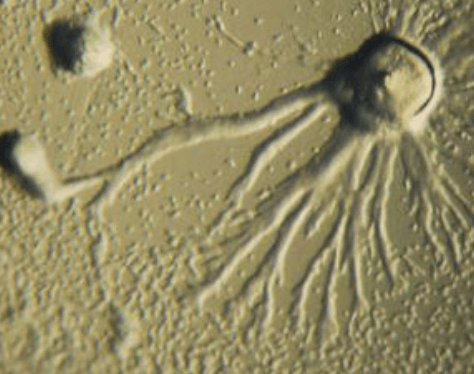
Single cells of the slime mold stream to a central point, forming a slug that will find food.
The starving cells form a mound, like Richard Dreyfus’s mashed potatoes, then rise and flop over, forming a gelatinous slug that moves toward light and heat. Finding bacteria, the slug stops, undulates, and its center telescopes upward, forming a “Mexican hat.” The hat becomes a “fruiting body” of some 20,000 cells, with a base and a stalk that the rest of the cells ascend. Cells that reach the top cloak themselves as spores, then rain down, dispersing and restarting the cycle as amoebae in the newfound land of plenty.
The slime mold slug bears a passing resemblance to Dart, the baby Demogorgon. Perhaps Dart communicated with the other fledgling monsters via a signaling molecule that Eleven and Will tapped into. After all, human cells use cAMP too. A Dicty explanation would be more unexpected than a run-of-the-mill virus, a go-to default in sci fi because you can’t picture it, unless you’re a biologist.
But does doc know enough about cellular slime molds to see possible parallels to the Demogorgon? Is he aware that peeing on slime mold slugs squelches their developmental program, like in “The One With the Jellyfish” episode of Friends? Does the good Dr. Owens actually know anything at all about biology? Seeming unskilled as both a doctor and a scientist, letting others treat Will and battle the monsters, he epitomizes the Dana Scully fallacy, the assumption that all doctors are also scientists. As she repeatedly told us, Dr. Scully from the X-Files was a physician and a scientist, as if the two are the same. They’re not, unless of course you have an MD/PhD. I have a PhD in genetics but I can’t hang an IV.
So to borrow from a Seinfeld episode, is there a developmental biologist in the house?
Ricki Lewis has a PhD in genetics and is a genetics counselor, science writer and author of Human Genetics: The Basics. Follow her at her website or Twitter @rickilewis.
A version of this article was originally published on PLOS Blog’s website as “The Biology of “Stranger Things’’” and has been republished here with permission from the author.