Should we accept the extinction of endangered species as just another part of evolution?

mass extinction worse than thought study drought

A recent opinion piece in the Washington Post from Dr. Robert Alexander Pyron has created quite the stir in the conservation and biology communities. Pyron’s piece, We don’t need to save endangered species. Extinction is part of evolution makes the case that extinction is not something with which we should overly concern ourselves, that we have no “moral” imperative with which to save species. After all, we are living during the sixth great extinction . . . so what if we leave the road to progress littered with highly a diverse assortment of roadkill?

There are those who agree with Pyron’s take. Ronald Bailey, a science correspondent for Reason magazine, focuses on the “utility” argument:

As a relatively well-off First Worlder, I have had the intense pleasure of walking in the wild within 40 feet of grazing rhinos and of swimming with Galápagos penguins. It would be a shame if future generations do not have an opportunity to enjoy such experiences. In any case, with rising wealth, urbanization, and the approach of peak farmland, the dire predictions of mass extinction are most likely exaggerated.

The other side of the coin, are those who fight for conservation or preservation. Dr. Ronald Sandler makes a strong case for the intrinsic value of species in a piece in Nature Education from 2012. He leads with a quote from environmental ethicist, Holmes Rolston, “These things [species] count, whether or not someone is doing the counting.”

Read full, original post: Saving Species from Ourselves

Should organic farming embrace new plant breeding techniques like CRISPR?

AdobeStock x

Over the last few years, new tools have rapidly created possibilities in plant breeding. These New Plant Breeding Techniques (NPBTs) have been met with both excitement and concern. They are blurring the line between conventional breeding (which can involve inducing random mutations into a plant’s DNA) and genetic modification, which introduces entire genes.

NPBTs are a collection of tools which can be used to modify a plant’s DNA, the most famous being CRISPR-Cas9….

Whilst some organic farmers are calling for NPBTs to be permitted in organic agriculture, certification bodies are making their position clear: crops made through NPBTs are incompatible with the organic ethos.

Without access to the tools used by breeders in conventional agriculture, can organic breeders meet the industry’s needs? A principle of organic farming is to adapt the seed to the environment, not the environment to the seed, yet organic agriculture suffers from a lack of crop varieties suited to their growing conditions. Conventional crop varieties have often been developed for high-input systems, whereas organic farming needs crops which can thrive without synthetic fertilisers and chemicals.

Some people have therefore argued that organic agriculture should embrace NPBTs to produce seeds which are ideally suited to its growing conditions.

Read full, original post: Perspectives on organic agriculture and new plant breeding techniques

DIY gene therapy? FDA is not a fan

HE AA GENES J

A few biohackers (fans of do-it-yourself (DIY) science experiments) recently designed a gene therapy for HIV. Not only that, they posted a video last month of one of them injecting it into his body in an effort to cure his HIV. Although this is not the first time that DIY gene therapy has been attempted, the publicity of this particular video may have been the seed that prompted FDA to issue a letter on their website…

The FDA does not mince words when it comes to this idea. They state in a letter on their website,

The sale of these products is against the law. FDA is concerned about the safety risks involved. Consumers are cautioned to make sure that any gene therapy they are considering has either been approved by FDA or is being studied under appropriate regulatory oversight.

If a gene therapy hasn’t been approved, it’s probably not safe. Look, you can do a lot of things at home… make beer, color your hair, refinish furniture, play fantasy football, bathe your dog, knit, build a life-size LEGO Batman or take on a fun papier-mâché project. But, one thing that you cannot do is edit your genes. At least, not until the FDA says that its ok.

Read full, original post: Many Things Can Be Done At Home. Editing Your Genes Is Not One Of Them.

Viewpoint: Food Evolution movie shows GMO supporters ‘you’re not alone’

food evolution

If you have the opportunity to see the documentary “Food Evolution,” do it. It has been the most talked-about food and agriculture film of the year — and rightfully so. The movie examines one of the most important tools in today’s agricultural industry, genetic engineering technology, and shows the emotion and divisiveness created by three small letters: G-M-O.

You have a tribe if you’re pro-GMO

“Food Evolution” shows you, that if you support biotechnology in agriculture, you’re not alone — you have a tribe that shares your beliefs, that wants to help the voices of science to be heard for the betterment of society.

This isn’t the end of the discussion

This is just the next step in a long-running discussion about today’s technologies and what the industry and government are doing to move the system forward. We need to keep talking and to keep learning so that people get informed, while connecting with them on all levels — as a parent, as relative, a colleague, and as a person. This film is available via Hulu and Amazon. If a screening isn’t coming to a location near you, I encourage you to take the time to stream it online.

Read full, original post: 6 takeaways from seeing the movie ‘Food Evolution’

Economist: EU’s GMO crop ban likely led to lower corn, soybean yields in Europe compared to US

GMO free small

Is it true that a ban on GM crops in the European Union has hurt productivity? Most likely yes, retired Montana State University Economics Professor Gary Brester told a crowd at the Montana Farm Bureau Annual Convention in Billings.

Brester explained that despite claims that the European yields without GMOS match those in the U.S., the debate is not taking into account enough years of data. “When I heard this debate, I went back to the early 1960s and started tracking productivity. Until 1996, the United State and the European Union shared technologies. Then when GMOs were banned, I’ve noticed in my data a flattening of yields in corn and soybeans in the EU, yet the U.S. yields using GMOs continue to increase.”

Could the difference be the weather or lack of farming knowledge? The researcher looked at wheat, as well, which is not a GMO crop; the EU production of wheat was to scale with the U.S. Yet, the EU yields of non-GMO crops was down while the U.S. increased remarkably.

“There is no other explanation than those increased because of GM crops,” said Brester, listing the benefits of GMOs including reduced input use, increased yields and reducing the environmental impacts of agriculture.

“The banning of this technology has been done with no documented human health problems despite extensive testing,” Brester said.

Read full, original post: Economics professor shows correlation between banning GMOs and EU grain productivity

Era of unregulated stem cell therapies may be coming to an end

StemCells

Is the Wild West of stem cell therapies coming to an end? Newly released guidelines from the U.S. Food and Drug Administration (FDA) suggest illegitimate, unproven uses might become a thing of the past. The latest statement by the FDA announces “a comprehensive policy framework for the development and oversight of regenerative medicine products, including novel cellular therapies.”

FDA Commissioner Scott Gottlieb, M.D. recognizes that “Alongside all the promise, we’ve also seen products marketed that are dangerous and have harmed people. With the policy framework the FDA is announcing today, we’re adopting a risk-based and science-based approach that builds upon existing regulations to support innovative product development while clarifying the FDA’s authorities and enforcement priorities. This will protect patients from products that pose potential significant risks, while accelerating access to safe and effective new therapies.” This is long overdue.

With high price tags, so-called “stem-cell” clinics are designing therapies without evidence that serve to do harm, are ineffective, prey on the most vulnerable—potentially curtailing their ultimate treatment choices, and threaten the legitimate work being done that holds great promise for devastating and serious disease.

With an explosion of developments in regenerative medicine, in general, regulatory bodies need walk a fine line between implementing some restrictions while still fostering innovation.

Read full, original post: Is The Wild West Of Stem Cell Therapies Coming To An End?


Exorbitant costs of gene therapy raise payment concerns for patients and government

healthcare costs x

[Editor’s note: Executives from several companies developing gene therapies gathered for a panel discussion at the recent Forbes Healthcare Summit, where they discussed pricing issues.]

Jeffrey Marrazzo, the co-founder and chief executive officer of Spark Therapeutics, has an approach to valuing his company’s gene therapy treatment for a rare form of blindness that even he realizes may be controversial.

Spark has undertaken extensive research and modeling to figure out how much it would be worth for one patient to be cured of blindness—a process that has included looking at the costs to both that patient and to society as a whole, said Marrazzo during a panel discussion at the Forbes Healthcare Summit on Thursday.  “When we modeled that, we thought we could easily value [the therapy] in excess of $1 million,” he said.

[Critic Steve] Miller proposed several alternative payment plans for pricey one-time treatments, including value-based pricing. Novartis has been an early adopter of value-based pricing. In fact, the company struck a deal on Kymriah with the Centers for Medicare and Medicaid Services (CMS), which stipulates that the government-run insurance plan will only pay for the treatment when patients respond within the first month after receiving it.

Just how healthcare payers will react to a $1 million gene therapy—should Spark decide that’s the right price—remains to be seen.

Read full, original post: Gene Therapy Is Booming, But How Will We Manage The Costs?

‘To lose them would be a disaster’: More than 20 wild relatives of modern crops added to ‘threatened’ list

Koningstein cropdiversity Lushoto

Wild relatives of modern crops deemed crucial for food security are being pushed to the brink of extinction, according to the International Union for Conservation of Nature.

More than 20 rice, wheat and yam plants have been listed as threatened on the latest version of the IUCN’s Red list.

The wild plants are being squeezed out by intensive farming, deforestation and urban sprawl, say scientists.

Modern crops can be crossbred with their wild cousins to safeguard foods.

”To lose them would be a disaster,” said Dr Nigel Maxted of the University of Birmingham, who is co-chair of the IUCN’s specialist group on crop wild relatives.

”It would be much more difficult to maintain food security without them.”

Commercial crops have lost genetic diversity. They are vulnerable to the effects of climate change, which may bring drought, diseases and new pests.

Work is under way to breed new varieties of grains, cereals and vegetables by crossing them with tough, wild species that can grow in a range of habitats, such as mountains, deserts or salt marshes.

These efforts rely on protecting plants related to modern food crops at the sites where they grow in the wild as well as preserving their seeds in gene banks.

Read full, original post: IUCN Red List: Wild crops listed as threatened

Viewpoint: Anti-GMO scare tactics show need for scientific literacy

x x

I was dead tired. I was trying to work as hard as I could to keep warm as I shoveled trash in a landfill in near freezing temperature. A worker had taken pity on me and lent me his jacket as I was tragically under-dressed during an uncharacteristically cold spell in January in Texas. The window cleaner I had used in a different job had frozen to the windows of the office building I was cleaning the previous day. I was unemployed and trying to prove my worth to a labor agency. I felt as disposable as the trash I was shoveling.

During our lunch break, I only drank the coffee provided onsite instead of eating. I only had $10 to my name until the labor center cut the check for the job I working. One of the other laborers convinced me to go to the food stamp office the next time the labor center had no available jobs.

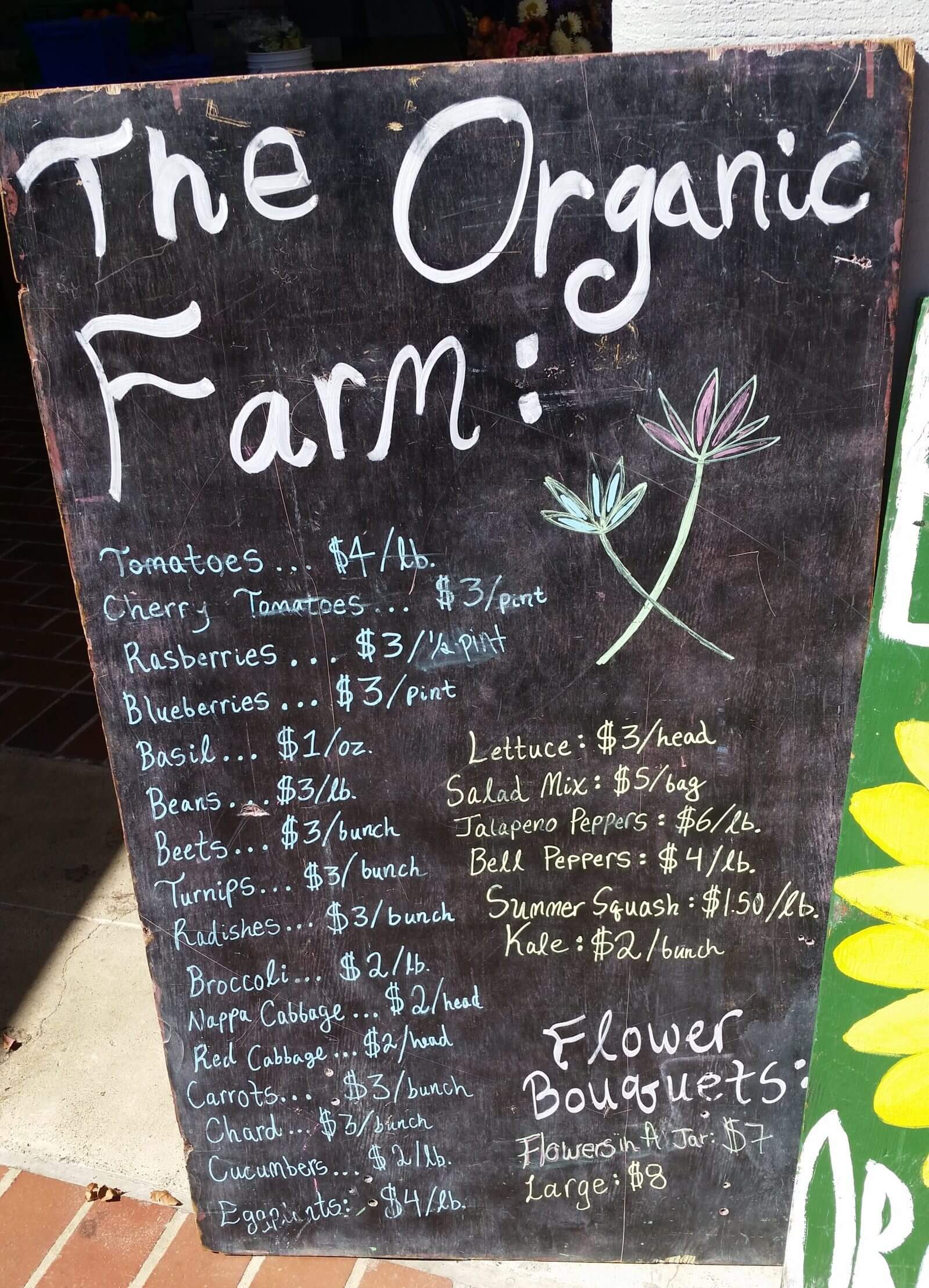
I received a little over $140 a month to help cover food expenses. Like 6.3 million other Texans, I had no health insurance. I tried to make do as best I could and spend my money wisely as possible. I tried to shop at the “outside” perimeter of the grocery store ( fresh produce and bread) and buying dried grains and beans in bulk when I could. To fit both my SNAP and “time” budget, a strategy of mine was to make stews and soups in a crockpot. I spent a lot of time poring over the weekly circulars to find deals as well as stopping by the food bank occasionally when I could get to it. Considering organic food is more expensive, it may seem surprising that I tried to buy organic produce and foods.

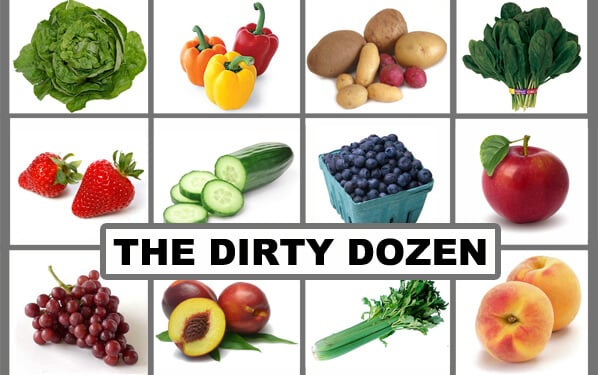
dd“It’s expensive, but think of organic produce as health insurance,” was the sentiment I received from my hippie mother and other people I respected. It seemed everywhere I turned, the message was clear — organic was healthier, cleaner and more nutritious.This frame of mind was and is particularly insidious on the internet. Comics, bloggers, and infographics cast scientists as villains with deadly “toxins”, “chemicals”, and “GMOs”, while organic farmers were superheroes. On the internet, organic bloggers pass themselves off as having as much insight as doctors. Organic produce was the medicine that will heal, “cleanse”, and prevent illness. I couldn’t afford to go to the doctor, so I better eat organic produce lest I succumb to the harmful toxins in conventional products. If I couldn’t buy totally organic I could at least avoid the foods on the scare-inducing “dirty dozen” list put out by the Environmental Working Group.

The organic food movement is often linked to the social justice movement. I cannot help but think there is a moral failing in promoting an organic diet when conventional food and GMOs are just as healthy and safe as organic food but cost way less. There is even a case to be made that GMOs offer ecological benefits by producing a higher yield with less resources. I could have stretched my meager benefits a lot farther had I not given into anti-GMO fear. Scare campaigns perpetuated by organic companies and bloggers hurt poor folks like myself.

study focusing on the purchasing behavior of low-income shoppers, published in Nutrition Today found that when vegetables were labeled as grown with pesticides “shifted participants toward “less likely” to purchase any type of (fruits and vegetables) regardless whether organically or conventionally grown.” Do you blame them? That “dirty dozen” list I mentioned earlier filled me with visions of vegetables saturated with toxic chemicals that I would ingest.The potatoes, carrots, and celery that served as the “base” of my crockpot stews were often on the “dirty dozen” list. The organic versions are also listed as 27 percent, 28 percent, and 44 percent more expensive than their conventional counterparts according to the USDA. It gets even more infuriating, organic proponents often prey upon the fears of mothers trying to keep their kids healthy. Organic baby food is listed as 29-31 percent more expensive than regular baby food. Low-income mothers have enough to worry about, let alone the safety of lower cost baby food.
scare tactics 12/7/17-3

The National Institute of Health, a public institution not beholden to any corporate interests, funded a review of the “dirty dozen list.” It found : “that (1) exposures to the most commonly detected pesticides on the twelve commodities pose negligible risks to consumers, (2) substitution of organic forms of the twelve commodities for conventional forms does not result in any appreciable reduction of consumer risks, and (3) the methodology used by the environmental advocacy group to rank commodities with respect to pesticide risks lacks scientific credibility.”

These scare tactics should make anyone who proclaims to care about social justice angry!

Enrolling in a community college and now a four-year college has opened up doors and has improved my situation in life. I will be forever grateful to Dr. Stege, my Bio 101 professor, who spent the first few weeks of class going over basic scientific literacy. He had his work cut out for him as an educator in a “crunchy” city that was still very much in a red state. He introduced scientific literacy to those on the right who didn’t believe in evolution and climate change, as well as to those on the left who were fearful of GMOs and vaccines. In his class, I learned about the importance of skepticismpeer review and how to apply research to my everyday life. That knowledge has been crucial to my empowerment. Learning to understand how the world works to make informed decisions about one’s own life and future is the most basic form of personal liberation there is.

Sierra Zambrano’s background is in conservation and natural resource management. She received her bachelor’s degree from Evergreen State College. She is currently trying to bring the “good news” of skepticism, peer review, and GMOs to her “crunchy” campus that is famous for its protests and organic farm program. Follow her on Twitter @SierraZambrano

This article was originally published at Medium as “Why Any Social Justice Movement Must Include Scientific Literacy” and has been republished here with permission from the author.

Climate change fighting plants: Genetically modified crops could trap half of human CO2 emissions in soil

download

The Salk Institute has enlisted a new ally in the effort to address the anticipated dangers of climate change — plants.

Scientists at the institute propose to breed plants to more efficiently remove carbon dioxide from the atmosphere, sequestering it in the ground for many decades.

By using plants as biological carbon scrubbers, as much as half the human contribution to atmospheric carbon dioxide could be trapped semi-permanently in the soil, said Joanne Chory, one of the plant scientists leading the program.

About six percent of the world’s cultivated land would be needed, and much of that could be in areas of marginal productivity, Chory said. These crops wouldn’t be grown for human consumption, but could include animal feed.

The goal is to make these plants produce more of a carbon-rich substance called suberin, the major component of cork. Suberin is produced in their roots, protecting them from water loss. Suberin resists biodegradation, potentially lasting for many decades.

This can be done either through genetic engineering, or by using knowledge of genetics to find naturally occurring varieties of plants with useful genes, and then cross them with traditional breeding, Chory said.

Genetic engineering to directly insert the desired genes would be quicker, but it faces opposition from some activists, she said.

Read full, original post: Salk Institute unleashes plants on climate issues

Migraine relief: First drug in 20 years that can prevent and cut in half length of attacks

managing migraine triggers and help getting treatment e

A new migraine drug that can halve the length of attacks has been hailed as “the start of real change” in how the condition is treated.

Erenumab, a laboratory-made antibody that blocks a neural brain pathway called CGRP, is the first drug in 20 years proven to prevent migraine attacks.

Phase three trial data on nearly 1,000 patients showed that it typically cut between three and four “migraine days” per month. In half the patients treated, migraine duration was reduced at least by half.

Lead investigator Prof Peter Goadsby, from King’s College hospital, London, said: “[research trial] Strive … represents an incredibly important step forward for migraine understanding and migraine treatment.”

The findings, reported in the New England Journal of Medicine, clearly showed that blocking the CGRP pathway could reduce the impact of migraine, he said. “The results of Strive represent a real transition for migraine patients from poorly understood, re-purposed treatments, to a specific migraine-designed therapy.”

“This is probably the first example of a migraine preventing drug that was rationally designed, rather than serendipitously found,” [professor Zameel Cader said].

Read full, original post: Migraine drug could halve the length of attacks, study shows

Genetics and eating: Why diets don’t work the same for everyone

man making salad e

New research from scientists at Texas A&M University found that a standard diet doesn’t work for everyone, in a study in animals. Published in the research journal Genetics, the team looked at how five different diets impacted the animals’ health during the course of six months.

The diets were picked to reflect our own and included American (high in fat and carbs), Mediterranean (wheat and red wine-based), Japanese (heavy on the rice and green tea), ketogenic (low in carbs, high in fat) and Atkins (high in fat and protein, low on carbs).

Unsurprisingly, the “healthier diets,” such as the Japanese-based eating plan, worked for most of the animals. However, one genetic type actually suffered from consuming all that rice and tea.

The Atkins diet also wasn’t for everyone and the research that two of the genetic types had some unpleasant consequences.

While the researcher was hoping to find the best overall diet, the results showed that there may not be just one optimal way of eating as what keeps one person svelte might cause another to gain weight. This is just the latest in a growing body of research showing how our genes might determine whether we’re slim or constantly struggling to maintain our dress size.

[Editor’s note: Read the full study]

Read full, original post: Diet Fail: Genetics Explain Why Your Friend Lost Weight On A Diet And You Didn’t

French farmers: 3 years too short to develop viable replacement for glyphosate herbicide

Screen Shot at PM

President Emmanuel Macron’s promise to rid France of controversial weedkiller glyphosate within three years has left some farmers in the European Union’s largest grain producing country on edge.

After intense debate, the EU this week cleared U.S.-developed glyphosate for another five years despite concerns that the most widely used pesticide in the world can cause cancer.

EU rules allow France to unilaterally ban the substance, however, an approach Macron has decided to take. He has given farmers and researchers three years to come up with an alternative.

“Three years is too short,” said Herve Fouassier, 45, who runs a 200-hectare farm in Loiret, south of Paris.

Like French farm unions, Fouassier does not believe a solution can be found in time.

“We are ready to hear the wishes of society which wants less use of crop protection products, but give us a little time to adapt,” he said, standing in a mustard field treated with glyphosate.

French crop growers said this week even five years is insufficient time because there is currently no alternative economically and environmentally viable alternative to the weedkiller.

Glyphosate’s worldwide success is linked to its low cost; farmers can kill weeds by spraying the chemical on their fields instead of plowing the soil several times to remove weeds.

Read full, original post: Three years too short to replace glyphosate, French farmers say

What can other African countries learn from South Africa’s experience with GMO crops?

Applying fertilizer on maize

Despite promotion of GM crops, adoption has been slow across the continent. South Africa began using the technology in the late 1990s, but twenty years on it is still the only sub-Saharan country to commercially grow them as a food crop (although Sudan and Burkina Faso grow GM cotton). This is rapidly changing, with Nigeria, Ghana, Cameroon, Ethiopia, Tanzania, Malawi, Mozambique and Uganda all currently carrying out field trials of various GM crops. No commercial release has yet been approved, and it will take time for the technology to reach anything like the levels in South Africa where 2.7 million hectares of GM crops were planted in 2016, the vast majority of which was maize.

Yet the technology’s widespread adoption in South Africa has also spurred a significant resistance movement: the annual March Against Monsanto gathers thousands of protesters across the country. Opposition is centred around the safety of eating GM crops, and the widespread spraying of Monsanto’s weedkiller Roundup….

Biotechnology will only ever offer partial solutions to food insecurity in Africa. But for those solutions to be effective we need to ask deeper questions about how science is done and, more to the point, who does it. A first step would be to untangle GM crops from multinational corporations and monoculture.

Read full, original post: Can GM crops fix Africa’s food crisis?

Neuron by neuron: We often examine the brain too closely to see the big picture

neuron
[Rafael Yuste thinks neuroscientists have been looking at the brain too close. “It’s just like a TV screen—if you’re watching a movie and could only look at an individual pixel, you would never understand what’s going on,” he says. “What neuroscientists have been doing since [the father of neuroscience, Santiago Ramon y] Cajal, is looking at the single pixels of the brain—one neuron at a time. So that’s why we need these methods to see the whole screen, to see what’s playing in our brains.” The methods in question were on display in a recent study he and his graduate student, Christopher Dupre, conducted, recording the activity of all neurons in the Hydra vulgaris, a centimeter-long hydroid, while the animal swam between two pieces of glass.

Capturing the entire neuronal activity in an organism—something Yuste [at Columbia University in New York City] and others have termed the BAM, or Brain Activity Map—is also part of a test of an hypothesis: that the building blocks of nervous systems are networks of neurons rather than individual neurons.

When I visited Yuste’s lab this summer, he told me that his team is now working, as part of a DARPA-funded project involving multiple labs, on a computational model of Hydra’s nervous system and planning experiments that would manipulate Hydra’s neural nets.

Read full, original post: A Brainless Breakthrough in Neuroscience

Leaked draft of EU report reveals mixed findings on neonicotinoids and bees

HONEY BEES

Draft findings from the European Food Safety Authority feed into a long-running, heated and so far inconclusive debate into why Europe’s bee populations are in decline.

The EU will vote as soon as next week on whether to extend a ban on three chemicals — known as neonicotinoids — which are accused of crippling insects’ nervous systems and decimating bee colonies. 

EFSA has been looking at data on neonicotinoids since 2015, though the vast majority of the data on the risks posed by the substances was deemed inconclusive. But according to draft documents seen by POLITICO, one of the substances — imidacloprid, which is manufactured by Germany’s Bayer — could pose a danger to bees.

The agency said two other substances — Syngenta’s thiamethoxam and Bayer’s clothianidin — posed a “small to negligible negative” effect on honeybee colonies.

Even after assessing the data for winter crops, EFSA does not seem to be any nearer to determining how dangerous the pesticides are.

For instance, in the case of thiamethoxam, “the available data do not offer a picture of clear effects.” For clothianidin use during the winter, EFSA said the data offer only a “tentative indication” of its “negligible” effects on bees. For imidacloprid, EFSA drew more negative conclusions, stating that “the data for honeybee colony strength after overwintering indicates a clear tendency for a negative deviation with a dose-response pattern.”

The EFSA findings are hardly likely to aid policymakers in determining whether to extend the ban on the three pesticides.

Read full, original post: Food safety watchdog links pesticide to bee decline (behind paywall)

Surrogate granted limited parental visitation rights by UK court, rejecting genetic connection

surrogate

In the surrogacy world, one of the worst case scenarios for intended parents is that the surrogate will change her mind and try to keep the baby. Although statistically, it is actually more likely that the intended parents will change their mind, and try to abandon the baby.

[Recently] a British court ruled against a surrogate who attempted to keep the baby she carried for a gay couple. That’s at least some good news. However, the court muddied the waters.  It granted the surrogate limited parental rights to the child, and ruled that the surrogate would be entitled to six visitations with the child per year.

This case would have been much less of a struggle in the US, where many states (like California, Nevada, and Illinois) recognize parental rights based on the intent of the parties. American courts also tend to find a significant legal differences between traditional (or genetic) surrogacy – where the surrogate is genetically related to the baby she carries – versus gestational surrogacy, where the baby has no genetic relationship to the surrogate.

Not so across the pond. There, surrogacy agreements are unenforceable, and a lawyer who negotiates one may even face criminal charges.

Read full, original post: Surrogate Tries To Keep Baby, Court Doesn’t Care About Genetics

Reexamining common genetics lesson: At least 49 genes contribute to earlobe attachment

caza F

A common, hands-on method for teaching genetics in grade school encourages students to compare their earlobes with those of their parents: Are they attached and smoothly mesh with the jawline? Or are they detached and dangly? The answer is meant to teach students about dominant and recessive genes.

Simple, right? Not so fast.

New research led by the University of Pittsburgh Graduate School of Public Health and School of Dental Medicine, and published online…in the American Journal of Human Genetics, reveals that the lesson is much more complicated, with an interplay of at least 49 genes contributing to earlobe attachment.

The study was an international collaboration involving investigators in the United Kingdom and China, and included data from the U.S.-based personal genetics company 23andMe Inc.

The results don’t mean that grade school science teachers should stop using traits like earlobes to teach genetics. But the lesson needs to be updated to show that even a seemingly simple inherited trait, such as earlobe attachment, involves a complex and fascinating interplay of genes that geneticists are only beginning to understand.

[Editor’s note: Read the full study]

Read full, original post: Do your ears hang low? The complex genetics behind earlobe attachment

Genomics AI tool: Google’s DeepVariant released as open source

Data x

A novel artificial intelligence tool that can accurately call out variants in sequencing data was released as open source on the Google Cloud Platform yesterday. The tool, called DeepVariant, was developed during a collaboration between the Google Brain team and researchers from fellow-Alphabet subsidiary, Verily Life Sciences. The release was announced in a press release cross-posted to the Google Research blog and the Google Open Source blog.

The Google Brain team and Verily wanted to develop a machine learning tool for variant calling that was capable of differentiating between accidental sequence changes and genetic mutations. To do so, they used millions of sequences collected by the GIAB project to teach their artificial intelligence, adjusting the parameters of the tool through a series of iterations.

Their work was rewarded last year when DeepVariant won the 2016 PrecisionFDA Truth Challenge for the Highest SNP Performance. Since then, the team believe that they have further reduced the error rate by 50%.

“DeepVariant is the first of what we hope will be many contributions that leverage Google’s computing infrastructure and ML expertise to both better understand the genome and to provide deep learning-based genomics tools to the community,” the press release concludes.

Read full, original post: Google Releases DeepVariant AI As Open Source