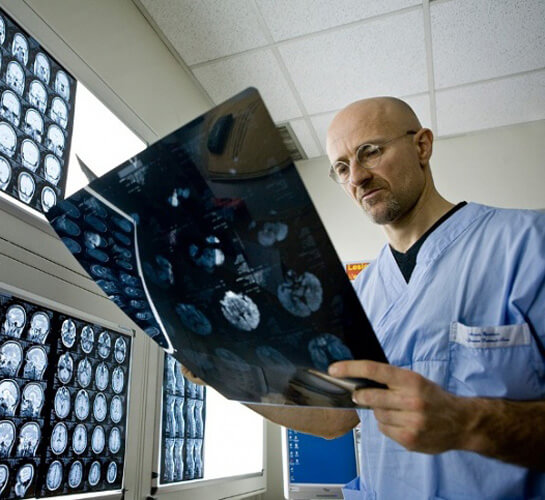
In February 2015, Sergio Canavero appeared in this very publication claiming a live human head will be successfully transplanted onto a donor human body within two years. He’s popped up in the media a lot since then, but two years and nine months later, how are things looking?
Well, he’s only gone and done it! As we can see in this Telegraph story … the world’s first human head transplant has been successfully carried out…
Well, not quite. Because if you look past the triumphant and shocking headlines, the truth of the matter becomes very clear, very quickly…
Many of Canavero’s previous appearances in the media have been accompanied by claims of successful head transplant procedures. But, how are we defining “successful” here? Canavero’s definition seems to be extremely “generous” at best.
…
And this recent successful human head transplant? It was on corpses! Call me a perfectionist if you must, but I genuinely think that any surgical procedure where the patients or subjects die before it even starts is really stretching the definition of “success” to breaking point.
…
You can weld two halves of different cars together and call it a success if you like, but if the moment you turn the key in the ignition the whole thing explodes, most would be hard pressed to back you up on your brilliance.
Yale University immunologist Kevan Herold spoke about a few of his newest diabetes patients to an unlikely audience: oncologists and cancer researchers. At the Society for Immunotherapy of Cancer’s annual meeting in Oxon Hill, Maryland, Herold and other speakers described how a novel class of promising cancer drugs is causing type 1 diabetes and other autoimmune diseases in some of those treated.
Known as checkpoint inhibitors, these medicines rev up the immune system and are rescuing people from deadly cancers. Physicians such as Herold, however, are now seeing a nasty, if treatable, side effect: the rapid onset of conditions such as thyroid disease, colitis, and type 1 diabetes, which all result from an immune attack on the body’s own tissues. As cases mount, researchers across specialties are intensifying efforts to figure out whether certain cancer patients on checkpoint inhibitors are at higher risk—and to learn from this unusual side effect how autoimmune attacks erupt.
…
[T]he key is to walk “a very fine line” between treating cancer and causing autoimmunity, says immunologist Brian Fife of the University of Minnesota in Minneapolis. Fife, who has been exploring how the drugs can cause diabetes, believes “there’s hope” that scientists will figure this out.
“Everything that my lab has produced is down in the basement.”
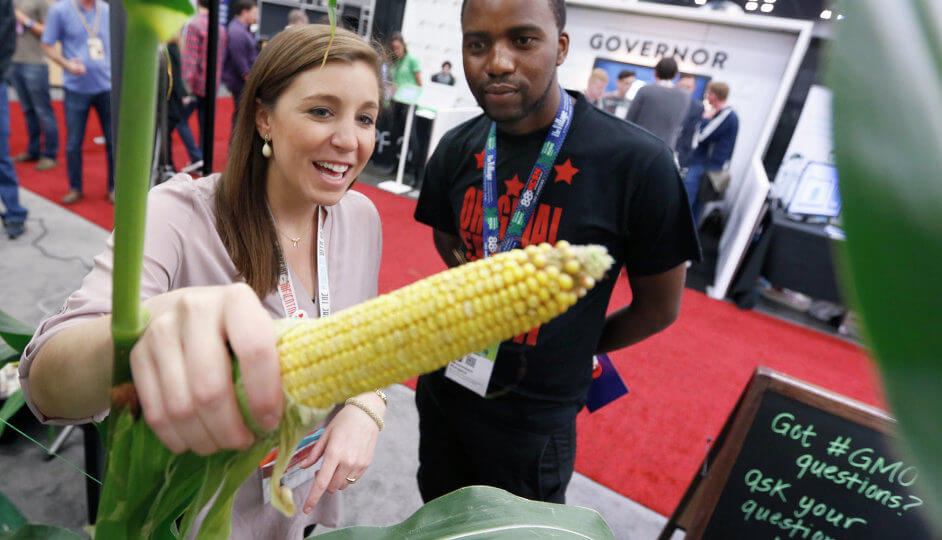
That is how Peggy G. Lemaux, Ph.D., described the decades of work on genetic engineering (G.M.O.s) and genetic editing that she and her colleagues at the University of California’s Plant & Microbiology have produced.
…
[S]he cited costs related to government regulation and intellectual property issues as contributing factors to why the commercialization of genetically modified wheat has languished.
…
Scientists have been able to develop a number of promising wheat varieties using traditional genetic modification and gene editing. These varieties include improved photosynthesis efficiency in wheat plants, nitrogen fixing wheat to reduce the use of fertilizers and even wheat bread that those with Celiac can eat with the usual issues.
…
Lemaux noted that [regulatory testing requires] an investment of $10 million to $20 million. The high cost puts the development and commercialization of bioengineered wheat outside of the means of most smaller companies and academics, she added.
…
“When I am feeling really optimistic, I say ‘maybe gene editing will make it easier and cheaper,’ but it’s going to depend on a large part on how it’s regulated, because it costs a lot to take it through regulation.”
A continental seed body on Friday [Nov. 17] supported the coexistence of genetically modified (GMO) seeds and conventional ones.
The Secretary General of African Seed Trade Association (AFSTA) Justin Rakotoarisaona said farmers stand to benefit greatly once they embrace modern agricultural tools.
“The use of improved GMO seeds is poised to make inroads into African agriculture in the near future, hence the need to address co-existence of biotech and conventional crops,” Rakotoarisaona told Xinhua….
…
He also said there was no need to fear as the emergence of modern crop biotechnology has led to development of a strict regulatory framework that governs the use and transfer of the technology.
South Africa is one of the countries in Africa that is already benefiting from the technology, while several countries have massively invested in biosafety systems and regulations to ensure safe use and application of this technology.
“The countries that are already growing biotech crops or permit their importation have biosafety laws in place that handle matters relating to human and environmental safety,” he noted.
…
AFSTA believes that the continent needs to take up and adopt new technologies like GMOs to be able to properly feed the increasing population and as well earn foreign exchange.
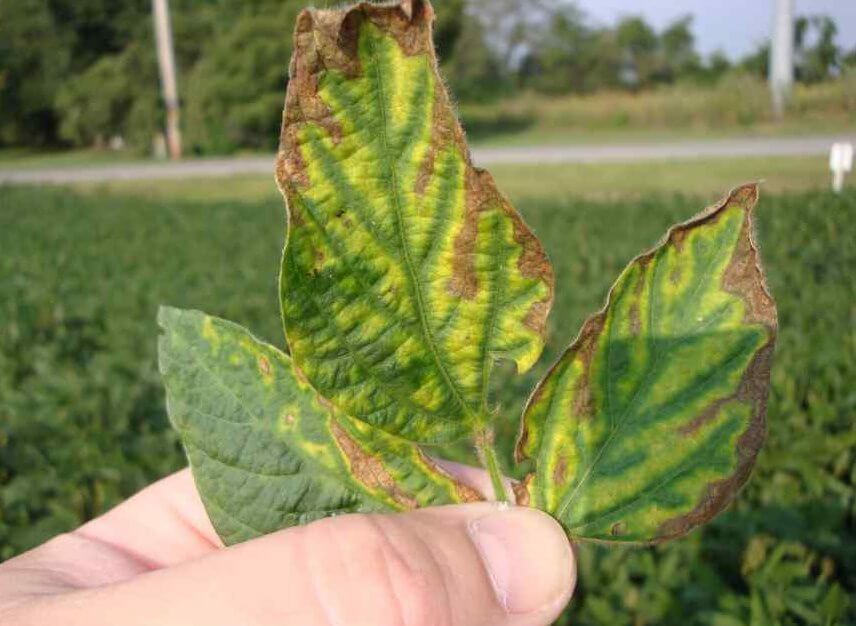
An Iowa State University agronomist is charting mechanisms – gene by gene – that could lead to soybean varieties resistant to sudden death syndrome [SDS].
A paper published recently in the peer-reviewed academic journal Plant Physiology shows a gene found in a model plant called Arabidopsis could confer improved disease resistance in soybeans. Madan Bhattacharyya, a professor of agronomy and lead author of the study, said his current research points toward several Arabidopsis genes that could act in concert to help soybeans fight off sudden death syndrome, a disease that has caused millions of dollars in crop losses for Iowa farmers.
“We’ve started to map many of these genes, and we think there are many different mechanisms that work together to create resistance of Arabidopsis against two soybean pathogens,” Bhattacharyya said. “We’re testing a hypothesis that putting a combination of these Arabidopsis genes into soybeans confers a high level of disease resistance.”
…
The study identifies [an Arabidopsis gene], called PSS1, as a means of improving soybean resistance. The transgenic soybean plants carrying this gene showed enhanced SDS resistance in two consecutive years under field conditions, Bhattacharyya said.
Plants and animals have evolved mechanisms to fight against their predators. Some of them are mechanical, like thorns or spines on a puffer fish, but some are chemical in nature. As a result, our food is full of natural pesticides and toxins.
It’s important not to let the term “pesticide” confuse you. We’re used to thinking of pesticides as the stuff we spray on plants or around our house to get rid of bugs. But the term “pesticide” is much broader than that: it’s any substance that gets rid of or repels a pest. The term encompasses many different -cides: herbicides (to get rid of plants), fungicide (to get rid of fungi), insecticides (to get rid of insects), etc. A natural pesticide can be toxic to the pest that its evolved to target, so I use the term “toxin” in this piece as well.
One of the more common natural pesticides that we ingest is solanine. This compound is present in different parts of the potato plant, which is a member of the nightshade family of plants. This paper from Lancet published in 1979 states that potatoes have small amounts of solanine in the peel and none in the flesh, but when the potato starts to green or sprout (i.e. the ‘eyes’ start growing), then the amount increases significantly. Solanine levels also increase in potatoes when they’re diseased, such as with the blight, and is probably part of the plant’s defense system.
The Lancet paper documents several cases of solanine poisoning from eating potatoes, but they were not typical cases (for example, individuals may have been malnourished). Current guidelines from the NIH state that eating solanine in very small amounts can be toxic and recommends throwing out spoiled potatoes or those that are green below the skin.
But solanine is just the tip of the iceberg when it comes to natural pesticides. Here are a few others:
Capsaicin: It’s what makes peppers hot. Does it really surprise you that it’s a natural pesticide? What animal in its right mind would want to punish itself by eating terribly spicy foods? Well, Homo sapiens do.The first pesticide containing capsaicin was registered with the EPA in 1962. As you know, it’s an irritant to most mammals, but it can also repel or kill insects.
Eugenol in cloves, nutmeg, basil and others is used as a bait in many pesticides, data suggests that it can also cause liver damage.
The list is very long. In 1990, Bruce Ames published a paper entitled “Dietary pesticides (99.99 percent all natural)”. In it, he and his coauthors outline that we eat an estimated 1.5 grams of natural pesticides a day, “which is about 10,000 times more” than the amount of synthetic pesticide residues we consume. This amount would be significantly higher in vegetarians and vegans. As an example, the authors provide a list of 49 different pesticides found in cabbage alone. The concentrations of these pesticides are in parts per thousand or parts per million, whereas the amount of synthetic pesticides we find on our food are in the parts per billion range.
Despite the vast amount of toxins in our diet, only a handful of these have ever been tested (note that the paper was written in 1990, but the point still stands). Of all the chemicals tested for chronic cancer tests in animals, only 5 percent have been natural pesticides and half of these were carcinogenic.
Think about that for a moment. While there’s an uproar about parts per billion amounts of synthetic pesticide residues on our food, there are more concentrated compounds in fruits and veggies actually known to cause cancer. In addition, some of the more commonly used pesticides in agriculture have mechanisms of action that are specific to the pests their targeting, making them far safer than many natural pesticides, which is on reason why they’ve gained popularity in the past half century.
For example, glyphosate, which is often paired with herbicide resistant GMO crops, shuts down a biochemical pathway in plants that simply doesn’t exist in mammals. In contrast many of the natural toxins found in plants can be harmful to mammals. Yet we’re far more concerned about glyphosate residues than we are about natural formaldehyde in pears. Check out the graphic at the end of this article that highlights this point: we fear anything that’s synthetic because we assume that it’s “bad for us”, but there’s plenty of stuff that’s “natural” that can be harmful at a certain dose.
I’ve read a lot of arguments from anti-GMO groups about how transgenic crops that have the Bt-toxin will kill us all, because it’s a registered pesticide with the EPA. “Do you want to eat something that’s a pesticide?” is what I’ve read time and time again. But as I’ve noted above there are plenty of “natural chemicals” that are registered pesticides, but no one seems to be freaking out about basil and mustard seeds.
The final point that I want to highlight is that the cross-breeding and “natural” hybridizations we’ve been doing for centuries has undoubtedly impacted the levels of some of these natural pesticides by unknown amounts because no one examines them. Going back to solanine, in the ’60s a new strain of potato known as the “Lenape” potato was developed through “natural” methods, but was found to be toxic due to increased levels of solanine: it had ~2-4x the amount of solanine found in other potato varieties and it had to be pulled off the shelves. But no one seems to be making noise about “unintended consequences” of traditional crossbreeding.
This should be a nuanced discussion. Just because an agricultural pesticide has a benign toxic profile does not mean that we shouldn’t try to minimize its use when possible. Just because a transgene for a natural pesticide added to a crop has no impact on mammals does not mean that we should not study its impact on the environment. Yet we shouldn’t consider our food to be “unsafe” or shun traditional farming practices because of the use of synthetic pesticides.
Remember: it’s all in the dose.
Layla Katiraee, contributor to the Genetic Literacy Project, holds a PhD in molecular genetics from the University of Toronto and is a senior scientist in product development at a genetic biotech company in California. All opinions and views expressed are her own. Her twitter handle is: @BioChicaGMO
Collectively, genetics studies have shown us that the indigenous inhabitants of the Americas are descended from a group that diverged from its Siberian ancestors beginning sometime around 23,000 years before present…
All genetics research to date has affirmed the shared ancestry of all ancient and contemporary indigenous peoples of the Americas, and refuted stories about the presence of “lost tribes”, ancient Europeans, and (I can’t believe that I actually have to say this) ancient aliens.
…
But it’s also important to understand what genetics can’t tell us. While writing up this article, I was appalled (although not surprised) that there is at least one personal ancestry testing company that has made the claim that they can help you determine whether or not you are Beothuk based on your DNA.
Let’s be clear: all claims that a person’s tribe or indigenous nationality can be determined from their genomes are scientifically inaccurate. First, this is because there simply are no currently known genetic markers that allow us to identify individual tribes or nations; although we see geographically patterned genetic variation throughout the Americas in ancient and contemporary populations which allows us to differentiate them (as done in this study), genetic lineages are not tribal or nation-specific….
Researchers trained eight sheep to identify celebrity faces from photographs. The investigators also found that the sheep could identify a picture of their handler without any training. This line of research could help improve understanding of Huntington’s disease and other neurodegenerative conditions in people, according to scientists at the University of Cambridge in England.
…
“Sheep are long-lived and have brains that are similar in size and complexity to those of some monkeys. That means they can be useful models to help us understand disorders of the brain – such as Huntington’s disease – that develop over a long time and affect [mental] abilities,” [study leader Jenny] Morton said.
Huntington’s disease is a genetic disorder that causes neurons (nerve cells) in particular parts of the brain to degenerate, resulting in debilitating physical, cognitive and emotional problems.
…
“Our study gives us another way to monitor how these abilities change, particularly in sheep who carry the gene mutation that causes Huntington’s disease,” Morton pointed out. Huntington’s disease gets progressively worse, and features uncontrolled movements, abnormal posture, and changes in behaviour, judgment and thinking. Morton and her team are currently studying sheep that have been genetically modified to carry the gene mutation that causes Huntington’s disease.
Our galaxy may contain billions of habitable worlds that don’t host any life. Should we attempt to change that?
Claudius Gros at the Goethe University Frankfurt, Germany, thinks we should. He believes in directed panspermia: deliberately seeding life throughout the cosmos. And to do that, he proposes we use a laser propulsion system that may not be technically out of reach.
Breakthrough Starshot is a project with ambitious aims to use such systems to send tiny, lightweight probes to Alpha Centauri. The goal is to take pictures of our nearest star, but these systems could also deliver much larger payloads into orbit around nearby stars, says Gros.
…
Starshot’s proposed 20-year mission to our nearest star after the sun would rely on ultralight craft propelled up to 20 per cent of the speed of light by giant, Earth-based lasers pointed at a light sail – essentially a mirrored surface. While there are unprecedented challenges, particularly in laser design and the reflectivity of the light sail, the team remains confident of the mission’s feasibility.
“It is just a matter of the will to make it happen,” says Chi Thiem Hoang at the Korea Astronomy and Space Science Institute.
New Zealand researchers have found the active ingredients in commonly-used weed killers can cause bacteria to be less susceptible to antibiotics.
The study builds upon research published in 2015 that found three common herbicides, including Round-up, caused E.coli and Salmonella to become less sensitive to antibiotics. The new research, published in Microbiology, investigated which ingredients were responsible and found it was the active ingredients to blame; the researchers suggest regulators should consider these impacts when considering whether such products are safe to use.
…
“The message from the paper is clear, we need to reconsider our use of herbicides in light of the effect that they are having on the microbial world,” [said Dr. Heather Hendrickson, Senior Lecturer in Molecular Bioscience, Massey University.]
…
“[The] findings show how complex biology and the microbial world are. Some of the ingredients made the bacteria more sensitive to some antibiotics, and others made them less sensitive to antibiotics. Fortunately, the type of resistance [they] found is not the type that can transfer from one species of bacteria to another, but it is clearly still cause for concern,” [said Dr. Siouxsie Wiles, Microbiologist and Senior Lecturer, University of Auckland.]
[Editor’s note: Val Giddings is a senior fellow at the Information Technology and Innovation Foundation. The following is part of a letter to the FDA’s Center for Food Safety and Applied Nutrition.]
Consumers need to understand that the dominant narrative about food & feed safety in the online space has been distorted and corrupted by special interests using fear to increase the market share for their favored products despite the lack of any genuine superiority or nutritional, safety, or sustainability value added. FDA must help the public understand that today’s food supply is the most abundant, safest, and least expensive in the history of humanity, and that food additives and processing have been huge positive contributors. Foods claimed to be nutritionally or environmentally superior or safer because they are “natural” or produced through organic methods are not.
FDA needs to communicate clearly and unambiguously to the public that so-called “genetically modified” foods represent an arbitrary category without scientific justification. FDA also needs to communicate that science-based risk assessment, data, and vast experience, consistently around the world, confirms that foods and feed described as “GM” or “GMO” are at least as safe as any other foods, and in some cases safer than the alternatives; and that parties who claim otherwise have no basis for such claims.
…
FDA needs to crack down on false and misleading food labels, including misleading “natural” claims as well as the intrinsically misleading NonGMO project, specious claims of organic food superiority, and other deceptive misrepresentations.
[Editor’s note: Karl Haro von Mogel is a geneticist with a PhD in Plant Breeding and Plant Genetics from UW-Madison with a minor in Life Sciences Communication.]
[The comments from the Center for Food Safety representative, Rebecca Spector, read] like they were drafted by lawyers, they also hint at the various ways that the anti-GMO law firm may work to attack and undermine any outreach program from the FDA.
[Elisa Odabashian, representing the Consumer’s Union] said that Roundup use “increased more than 15 times” but neglected to mention reductions of other herbicides that it replaced, a very common and intentionally misleading statement about pesticide use.
Researchers at the National Agricultural Research Laboratories (NARL) in Kawanda [Uganda] have said they are ready to go for open- field trial of the genetically -modified banana, before it is released to the public in 2021.
…
[O]pen-field trials … means that they will test the banana varieties with the farmers and the farming communities to make sure they can resist the bacterial wilt in different agro-ecological zones.
…
The GM varieties are meant to resist banana bacterial wilt and they are also pro-vitamin A to fight malnutrition among most communities around the country.
…
The banana bacterial wilt resistant gene was got from green pepper, which is an edible crop while the pro-Vitamin A gene, was got from a banana variety not grown in this region but only found in South Eastern Asia.
These genes are added into the already existing varieties to make them resistant to banana bacterial wilt and become pro-vitamin A.
…
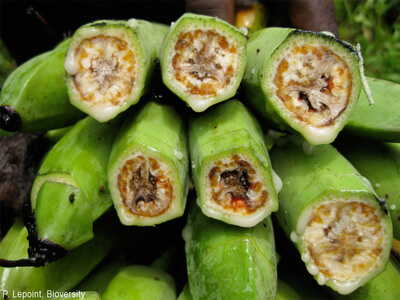
Bacterial banana wilt was first reported in Uganda in 2001 – all regions were affected, with central and western regions most hit
It was estimated the country lost up $4bn in ten years from the wilt destruction – this is about 17 percent of the country’s GDP.
The GLP aggregated and excerpted this article to reflect the diversity of news, opinion and analysis. Read full, original post: Ugandans to Have GMO Matooke in 2021 – Researchers
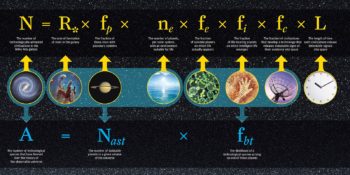
Comparative mammalian neuroscience, paleobiology, the discovery of thousands of planets around other stars in our corner of our galaxy, and the famous Drake Equation all suggest that we are not alone. Within our own galaxy, there should be thousands, if not millions, of civilizations capable of communication and travel between the stars. Occasionally, scientists detect radio signals from across space whose patterns could suggest intelligent origin. Also, in recent years, astronomers have been observing strange dimmings of a certain star that could represent some kind of massive engineering project, but none of these phenomena have a confirmed technological origin. Eyebrow-raising signals picked up by researchers of the Search for Extraterrestrial Intelligence (SETI) Institute have not appeared with the repeatability that science demands, nor have all possible natural phenomenon been exhausted that might explain the unusual star.
To state it plainly, there is not a shred of evidence that any thinking, technological beings share the Cosmos with us. Yet this lack of evidence conflicts with the fact that our science tells us that someone else must be out there. The contradiction is known as the Fermi Paradox, named for Enrico Fermi, the 20th century nuclear physicist, who noted the contradiction in 1950. That was eleven years before astronomer Frank Drake developed his famous formula for estimating the number of technological communicative civilizations, and decades before the first detection of a planet around another star.
Since Drake initiated what would become SETI back in the 1960s, ET skeptics have typically depended on the Fermi Paradox to frustrate SETI optimists. That hasn’t stopped SETI scientists from looking for evidence of ET communication or other technology that might leak across interstellar space. And now artificial intelligence (AI) technology, and to some extent neuroscience, has added a new dimension to the discussions. What if technology were to become so advanced that it no longer sends out waves or particles across space, or even so advanced that it cannot be recognized, or distinguished from the natural world?
Putting technological advance into perspective
Arizona State University (ASU) is home to the Beyond Center, directed by astrophysicist Paul Davies who noted recently that extremely advanced technology might not even be made of matter. “Five hundred years ago,” Davies wrote, “the very concept of a device manipulating information, or software, would have been incomprehensible.”
Now, it’s true that some people of the Renaissance period –Leonardo da Vinci, for instance– might delight in a piece of 21st century hardware, realizing that it’s a sophisticated machine. But Davies’ point is that our technology operates on a higher level than that of a machine from five centuries ago. Once familiar with a 21st century helicopter, da Vinci (who actually imagined and drew a helicopter-like flying machine) wouldn’t know what made the craft’s engine turn, nor about the radio signals from satellites in space keeping the craft on course, but he could quickly learn to recognize that the helicopter is approaching by it’s characteristic noises.
But Davies points out that an extraterrestrial technology more advanced than ours could be many levels beyond our own. Consider that da Vinci would understand the mechanical aspects of the vehicle — the rotor blades turning similar to a wheel turning — but that he wouldn’t see the engine whose tiny valves and special materials constitute a level of technology much higher than the steam engine that was still centuries ahead of da Vinci. The computers and other electronics inside the vehicle represent still a higher level. Imagine then adding another five hundred years of technological advancement.
But now consider a civilization that has been around for thousands, tens of thousands, or even hundreds of thousands years. Comparing their technology to ours would be like comparing our technology to that of Stone Age humans, who in all likelihood would see us as gods. Unlike da Vinci noticing the rotor blades turning and appreciating the power of the resulting wind, Stone Age people would notice only that the vehicle flies and would be frightened by the noise.
Drake Equation
Now, project our technology forward by a million years, or dare I say a billion? If we continue to advance technologically,there will be newer and newer levels of technology. Considering how our communication devices are getting smaller and the predictions that they could eventually be implanted. It’s not unreasonable to suggest that we would appear as magicians or gods even to the people from 200 years ago, when scientists were starting to recognize electromagnetism.
Whereas the Drake Equation predicts that millions of ET civilizations should have emerged just within our own galaxy, the possibility of having such a civilization nearby depend on the most uncertain factor of all — what Drake calls L, the longevity factor. We simply have no idea how long the typical technological civilization should endure. Will we last just another few decades and then destroy ourselves? Will we go on for millions of years, getting increasingly advanced? Or will it be something in between? Maybe we’ll lose our technology and go into a dark age, then start over. The bottom line though is that the chances of encountering another civilization depend on the L factor. This means that we can call a neighboring civilization “a little bit ahead of us” technologically, if they are ahead of us by, say 10,000 years.
From that perspective, Davies thinks that we must consider levels of technology that don’t even involve matter. Given the rate that our technology is advancing, we could be talking about mere centuries, or at most millennia to reach such a point ourselves, in which case the window for recognizing extraterrestrial intelligence by the radio waves, optical waves, or anything else that it puts out or leaves behind could be incredibly narrow — if we take a cosmic perspective on time.
And that could be the answer to the Fermi paradox.
David Warmflash is an astrobiologist, physician and science writer. BIO. Follow him on Twitter @CosmicEvolution.
European Food Safety Authority (EFSA) scientists have cleared a genetically modified sugar beet developed by Monsanto and KWS for reauthorisation in the EU.
The sugar beet variety in question, H7-1, has been genetically modified to be resistant to the controversial herbicide glyphosate, manufactured by Monsanto itself.
EFSA carried out the original opinion, giving the crop the health and safety all-clear, back in 2006 and the European Commission authorised the crop for import and processing in 2007 for a period of ten years.
…
The sugar beet’s EU authorisation was granted to be used in food and feed imports and processing, and food containing ingredients produced from it.
It does not include authorisation for cultivation within the European Union (EU).
GM food and ingredients may be sold in the EU but if the GM content is greater than 0.9% this must be clearly labelled on pack – a rule that has acted as a de facto ban due to consumer mistrust.
It’s because of the stem cells. Cornell University researchers determined that for testicular cancer, those cells are more capable of responding to chemotherapy, and they do so better than stem cells in other forms of cancer. And this effectiveness takes place with testicular cancer even after it metastasizes.
“We conclude that the chemosensitivity of TGCTs,” or testicular germ cell tumors, the authors wrote in their study, “derives from the sensitivity of their cancer stem cells to DNA-damaging chemotherapy.” The paper was published Tuesday in the journal Cell Reports.
…
“The study provides new insights into the basis for the responsiveness of testicular cancer to chemotherapy, said Professor Robert Weiss, the study’s senior author, from Cornell’s College of Veterinary Medicine. He added that this has “always been an intriguing observation, but the basis for it was not clear.”
…
Testicular cancer primary affects younger men between 18 and 40 years old. And research performed showed that as men age, the cells that are susceptible to transforming into cancerous ones become more resistant to do so. In the group’s other significant finding, researchers also confirmed that the risk for this type of cancer is determined in utero.
A quantitative weight of evidence (QWoE) methodology was used to assess higher-tier studies on the effects of imidacloprid (IMI) on honeybees. Assessment endpoints were population size and viability of commercially managed bees and quantity of hive products.
…
The overall weight of evidence indicates that there is minimal risk to honeybees from exposure to IMI from its use as a seed treatment. Exposures via dusts from currently used seed coatings present a de minimis [too trivial or minor to merit consideration] risk to honeybees when the route of exposure is via uptake in plants that are a source of pollen or nectar for honeybees.
There were few higher-tier observational (ecoepidemiological) studies conducted with IMI.
Considering all lines of evidence, the quality of the studies included in this analysis was variable, but the results of the studies were consistent and point to the same conclusion – that IMI had no adverse effects on viability of the honeybee colony.
Thus, the overall conclusion is that IMI, as currently used as a seed treatment and with good agricultural practices, does not present a significant risk to honeybees at the level of the colony.
Researchers published, what they say is the first case of a living person identified with the degenerative brain disease, chronic traumatic encephalopathy, or CTE. While unnamed in the study, lead author Dr. Bennet Omalu confirmed to CNN that the subject of the case was former NFL player, Fred McNeill — who died in 2015.
…
The discovery was first made in 2012 using an experimental brain scan that can trace a signature protein of CTE called tau. The case study was published in the journal Neurosurgery this week.
…
CTE is known for plaguing people with Alzheimer’s like symptoms such as memory loss, rage, mood swings, and in some cases, suicidal ideation. Severity of the disease is categorized into four stages, with stage 4 being the most severe. While researchers don’t know exactly why certain people develop the disease and others don’t, they believe that it results from repeated blows to the head that trigger a build up of tau proteins in the brain.
…
Omalu noted that in CTE, tau makes distinctive patterns in the brain. It has a “specific topographic signature,” he said, and that pattern can be detected in imaging.
New research now shows that some humans possess a genetic equivalent to [an anti-aging] drug. A small number of Amish people in the US state of Indiana have a genetic mutation that cuts their PAI-1 levels in half, and adds on average ten years to their lifespan. Even older people with the mutation have remarkably elastic blood vessels, an indicator of good vascular health.
“I think something like this could be part of the anti-ageing solution to extend the lifespan of individuals,” [researcher Doug] Vaughan says. If we can replicate this genetic mutation in other people, we could have found a way to fight the most inevitable of all illnesses – old age.
…
Vaughan identified 43 people with the mutation who, on average, lived ten years longer than other people in the community. By his estimates there may be up to 300 more people with the same mutation, around five per cent of the Berne Amish kindred.
…
The people he studied seemed perfectly healthy with half the normal amount of PAI-1, so at this early stage there is no real indication that inducing this mutation would be dangerous.







 Capsaicin






 Arizona State University (ASU) is home to the Beyond Center, directed by astrophysicist Paul Davies who noted recently that extremely advanced technology might not even be made of matter. “Five hundred years ago,” Davies wrote, “the very concept of a device manipulating information, or software, would have been incomprehensible.”