Bolivia has been harvesting genetically modified (GM) soybeans since 2008, and its production exceeds one million hectares per year since 2012. However, it has not authorized the use of transgenic varieties in other crops.
….
A recent study commissioned by several agricultural institutions points out that maize production could be more than doubled by 2025 if the government authorizes GM crops to work. With GM maize production area can rise from 425,000 to 650,000 hectares. José Luis Llanos, a representative of ProyectAgro, indicated that domestic demand is currently 850,000 tons per year, an affordable volume, but that will rise as well with the increased production of pigs, poultry and cattle.
Maize is one of the main inputs for animals and it is feared that domestic production will not accompany the growth of the livestock sector.
Isidoro Barrientos, president of the Agricultural Chamber of Small Producers of the East (Cappo), said that there is no way to produce more if it is not with GMOs. ‘The only way we see to improve corn yields is for our government to understand us, and to open up policies and measures that may favor us. We cannot leave our colleagues who fail year after year and that is why we need the technology to produce’ said Barrientos.
[On October 11th, Kenya] unveiled a national task force to oversee the commercialization of genetically modified cotton in the next five years.
Cabinet Secretary for Agriculture, Livestock and Fisheries Willy Bett said the team will build the capacity of key stakeholders involved in the rollout of genetically engineered cotton.
…
He said Kenyan farmers will start cultivation of the Bt cotton in 2019 once the task force establishes structures to support that endeavor.
Bt cotton is genetically enhanced with Bt-genes to protect it against caterpillar pests, especially the African bollworm, the most destructive pest in cotton crops. Bt (Bacillus thuringiensis) is a beneficial bacteria that occurs naturally in the soil, local Daily Nation reported.
Since 2002, the National Performance Trials of the Bt cotton have been conducted at Kenya Agricultural, Livestock Research Organization (KALRO)’s research center at Mwea in central Kenya, where the plant performed well, he said.
Controlled field trials of the Bt cotton have been going on since 2002 and are now nearing completion.
The government approved the field trial of Bt cotton (MON 15985) in a Gazette notice issued in September this year.
[Editor’s note: Dan Blaustein-Rejto is a food and agriculture analyst at the Breakthrough Institute.]
A new report provides further evidence that cattle grazing, even when purportedly low-impact practices are used, might not be carbon-neutral or reduce net greenhouse gas emissions…This report adds to our understanding by calculating that at a global scale, grazing systems cannot sequester more carbon than is produced over the life of the cattle. What it doesn’t do, however, is consider how the environmental impacts of different production systems square up.
The new research, published by the Food Climate Research Network, finds that under the right conditions, best-practice cattle grazing can sequester more carbon in the soil than is emitted over the life cycle of the production system. But these cases are rare and cannot be scaled up across much of the world’s grazing land. This comes in stark contrast to the views of advocates like Allan Savory, who has claimed that so-called “carbon grazing” could sequester not only all the carbon emitted by livestock, but all the carbon emitted across all sectors of the economy.
…
Given wide differences in feedlots and grazing across countries, it’s almost inevitable that feedlots will be the climate-smart choice in some circumstances just as pasture will be in others.
The GLP aggregated and excerpted this article to reflect the diversity of news, opinion and analysis. Read full, original post: Might Feedlots Be the Sustainable Option?
[L]ong-held racist assumptions based on skin color have been scientifically proven wrong, according to a groundbreaking new study in the journal Science published on [October 12].
With their observations, the team of geneticists led by the University of Pennsylvania’s Sarah Tishkoff, Ph.D., tear down that notion by discrediting the idea that race has any biological roots.
…
“The fact is that many of these variants that we found to be associated with light skin — that are really common now in Eurasians — originated in Africa,” [Tishkoff] tells Inverse. “Here are these genes that impact skin color, and they have an African origin. Even the ones associated with light skin.”
…
The vast diversity of human skin color, they found, is largely due to a few tiny tweaks to the gene sequences in these regions.
…
There is no guarantee that Tishkoff’s work will convince people to rethink racist beliefs, but at least it offers us a bit of perspective: Those tiny discrepancies, mere aberrations in the human genome we all share, are at the root of some of the most egregious crimes we commit against each other. Isn’t it time we rethink the poorly informed assumptions that our Middle Age ancestors held?
The U.S. Department of Health and Human Services (HHS) just released their 2018-2022 plan, which unequivocally states that life begins at conception and deserves protection. In the introduction it says,
“HHS accomplishes its mission through programs and initiatives that cover a wide spectrum of activities, serving and protecting Americans at every stage of life, beginning at conception.”
…
Compared to previous drafts, this new plan is overwhelming friendly to religious organizations as well. It includes 40 references to “faith-based” organizations and upholding their rights, compared to only three references in the Obama administration’s HHS plan.
This draft is consistent with earlier released interim rules the HHS released to protect Americans’ right to conscience, specifically those who have “a religious or moral objection to paying for health insurance that covers contraceptive/abortifacient services.”
…
Susan Berke Fogel, director of reproductive health with the National Health Law Program, a pro-choice, liberal leaning health rights organization, told Politico, “this is license to discriminate.”
…
While this draft is good news for pro-lifers, it is not set in stone yet. The document is still a draft and is open to public comment until October 27, 2017. If approved, the draft will replace the Obama administration’s previous five-year plan.
Lieutenant-Colonel David Burch, the Minister of Public Works [on the island of Bermuda] announced that his ministry would be granted a licence by the Department of Environment and Natural Resources to import restricted concentrated forms of glyphosate herbicide to tackle overgrown roadsides.
Colonel Burch told MPs the licence would be granted only after an integrated vegetation management [IVM] plan had been completed, and he stated the public importation ban on concentrated glyphosate-based herbicides would continue.
…
Mr Burch described the [IVM ]plan as “the most efficient control plan customized to local conditions” saying its implementation, which has already begun, had potentially significant cost savings. He added: Considerable research and monitoring has occurred both locally and internationally to support the use of glyphosate herbicide with certain conditions and monitoring and those conditions will be met.”
But Jonathan Starling, executive director of [Greenrock, a environmental sustainability nonprofit] , pointed to shortcomings in the local study. He said: “…We are aware of the study previously conducted showing that the impact on human health of using glyphosate is minimal. Our main problem with that study was that it didn’t take a wider look at the environmental impact of glyphosate use.
The GLP aggregated and excerpted this article to reflect the diversity of news, opinion and analysis. Read full, original post: Fears over relaxing weedkiller ban
This is an exposé of how one scientist, Christopher Portier, is bringing down the reputation of science, scientific regulatory advice and a WHO agency. It calls to question the funding, transparency and motivation of the anti-glyphosate campaigners, the role of IARC in the American anti-corporate litigation practices, and the quality of the scientists who engage with them. It demonstrates how the entire campaign against glyphosate has been built on greed and deceit.
This blog is based on statements in Christopher Portier’s deposition in the liability litigation hearings related to the cases against Monsanto’s Roundup (commonly known as the “Monsanto Papers”). Portier was the external special adviser to the IARC working group that prepared their famous “glyphosate is probably carcinogenic” decision. This exposé will highlight the following information:
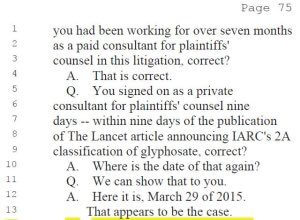
During the same week that IARC had published its opinion on glyphosate’s carcinogenicity, Christopher Portier signed a lucrative contract to be a litigation consultant for two law firms preparing to sue Monsanto on behalf of glyphosate cancer victims.
This contract has remunerated Portier for at least 160,000 USD (until June, 2017) for initial preparatory work as a litigation consultant (plus travel).
This contract contained a confidentiality clause restricting Portier from transparently declaring this employment to others he comes in contact with. Further to that, Portier has even stated that he has not been paid a cent for work he’s done on glyphosate.
It became clear, in emails provided in the deposition, that Portier’s role in the ban-glyphosate movement was crucial. He promised in an email to IARC that he would protect their reputation, the monograph conclusion and handle the BfR and EFSA rejections of IARC’s findings.
Portier admitted in the deposition that prior to the IARC glyphosate meetings, where he served as the only external expert adviser, he had never worked and had no experience with glyphosate.
I am still too shocked to know where to start! Perhaps a bit of history.
Background
Glyphosate is a mildly toxic herbicide widely used by EU farmers to control weeds and enable conservation agriculture practices that protect and improve soil health. This off-patent substance has been used effectively for over 40 years and still, to a large extent, delivers what farmers need, cheaply and sustainably. Outside of Europe, it is also used in combination with herbicide-resistant modified seeds (most well-known as the base for Monsanto’s Roundup used with Roundup-Ready seeds).
In March 2015, the International Agency for Research on Cancer (IARC) published its findings on glyphosate (and several insecticides), judging the herbicide to be probably carcinogenic. This sparked a wave of campaigning among the environmental activist community, the anti-GMO NGOs and the organic food industry lobby for a ban on glyphosate. All other scientific bodies and research institutes have rejected IARC’s conclusion, without exception. The European Commission has been trying for two years to renew the authorisation for glyphosate, but at each point has been blocked by Member States. It is likely that next month’s last attempt will fail and glyphosate will be removed from European markets.
This seems to be a type of revolving door: work to classify a substance, then work to sue the companies
Christopher Portier chaired an IARC committee in 2014 that proposed glyphosate as a substance to be studied by the monograph working group, to which he was named as the only invited technical specialist. I was alarmed to find Portier attached to this IARC panel given his affiliation with the Environmental Defense Fund, an American NGO running anti-pesticide campaigns since the 1960s. For two years, I have been documenting how IARC, and Portier in particular, have been acting with an activist zeal to push a clear anti-glyphosate, anti-Monsanto agenda (having written over 20 blogs on this scandal). Portier is part of what I have called the carpetbagger wave of American anti-GMO activists bringing funds, staff and strategies from Washington to the much more fertile precautionista lobbying terrain in Brussels.
Portier submitted his deposition at the offices of the law firm Weitz & Luxenberg on 5 September 2017. This blog is based on statements from the transcript of this meeting, published by USRTK. All screenshots are taken from this document with page numbers visible therein. The Q refers to the Attorney for the Defendant and the A is the answer provided by Portier. Portier also submitted an expert report prior to this meeting (referred to as “the report”).
Milking the Monsanto Honeypot
At the time IARC published its conclusions on glyphosate, Christopher Portier joined two law firms (Lundy, Lundy, Soleau & South and Weitz & Luxenberg) as a litigation consultant. He had even been in contact with Mr Lundy two months before joining the glyphosate working group meeting. As a consultant, Portier’s billing rate, according the report he submitted prior to the deposition, is 450 USD per hour.
He has no idea what the total is??? I would notice 160K in my bank account!
As of June, 2017, Portier had billed Lundy, Lundy, Soleau & South 160,000 USD for initial document preparation.
His role is to read documents and advise the lawyers on scientific matters as the two firms prepared lawsuits against Monsanto. That Lundy, Lundy, Soleau & South and Weitz & Luxenberg (see newspaper clipping below) were planning a Monsanto litigation strategy before IARC had even held their glyphosate working group meeting, and lining up their dream team, should come as no surprise – these class-action lawyers are a different breed of opportunist.
But Portier was not thinking like a scientist when he planned out this retirement scheme.
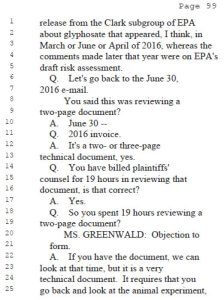
One could imagine that a long series of protracted lawsuits against Monsanto would be quite lucrative to the good scientist. What I found remarkable, as did the lawyers, is how meticulous Dr Portier has been on his research. He billed the law firm for 19 hours of work to read a two-page memo.
19 hours to read two pages (at 450 USD/hour).
This suggests that the law firm either has enough cash to splash, very lax accounting practices or they are letting Portier invoice for other fees they would rather keep off the books. I know which answer I believe.
Wonder how much Chris will charge for reading my blog?
This over-billing could compensate for Portier’s busy globe-trotting lifestyle, visiting capitals from Auckland to Ottawa – wherever there were meetings to consider banning glyphosate. I don’t suspect he was doing this out of the goodness of his heart.
Now the Risk-Monger is not envious (he has enough money to live well and provide enough free time to blog), except that I can’t help but notice the hypocrisy. Nor could the Attorneys for the Defendant. Here you have a scientist pulling in truckloads of cash to read a few documents (or memos) and then goes on the activist attack to criticize industry-funded researchers or those who might have their decisions skewed by “economic motivations”.
On the bright side, whenever industry funds research, they usually disclose their funding. I wonder if Dr Portier is equally transparent about who is paying his rent?
Portier, kettle, black! No Transparency
One of the problems with Portier’s contract with the law firm is that, like many legal relationships, it was imperative to maintain confidentiality. A kind of “lawyer-client privilege”, but for scientists. In other words, Chris could get paid so long as he did not tell anyone he was acting as their litigation consultant.
One of the problems with Portier’s contract with the law firm is that, like many legal relationships, it was imperative to maintain confidentiality. A kind of “lawyer-client privilege”, but for scientists. In other words, Chris could get paid so long as he did not tell anyone he was acting as their litigation consultant.
Portier was not allowed (bound by contract) to be transparent. He could not tell the media, journals, the public or other experts who was paying his rent. In fact, if anyone tried to force the good scientist to disclose his funding sources, he could push the panic button and his lawyers would come in, represent him and bring him to safety. (“I believe that’s what Part C says.”) Now call me naive, but I thought that kind of protection was only provided to mafia accountants.
During the deposition, the attorney for the defendant went systematically through every meeting, every paper, letter or activity and Portier admitted, at each point, that he had not identified his conflict of interest or acknowledged the law firms. But he still attacks Monsanto on this.
It took the attorney defense about 4 pages to convince Chris he had been full-frontal lying.
So Portier travels the world, meets the European Commissioner for Health, travels to the European Chemicals Agency for tea, advises the German Bundestag and meets with almost every health or environment minister across the European Union fighting the good fight to ban glyphosate while at the same time screwing Monsanto. But in the back of his mind must have been this latent, nagging discomfort that at some time during the conversation, any conversation, someone would turn to him and say: “So tell me, Chris, who is funding your activities?”.
By the time of the deposition, when all was finally opened up and put on the table, Portier must have been exhausted from carrying that burden.
To the contrary, Christopher Portier seemed to be quite comfortable lying about his funding. He even embellished his story with hyperbole. While he had received at least 160,000 USD to cover his activities, he would turn around and declare to a journalist that “no one had paid him a cent” and that he “had no conflict of interest whatsoever”. “Whatsoever” Chris? Seriously? Did you really have to add that word when you were fully bought and paid for?
In Portier’s defense, it could be a matter of simple ignorance. He may be another one of those people who think ‘conflict of interest’ only happens to evil corporate people. In the CV that he filed in his report, Portier failed to mention that he had been working for the Environmental Defense Fund. Also during the deposition (p 38-39), he scoffed at people who had thought his work for EDF could have been “perceived” as a conflict of interest. Perhaps being listed in the monograph working group as merely an “Invited Specialist” must still be eating him up inside.
After the publication of his deposition, his paymasters had to back down. When appearing in front of the European Parliament, Portier absolved himself by acknowledging who he was working for.
The New Anti-Corporate Bonanza
There has been much focus on how industry money is influencing policy debates, but scant attention to how certain “class-action-driven” law firms are using flimsy evidence (usually from IARC) to organise large-scale litigation bonanzas against corporations.
During the time of the tobacco lawsuits, a certain breed of lawyer emerged – one who could identify victims and negotiate quick settlements. Revenues grew nicely either through large jury payouts or compromises. Lawyers attract victims with “no cost, no fee up front” policies, with legal fees taken only when there is a pay-out (sometimes up to 50%).
Trawling for cancer victims. In the fine print: If No Recovery, No Fees or Costs are Charged!
But once the tobacco industry negotiated a truce with the American government (in exchange for a bit of honesty about the effects of smoking), these lawyers had to go elsewhere for their cash-flow. Each IARC monograph creates a new potential industrial sector for these snakes to feed on.
These law firms are also turning to campaigns and policy debates to ensure public outrage over the victims of alleged corporate malfeasance, running slick communications sites and, in the case of Weitz & Luxenberg (one of Portier’s Sugar Daddies … as well as Erin Brockovich’s), working with NGOs like US Right to Know.
This is what I would like to call the Oreskes Principle. Naomi Oreskes organised a conference with the Union of Concerned Scientists including some rather unscrupulous lawyers, NGO actors and academics in 2012 to see how to “tobacconise” other industries. This shockingly open strategy tries to find the means to put companies under continuous litigation pressure until they either change their strategy or go out of business. In 2012, they looked at ways to sue oil companies like ExxonMobil for climate change, and sure enough, several years later, the New York State Attorney General subpoenaed Exxon (and their consultants) for possible litigation for misleading investors on potential climate change effects.
The key goal of the Oreskes Principle is to run emotional campaigns, before going to the jury, to create enough public outrage that no jury would ever be able to be objective or capable of discerning facts from fear campaign materials. Manipulate public perception, create fear or outrage by cooperating with activists, gurus and NGOs, find a corporate scapegoat and litigate the hell out of them. Sound familiar?
This strategy is being played out now not only with Monsanto, but with Johnson & Johnson who are presently battling over 4500 lawsuits (with a recent 417 million USD decision against them) related to the suspected link between cancer and talcum powder (taken from another woefully written IARC monograph). There are several other IARC-driven examples of ongoing class action lawsuits (from certain industrial solvents to diesel exhaust fumes). With every hazard-based monograph, IARC is filling the trough for unscrupulous class-action lawyers to pony up some victims and trick a scientifically illiterate jury. Just add a litigation consultant from the original monograph working group to add credibility and watch the revenues come rolling in.
One problem I have with this (actually, I have dozens of problems with this model) is that law firms (especially the class action breed) are not at all transparent. We know, for example, that Weitz & Luxenberg are working with USRTK, they say so (only because Carey is managing their victim services), but we don’t know how much they are paying the NGO to help “subjectify” potential jurors or if they are funding other NGOs. How much do these law firms support activist groups?
One wonders how much IARC is aware of this, how much they play into the litigation trough and how aware the IARC working group scientists are of the potential available income as a “litigation consultant”. Clearly Portier knew about it and could barely wait for the ink to dry on the monograph before cashing in.
Portier: The Key to the Glyphosate Ban
Portier, in an email to the directors in IARC, took it upon himself to ‘heroically’ save IARC’s glyphosate monograph and to preserve IARC’s reputation as the leader in the fight to change how substances are reviewed. In the message posted here, Portier valiantly promised his IARC friends to be the agency’s defender! This suggests that he has been, since the IARC monograph working group meeting, the chief driver defending both IARC and its decision on glyphosate.
So what would Portier’s disgrace mean for IARC’s glyphosate monograph? If the monograph were retracted, what would happen to all of those class-action lawsuits against Monsanto? What would happen to all of those lovely lucrative consulting fees?
I do not believe Portier has worked so tirelessly over the last two years because of the need to defend the accuracy of the science or concern for public health, but rather, should IARC be forced to retract this monograph:
the thousands of lawsuits filed against Monsanto would be lost,
Portier’s lucrative consulting contract with these two law firms would be lost
his scientific reputation would be lost.
So out of personal greed, Christopher Portier led a two-year attack against EFSA and the BfR to undermine their scientific credibility on glyphosate, visiting European capitals, interfering in regulatory agency activities and living a life of total deception. Sweet!
But the science is not there. Glyphosate, by any risk assessment standards, is not carcinogenic. No other agency has supported IARC’s controversial conclusion. Not one!
Now comes the truly awful part of this terrible story.
Is Portier even an Expert?
Prior to showing up at IARC to be the external expert special adviser to Monograph 112 on glyphosate, Christopher Portier admitted, in his deposition, that he had never worked on glyphosate – that he had never even looked at any of the evidence on the carcinogenicity of glyphosate. He is, by education, a statistician who had previously worked on a wide variety of subjects including mobile phones.
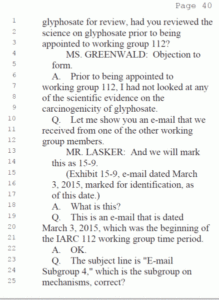
Portier acknowledges that prior to the IARC WG meeting, the expert adviser had never looked at any scientific evidence on glyphosate.
Many would wonder first why IARC would invite Portier to be the only invited expert adviser if he had never worked, had never published or had never been engaged with the pesticide toxicology community in general or with glyphosate in particular. Well, anyone who has looked at that little agency in Lyon will understand that IARC is not really very scientific, but more like a club of activist scientists and special interests. Kurt Straif and Kate Guyton knew Chris very well – the actual scientific capacity didn’t matter!
More interesting is why Portier decided to accept to serve in this vital function on what he knew would be a controversial monograph if he had no credible academic background, clearly a conflict of interest (working for an anti-pesticide NGO) and no real reason to be in the room. Did he accept the task because of the lucrative consulting contract he would get as an advisor to the law firms already planning to sue the pants off of Monsanto? Was it his hatred of industry science and the Monsanto conspiracies he had already been publishing on? Was it his desire to change the risk assessment approach (with glyphosate as his launch pad)? Probably all of these reasons, but I believe his desire post IARC publication was largely guided by personal interest and greed.
One thing is clear, his reasoning was not driven by any desire to advance the science or ensure sound science-based policy!
If Portier had Worked for Monsanto…
I can’t help thinking of the depth of the double standards here. Christopher Portier acted out clear self-interest for a lucrative consulting contract, did not disclose who was paying him as he lobbied at the highest levels, had his interests aligned with the continued regulatory belief that glyphosate was carcinogenic and had led people to believe he was an expert on glyphosate. His combative actions have torn apart trust in science, trust in regulations and trust in conventional agriculture. He has aligned himself with an army of self-interested lobbyists and activists who are charging Monsanto with the very things Christopher has admitted in his deposition to have done.
The science does not side with Portier … at all. Nor does the truth. Nor do norms of basic human decency.
Soon I will go to give a lecture and see my cardiologist. This blog may get some circulation, maybe a reprint or two among those who agree that the science should be respected. The organic lobby activists will largely ignore this and continue to attack Monsanto (they might say, in a Machiavellian tone, that Chris needed to do this in order to get people to see how terrible Monsanto is). The clever wordsmiths in the movement may even elevate Portier to the messianic level because I used less than polite adjectives (and I’ll be under more attack by people paid to hate). By next week, this will be forgotten and I’ll be writing about something like endocrine disrupting chemicals.
How do we get out of this outrageously stupid narrative? How do we get people to wake up and see that the entire move to ban glyphosate, to hurt farmers and affect consumers has been based on greed and lies? How do we get regulators to show courage and do their jobs?
I can’t answer that … I can only hope others start asking such questions as well.
Personal Comment
Many Risk-Monger followers will have noticed the abuse I have received in the last few weeks, particularly in the Belgian and French media, related to the anti-glyphosate campaign, with baseless claims of me being the poster-boy of Monsanto lobbying. They will recall how I started my criticisms of IARC’s monograph 112 over 30 months ago just after the publication of their glyphosate findings, with the mainstream media picking the IARCgate scandal only a year later and only after activists had succeeded in shutting my old blog page down because of my defense of glyphosate. They will see the daily attacks on me on social media (yesterday around 300 slurs on my twitter account alone) and must wonder how vindicated I am feeling to read Portier’s shockingly incriminating deposition.
I actually feel quite sad.
Sad for what these activists have done to the reputation of science.
Sad for the loss in public trust in the agencies regulating plant protection products.
Sad for how the farmers have been left voiceless and lost in the volume of opportunistic attacks by the organic food industry lobby.
Sad that Portier’s deposition has been out for a week now, and I am the first person to raise attention to it.
Sad that regulators in Brussels see this information, but still continue to move toward taking glyphosate off the market, out of fear of the enraged chemophobic mob this lobby has created in each European capital.
I am ashamed that characters like USRTK’s Carey Gillam, CEO’s Martin Pigeon and the European Green Party’s Bart Staes were standing up in the European Parliament condemning Monsanto and casting doubt on the safety of glyphosate when they knew full well the lies and deception of the shambolic work of IARC and of Christopher Portier (sitting next to them), upon which their entire campaigns rested.
It is sad that today they will ignore the fact that their entire attack on glyphosate is based on lies and greed and no scientific facts, and tomorrow, Carey, Martin, Bart and thousands of other well-paid activist lobbyists will get up again and put all of their hate and energy into banning a beneficial agricultural product, not for any environmental or public health reason, but simply to win … to win a cynical campaign that is funded by an industry that is building its market up on creating public fear.
It is sad to think that tomorrow I will get up again, in vain, to try to get people to see these lies and greed.
I guess integrity doesn’t pay the rent.
David Zaruk is the Risk Monger, an EU risk and science communications specialist since 2000, active in EU policy events from REACH and SCALE to the Pesticides Directive. Follow him on twitter @zaruk
Fear-mongering ‘facts’—like tomatoes engineered with spider genes or cars exploding from full gas tanks on hot summer days— show how out of touch society is with basic science. Science literacy depends on the clarity of communication from scientists and scientific institutions. The prevalence of these fake ‘facts’ show that something must be done to remedy the chasm between the public and academia, especially as science legislation becomes affected by bad science. Mahaletchumy Arujanan, a Malaysian scientist and executive director of the Malaysian Biotechnology Information Centre (MABIC) calls on the scientific community to establish productive dialogue with non-scientists, defend research priorities and criticize bad science.
When scientists excavated a 40,000-year-old skeleton in China in 2003, they thought they had discovered the offspring of a Neandertal and a modern human. But ancient DNA now reveals that the “Tianyuan Man” has only traces of Neandertal DNA and none detectable from another type of extinct human known as a Denisovan. Instead, he was a full-fledged member of our species, Homo sapiens, and a distant relative of people who today live in East Asia and South America. The work could help scientists retrace some of the earliest steps of human migration.
“The paper is very exciting because it is the first genome to fill a really big gap, both geographically and temporally, in East Asia,” says paleogeneticist Pontus Skoglund of Harvard Medical School in Boston, who was not involved in the work.
…
[T]he Tianyuan Man was not a direct ancestor, but rather a distant cousin, of a founding population in Asia that gave rise to present-day Asians, Fu’s team reports today in Current Biology. It also shows that these ancient “populations moved around a lot and intermixed,” says paleoanthropologist Erik Trinkaus of Washington University in St. Louis in Missouri, who is not a co-author.
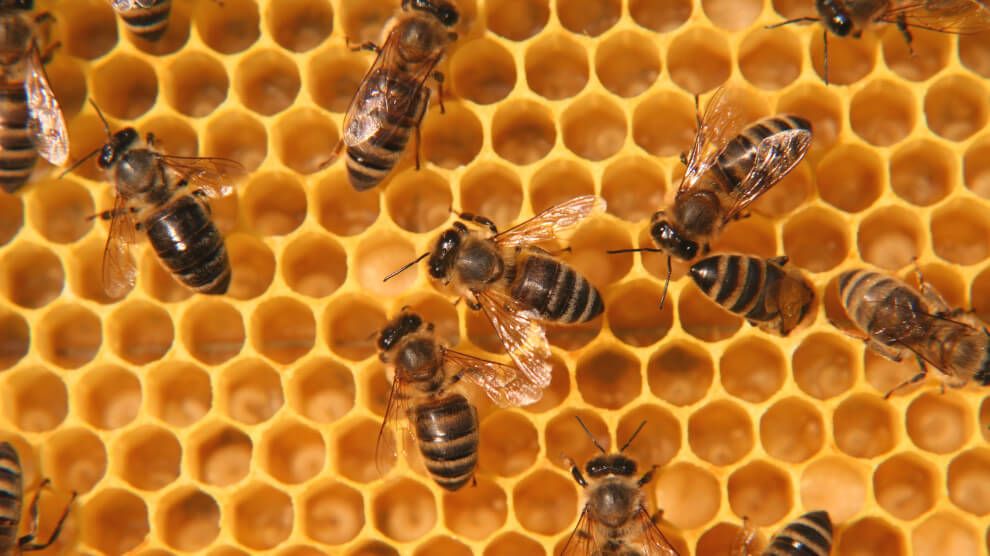
That’s the takeaway from a paper, published in the journal Science, by a team of Swiss researchers. They found traces of the bug-killing chemicals in 75 percent of honey samples drawn from around the world—and 86 percent of the samples from North America.
For human honey eaters, there’s probably nothing to worry about. The authors report that in all of the tested samples, the levels found were “below the admissible limits for human consumption according to current EU and U.S. regulations.”
…
The Swiss team notes that the chemicals turned up in honey at an average concentration level of 1.8 nanograms per gram; and that ill effects from exposure to them have been documented at levels as low as 0.1 nanograms per gram. Nearly half of all the honey samples they tested carried neonics at that concentration or higher.
Neonics are produced primarily by the Swiss/Chinese agrichemical titan Syngenta and its German rival Bayer, which is currently in the process of merging with Monsanto. The companies vigorouslydeny that their blockbuster insect-killers do any harm to bees and other pollinators, but research to the contrary is piling up.
Every day, it seems, brings with it fresh new horrors. Mass murder. Catastrophic climate change. Nuclear annihilation. It’s all enough to make a reasonable person ask: How much longer can things go on this way? A Princeton University astrophysicist named J. Richard Gott has a surprisingly precise answer to that question.
…
Assuming that you and I are not so special as to be born at either the dawn of a very long-lasting human civilization or the twilight years of a short-lived one, we can apply Gott’s 95 percent confidence formula to arrive at an estimate of when the human race will go extinct: between 5,100 and 7.8 million years from now.
…
But for either of those scenarios to be true we must be observing humanity’s existence from a highly privileged point in time: either at the dawn of a technologically advanced, galaxy-hopping supercivilization, or at the end of days for an Earthbound civilization on the brink of extinguishing itself.
…
Gott’s Copernican estimate for human life is in line with what we know of species’ life spans from the fossil record. Mammalian species typically last around 1 million years before going extinct. You could argue that our species’ intelligence gives us a survival edge over say, a mastodon or a rabbit, which could make us more likely to beat those odds.
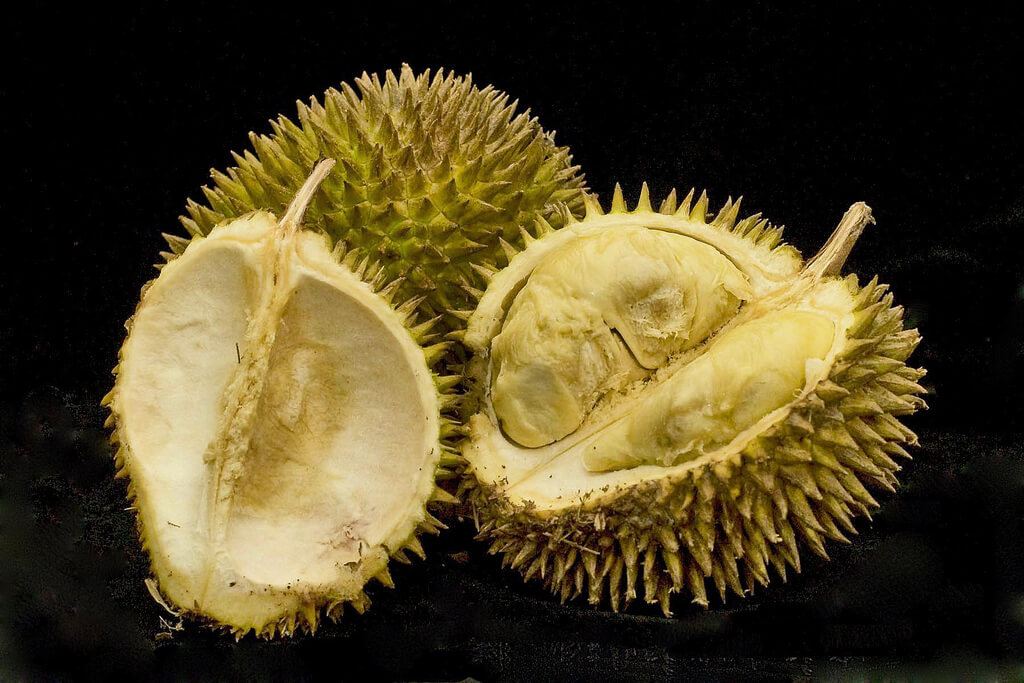
[A team of five researchers from the National Cancer Centre Singapore (NCCS) ] used state-of-the-art sequencing platforms to map the genome of the Musang King or Mao Shan Wang durian. According to the team, they received funding of S$500,000 from a group of anonymous durian lovers.
The team’s analysis, published in the journal Nature Genetics, revealed that the durian genome comprises about 46,000 genes, almost double that of humans who have 23,000 genes.
…
Comparing gene activity patterns from different parts of the durian plant led to the identification of a class of genes called MLGs (methionine gamma lyases), which regulate the production of odor compounds called volatile sulphur compounds (VSC), the press release stated.
“Our analysis revealed that VSC production is turbocharged in durian fruits, which fits with many people’s opinions that durian smell has a ‘sulphury’ aspect,” said Duke-NUS’s Prof Patrick Tan, who is also co-lead author.
The durian genome sequence will be a useful resource for durian agronomy research – for example in identifying, and possibly modifying genes involved in disease resistance, drought tolerance and flavor profiles.
“We can look at the genes (responsible for) the high sugar level in the durian. Theoretically, it’s possible to create a diabetic-friendly durian,” said [professorTeh Bin Tean, the deputy director of the National Cancer Center]
The GLP aggregated and excerpted this article to reflect the diversity of news, opinion and analysis. Read full, original post: Singapore scientists crack the durian genome
Methionine, found in meat, is one of the nine essential amino acids that humans get from food, according to the National Center for Biotechnology Information. It is needed for growth and tissue repair, improves the tone and flexibility of skin and hair, and strengthens nails. The sulfur in methionine protects cells from pollutants, slows cell aging and is essential for absorbing selenium and zinc.
Every year, synthetic methionine worth several billion dollars is added to field corn seed, which lacks the substance in nature, said study senior author Joachim Messing, a professor who directs the Waksman Institute of Microbiology.
…
Rutgers scientists inserted an E. coli bacterial gene into the corn plant’s genome and grew several generations of corn [read the full study here (behind paywall)]. The E. coli enzyme – 3′-phosphoadenosine-5′-phosphosulfate reductase (EcPAPR) – spurred methionine production in just the plant’s leaves instead of the entire plant to avoid the accumulation of toxic byproducts…. As a result, methionine in corn kernels increased by 57 percent, the study says.
Then the scientists conducted a chicken feeding trial at Rutgers and showed that the genetically engineered corn was nutritious for them, Messing said.
“To our surprise, one important outcome was that corn plant growth was not affected,” he said.
Japanese researchers have genetically engineered hens whose eggs contain drugs that can fight serious diseases including cancer, in a bid to dramatically reduce the cost of treatment, a report said (October 9th, 2017).
…
Researchers at the National Institute of Advanced Industrial Science and Technology (AIST) in the Kansai region kicked off the process by introducing genes that produce interferon beta into cells which are precursors of chicken sperm, the newspaper reported.
They then used these cells to fertilise eggs and create hens which inherited those genes, meaning the birds were able to lay eggs containing the disease-fighting agent.
The scientists now have three hens whose eggs contain the drug, with the birds laying eggs almost daily, the report said.
The researchers plan to sell the drug to pharmaceutical companies, halving its price, so the firms can use it first as a research material, the newspaper said.
Consumers may have to wait a while, as Japan has strict regulations concerning the introduction of new or foreign pharmaceutical products, with screening processes that routinely take years to complete.
Seed developers including Monsanto Co. and DowDuPont Inc. have invested in gene-editing technology, which enables scientists to make precise changes to plants’ existing DNA. Executives say they’re also strategizing on how to introduce it to consumers without arousing the same fears and suspicion that followed the development of earlier biotech crops, which involved adding genes from other species.
…
James Collins, who heads DowDuPont’s agricultural division, said that gene editing is different because the technology can be used to make edits within a plant’s existing genetic code, without adding any outside genes.
For that reason, he said, gene-editing tools such as CRISPR-Cas9 and TALEN resemble the centuries-old process of breeding together different strains of plants to produce an improved version.
Persuading consumers to support gene-edited crops will require engaging them “at a very local level,” Mr. Collins said. The agriculture industry, he said, must communicate to people how a variety of corn, with its DNA edited to better resist drought, can help to feed a global population projected to rise to nearly 10 billion by 2050, for instance.
“You need context,” said [Hugh Grant, Monsanto’s chief executive]. Today, he said, “people are further and further away from the field, and further away from how food is produced.”
The GLP aggregated and excerpted this article to reflect the diversity of news, opinion and analysis. Read full, original post: Seed Giants See Fresh Start in Gene-Editing
Male birth control is the great promise that never was. We’ve been just a few years away from a male pill for decades. But each time, side effects or lack of effectiveness foils every woman’s dream of finally passing on the burden of [protecting against] pregnancy prevention to her partner.
…
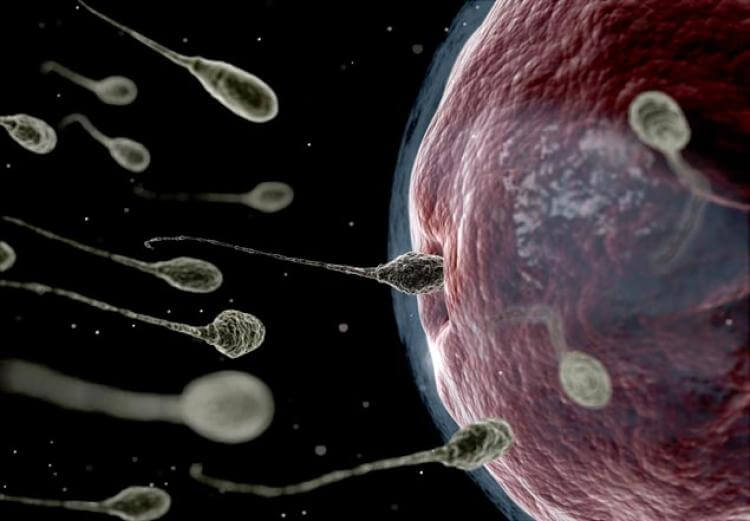
This latest male contraceptive candidate put into play—one that’s expected to enter human clinical trials in the next year or so—is a gel that uses a technique called “reversible inhibition of sperm under guidance” to block sperm from being ejaculated. It’s looked promising in trials done in rabbits and primates.
But we’ve seen this before. Pharmaceutical companies have been reluctant to invest much into the male contraceptive market and few techniques have moved past initial phases of testing. That’s partially because the bar for side effects is very low. While women’s birth control causes a litany of side effects for many women, regulators view those side effects as acceptable because they’re a trade-off for preventing another potentially dangerous medical condition: pregnancy.
…
The market demand is there, however—and it’s a market potentially worth billions and billions of dollars. Maybe one day genetic engineering will lead to a male birth control option that’s just a little easier to swallow.
Mya Burkhart was only six months old when she suffered her first cardiac arrest. It was her eighth or ninth visit to hospital when it happened. She had respiratory problems and was not developing at a normal rate. Doctors predicted she might have a muscle disorder, but symptoms said otherwise. Due to heart attack, Mya spent three weeks on ventilator in ICU. Her mother, Holly said she could not pick her up due to her condition. Doctors finally suggested to have her genome tested to get clues about her lack of normal growth and breathing condition.
The genome test was in its infancy at that time. But Molly was ready to take a chance to seek answers to her daughter’s condition. The role of genome screening was controversial as information obtained was neither definitive nor accurate all the time. But doctors took chances in finding answers to her condition. In Mya’s case, genome screening revealed a mutation in her gene responsible for transportation of citrate. Without that gene, her cells could not get the needed energy. Once the analysis unveiled the deficiency, Mya was given citrate supplements. She might have development delays, but she did not get any respiratory infections. Genome screening helped doctors to save her life.
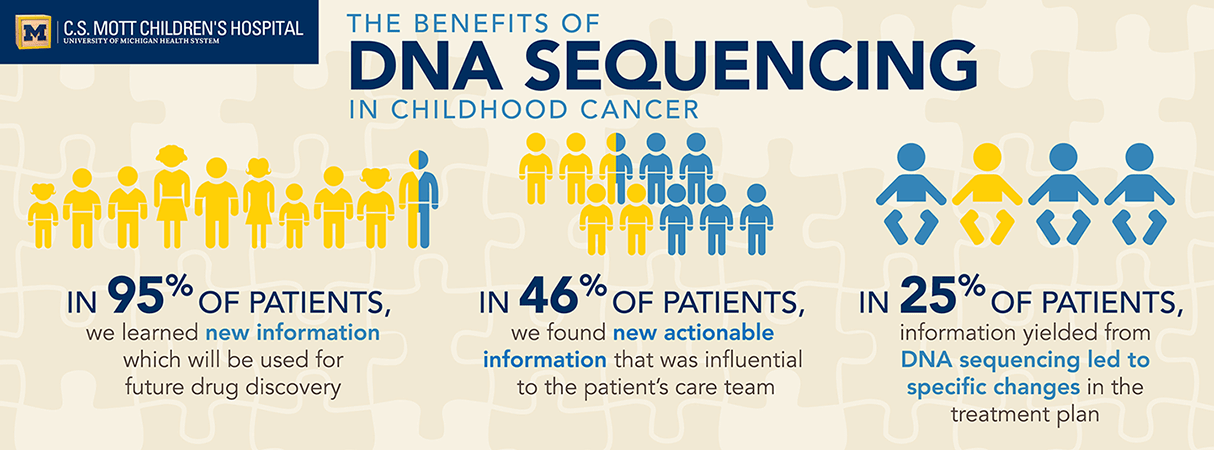
Today, even small improvements and discoveries in DNA sequencing can result in immediate clinical consequences. From Sanger sequencing to the Human Genome Project to single molecule sequencing, there have been significant improvements over the period of time.
Researchers are optimizing DNA sequencing using nanophysics and electric currents to enable totally new sequencing experiments. Moreover, they are also working to make this available for large scale use. A recent study published in Nature Communications outlined a newly developed technique, ELM-seq. This technique helps researchers to control and manipulate DNA sequence.
Leading market players are investing in developing next generation sequencing technologies owing to technological advancements, discovery of improved methods that provide precise results, and increase in DNA sequencing applications. Researchers in the Netherlands are working on developing methods with the help of DNA sequencing to use existing drugs to treat various types of rare cancers. In its recent report on the global DNA sequencing market, Allied Market Research stated that the market is expected to reach $18,284 million in 2023, growing by 19.6% from 2017 to 2023.
Following are new research studies that could have a significant impact on the global industry:
Optimization with the help of nanophysics & electric currents
A new technology developed by Meni Wanunu, Northeastern University Professor of Biological Physics in association with Pacific Biosciences, optimizes DNA sequencing with the help of nanophysics and electric currents. DNA can be loaded into sequencing wells having higher orders of magnitude efficiencies. The research was published in the journal, Nature Nanotechnology.
Pacific Biosciences developed an optical technology for single molecule sequencing (SMS), which depends on nano-wells. These nano-wells play a significant part in localizing sequencing signal and carrying out single molecule sequencing. But, methods implemented by the company to load DNA into wells works for shorter molecules rather than longer. These wells were redesigned by Wanunu in his lab for integration of nanopores at their bases. Nanopores are pores of nanometer dimensions, found in electrically insulating materials and used to study the physical properties of biomolecules. The redesign with the integration of nanopores allowed attraction of larger segments of DNA once electric field is applied. The DNA molecules enter the wells once the voltage is applied and longer DNA molecules become predominant over shorter ones.
“Large DNA molecules need just a small push to get into the sequencing volume, but once we apply this force, we can capture enormous sample fragments easily. The system will enable totally new sequencing experiments,” said Joe Larkin, first author of this paper.
Furthermore, Wanunu and his lab are striving to make this technology available for large-scale use, especially for equipment at Pacific Biosciences.
Effect of DNA sequencing on gene activity
Researchers have developed a new technique that scans thousands of randomly generated DNA sequences to search those particular ones that activate reporter genes. A reporter gene is used to ‘tag’ another gene or particular DNA sequence. It assists in identifying cells that contain the tagged gene or targeted sequence.
Researchers developed the technique, known as ELM-seq, which is used to enhance level of transcription, a process in which a gene is read to generate an intermediate message known as RNA. The technique is dependent on indirect measurement of activities of a gene that encodes a protein adding a chemical ‘tag’ on to DNA. There will be more tags on DNA if a gene is more active. The detection and measurement of these tags are carried out with the help of massive parallel sequencing, a technique that uses miniaturized and parallelized platforms for sequencing. This technique offers a quantitative readout of activity levels of genes and outlines how thousands of sequences affect gene activity.
Researchers have proved that the technique is applicable for a simple organism. Moreover, it could be applicable for bacterial species or human cells to determine how genes are controlled and can be manipulated.
DNA Sequencing opens possibilities of drugs for rare cancers
Patients with rare cancers patients can be treated with therapies used for patients with other cancers if they carry similar genetic mutations as them. The Centre for Personalized Cancer Treatment (CPCT) gathers biopsies from metastatic cancer patients. These biopsies are analyzed with the help of Whole Genome Sequencing (WGS) to create a database for all types of cancer. Researchers have found preclinical evidence suggesting that certain drugs, which are sensitive to certain types of tumors could also be sensitive to patients with the same mutation in other types of tumor groups
“By sequencing the whole genome in so many patients, we found commonalities between tumors and DNA mistakes. For example, the ERBB2 gene is mainly screened for in breast cancer patients, but we know that it is also present in patients with other tumor types,” said Prof. Emile Voest, principal study investigator from the Netherlands Cancer Institute in Amsterdam.
The study aims to determine full potential of existing drugs instead of development of new drugs and using it for treatment of other types of cancer with the help of DNA sequencing.
Pratik Kirve is a writer at Allied Analytics LLP. He holds a bachelor degree in Electronics and Telecommunication Engineering. Follow him Twitter at @PratikKirve
In a first-of-its kind study looking at empathy, researchers have found strong evidence that the ability to read and understand emotions in others simply by looking into their eyes is influenced by our genes.
…
The researchers found evidence that this important human ability to read, understand and respond to emotions in others — vital for social interactions — is indeed influenced by genetics, and that women were much more adept at discerning emotions than men. The researchers even found a specific genetic variant that influenced that ability in women, an association not found in the opposite sex. In addition, the study found that higher empathy scores were also associated with higher risk for anorexia, more years in school, and openness to new experiences.
The research adds to ongoing studies on the connections between empathy and autism, specifically the ability to infer emotions in others or “cognitive empathy.”
…
The genetic variant associated with empathy in women is near the gene LRRN1 on chromosome 3, which is highly active in a part of the human brain called the striatum. Brain scans indicate that this portion of the brain may play a role in cognition empathy, but more study is needed to understand this potential connection.
The GLP aggregated and excerpted this blog/article to reflect the diversity of news, opinion, and analysis. Read full, original post: The Genetics of Empathy
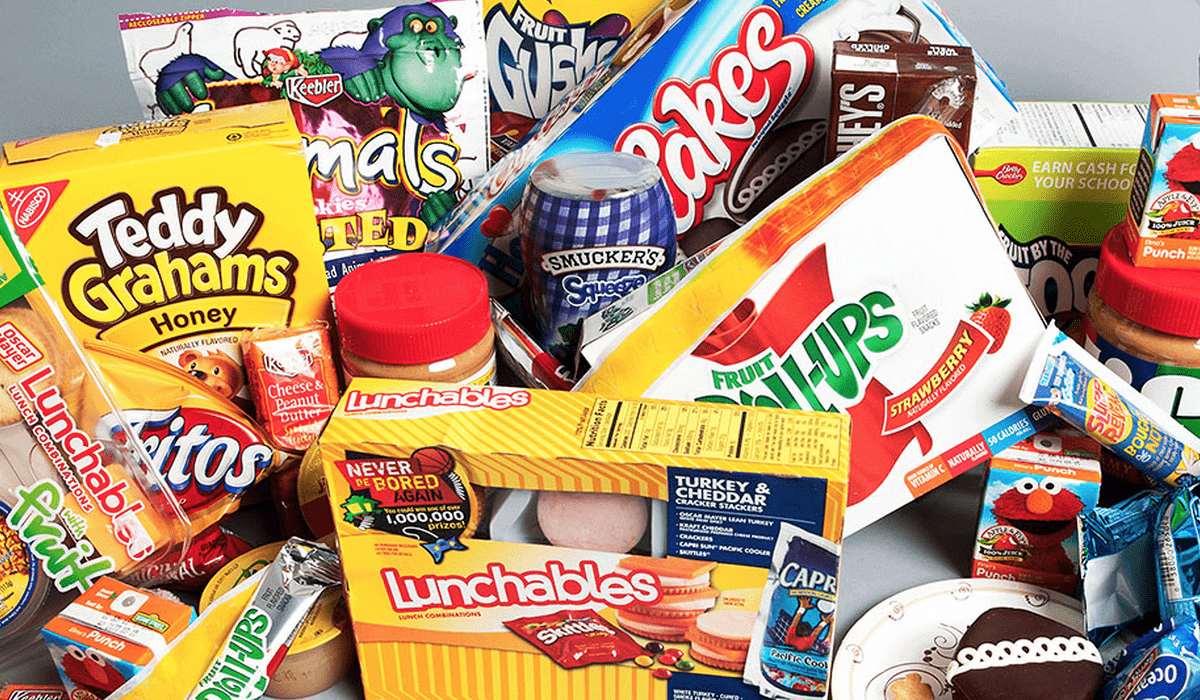
[Most] of us don’t have a clear understanding of what “processed food” means. Many foods we like to think of as “whole” and “natural” undergo a fair amount of processing. As food scientist Robert Shewfelt explains in his book In Defense of Processed Food, baby carrots have to be de-leaved, washed, disinfected with chlorine, chilled, cut, peeled, and polished prior to bagging. Bagged salads are shredded and triple washed, also with chlorine. Most milk in the U.S. is fortified, homogenized, and pasteurized, and that’s a good thing, as pasteurization greatly reduces the risk of foodborne illness.
…
But what about the chemicals?… Well, technically, everything is a chemical. Just look at the makeup of this all-natural banana: all chemicals. And organic pop tarts and non-GMO chips aren’t any healthier, or less processed, than those made by Kellogg’s or Lay’s.
Weighing the health risk of certain ingredients, it’s important to remember that old maxim: The dose makes the poison. Most preservatives, additives, and other chemicals in our food are present only in trace amounts that aren’t dangerous or unhealthy. For example, a July 2017 New York Times article on boxed macaroni and cheese warned consumers about the presence of dangerous phthalates, but what the article didn’t explain is that the levels detected were minuscule.
The GLP aggregated and excerpted this article to reflect the diversity of news, opinion and analysis. Read full, original post: ‘Processed Food’ Gets an Unfair Bad Rap