Drought-tolerant maize could increase food security in Zimbabwe

maize

A new study from scientists with the International Maize and Wheat Improvement Center (CIMMYT) shows that drought tolerant (DT) maize varieties can provide farming families in Zimbabwe an extra 9 months of food at no additional cost [read the full study here]. As climate change related weather events such as variable rainfall and drought continue to impact the southern African nation at an increasing rate, these varieties could provide a valuable safety net for farmers and consumers.

The study found that households that grew DT maize were able to harvest 617 kilograms more maize per hectare than households that did not grow DT maize varieties. This translates into $240 per hectare extra income for households that grow DT maize varieties, equivalent to 9 months’ worth of additional food security.

As 93 percent of households surveyed grow improved maize varieties using seed purchased from local markets, this shows that by switching to DT varieties local farmers could greatly improve their livelihoods and food security at no additional cost. Currently, only 30 percent of households surveyed grow DT varieties.

Adoption of drought-tolerant maize varieties by farmers is crucial to maintaining food security in the region. Studies have shown that CIMMYT DT maize varieties can increase yields by 40 percent under severe drought conditions compared to local commercial varieties.

The GLP aggregated and excerpted this article to reflect the diversity of news, opinion and analysis. Read full, original post: Drought tolerant maize provides extra 9 months of food for farming families

Aquabounty and food activists clash over need for labels for GMO salmon

salmon gmo

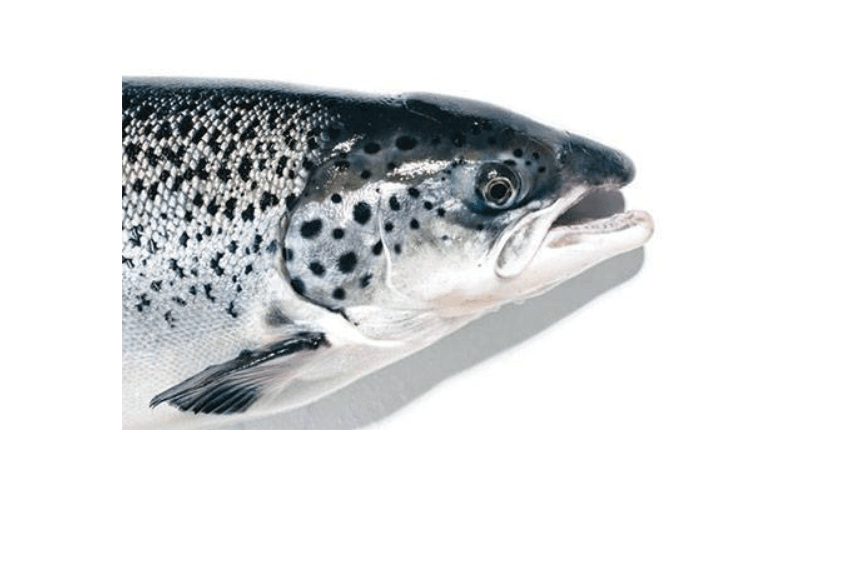
Four-and-a-half tons of genetically modified salmon have been released into the Canadian food market, and consumers have no way of knowing exactly where.

The release has roiled GM food skeptics, who say there’s no way for them to figure out whether the fish—sold by Massachusetts-based AquaBounty Technologies—were purchased by Canadian retailers, restaurants, or food service operators. Even more frustrating to them, the Canadian government does not require GM foods be labeled as such, making them virtually impossible to avoid.

What’s happening in Canada with the rollout of the salmon—the first country in which it will be sold—is noteworthy because, in the last decade, a negative narrative, fair or unfair, has developed around genetically modified foods, driven by a relatively small but vocal contingent of skeptics who want to avoid eating those foods. Until now their ire has been aimed at GM corn, soybeans, and other plant products. But AquaBounty is introducing the first genetically-modified food animal to its first market, a powerful moment for future foods.

Quartz reached out to AquaBounty to learn more about the salmon rollout and its future plans. The company did not make someone available to discuss those topics.

The GLP aggregated and excerpted this article to reflect the diversity of news, opinion and analysis. Read full, original post: The rollout of the first genetically modified food animal is being bungled

Ben and Jerry’s announces organic dairy line in Europe, pledges ‘no glyphosate traces’

Screen Shot at AM

Ben & Jerry’s has moved to cut all glyphosate-tainted ingredients from its production chain and introduce an “organic dairy” line next year, after a new survey found widespread traces of the controversial substance in its European ice-creams.

The trigger for [the] move was a survey which found that popular B&J 500ml tubs of flavours such as Peanut Butter Cup, Half Baked and Chocolate Fudge Brownie in the UK all contained between 1 and 1.23 parts per billion of glyphosate.

Other B&J flavours that tested positive for glyphosate in France, Germany and the Netherlands were: Karamel Sutra Core, Cinnamon Buns, Cookie Dough and Topped Chocolate Caramel Cookie Dough.

Ronnie Cummins, the international director of the Organic Consumers Association, which commissioned the new survey, said: “Although we are happy to hear that consumer pressure has forced Unilever/Ben and Jerry’s to declare that some of their non-dairy ingredients will no longer be sprayed with RoundUp … the campaign to force Ben and Jerry’s to begin the transition to 100% organic will continue until the company signs a legally binding agreement and timeline to make this global transition over the next three to five years.”

European food safety authority guidelines put the levels of glyphosate found in the HRI tests well within safe limits.

The GLP aggregated and excerpted this article to reflect the diversity of news, opinion and analysis. Read full, original post: Ben & Jerry’s to launch glyphosate-free ice-cream after tests find traces of weedkiller

Is it better to be intelligent or a critical thinker?

thinker

You might imagine that doing well in school or at work might lead to greater life satisfaction, but several large scale studies have failed to find evidence that IQ impacts life satisfaction or longevity.  Grossman and his colleagues argue that most intelligence tests fail to capture real-world decision-making and our ability to interact well with others.  This is, in other words, perhaps why “smart” people, do “dumb” things.

The ability to think critically, on the other hand, has been associated with wellness and longevity. Though often confused with intelligence, critical thinking is not intelligence.  Critical thinking is a collection of cognitive skills that allow us to think rationally in a goal-orientated fashion, and a disposition to use those skills when appropriate.

Is it better to be a critical thinker or to be intelligent? My latest research pitted critical thinking and intelligence against each other to see which was associated with fewer negative life events. People who were strong on either intelligence or critical thinking experienced fewer negative events, but critical thinkers did better.

Intelligence is largely determined by genetics. Critical thinking, though, can improve with training and the benefits have been shown to persist over time.  Anyone can improve their critical thinking skills: Doing so, we can say with certainty, is a smart thing to do.

The GLP aggregated and excerpted this blog/article to reflect the diversity of news, opinion, and analysis. Read full, original post: Why Do Smart People Do Foolish Things?

Despite drift issue, Monsanto sees ‘surge’ of farmers buying dicamba-resistant GMO soybean seeds

RRSoybeansExtend

Monsanto Co. posted a surprise fourth-quarter profit and said it still expects a surge in sales of a controversial line of genetically modified soybeans, despite complaints that an herbicide used along with the seeds has damaged some U.S. crops.

The St. Louis-based company also said its Roundup Ready 2 Xtend soybeans will cover more than 20 million acres in the U.S. in 2017 and in excess of 40 million next year.

There has been speculation the company would take a hit from problems experienced by some growers this year as they apply dicamba, a weedkiller that Xtend seeds have been genetically modified to withstand. In some cases, the chemical has been “drifiting” across other fields that aren’t planted with dicamba-resistant crops. At least 2.5 million acres (1 million hectares) were damaged in the latest growing season through mid-July, according to one estimate.

The issue led Missouri and Arkansas to implement temporary bans on dicamba earlier this year. Monsanto maintains that errors in applying the pesticide are to blame for any damage. But some observers question whether the chemical is drifting because it’s too volatile.

The GLP aggregated and excerpted this article to reflect the diversity of news, opinion and analysis. Read full, original post: Monsanto Shrugs Off Herbicide Concerns With Surprise Profit

Has the Non-GMO label fever peaked? Major vegetable packing firm removes ‘fear perpetuating’ label

p landing nourish bowls

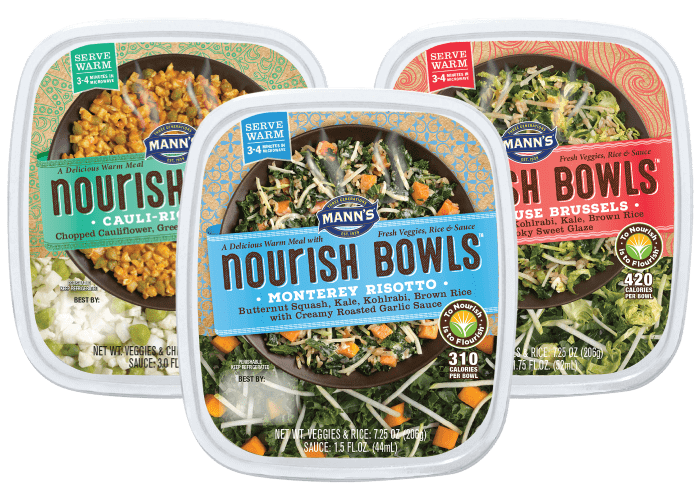
One year ago, Mann Packing went through the process of getting some of its vegetable products Non-GMO Project Verified. Now, the company is trying to distance itself from non-GMO labeling.

The company is removing the non-GMO verified check from its single-cut lettuce products in its next print run, which could take place next month, said Gina Nucci, Mann’s director of corporate marketing. Mann did an about face after presenting its product packaging in Canada, where the Non-GMO Project Verified label is only allowed on products that have a GMO alternative.

“There is no GMO lettuce,” said Nucci. “It made us go: Why are we doing this? We are perpetuating a fear that something is wrong with GMOs. We didn’t feel right doing that, so we chose to take that label off.”

Nucci added that the company is aware it has customers who want their products to be GMO-free. Mann gets about three calls per week on its 1-800 number from people asking if its products have GMOs. To contend with this, the company created an FAQ page.

She explained that Mann’s approach is all about giving consumers all the facts “so they can make the best choice for them.”

The GLP aggregated and excerpted this article to reflect the diversity of news, opinion and analysis. Read full, original post: Why Mann Packing is removing non-GMO labels as major brands add them

Is climate change to blame for disappearing bumblebees?

bumblebee

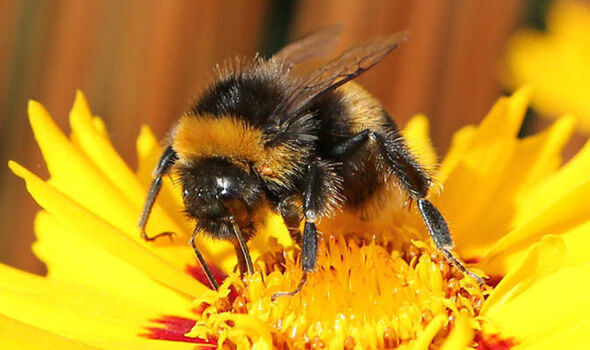
[Researchers] have discovered one of the reasons why bumblebees are disappearing – global warming’s effect on flowering times.

Scientists at Florida State University studied three species of bumblebee in the Rocky Mountains in Colorado, looking at both the direct and indirect effects of climate change. Their findings are published in Ecology Letters.  

The researchers found that up in the Rocky Mountains, global warming is causing snow to melt earlier, and flowering seasons to last longer. This might sound like a good thing for bees, but Ogilvie and her team found quite the opposite. Extended flowering seasons meant more days of poor flower availability and a shortage of food overall. Sadly, this lack of good quality flowers is killing the bees.

“When researchers think about flower effects on bees, they typically consider floral abundance to be the most important factor, but we found that the distribution of flowers throughout a season was most important for bumblebees,” Ogilvie said.

As the world’s population continues to expand, and the climate is constantly changing, future food security is becoming more and more of a worry….Along with other bee species, they are responsible for pollinating 70 percent of our fruit, veg, nuts, and seeds. 

The GLP aggregated and excerpted this article to reflect the diversity of news, opinion and analysis. Read full, original post: How Climate Change Is Killing Bumblebees

Questioning the benefits of caffeine for Parkinson’s patients

e

A few years ago we were told that something as basic as drinking coffee conferred benefits upon those with Parkinson’s disease. But after closer inspection and expanded study, that conclusion has been withdrawn.

The new research took note of the small number of participants and the brevity of the previous study, which lasted just six weeks. When they enlarged the pool of subjects and lengthened the timeline, the benefits were no longer apparent. […] “While our previous study showed possible improvement in symptoms, that study was shorter, so it’s possible that caffeine may have a short-term benefit that quickly dissipates,” said Ronald Postuma MD, MSc, at McGill University in Montreal. “Regardless, our core finding is that caffeine cannot be recommended as therapy for movement symptoms of Parkinson’s disease.”

The 2012 study was only six weeks long; the new study was expanded to six to 18 months, following 121 participants diagnosed with Parkinson’s for an average of four years. Sixty received caffeine capsules, while the other half (61) were given placebos. […] For caffeine consumers, researchers found no appreciable improvement in controlling movement symptoms, as well as no quality of life improvements, two major factors that convinced researchers to halt the study.

The GLP aggregated and excerpted this blog/article to reflect the diversity of news, opinion, and analysis. Read full, original post: After Review, Caffeine’s Benefit For Parkinson’s Nullified

Are you reading this because you want to? Or because the neurons in your brain want you to?

Shackle Cover Knowing Neurons

If you’ve ever read an article proclaiming that neuroscience disproves free will, you’ve probably heard of the Libet experiment.

The claim advanced by Libet and many others was that the readiness potential is an empirical indicator of the underlying neurological mechanism that we experience as volition. Our conscious experience of free will is therefore merely something we report after the fact, once our brains have initiated the action. Free will can thus be measured, the argument went — and it is the product of neurochemistry, not the conscious mind.

[W]hen confronted with the choice to murder, my decision is not simply the result of a logical process of deliberation but also a response to a well-formed impulse — something that might well appear from a neurological perspective to be a “real-time read-out of neural precursor activity.”

[Neuroscientist Patrick] Haggard offers a convincing case for the measurability of a reasons-responsive impulse to act. But he has not shown why the existence of such impulses must doom human freedom. Why, when faced with a choice — whether to kill, for instance — am I confronted with this impulse, this sense of will?

Neuroscientists continue to claim that they have annexed free will to their domain. But, at least for now, freedom belongs still to the philosophers.

The GLP aggregated and excerpted this blog/article to reflect the diversity of news, opinion, and analysis. Read full, original post: Can Neuroscientists Measure Free Will?

University student reflection: Let’s take a balanced ethical and scientific look at genetic engineering

geneticengineering dassaulr

Although the idea of engineering genes has been on the minds of science fiction writers, ethicists, and biochemists alike for decades, only recently has gene-editing science fully entered the glare of the public spotlight. This is, in part, due to a recent successful account of gene editing: the modification of a single DNA strand in multiple human embryos. As a result, fear of the impending race of designer human beings has been trickling into the public psyche. But how warranted is this fear? And, more importantly, what are the ethical implications of any of this?

To me, genetic engineering is as fascinating as it is complicated. Although I understand why people would pick different sides when it comes to supporting progress in the field, I am a fan (to a certain extent). Yes, it is ethically and scientifically complex, but if utilized intelligently and responsibly, it ultimately has the capacity to do more good than harm.

In order to explore the ethical dimensions of genetic engineering, it’s important to give a bit of background on how far along we are in terms of gene editing at the moment. The New York Times has a handy and fun way to test your knowledge of modern gene editing and the internet can certainly conjure up more than a few examples, but the gist is this: we’re not particularly advanced at gene editing, especially when it comes to humans.

Genetic engineering was first developed in 1973, and since then it has undergone a multitude of advancements and changes. Many of these have been applied to food and agriculture: for example, scientists at Pennsylvania State University have recently developed a type of mushroom that doesn’t turn brown after slicing, and they’re currently working on doing the same for potatoes. The market for genetically modified organisms (GMOs) is expected to grow from 112 million tons to 130 million tons by 2021, especially in countries in need of larger, more nutritious or drought-resistant food. Gene editing has also been applied to diseases, such as diabetes in mice (for the eventual application to humans).

mushroomsAnd the most powerful recent advancement is called CRISPR, which is a gene-editing system that allows researchers to target, edit, or excise any gene they want in an organism. CRISPR has essentially changed the game for genetic engineering, making something that once took years to master as simple as a few days’ work. Researchers used CRISPR to fix a heart disease caused by a genetic mutation. This could, in theory, mean CRISPR will be able to prevent this same mutation from ever affecting any embryo.

Don’t get too nervous or excited though: The process remains arduous and difficult, mostly because there are so many genes that influence a given plant or animal. For example, the number of genes influencing something like height is incredibly vast—some estimates go as high as 93,000 genetic variations. With our current capabilities (which, again, have only allowed for the modification of one genetic mutation in humans), there is no way that we could modify and test each of those different genes for height enough to make a significant difference. Even though it can take very little time to alter a single gene, altering thousands, and figuring out which thousands to alter, is incredibly time-consuming. So if you’re worrying that non-designer children will have to compete with a generation of Michael Jordans and Marie Curies, that fear, at least, should be assuaged.

What is more complicated is the potential uses of gene-editing technology for repairing genetic diseases, such as cystic fibrosis, some cases of early-onset Alzheimer’s, and even blindness. Because, as great as it is to make such astounding scientific advancements, access to such tools will likely be extremely limited, and thus extremely expensive. So, as with so many other things, genetic engineering could lead to an increasingly large economic divide. The best healthcare is already privileged to those of greater economic means, and this could be extended to genetic engineering for disease eradication. This is the source of a lot of fear—warranted fear—for a lot of people.

It’s extremely important to keep the social impact of genetic engineering in mind, especially when it comes to disease eradication. But this does not mean we should halt all scientific inquiry into the field. It’s a little scary to imagine banning scientific studies on the basis that results could be exclusive. With this mentality, any once-expensive cure that has been subsidized or improved so as to make more widely available wouldn’t exist. So while the socioeconomic implications are incredibly important, I don’t believe they should be the reason for the demise of gene-editing research.

And I don’t think too many people are arguing that we shouldn’t continue to research on the sole basis that the results could be really expensive and unavailable to most people. I think the main concern about genetic engineering has to do with the other potentially radical consequence: designer babies.

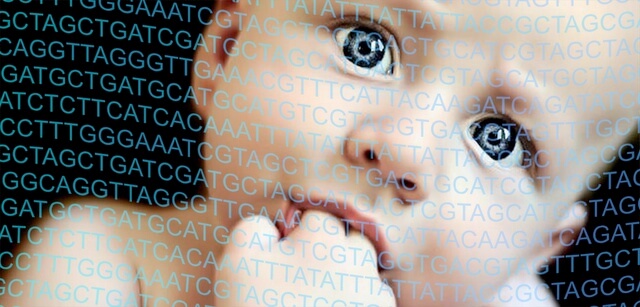
There’s something that feels wholly wrong about the idea of parents choosing how to make their children act and look, giving their offspring an advantage stemming not from the randomness of genetics but from deliberate choice, the cutting-and-pasting of genes. Follow the trajectory of this idea into the future, and you find yourself looking into the face of a terrifying potential reality: the divide between “designed” people and “natural” people strict and cutting, with economic, gendered, and racial consequences. This idea is terrifying.

I will note though, that as I mentioned before, trains of thought like this one are still much closer to science fiction than science, not least because no one has any idea how to deliberately design a child. Also, the number and size of conferences covering the ethics of genetic engineering in the past half-decade are reassuringly large—scientists are aware of the ethical considerations and are taking them into account. This is not to say that we should remove attention from the issue and let the scientist handle it. We should continue to pay attention and we have to hold scientists accountable—just without deterring work that has the capacity to do real good.
designerAnother argument, and one that has been used against genetic engineering since it was first developed, is that we’re interfering with a natural process, or evolution, or God’s plan, or what have you. The argument that genetics and evolution and natural selection should be left up to chance, rather than human interference, is not a new one. And once again, it’s important to acknowledge the validity of these fears. Taking the evolution of human beings into our own hands is an idea that can have severe consequences. Instead of simply arguing for the fundamental manipulation of humanity, I would like to complicate the idea that natural selection is a better process than self-evolution.

Natural selection takes millions of years. From the point that life first evolved on this planet—some three billion years ago—the process of mutation, diversification, evolution, and extinction has taken so long, it’s physically impossible to comprehend. And humans have only been around for 200,000 years of that history of life. So if you’re wondering why you still have an appendix or a tailbone, or you’re not well-suited to the really hot climate in which you live, it’s because evolution essentially takes forever. Given enough time, humans will adapt and change to suit our environments, it just takes a really, really long time.

But what if we could speed up the process of adaptation?

Adaptation is rooted in socio-biological trends, and this is demonstrated by the subtle, but nonetheless prevalent, adaptive differences in humans from a variety of regions. National Geographic described this in an article about the process of self-evolution, noting that the ancestors of modern Australian and Tasmanian Aboriginals developed adaptations allowing them to survive in freezing temperatures at night, in addition to blistering temperatures during the day. The ancestors of Sherpas living near the Himalayas adapted greater lung capacities that allowed them to climb extreme heights. Across the continents, human genetic variation is based on changes that have happened over thousands and thousands of years.

Through decisions ancient humans made and the ones we make today, our species has self-evolved. Although these improvements were not through technological means, self-evolution is nothing new to our species. As such, taking it to the next level may not be as large a jump as we think.

With climate change as a looming force on the horizon, what if we could self-adapt to survive in warmer temperatures or wetter environments? With rising sea levels, what if we could adapt towards better lung capacity? As humans, we could bypass the long and random process of evolution—which will happen to us anyway, whether we like it or not—and choose ways in which we can meet the demands of our environment. If the focus of genetic engineering was not on making humans into perfect beings, but rather allowing humans to survive in harsh environmental conditions or remain free of life-threatening diseases, it could be the exact tool we need.

While this is only a hypothetical solution for the future, it nonetheless has implications for the present. It is more important than ever that we continue responsible and ethical research into genetic engineering. To put it bluntly, genetic engineering isn’t just about potentially advancing the species: it’s about saving us from ourselves.

Emmy Hughes is a sophomore at Wesleyan University, where she studies English and Earth and Environmental Science. She’s the Assistant News Editor for The Argus, Wesleyan’s student newspaper. Follow her on Twitter @emmyughes.

A version of this article was originally published on the Wesleyan Argus’ website as The Case for Responsible Genetic Engineering and has been republished here with permission from the author.

Kevin Folta looks back 5 years after release of controversial Séralini GMO rat study

tumeur emois

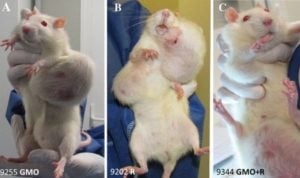
Five years ago the news rocked the world. Images of three grotesque rats penetrated social media, and were bannered across the headline space of thousands of websites. The image came from a scholarly paper that claimed a relationship between ingredients from engineered crops and tumors.

The response was immediate. Scientists examined the work and noted its many shortcomings. On the other hand, activists touted the work’s veracity, representing it as proof-positive that such technologies were deadly. Some governments viewed this report as a precautionary shot-across-the-bow and halted all use of genetically engineered crops. One of those nations was Kenya, a country that has serious food security issues and could benefit from new technology.

And today the image is still used as rhetoric against safe technology that could feed more people and decrease the cost and environmental impact of farming.

What can learn about the paper, the authors, and the claims just from those panels of the figure?

vsElp GyxM PNxTv
Time has shown that this work was DOA, yet its deadly legacy continues to impede the propagation of sound technologies that could help feed more people and reduce environmental impacts of agriculture.

Here are the famous three panels from Figure 3 in the original paper. I’m not going to link it. If you are interested in a deep dive on the inadequacies of the statistics, the poor pathology work and the details around the paper see the reports by Drs. Alison Van Eenennaam and Wayne Parrot.

What are some simple takeaways that tell a lot about the work, the ethics of authors, and the agenda of the publication?

The figure claims to show representative rats from animals fed “GMO”, animals fed herbicide (R), and animals fed “GMO” and herbicide. (I’m not sure why the image I have here is labeled A, B, C. In the original work it was J,K,L). Here are five important issues to note:

  1. Tumors in the control rat? What about the rat that ate a non-GMO, no herbicide diet? Where’s that? We don’t know. In the figure, the authors somehow forget to show it. If you look at Table 2 you see that control rats get tumors too. This is an important note because this omission suggests intent of the authors. If you show the control, then the figure loses its punch. How reviewers missed this is beyond me.
  2. Identical outcomes from remarkably different treatments. Does it not seem amazing that a technology used in genetic improvement and an herbicide would produce the same startling outcome? That should raise red flags. It says the experimental subjects (rats prone to tumors) are showing pathology independent of the treatment, not that the treatments cause the pathology.
  3. The state of laboratory animals. These animals have progressed to a horrendously painful, suffering state. If the authors were truly measuring tumor incidence they would have been able to stop when the tumors were the size of a pea and then humanely euthanized the animals. These animals were deliberately kept alive to grow bigger tumors, forced to suffer for this photo. This raises severe ethical questions about the author team. Their need for this shock photo exceeds their ethics for humane treatment and respect for lab animals.
  4. The use of the term “GMO”. If the figure was going to show a meaningful association between a treatment and effect, it would have precisely reported the nature of the treatment. “GMO” is not a treatment. It is not even a scientific term. A real figure would have simply noted the precise gene or genetic line changed. There is nothing inherently plausible in any transgenic plant that can cause tumors. If there was something specific about that line of feed, that should have been how the panels were labeled. This shows agenda. The authors needed the term GMO next to that rat for scare value.
  5. Five years later, no independent validation. Certainly if a technology used to produce ingredients in 70% of grocery store products was causing tumor growth in its consumers, that would be of scientific interest. But the story blew up in September of 2012 and then fell flat with the research community. There was no independent repetition of these results. There was no expansion of the study by other experts in tumor biology or oncology. It did not seed future research efforts or open new avenues of tumor and cancer research. The work was dead on arrival, which says a lot.

Again, this work was cited as justification to terminate use of genetically engineered crops in several countries. This paper, a political statement manufactured with poor scientific rigor, has a body count. This paper stopped deployment of crops in places where the world’s poorest subsistence farmers could have benefited. This paper let people go hungry, and when 21,000 people die every day from malnutrition, this paper is responsible for at least some of them.

Scholarly work became propaganda for a broken movement. Our scientific literature was exploited to propagate fear. A failed peer review kept food from the mouths of many.

Looking back at this paper, five long years ago, it reminds us that the best evidence an anti-scientific movement has does not fare well over time, and has had serious consequences that harm those in need.

Kevin M. Folta is a Professor and Chairman of the Horticultural Sciences Department at the University of Florida. He teaches science communication workshops for scientists and ag professionals, and hosts the weekly podcast Talking Biotech. Follow him on twitter @kevinfolta

This article was originally published on Medium as The Rats that Kill and has been republished here with permission.

Viewpoint: Glyphosate herbicide’s ‘tough year’ could get much worse

Roundup

Monsanto’s flagship weed killer, Roundup, has had a tough year. And it could get worse.

With Roundup at the center of a federal case in the United States over claims that it causes cancer, European Union officials … weigh whether to allow the continued use of products that contain Roundup’s active ingredient, glyphosate, in its 28 nations.

Because Europe makes such decisions the way Americans vote for president — with a weighted vote among its member states — the outcome is tricky to predict.

A final decision, already long delayed, is not expected until later this year. France and Italy have indicated they will oppose the reauthorization, while Germany’s position remains unclear. A range of outcomes are possible, including phasing out Roundup and similar products entirely or limiting the length of their reapproval.

While Roundup still enjoys broad support among farmers and a number of European governments, sentiment against its maker is at a low point in Europe, with a petition campaign against glyphosate reportedly surpassing one million signatures.

The GLP aggregated and excerpted this article to reflect the diversity of news, opinion and analysis. Read full, original post: Monsanto’s Roundup Faces European Politics and U.S. Lawsuits


Data storage may be coming to a molecule near you

dna storage e
[George Church] and two Harvard colleagues translated an HTML draft of a 50,000-word book on synthetic biology, coauthored by Church, into binary code, converted it to a DNA sequence—coding 0s as A or C and 1s as G or T—and “wrote” this sequence with an ink-jet DNA printer onto a microchip as a series of DNA fragments.

Not only did this result represent far and away the largest volume of data ever artificially encoded in DNA, it showcased a data density for DNA that was several orders of magnitude greater than that of state-of-the-art storage media, never mind the average computer hard drive.

With continued improvements in the volume of information that can be packed into DNA’s tiny structure—data can be stored at densities well into millions of gigabytes per gram—such a future doesn’t look so fanciful. As the costs of oligonucleotide synthesis and sequencing continue to fall, the challenge for researchers and companies will be to demonstrate that using DNA for storage, and maybe even other tasks currently carried out by electronic devices, is practical.

Whatever the future of DNA in these more complex technologies, such projects are a testament to the perceived potential of molecular data storage—and an indicator of just how much the field has progressed in a very short period of time.

The GLP aggregated and excerpted this blog/article to reflect the diversity of news, opinion, and analysis. Read full, original post: Making DNA Data Storage a Reality

Being obese doesn’t always mean you are metabolically unhealthy

sumo

To date, countless epidemiological studies have shown that as you move from a normal weight (BMI = 18.5-24.9 kg/m2) towards overweight (BMI = 25-29.9kg/m2) and obesity (BMI ≥ 30 kg/m2) the risk of many diseases increases exponentially. Does this imply that every individual carrying excess weight is guaranteed to develop diabetes, cardiovascular disease, cancer, or some other disease? Although this belief prevails, the cumulative research suggests the answer to the above question is a resounding “NO!”

Today it is believed that approximately 25-30% of obese individuals ­remain metabolically healthy (normal blood glucose, blood lipids, blood pressure, and cytokine profile) despite their excess weight. However, despite awareness of the metabolically-health obese phenotype for close to 30 years, there currently exist no established criteria by which to define these individuals.

Japanese sumo wrestlers are often used as a popular example of metabolically healthy obese. They are morbidly obese and yet due to their high level of activity have very little visceral fat accumulation, tons of muscle mass, and a healthy metabolic profile – until they stop training, that is.

[I]t is important to note that excess weight alone doesn’t absolutely guarantee the presence of metabolic disease. There is certainly truth to the notion that there is more to health than the number on one’s bathroom scale.

The GLP aggregated and excerpted this blog/article to reflect the diversity of news, opinion, and analysis. Read full, original post: Can people with obesity be metabolically healthy?

India investigating reports of cotton farmers growing unapproved improved Monsanto GMO variety

cotton

A top Indian cotton-producing state has ordered an inspection of fields planted with an unapproved variety of genetically modified seeds developed by Monsanto, which is fighting to retain its market in the world’s biggest grower of the fiber.

Farmers in Andhra Pradesh have planted 15 percent of the cotton area in the state with Bollgard II Roundup Ready Flex (RRF), prompting the local government on Friday [Oct. 6] to form a panel of officials to “inspect the fields of farmers growing RRF”.

The order, issued by senior Andhra Pradesh official B. Rajasekhar, did not say how the farmers accessed the unapproved variety of genetically modified (GM) cotton.

“It’s a matter of grave concern that some seed companies, while suppressing their real intent of profiteering, are attempting to illegally incorporate unauthorized and unapproved herbicide-tolerant technologies into their seeds,” a Monsanto spokesman said.

Bollgard II RRF is a proprietary technology owned by Monsanto, the world’s biggest seed maker, which last year withdrew its application seeking approval from the regulator, Genetic Engineering Appraisal Committee (GEAC), for this variety.

The withdrawal was seen as a major escalation in a long-running dispute between the Indian government and Monsanto, which is also locked in a bitter battle with Andhra Pradesh-based Nuziveedu Seeds Ltd.

The GLP aggregated and excerpted this article to reflect the diversity of news, opinion and analysis. Read full, original post: Indian state to inspect cultivation of Monsanto’s unapproved GM cotton

Has the evolution of artificial intelligence reached its limits?

robot

But the peculiar thing about deep learning is just how old its key ideas are. Hinton’s breakthrough paper…was published in 1986. The paper elaborated on a technique called backpropagation, or backprop for short. Backprop…is “what all of deep learning is based on—literally everything.”

[M]aybe we’re not actually at the beginning of a revolution. Maybe we’re at the end of one.

[T]hese “deep learning” systems are still pretty dumb, in spite of how smart they sometimes seem. A computer that sees a picture of a pile of doughnuts piled up on a table and captions it, automatically, as “a pile of doughnuts piled on a table” seems to understand the world; but when that same program sees a picture of a girl brushing her teeth and says “The boy is holding a baseball bat,” you realize how thin that understanding really is, if ever it was there at all.

[T]he latest sweep of progress in AI has been less science than engineering, even tinkering. And though we’ve started to get a better handle on what kinds of changes will improve deep-learning systems, we’re still largely in the dark about how those systems work, or whether they could ever add up to something as powerful as the human mind.

It’s worth asking whether we’ve wrung nearly all we can out of backprop.

The GLP aggregated and excerpted this blog/article to reflect the diversity of news, opinion, and analysis. Read full, original post: Is AI Riding a One-Trick Pony?

The role of emotions in problem solving

RS scr

What is the purpose of emotion? More elaborately, how do the psychological and neurological mechanisms of emotion underlie a person’s point of view on the world? These were the questions taken up by Philip Gerrans, a professor of philosophy at the University of Adelaide in Australia, in his talk at the Human Mind Conference in Cambridge, England…

The mind, says Gerrans, is hierarchically organized to solve problems. “And what [the mind] likes to do is solve the problem at the lowest possible level.” Emotions, according to this view, serve a dual purpose. First, they alert us to the significance of things in the world. And second, by existing as feeling, they also allow us to solve many problems quickly and without much conscious deliberation.

Thus, Gerrans contends, emotions help to coordinate the mind’s hierarchical problem-solving structure and its engagement with the world. More specifically, “low-level emotional systems direct perception [and] sensation” to extracting the most relevant information from the world. High-level emotional systems manage and reflect on this information.

Gerrans’s talk, like so many others at the Human Mind Conference, seems at first blush to reduce mind to matter, but winds up only reiterating very old philosophical conundrums about whether one can ever be brought fully under the purview of the other.

The GLP aggregated and excerpted this blog/article to reflect the diversity of news, opinion, and analysis. Read full, original post: What Is the Purpose of Emotion?

Rich people care more about perceived ‘naturalness’, environmental impact than lower-income food buyers

GettyImages a f f b aa f f

[Editor’s Note: Jayson Lusk is a food and agricultural economist and head of the Agricultural Economics Department at Purdue University.]

[How] do food values differ across consumers with different incomes? This question is important because not all consumers have the same preferences, and the people with the ability and connections to affect public policy (and grocery store bottom lines) may give priority to food issues that are less relevant to people in the lower end of the socioeconomic spectrum.  

To address this issue, I used some statistical analysis to control for differences in age, gender, education, etc. and then compare how people in different income categories rate each food value.  

There were three food values for which importance tended to decline with income: price, safety, and taste.  The big one is price.

Compared to consumers in the highest income category (more than $160,000/year in household income), consumers in the lowest income category (less than $20,000/year in household income) place 42 percentage points higher level of importance on the price they pay for food.

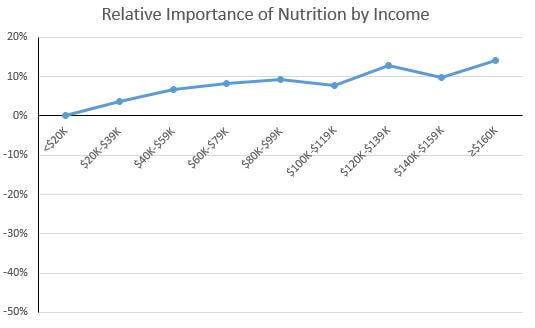
There were five food values for which importance tended to increase with income: naturalness, nutrition, environment, novelty, and origin.

foodvalue

As the figure above shows, the highest income consumers placed about 12-14 percentage points higher importance on naturalness than lower-income consumers; for nutrition and environment (see below), the results are similar.

foodvalue

vsElp GyxM PNxTv

The GLP aggregated and excerpted this article to reflect the diversity of news, opinion and analysis. Read full, original post: Food Values of the Rich and Poor

Talking Biotech: Can we fight herbicide-resistant weeds with non-GMO RNAi technology?

sammons cover

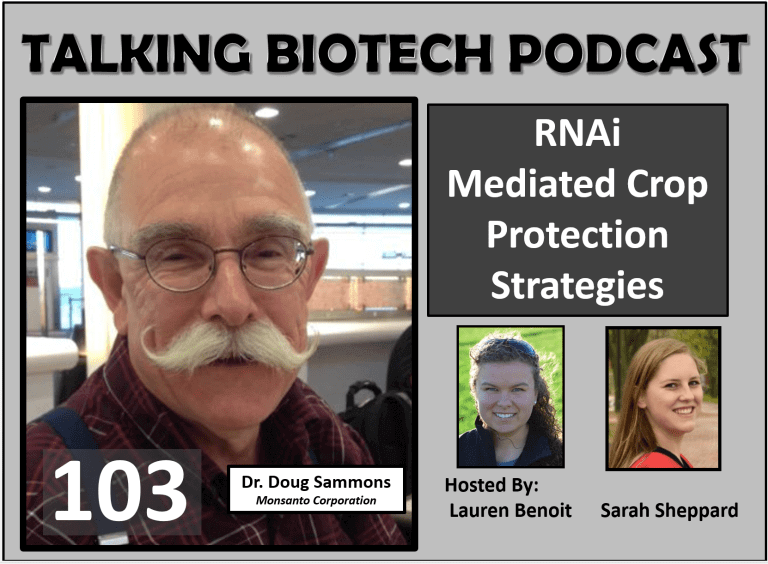
The evolution of weed and insect resistance to traditional controls has brought about the need for new approaches in crop protection. Today’s guest is Dr. Doug Sammons  a biochemist from the Monsanto Company. He has spent a career in understanding mechanisms of herbicide action and resistance, and now discusses new approaches using RNAi to enhance weed sensitivity to herbicide treatment.  The result is better weed control and decreased need for herbicide treatments. Hosted by Sarah Sheppard and Lauren Benoit.

Visit Kevin Folta’s Talking Biotech

Follow Talking Biotech on Twitter @TalkingBiotech

Follow Kevin Folta on Twitter @kevinfolta | Facebook: Facebook.com/kmfolta/ | Lab website: Arabidopsisthaliana.com | All funding: Kevinfolta.com/transparency

Stitcher | iTunes | Player FM | TuneIn