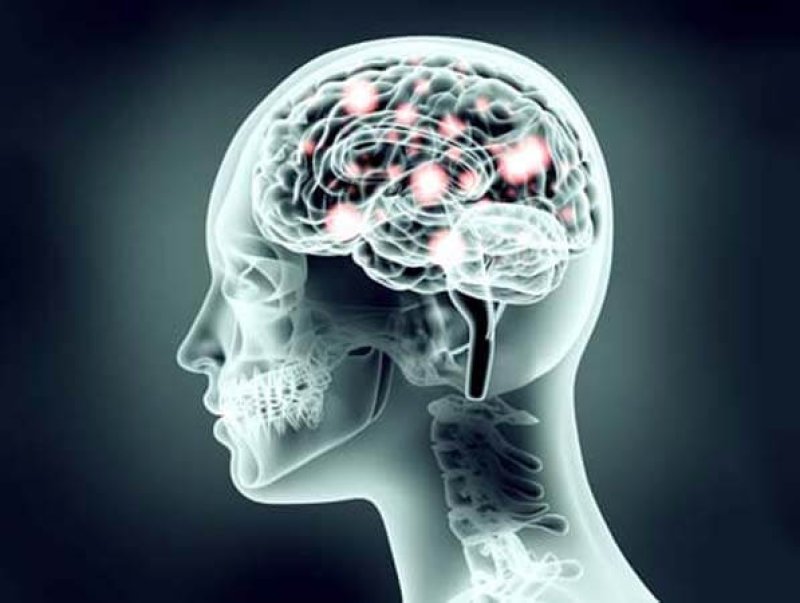
How ‘minor insults to the brain’ could fuel Alzheimer’s

inflammation

When it comes to the perpetrator of Alzheimer’s disease (AD), the finger of blame has long pointed to hard deposits of protein in the brain known as amyloid plaques. But smouldering signs of inflammation are also clearly evident in the background.

Now a paper in Nature reveals how the two processes connive. During inflammation, specks of a protein called ASC are released. Like the grit inside a pearl, they seed the deposition of amyloid. The authors – Carmen Venegas at the University of Bonn, Germany and colleagues – showed that in mice, removing the specks prevented the formation of amyloid and slowed progression of the disease.

…

The findings show how inflammation and amyloid may collude in a vicious cycle to cause the disease. Amyloid deposits cause inflammation; inflammation releases ASC; ASC seeds the deposition of more amyloid plaque.

What this means, explains senior author Michael Heneka, is that minor insults to the brain – perhaps a virus or mild injury – could snowball into a major inflammatory cascade that kills off neurons.
…

Heneka points out that population studies already show the use of anti-inflammatory drugs like ibuprofen allay the onset of AD. But he says these drugs are too non-specific. Many drug companies are now focused on finding drugs that inhibit the function of the inflammasome in a particular tissue. “This is all under way,” he says.

Read full, original post: Brain inflammation sows the seeds of Alzheimer’s

Related Articles

Infographic: Global regulatory and health research agencies on whether glyphosate causes cancer

Infographic: Global regulatory and health research agencies on whether glyphosate causes cancer

Does glyphosate—the world's most heavily-used herbicide—pose serious harm to humans? Is it carcinogenic? Those issues are of both legal and ...

Most Popular

ChatGPT-Image-Mar-10-2026-01_39_01-PM
Viewpoint—“Miracle molecule” debunked: Why acemannan supplements don’t work
Screenshot-2026-09-22-at-12.26.15-PM
‘Forever chemical’ concerns: Separating hysteria from reasonable concern in the debate over PFAS danger
Personalized-Cancer-mRNA-Vaccine-Vial
Personalized mRNA vaccines are poised to revolutionize cancer treatments. Here are the barriers.
AI Doctor with a Digital Neural Head
Utah becomes first state to empower AI to bypass doctors and prescribe certain drugs
AI-Force-Uniform-Insignia-Close-Up
Trump wants an AI Force like Space Force, but that could make AI’s risks harder to manage
Radioactive-Americana-Collage-2
The kooky logic behind the raft of spurious cancer claims from Harvard’s T.H. Chan School of Public Health
Screenshot-2026-09-22-at-10.54.12-AM
‘They misunderstand science’: Research attempting to tie autism to changes in the gut microbiome comes under fire
Deepfake Democracy Media Mosaic
31 states have passed a patchwork of laws to limit election deepfake commercials. They’re not working very well.
Screenshot-2026-10-11-at-8.10.44-PM
Tearful onions? CRISPR has a solution for that
Screenshot-2026-10-08-at-1.23.28-PM
Countries around the world are rushing to pass teenage social media bans. Could they backfire?
Screenshot-2026-10-05-at-11.57.44-AM
Scaremongering or legitimate safety concerns? The political dogfight over America’s food safety system
glp menu logo outlined

Get news on human & agricultural genetics and biotechnology delivered to your inbox.