[When Nancy] Wurtzel stared at the blue glow of her computer screen announcing she had two copies of the ApoE4 variant and quoting her a 60-percent chance of developing Alzheimer’s by age 85, she panicked. “I could hardly catch my breath, and I felt like the floor was opening up. The reality hit me,” says Wurtzel.
…
As the field of precision medicine explodes, the nation’s 4,600 genetic counselors have the job of interpreting genetic-testing results for patients and advising them on whether they should get more testing or medical treatment.
…
As demand for their services grows, the field is facing a national shortage in which there are an estimated two to three jobs available for every graduate of genetic-counselor training programs. To address it, in addition to recruiting future students and expanding training programs, professional societies are at work trying to change the way genetic counselors are viewed in the health-care system.
…
In the meantime, start-ups have emerged to fill the information gap for DTC patients by making counseling services more accessible and cheaper. In July, My Gene Counsel plans to launch a digital product that will help users interpret their test results for hereditary cancer genes.
…
“I wished someone was there to listen to what I was feeling at the time,” [Wurtzel] says. “I don’t advise anyone to do it by themselves.”
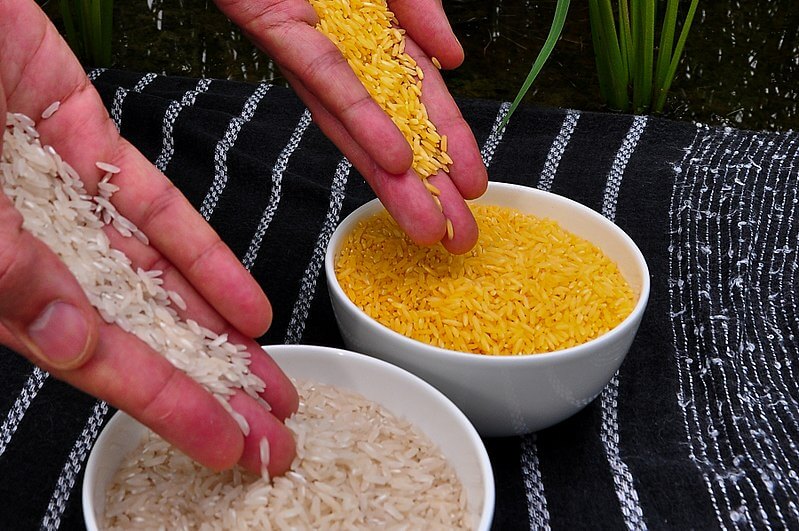
The United States Food and Drug Administration (FDA) has approved Golden Rice, marking the third positive international assessment for the genetically engineered biofortified crop.
In an official letter to the developers of Golden Rice, the International Rice Research Institute (IRRI), the FDA concurred that the new rice was safe for consumers.
“Based on the information IRRI has presented to FDA, we have no further questions concerning human or animal food derived from GR2E rice at this time,” the FDA’s letter to IRRI concludes.
The FDA’s assessment concerns Golden Rice event GR2E, which contains genes encoding phytoene synthase and carotene desaturase, components of the carotenoid biosynthetic pathway.
These genes allow Golden Rice to produce the Vitamin A precursor beta-carotene, giving it a rich yellow colour.
The rice is intended to address Vitamin A deficiency (VAD), a serious disease which is estimated to affect 250 million preschool-age children around the world. VAD can cause blindness and early death in young children who are affected.
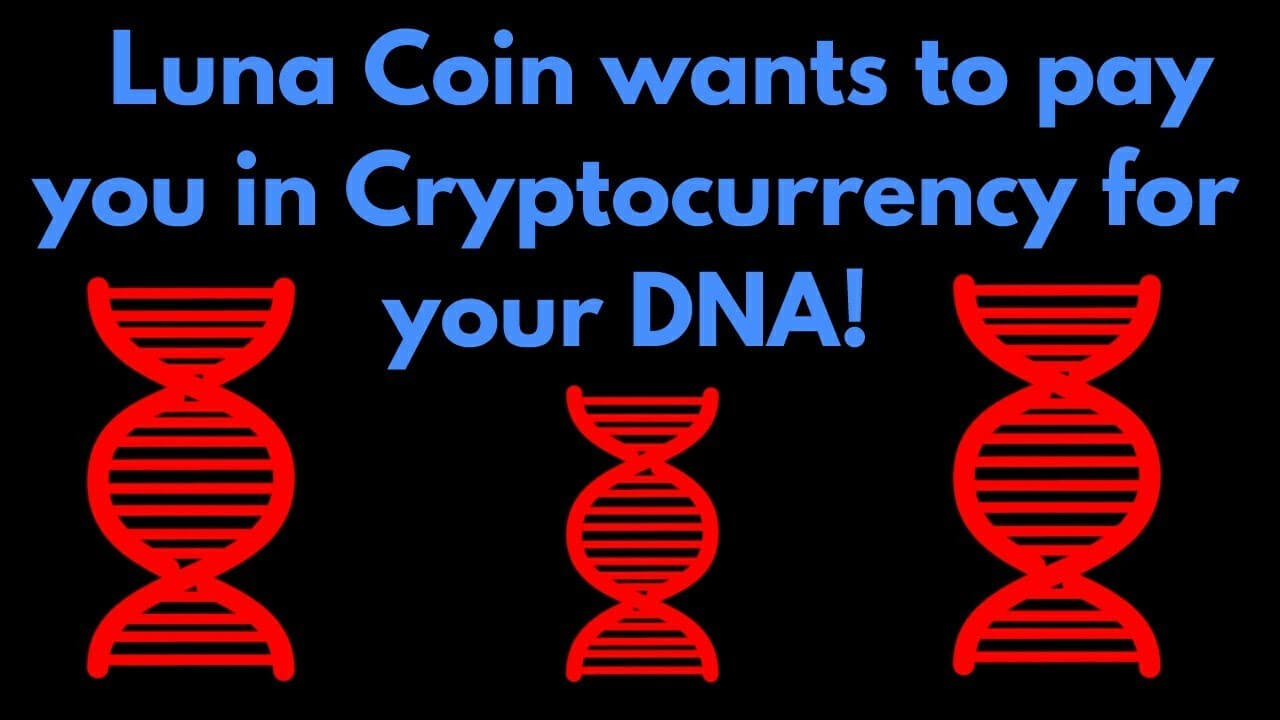
San Diego startup Luna DNA hopes to create a database of donated DNA, health records and diet/exercise information for medical researchers while paying dividends to people who voluntarily contribute their data.
…
“By providing their data, they become shareholders in the data base,” [President Dawn Barry said]. “The more they donate, the more shares they get, and as proceeds are generated, they flow back to the individuals in the form of dividends consistent with the number of shares they have through their data donor ships.”
…
Luna DNA would not provide DNA sequencing or analysis itself. The startup is targeting people who’ve already had their DNA analyzed from services like 23andMe and Ancestry.com, as well as other means such as clinical drug trials.
Barry estimates that roughly 15 million people have gotten genetic information through these services.
In addition, there are a host of health data aggregators today that make it easier for people to access and share their electronic medical records, she said.
…
“That is the beauty of a platform like this,” said Barry. “You can participate without anybody knowing your personal information. Our goal is to bring all of the de-identified, aggregated data together for research.”
Critics argue that agro-biotechnology, and in particular genetic engineering, only provides large multinational corporations with the means to continue their dominance of the global food system, disadvantaging smallholder farmers, and ultimately — consumers. Proponents argue that agro-biotechnology, like the genome editing CRISPR-Cas9 system, should be made more accessible to smallholder farmers who will benefit from advanced breeding efforts in their own countries, using these precise tools to improve the crops of most interest to them.
The hope is that these new effective breeding tools could enable new collaboration, where researchers work hand-in-hand with farmers to develop crops and livestock more resistant to diseases and droughts, adapted to specific local needs. In South America, for example, researchers could assist potato farmers across the Andes Mountains create crops more tolerant to climate change, while at the same time protecting the region’s highly valuable agrobiodiversity.
And so the future is already here, but it’s not evenly distributed and we’re not ready. This is why we need to step up capacity-building efforts and strengthen and broaden the innovation agenda, enabling the benefits of modern biosciences to reach smallholder farmers in the southern hemisphere.
Editor’s note: Ivar Virgin is a senior researcher at the Stockholm Environment Institute
[D]oes a chimpanzee deserve more rights than, say, a pigeon? The logic that leads to “yes” is clear enough, but putting it into practice would be tough, scientists say. Because when it comes to measuring intelligence, we’re actually a little dumb.
…
“I don’t know any comparative psychologist who even likes the word ‘smart’ or ‘intelligent’ in talking about animals,” said Kristin Andrews, a philosophy professor and cognitive scientist at York University.
…
Scientists know animals are capable of demonstrating an array of cognitive skills, and there are some skills that some animals are better at than others. But the problem is that a hierarchy assumes all animals (including humans) evolved for the same environment. And that just isn’t true. Animals are smart in the ways they need to be smart, Andrews said. And because environment and needs differ by animal, trying to rank them is futile. If a polar bear has different skills than an octopus, does that mean one is smarter than other — or does it just mean the ocean is different from an iceberg?
…
It’s useless to extend human rights to animals, [experimental psychologist Edward Wasserman] told me, because that’s inevitably going to be based on a hierarchy model of intelligence. Instead, we should be giving animals animal rights — starting with the right to a wild habitat.
The packaged food and drink industry will try to persuade a Washington state appeals court … that exercising its First Amendment rights required withholding the names of the companies that spent $11 million to defeat a 2013 initiative that would have required labels on food with genetically modified ingredients.
The Grocery Manufacturers Association argues that funneling the contributions through the trade association shielded companies from boycotts and even death threats, like the ones their members suffered for opposing a similar GMO proposition in California the year before.
…
GMA is appealing a record-breaking $18 million fine handed down in 2016 by Thurston County Superior Court Judge Anne Hirsch. Hirsch ruled that GMA intentionally broke the law by belatedly naming the companies that contributed to the “No on Initiative 522” campaign.
The penalty is by far the largest ever levied in the U.S. for not reporting political activities.
…
In a similar case, the anti-GMO organization Food Democracy Now has appealed a $319,281 fine for failing to name donors who contributed to the “yes” on I-522 campaign. The appeals court will hear oral arguments in that case June 25 in Tacoma.
Farmers need to get in front of the messaging about genome editing technology — or risk seeing it suffer the same fate as GMOs in the court of public opinion.
That’s the warning from the chair of Alberta Wheat’s research committee, who is one of many who fears genome editing is going to get lumped in with genetic modification in the minds of the public.
“I think part of the problem with the current resistance to GMOs is because it was not well publicized. It was a disgrace actually,” said Lacombe-area producer Terry Young. “The technology came out and 10 years later, the public found out what it was being used for and then they were all up in arms because they didn’t have awareness of or input into the process.
“We need to set the record straight and do so in a more timely fashion.”
Genome editing is fundamentally different from genetic engineering. Unlike the latter, the process doesn’t involve inserting a gene from another species. Instead, a very small part of a plant’s DNA is removed or modified. The technique is so precise, scientists compare it to changing a bit of text in a document — hence the term editing.
Under a microscope, it’s hard to miss. Take just about any cell, find the nucleus, then look inside it for a dark, little blob. That’s the nucleolus.
…
“We think the nucleolus plays an important role in regulating the life span of animals,” said Adam Antebi, a cellular biologist at the Max Planck Institute for Biology of Ageing in Germany. He’s an author of a new review published last week in Trends in Cell Biology that examines all the new ways that researchers have fallen in love with the nucleolus — especially its role in aging.
…
The nucleolus can wax and wane in response to a body’s available nutrients and growth signals.
The more growth signals it intercepts, the more machines, or ribosomes, it makes. It gets bigger to contain them, but mysteriously this also shortens a cell’s or organism’s life. When food is restricted, or a metabolic pathway is silenced or slowed down, nucleoli shrink, making fewer ribosomes, and cells live longer.
Dr. Antebi thinks that as the nucleolus gets smaller, it also starts remodeling the things it would create to make the best of available supplies.
This is a highly coordinated process, he said. And life span can be thought of as how well the nucleolus balances the need to grow with the need to repair, correct mistakes and make sure everything works.
A few years back, I learned of a patient who had her DNA tested by one company and then interpreted by another. She sought help when data from the third-party company suggested she was at increased genetic risk for breast cancer. Concern over what had been identified in the interpretation report ultimately led this patient to see a genetic counselor — a trained professional who can advise on the genetic risks for various diseases. The counselor eventually determined the result was nothing to worry about.
For me, this “false positive” case raised red flags about a sometimes dodgy do-it-youself world of genetics.
…
[T[he validity of genetic tests to which consumers have direct access remains questionable. In fact, a recent article by scientists at one of the clinical testing labs that medical providers rely on reported that approximately 40 percent of results reported from raw DNA interpretation were incorrect.
…
Genetic counselors, meanwhile, are frustrated. The message from commercial testing companies has led to unrealistic expectations from consumers about what they can learn about themselves. It’s challenging for counselors to correct misconceptions, especially when they are met with resistance from patients.
Like my younger self, most Canadians are unaware of the vast diversity of bee species we have in Canada and are mostly familiar with the western honeybee (Apis mellifera), a non-native species introduced to Canada to provide a sweetener for early settlers.
In fact, Canada has more than 800 species of native bees. Most of our native species do not live in hives but are solitary, living in the ground or hollow stems. None of them make honey. Many of them do not sting.
…
That bees are notably important pollinators of our ecosystems and many of our food crops explains the recent intense public interest in “saving” them. Their perceived value is bound up in their ability to perform ecosystem services for us: we must save the bees to save ourselves. The intrinsic value of bees as wildlife species with unique natural histories is rarely mentioned, even though it is clear that the wild species are those most at risk of disappearing. Our native bees have relationships with microorganisms, parasitoids, plants, birds and mammals that we have barely begun to understand. Just as with larger, charismatic animals like polar bears and white rhinos, the conservation value of native bees should not and cannot only be defined by what they can do for us.
Editor’s note: Sheila Colla is a professor of environmental studies at York University in Toronto, Canada
[T]axonomy – the science of classifying organisms – would be so much easier if life forms came with barcodes…
Interestingly enough, there’s actually something to that hopeful desire. Since the turn of the century, a group of scientists has attempted to classify species by sequencing their DNA, specifically DNA from a specific region inside mitochondria, the energy production centers of cells.
This ‘DNA barcoding’ doesn’t work well for all forms of life, particularly plants, but it does work exceedingly well for animals. In a 2016 study, researchers used mitochondrial DNA to classify bird species then compared their results with those of traditional methods. The two classification systems agreed in 94% of cases.
…
[Researchers Mark Stoeckle and David Thaler] found that older species tended to have a greater average difference in mitochondrial DNA. This makes sense, as genetic adaptations tend to accumulate over time, which can lead groups of individuals within a species to diverge into entirely new species. When they do, their mitochondrial DNA is noticeably different.
“If individuals are stars, then species are galaxies. They are compact clusters in the vastness of empty sequence space,” Thaler analogized.
The study demonstrates that “Big Data” can play a pivotal role in classification, and has the potential to infuse taxonomy with a needed measure of objectivity.
Read full, original post: What Can ‘DNA Barcodes’ Tell Us About Evolution and Ourselves?
Former President Olusegun Obasanjo … declared that unless innovative advances such as biotechnology are achieved in agriculture, global efforts at ending hunger would remain a mirage.
Obasanjo, who observed that the world’s population is estimated to reach about 9.7 billion by 2050, noted that more land would need to be cultivated to feed the world’s teeming population, adding “if agricultural yields stay the same, we would need to cultivate more than double the present amount of land to feed that population. That’s 82% of our total land area on earth”.
…
Obasanjo, also noted that biotechnology has the potential to increase agricultural productivity, enhance food security, develop a better health care delivery system, boost an efficient industrial development process for transforming raw materials and detoxifying hazardous wastes, reduce mortality rates, move agriculture away from a dependence on chemical inputs and help to reduce environmental problems.
He urged the government to encourage scientific incursion into agriculture via policy measures specifically designed to encourage research and development as well as the adoption of new technologies.
Is my car hallucinating? Is the algorithm that runs the police surveillance system in my city paranoid? Marvin the android in Douglas Adams’s Hitchhikers Guide to the Galaxy had a pain in all the diodes down his left-hand side. Is that how my toaster feels?
This all sounds ludicrous until we realise that our algorithms are increasingly being made in our own image. As we’ve learned more about our own brains, we’ve enlisted that knowledge to create algorithmic versions of ourselves. These algorithms control the speeds of driverless cars, identify targets for autonomous military drones, compute our susceptibility to commercial and political advertising, find our soulmates in online dating services, and evaluate our insurance and credit risks. Algorithms are becoming the near-sentient backdrop of our lives.
The most popular algorithms currently being put into the workforce are deep learning algorithms. These algorithms mirror the architecture of human brains by building complex representations of information. They learn to understand environments by experiencing them, identify what seems to matter, and figure out what predicts what. Being like our brains, these algorithms are increasingly at risk of mental-health problems.
Deep Blue, the algorithm that beat the world chess champion Garry Kasparov in 1997, did so through brute force, examining millions of positions a second, up to 20 moves in the future. Anyone could understand how it worked even if they couldn’t do it themselves. AlphaGo, the deep learning algorithm that beat Lee Sedol at the game of Go in 2016, is fundamentally different. Using deep neural networks, it created its own understanding of the game, considered to be the most complex of board games. AlphaGo learned by watching others and by playing itself. Computer scientists and Go players alike are befuddled by AlphaGo’s unorthodox play. Its strategy seems at first to be awkward. Only in retrospect do we understand what AlphaGo was thinking, and even then it’s not all that clear.
Garry Kasparov playing against Deep Blue, the chess-playing computer built by IBM. Image credit: Adam Nadel, AP Images
To give you a better understanding of what I mean by thinking, consider this. Programs such as Deep Blue can have a bug in their programming. They can crash from memory overload. They can enter a state of paralysis due to a neverending loop or simply spit out the wrong answer on a lookup table. But all of these problems are solvable by a programmer with access to the source code, the code in which the algorithm was written.
Algorithms such as AlphaGo are entirely different. Their problems are not apparent by looking at their source code. They are embedded in the way that they represent information. That representation is an ever-changing high-dimensional space, much like walking around in a dream. Solving problems there requires nothing less than a psychotherapist for algorithms.
Take the case of driverless cars. A driverless car that sees its first stop sign in the real world will have already seen millions of stop signs during training, when it built up its mental representation of what a stop sign is. Under various light conditions, in good weather and bad, with and without bullet holes, the stop signs it was exposed to contain a bewildering variety of information. Under most normal conditions, the driverless car will recognise a stop sign for what it is. But not all conditions are normal. Some recent demonstrations have shown that a few black stickers on a stop sign can fool the algorithm into thinking that the stop sign is a 60 mph sign. Subjected to something frighteningly similar to the high-contrast shade of a tree, the algorithm hallucinates.
How many different ways can the algorithm hallucinate? To find out, we would have to provide the algorithm with all possible combinations of input stimuli. This means that there are potentially infinite ways in which it can go wrong. Crackerjack programmers already know this, and take advantage of it by creating what are called adversarial examples. The AI research group LabSix at the Massachusetts Institute of Technology has shown that, by presenting images to Google’s image-classifying algorithm and using the data it sends back, they can identify the algorithm’s weak spots. They can then do things similar to fooling Google’s image-recognition software into believing that an X-rated image is just a couple of puppies playing in the grass.
Algorithms also make mistakes because they pick up on features of the environment that are correlated with outcomes, even when there is no causal relationship between them. In the algorithmic world, this is called overfitting. When this happens in a brain, we call it superstition.
The biggest algorithmic failure due to superstition that we know of so far is called the parable of Google Flu. Google Flu used what people type into Google to predict the location and intensity of influenza outbreaks. Google Flu’s predictions worked fine at first, but they grew worse over time, until eventually it was predicting twice the number of cases as were submitted to the US Centers for Disease Control. Like an algorithmic witchdoctor, Google Flu was simply paying attention to the wrong things.
Algorithmic pathologies might be fixable. But in practice, algorithms are often proprietary black boxes whose updating is commercially protected. Cathy O’Neil’s Weapons of Math Destruction (2016) describes a veritable freakshow of commercial algorithms whose insidious pathologies play out collectively to ruin peoples’ lives. The algorithmic faultline that separates the wealthy from the poor is particularly compelling. Poorer people are more likely to have bad credit, to live in high-crime areas, and to be surrounded by other poor people with similar problems. Because of this, algorithms target these individuals for misleading ads that prey on their desperation, offer them subprime loans, and send more police to their neighbourhoods, increasing the likelihood that they will be stopped by police for crimes committed at similar rates in wealthier neighbourhoods. Algorithms used by the judicial system give these individuals longer prison sentences, reduce their chances for parole, block them from jobs, increase their mortgage rates, demand higher premiums for insurance, and so on.
Self-driving car. Image credit: Uber
This algorithmic death spiral is hidden in nesting dolls of black boxes: black-box algorithms that hide their processing in high-dimensional thoughts that we can’t access are further hidden in black boxes of proprietary ownership. This has prompted some places, such as New York City, to propose laws enforcing the monitoring of fairness in algorithms used by municipal services. But if we can’t detect bias in ourselves, why would we expect to detect it in our algorithms?
By training algorithms on human data, they learn our biases. One recent study led by Aylin Caliskan at Princeton University found that algorithms trained on the news learned racial and gender biases essentially overnight. As Caliskan noted: ‘Many people think machines are not biased. But machines are trained on human data. And humans are biased.’
Social media is a writhing nest of human bias and hatred. Algorithms that spend time on social media sites rapidly become bigots. These algorithms are biased against male nurses and female engineers. They will view issues such as immigration and minority rights in ways that don’t stand up to investigation. Given half a chance, we should expect algorithms to treat people as unfairly as people treat each other. But algorithms are by construction overconfident, with no sense of their own infallibility. Unless they are trained to do so, they have no reason to question their incompetence (much like people).
For the algorithms I’ve described above, their mental-health problems come from the quality of the data they are trained on. But algorithms can also have mental-health problems based on the way they are built. They can forget older things when they learn new information. Imagine learning a new co-worker’s name and suddenly forgetting where you live. In the extreme, algorithms can suffer from what is called catastrophic forgetting, where the entire algorithm can no longer learn or remember anything. A theory of human age-related cognitive decline is based on a similar idea: when memory becomes overpopulated, brains and desktop computers alike require more time to find what they know.
When things become pathological is often a matter of opinion. As a result, mental anomalies in humans routinely go undetected. Synaesthetes such as my daughter, who perceives written letters as colours, often don’t realise that they have a perceptual gift until they’re in their teens. Evidence based on Ronald Reagan’s speech patterns now suggests that he probably had dementia while in office as US president. And The Guardianreports that the mass shootings that have occurred every nine out of 10 days for roughly the past five years in the US are often perpetrated by so-called ‘normal’ people who happen to break under feelings of persecution and depression.
In many cases, it takes repeated malfunctioning to detect a problem. Diagnosis of schizophrenia requires at least one month of fairly debilitating symptoms. Antisocial personality disorder, the modern term for psychopathy and sociopathy, cannot be diagnosed in individuals until they are 18, and then only if there is a history of conduct disorders before the age of 15.
There are no biomarkers for most mental-health disorders, just like there are no bugs in the code for AlphaGo. The problem is not visible in our hardware. It’s in our software. The many ways our minds go wrong make each mental-health problem unique unto itself. We sort them into broad categories such as schizophrenia and Asperger’s syndrome, but most are spectrum disorders that cover symptoms we all share to different degrees. In 2006, the psychologists Matthew Keller and Geoffrey Miller argued that this is an inevitable property of the way that brains are built.
There is a lot that can go wrong in minds such as ours. Carl Jung once suggested that in every sane man hides a lunatic. As our algorithms become more like ourselves, it is getting easier to hide.
Thomas T. Hills is professor of psychology at the University of Warwick in Coventry, UK. Follow him on Twitter @thomhills
If there’s one clear finding that emerges from a new study on genetically modified food in Canada, it’s that Canadians are confused about it.
A survey of consumer attitudes about genetic engineering plant-based and animal-based foods released Thursday [May 24] finds that the majority of Canadians — 56.3 per cent — believe that genetically modified (GM) food is thoroughly tested before it reaches consumers, compared with just 16 per cent who disagree.
But at the same time, Canadians are deeply divided on the safety of genetically modified plants, animals and food products, according to new data from Dalhousie University.
The survey of 1,049 Canadians found that 37.7 per cent believe GM food is safe to consume, while 34.7 per cent believe it is not safe to eat and 27.6 didn’t have an opinion on its safety. Thirty-five per cent of those surveyed said the health effects of GM food are fully understood, while 44 per cent said they disagreed.
…
“People who are supportive of biotechnology would argue that there is little risk (from GM food), and it’s true — from a food safety perspective, the science is very clear,” said [Sylvain Charlebois, dean of management at Dalhousie University and lead author of the study], who believes GM food should nevertheless be labelled.
The survey found that 88.6 per cent of respondents said GMO food and ingredients should be labelled as such in Canada.
The Food and Drug Administration will soon be alerting companies that certain gene therapies in development can qualify for less arduous review at the agency, Commissioner Scott Gottlieb said Tuesday [May 22].
Specifically, gene therapies for hemophilia, a rare disease in which blood doesn’t clot properly because it lacks certain proteins, could be evaluated based on whether therapy increases those proteins in the blood, regardless of whether the therapy actually causes the patient to bleed less.
Gottlieb said that hemophilia is the first disease the FDA will target with its new policy. An FDA spokesperson later said hemophilia was chosen because “it’s an area of a lot of development activity.”
…
One challenge, Gottlieb said, is that the traditional clinical trials companies need to complete before bringing a drug to the market may not be able to fully determine the “durability of response.” In other words, the effectiveness of the therapy might change after the trial is over, and initial signs that the drug works might not pan out upon further scrutiny. But because some of these treatments address patients with few other options, it may be worth the risk for them to undergo a treatment with indirect evidence of a benefit — protein levels in the case of hemophilia — even if there are some unknown future risks.
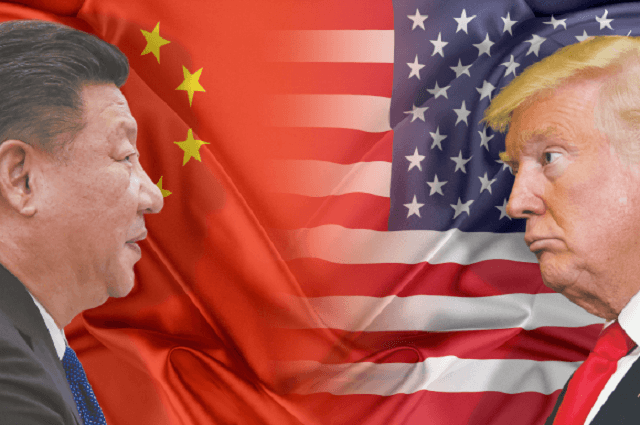
The United States is seeking better access for imports of genetically modified crops into China as part of a trade deal currently under discussion between the two sides, said two people familiar with the matter.
The subject, long a major irritant in agricultural trade between the countries, is a main issue for the U.S. Department of Agriculture, said a biotech industry source with knowledge of USDA discussions.
“I can say with full confidence that biotech is one of the key issues for USDA in this conversation with the Chinese,” the source said.
…
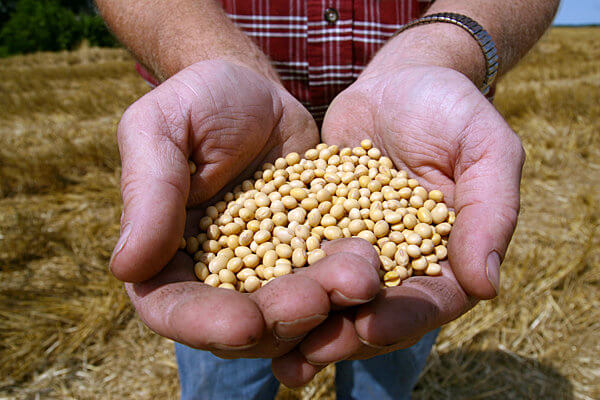
China does not permit planting of GMO food crops, but it does allow the import of GMO soybeans and corn for use in its huge animal feed industry.
However the approval process for new GMO strains is slow, unpredictable and not based on science, the biotech industry has said.
As the world’s top buyer of soybeans and a major buyer of other grains, China’s slow approval process stalls trade by forcing agrichemical firms to restrict sales of new products to American farmers until they get Beijing’s go-ahead.
Stormfront and similar online forums, as well as the comment sections on “alt-right” news websites and Twitter accounts, regularly host what [University of Michigan bioinformatics graduate student Jedidiah Carlson] dubbed “informal journal clubs,” dedicated to dissecting population genetics papers and sorting them into those that support a white nationalist ideology and those that don’t. For more than a year, [Carlson] has followed the evolution of this strange, racist trend.
…
Q: Do any of the white nationalists discussing these papers actually know what they’re talking about?
A: There’s a range of expertise and familiarity. Some are fairly familiar with some of the science. It behooves them to know the science so they can feel like they are going toe-to-toe with the people actually doing the science.
…
Q: How do they misappropriate the work?
A: People will grab figures from scientific papers and edit them in several different ways to make them look like they support the white nationalist ideology.
…
Q: Can scientists do anything to prevent their work from being misused by these groups?
A: […]The genomic revolution is still well underway. But I think because of precisely that, we need to think more carefully about not just our own interpretation of the work, but anticipating how our work might be misinterpreted and trying to preemptively patch up the holes in that logic.
In the span of two years, Aaron Traywick, who was 28 when he died, went from a virtual unknown to a notorious personality in the biohacking community. At the time of his death, he was estranged from many of his closest collaborators.
…
Mr. Traywick proved to be secretive and aggressive. He kept the people he worked with away from one another, ensuring that he was the only person at his company with all the information.
…
One of the ways Mr. Traywick convinced people to work with him — or to buy what he was selling — was the persona he affected. He used his brief experience working for his cousin to represent himself as a moneyed veteran of Capitol Hill, knowledgeable about health care policy and the structural limitations placed on researchers by the Food and Drug Administration.
…
Mr. Traywick left a mixed legacy. But his career in biohacking stands as a symbol of the unrealized goals of the community to which he briefly belonged. Shortly after his death, the United States Transhumanist Party, Mr. Stolyarov’s organization, issued a statement.
“Regardless of the cause, the U.S. Transhumanist Party emphasizes that death is wrong,” it said. “Mr. Traywick’s death is deeply wrong and will remain so. He will be missed by all of us. May his vision live on.”
There’s a lot of money to be made in kowtowing to the latest dietary fads and unsubstantiated health scares.
…
The proliferation of ridiculous labels — from “non-GMO” salt to “gluten-free” water — serves as a case-in-point. They believe the average person is ignorant enough to fall for that sort of nonsense… and they’re right.
…
Given the thoroughly unscientific and litigious milieu in which we live, companies find themselves scrambling to appease the uneducated Twitter mob and apologizing for being in business. That’s why it’s such a breath of fresh air when a company stands up to the hysteria.
In response to a critic who was unhappy that one of its labels said, “partially produced with genetic engineering,” Betty Crocker responded:
Fantastic response! A full-throated endorsement of biotechnology is a beautiful thing.
May Betty Crocker live long and prosper. And may companies like Panera Bread learn that honesty is a far better marketing strategy than deceitful fearmongering.