An ancient species of human with a brain no larger than an orange may have possessed intelligence to rival that of our own species. Despite their size, the brains of Homo naledi have many of the sophisticated features found in modern humans.
…
From the outset, one of the scientists behind the discovery, Dr Lee Berger of the University of the Witwatersrand, insisted there was more to this new species than its diminutive 5-foot stature suggested.
“We argued that H. naledi was exhibiting some very complex behaviours,” he told The Independent. “We said it had a tool-making hand – or at least a potentially tool-making hand – we pointed out it had small feet and we rather controversially said the site may be a deliberate body disposal site.”
…
To determine whether there was more going on in the heads of these ancient humans than met the eye, Dr Berger enlisted the help of colleagues who could help him piece together skull fragments and create digital reconstructions of their skull interiors.
…
[S]cans of the H. naledi revealed complexity in many areas – including regions linked with emotion and a large frontal lobe associated with language.
“It’s too soon to speculate about language or communication in H. naledi,” said co-author Dr Shawn Hurst of Indiana University. “But today human language relies upon this brain region.”
Across the globe, genetically engineered (GE) crops face opposition from environmental and organic food activists, who claim the crops harm the environment and endanger human health.
How factual are their claims? The evidence strongly supports GE over organic crops.
Not long ago, Vijay visited the Sprouts organic food store in San Jose, California. To his surprise, organic vegetables that had shorter shelf-life and higher risk of bacterial contamination and thus serious illness were priced two to ten times more than their GE and conventional food alternatives. The store is famous among millennial techies in the Silicon Valley and enjoys reasonable sales. One possible explanation would be the false notion that GE foods are risky or injurious to health; another is that buyers incorrectly believe organic produce have fewer pesticides, are more nutritious or better protect the environment.
…
[O]rganic crops require more land, more water, more labor and higher farming expenses to generate the same produce.
…
The lies, demagoguery and destructive tactics of anti-GE groups are poisonous to the century-long effort to eradicate food poverty across the globe. These inhumane, lethal tactics can no longer be tolerated.
Beekeepers in the U.S. reported an increase in honeybee deaths over the last year, possibly the result of erratic weather patterns brought on by a changing climate, according to the scientist leading an annual survey on the insects.
U.S. beekeepers said 40 percent of their hives, also called colonies, died unexpectedly during the year that ended March 31, according to a survey released Wednesday [May 23] by researchers from Auburn University and the University of Maryland. That’s up from 33 percent a year earlier.
Elevated bee-loss rates have been an agricultural concern for the past decade, since a mysterious malady called Colony Collapse Disorder coincided with a doubling of honeybee death rates and spurred greater attention and research on commercial and wild bees. Higher death rates make pollination more expensive for beekeepers and farmers.
An autumn that began with hurricanes in southern states, followed by abnormal temperature patterns and frequent winter storms, may have disrupted bee feeding patterns and increased their vulnerability to other maladies, said survey coordinator Geoffrey Williams, an assistant professor at Auburn in Alabama.
…
Pesticides have been identified as one cause for rising death rates, though many beekeepers and researchers point to more traditional concerns such as the varroa mite, a honeybee scourge for more than three decades.
Jennifer Doudna, the gene-editing pioneer whose breakthrough in CRISPR technology has taken the scientific world by storm, expressed surprise [May 22] at how fast the world’s scientists have put her findings to work, as well as concern that gene-editing technology could outpace ethical constraints on its use.
…
CRISPR could help people awaiting organ transplants by making animal organs more humanlike or less likely to be rejected by human hosts, Doudna said. It is being used to explore ways to cure human diseases, like Huntington’s, that have genetic causes, and it can also be used to create diagnostics.
In agriculture, Doudna said, scientists can change the genomes of crop plants far more precisely using CRISPR than they can with selective breeding. Changes could make crops more robust in adverse conditions, pest-resistant, and able to bear more fruit.
Some changes, like those to differentiated tissue cells known as somatic cells, will only affect the organism in which they are made, while those made to cells important to reproduction, called “germline editing,” will be passed on to future generations.
With the ability to easily change the genome of an organism, including a human being, Doudna said it is important that ethical discussions keep pace with technology.
Although the USDA has announced it “does not have any plans to regulate plants” that are created through the revolutionary gene editing techniques that have potential to quickly give farmers crops with a wide variety of desirable traits that might otherwise take decades through conventional breeding methods, it is not likely that heavily-funded anti-GMO organizations will sit on the sidelines and watch it happen.
…
The big difference is that editing a plant’s own genome doesn’t involve the introduction of genetic material from other species, as with the GMO crops now planted on billions of acres worldwide, and which opponents have painted with devil horns, even though there has been not a scintilla of scientific evidence that they pose any risk to human health.
…
America’s farmers, who have increasingly borne the brunt of consumer disfavor from the fear-based “Frankenfood” campaigns of anti-GMO organizations, have an opportunity through their own organizations and lobbyists to get out in front of image shaping for gene-edited crops.
Leading companies, including Bayer, Monsanto, DowDupont, and Syngenta, are joining in the effort to inform the public about the benefits possible through gene editing — not the least being a less expensive process of getting better varieties into farmer fields without the burdensome regulations that now add years and millions in costs.
Recently, roughly 200 eminent scientists assembled in Boston. Their agenda? Creating “superhero” human cells impervious to all viral attacks and possibly other killers—radiation, freezing, aging, or even cancer.
The trick isn’t super-soldier serum. Instead, the team is relying on tools from synthetic biology to read the cell’s genetic blueprint and rewrite large chunks of the genome to unlock these superpowers.
“There is very strong reason to believe that we can produce cells that would be completely resistant to all known viruses,” said Dr. Jef Boeke, a geneticist at New York University.
…
But the team’s main goal isn’t a super-cell. Rather, they’re hoping the project, dubbed “Project Recode,” will develop a whole suite of molecular tools that enable scientists to write their own code into existing genomes—or fabricate entirely new artificial genomes.
…
“Recoding every protein in the human genome, for example, would require 400,000 changes” in 20,000 human genes, explained [geneticist George] Church in a press release.
That’s why the team is looking to synthesize a genome from scratch, rather than making individual edits with CRISPR or other tools.
As Boeke colorfully said, “It’s like if you’re editing a short story: if you’re changing so much of it, you might as well just rewrite the whole damn thing.”
A quick note in my news feed highlighted a new data set from the World Bank that shows that while the US has one of the most productive agriculture sectors in the world, it also has some of the lowest rates of pesticide and fertilizer use. Good news. The author’s title, however, stuck me as unfortunate: World’s Model for Sustainability in Food Production. His write up was about pesticide and fertilizer use, and while high yields, with low pesticide and fertilizer rates are very commendable (and surprising to many), pesticide and fertilizer use is hardly the last word in sustainability in agriculture. And among the biggest impacts of agriculture: land use, water use, greenhouse gas emissions, water pollution; pesticides hardly rate. And yet…
One of the things that has really begun to stand out in the debate between advocates of technologically progressive agriculture and the critics of technological agriculture is the persistence of the idea that the use of pesticides is still a major problem, if not the central environmental impact of agriculture, that needs to be addressed. This is unfortunate. It’s just not accurate. It’s a cul-de-sac in the discussion about how to improve the environmental footprint of agriculture. It’s a distraction from the addressing the major environmental impacts.
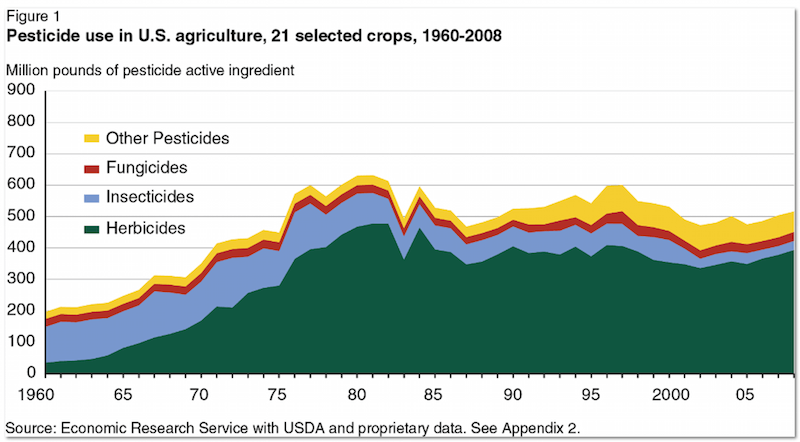
Before getting into the details of our story, I’d like to take a quick look at the big picture by way of the raw trend in pesticide use in the US.
https://www.ers.usda.gov/amber-waves/2014/june/pesticide-use-peaked-in-1981-then-trended-downward-driven-by-technological-innovations-and-other-factors/
The USDA recently took a look last year at the use of pesticides since 1960. What they found is that use peaked in 1981 and has remained fairly steady with a small decline from 1981 to 2008.
There are two important variables that aren’t caught in that graph. The first is that it doesn’t capture the improvements in the pesticides used. As we’ll see, the pesticides in use have become less toxic and more degradable over time. The second thing to keep in mind is that the population of the US in 1980 was 230 million, in 2008 it was 304 million. Yields have gone up dramatically. So, while use per acre has only modestly decreased since 1981, it has gone down dramatically both per capita and a per unit produced, while the toxicity and biodegradability have improved. That’s not to say that use per acre isn’t important, but we should keep aware of other ways of assessing what’s going on to get a fuller sense of what has actually happened.
The chemical hangover of the post-war era
The disconnect between public perception and clear improvements mostly comes from the chemical hangover people are still feeling from the unfortunate excesses of industry during the 1950s, 60s and into the 1970s. DDT, PCB’s, a raft of dangerous food colorings and additives pulled from the market, Love Canal and similar incidents left people with the unshakeable feeling that everything causes cancer and technological progress might be more trouble than it’s worth. People have a much better handle on that dismal chapter of history than they have on the reforms and innovation that followed. With creation of the Environmental Protection Agency and the passage of the Clean Air and Water Acts, regulation has become much tighter. Meanwhile, scientists began working in earnest to create pesticides that were more effective, better targeted at the pests they were aimed, while leaving a lighter footprint everywhere else. Environmental watchdog groups have worked hard to make sure that they do.
Another source of disconnect is the way organic farming has been marketed as free of pesticides. Leveraging the false public perception that organic farms don’t use pesticides, organic marketers advocates and advertisers exaggerate their harms on the environment and the risks for consumers. In denying their own pesticide use, while playing up the use in conventional agriculture, the organic industry has played a big role in shaping public perception on the issue, and not for the better.
All of these threads have come together to create a widespread lack of understanding that modern pesticides are much safer than an earlier generation chemicals. Many pesticides have been banned in recent decades and new chemistries that have been approved are much more targeted in the way that they work. Following the uproar over DDT, scientists have made degradibility a central priority, so today’s pesticides are far less persistent in the environment.
The environmental impacts highlighted include water use and irrigation; nutrient leaching and eutrophication due to excess nitrogen and phosphorus; land use, especially tropical deforestation; and greenhouse gases, especially N2O but also carbon and methane. If you look at the research on the environmental impacts of food production by researchers like geophysicist Gidon Eshel of Bard College (Michael Pollan’s go-to source on these matters) you will find a similar set of concerns and the same absence of pesticides as an environmental concern.
When you really dig into the research on the hierarchy of ecological impacts, pesticides represent a drop in the sustainability bucket when compared to land use, water use, pollution and greenhouse gases. In fact, it may seem counter-intuitive but, pesticides can play a substantial role in mitigating the damage associated with many of those other factors. Pesticides allow for us to grow more food on less land, limit the wasting of fuel and water, and help curb erosion and run-off. There is nothing sustainable about pouring inputs into growing food that is destroyed by pests.
In conversations however, I continually find myself talking to people who would happily trade the need to use more land, more manure, more water, more fuel in exchange for decreasing pesticide use. In a world of trade offs, this is getting the calculations and priorities on environmental impacts exactly backwards.
What you should know about pesticide use in 2108
What’s changed about pesticide use since Silent Spring, Rachel Carson’s 1962 classic book that ignited people’s concerns about the environmental downsides of pesticides. It’s true that pesticides, when misused, still pose risks to farm workers, and a few pretty nasty pesticides are still in use. For instance, chlorpyrifos, an insecticide has been linked to developmental issues in the children of farm workers. Methyl bromide, a soil fumigant has been linked to ozone depletion and cancer risk for farm workers. A phase out of methyl bromide ended in 2005, use of methyl bromide in the U.S. allowed in strawberry production under an “critical use” exemption to the Montreal Protocol on ozone depletion. That exemption ended in 2017. These are important challenges, but their use is decreasing while the use of more targeted and less toxic chemicals steadily increases. Unfortunately, given a chance to follow through on a move to remove chlorpyrifos from the market begun by the Obama administration, the Trump administration declined.
Chlorpyrifos use has steadily declined
Chlorpyrifos is an organophosphate insecticide, perhaps the most problematic class of pesticides. Organophosphates are nerve agents, and the way they kill bugs also works on animals and humans. The good news is that the use of organophosphates has been steadily declining over the past three decades as this chart in Science shows. I see them much more as farm worker’s health and safety issue than an environmental or consumer issue at this point.
In the last few years, agriculture expert and writer Steve Savage has done great work breaking down common misconceptions about pesticide use. In a post using the California grape industry as a typical example, he shows how the profile of pesticide use has dramatically improved over the years. Contrary to campaigns by environmental groups and anti-GMO activists that talk about a “flood” of “toxic pesticides” unleashed since the beginning of the biotech era, the data show usage shifting dramatically away from Category II (moderately toxic) and Class III (slightly toxic) towards Category IV (practically non-toxic) and the almost complete abandonment of Class I (highly toxic) pesticides.
The chart above underscores that today’s most prevalent pesticides are relatively benign from a human health perspective: more than 60% of the pesticides used in California are classified as Category IV (relatively non-toxic) and another 20% are Category III (slightly toxic).
Savage goes on to compare the amount of pesticides used in California in relation to the toxicity of substances that we popularly consider safe or even good for us.
Nearly all the pesticides used in California are less toxic than caffeine or aspirin, with only 3% by acreage more dangerous than your favorite morning pick-me-up or your favorite pain reliever. More than half are less toxic by weight than vitamin C.
What drives the perception disconnect?
Savage also lays out the interesting story about what has contributed to the reduction in pesticide use and what forces are in place conspiring to keep these achievements something of a public secret. It’s worth quoting at length.
The Environmental Movement: becoming visible after the publication of Rachel Carson’s “Silent Spring” in 1962, a broad coalition of NGOs, politicians and academics drove the awareness and impetus for the creation of regulatory bodies such as the EPA (est. 1970) which began to regulate pesticides. In a variety of ways these groups have continued to be an important voice that puts pressure on regulators to deal with additional issues as they arise through advances in the sciences of human and environmental toxicology. However, you won’t hear these groups talking about how much things have improved. They tend to focus on the next issue rather than on past progress, even if they could take some real credit along with the rest of the “team.”
The Major AgroChemical Companies: These players have been investing hundreds of billions of dollars over decades to discover, evaluate, and commercialize new pesticide options. Their search has been for products that work better, which are more selective, and which can meet ever more sophisticated health and environmental standards. Without this investment, between pest resistance development, new pests and regulatory constraints, farmers would never have been able to accomplish the sort of productivity gains that have been seen. These players are actually constrained by the EPA from talking about new products as being safer than the older ones. They also usually have a mixed portfolio of newer and older products. Besides, in an anti-business climate their messaging is typically ignored.
Government Regulators: If you step back and look at what agencies like the US EPA have accomplished over the decades, it is rather impressive. On the whole, the EPA has done its job in a way that is science-based and free from excessive political influence. As is probably the fate of any such regulator, the various “sides” on issues are all going to be unhappy with something about your decisions or bureaucratic procedures. Honestly, the EPA does not seem to have the skill or orientation for public promotion of what they have achieved (although this summary is pretty good). In any case the political Right tends to want to get rid of the agency, and the Progressive Left seems to think that they have all been “bought-off.” I have some direct experience with EPA staffers and a window on their process through friends who serve on advisory panels. This system isn’t perfect, but it deserves a great deal more respect than it gets.
Pesticide use commands inordinate attention from the general public because they are seen as “unknown” and “scary”. The fears play into the well known inability of humans to to distinguish hazard from risk. Even the mere mention of the word “chemical” can touch off an extreme psychological and irrational reaction. Yet most fears are simple run of the mill chemophobia. Synthetic chemicals are automatically considered more harmful than natural chemicals, although synthetics are often specifically developed to be better targeted and less toxic. The general public tends to think just the opposite. Most of us are prone to fall prey to appeals to the natural.
It’s the same reason we fear shark attacks more than slipping in the shower or driving when tipsy despite the fact that our bathrooms and drinking and driving are thousands of times more treacherous than swimming in the ocean. As consumers we are almost completely insulated from any serious health risks when it comes to pesticides. The residue levels in food, based on decades of empirical data, is mostly infinitesimal, and dropping.
Chemophobia has been used as a major wedge among agriculture warriors, used as a political football in the culture war between organic and conventional agriculture. It’s understandable. While, deforestation in the Amazon or the deadzone in the Gulf of Mexico may be of greater consequence, they don’t rate compared to the spector of pesticide residues when we are at the supermarket trying to decide what to feed our kids.
Pesticide use, while not absent from organic farming, is perceived as the most visible difference that sets organic apart. Pesticides are permitted in organic, some of them quite nasty. It’s only synthetic pesticides that are prohibited. It’s a perceived sustainability advantage, one that isn’t borne out looking at the evidence. When you dig below the surface at the environmental impact of various farming modes, however, organics fairs less well. On concerns like carbon, methane, nitrogen and phosphorus pollution, organic farming is less sustainable. Thus, much is made about synthetic pesticides, despite their relatively minor environmental impacts.
How biotech crops have impacted pesticide use
Insect resistant crops, corn and cotton that produces produce proteins toxic to pests, have been pivotal in reducing insecticide. While that impact is well documented, it’s less well known. Here’s a USDA report on the issue:
Farmers generally use less insecticide when they plant Bt corn and Bt cotton. Corn insecticide use by both GE seed adopters and nonadopters has decreased—only 9 percent of all U.S. corn farmers used insecticides in 2010. Insecticide use on corn farms declined from 0.21 pound per planted acre in 1995 to 0.02 pound in 2010. This is consistent with the steady decline in European corn borer populations over the last decade that has been shown to be a direct result of Bt adoption.
Even farmers who didn’t adopt Bt corn benefited from the reduction in pestsBorrowing again from the infographic from Science, we can see how the use of soil applied insecticides plummeted as Bt corn planting became more widespread .
Here’s use in corn broken out by insecticide.
The decrease is due to the effectiveness of Bt crops as well as a virtuous cycle, notesGrist food and agriculture writer Nathanael Johnson:
When I started asking about environmental effects, several experts who take a critical view of GMOs pointed me to an entomologist at the University of Arizona named Bruce Tabashnik. Yet Tabashnik was surprisingly upbeat: So far, he said, insect-resistant plants have been a clear win for the environment. “Because of them, we’re running the pesticide treadmill in reverse,” he said.
The pesticide treadmill describes a problem that consistently occurs in agriculture. It goes like this: Eventually, insects evolve resistance to an insecticide, so the farmer starts using more sprays or something more toxic. But this can kill all the critters in the fields — not just the pests, but also the predators that eat the pests. Then the problem gets much worse. As time passes the farmer becomes more and more dependent on chemicals as the only means of pest control, using larger amounts, or more severe poisons, and getting less benefit.
But transgenic insect-resistant crops have turned this process around, Tabashnik says. These plants produce proteins from a widespread bacterium known as Bt (Bacillus thuringiensis) that only harm a narrow set of insects. Bt itself is widely used as an insecticide, mostly by organic farmers. Because the Bt-producing crops kill some key pests, farmers spray less insecticide to control those pests. This allows beneficial insects to survive. With more insect predators there’s less need for insecticides, and when farmers do spray, the insecticides work better.
The link between Bt crops and the decrease in insecticide use is unequivocal. The numbers on herbicide use are less dramatic and the picture less stark–until you dig deeper. Glyphosate use has increased and total pounds of herbicides are up a little or down a little depending on what data is cited. But the real story is the the most toxic herbicides have fallen by the wayside.
Let’s take a look at the second and third most popular herbicides from the pre-biotech era. Prior to 1996, alachlor was the second most popular herbicide after atrazine. Alachlor is banned in Europe and strictly regulated in Australia. It presents some health risk to humans.
The third most heavily used herbicide prior to 1996 was cynazine, basically atrazine plus cynanide.Cyanazine was eventually put under special review due to concerns over its possible cancer-causing potential. DuPont voluntarily discontinued it in 1999, and its sale in the US was officially prohibited by 2002. (You can read more on the herbicides that glyphosate has displaced here.)
The odd thing is that even though preservation of soil is a major goal of the Environmental Working Group and clean water is a major goal of Food and Water Watch, both groups put a lot of time and energy into opposing pesticides and biotech crops when biotech crops have helped to improve the profile and impact of pesticide use, while improving soil conservation. The role that glyphosate and other herbicide tolerant crops have played in the adoption of conservation tillage should be something both groups could get behind. Conservation tillage reduces erosion, water use, and fertilizer run-off. Those are all big ticket environmental impacts, made possible in many cases by an herbicide that with a lower toxicity than table salt, and applied fairly sparingly. Just between corn and soybeans, we are talking about 100-150 million acres of conservation tillage. In one paper that tried to model the impact of Roundup Ready soybeans on reductions in tillage found “the adoption of conservation tillage and no-tillage have been about 10% and 20% higher, respectively, due to the advent of glyphosate tolerant soybeans.” That’s several million acres of no-till and conservation soybean production. For comparison, in 2016 there were 124,591 acres of organic soybeans in production, with the vast majority in conventional tillage. If organic farming researchers could finally figure out how to make no-till in organic soybeans viable with the roller crimper, that new innovation might be applied up to something like 100,000 acres. Over two decades after the adoption of Roundup Ready crops in conventional no-till systems, they are still struggling to make no-till viable in organic production at scale.
The 2017 paper attempts to suss out the question of what has happened to herbicide use on major crops over the last two decades: Has use increased or decreased, have environmental impacts increased or decreased, and what role the RoundUp Ready traits have had on those changes? In a blog post on the publication of the paper, Kniss summarized his findings.
First of all, I found strong evidence that herbicide use has indeed increased in GMO crops (corn, soybean, and cotton), much as the critics have suggested. However, I also found that herbicide use has increased even faster in the non-GMO crops rice and wheat. This suggests that there is an overall trend for increasing herbicide use in all crops, irrespective of whether GMO varieties are available. It is even plausible, based on these data, that GMO crops have slowed the increase in herbicide use (though it is impossible to say for sure).
Another interesting finding from this analysis is that the trends in relative herbicide toxicity are different depending on whether you look at acute or chronic toxicity. Acute toxicity is what most people think of when they hear the word “toxic.” Acute toxicity describes how much of a chemical would be required to cause problems in a one-time exposure. Think spilling onto your clothes, or accidentally drinking the herbicide. But for pesticide applicators, the chronic toxicity of a herbicide is arguably more relevant, since they’re interacting with these chemicals on a regular basis for many years of their lives. It is rare for an applicator to accidentally ingest an acutely toxic dose; but much lower doses are required to cause chronic effects, as long as the exposure is repeated enough times. As a pesticide applicator myself, I was particularly interested in the chronic toxicity hazard results.
Of the three GMO crops in the analysis, the chronic toxicity hazard associated with herbicides has actually increased in corn and cotton, but decreased in soybean over the last 25 years. But in all three crops, few of the changes in herbicide use that caused chronic toxicity to change are directly attributable to the GMO traits. In the final year of corn herbicide use data (2014), just two herbicides (atrazine and mesotrione) made up 88% of the total chronic toxicity hazard. In cotton, just one herbicide (diuron) made up 88% of the total chronic toxicity hazard. Use of these herbicides aren’t tied to adoption of GMO crops; these herbicides were used before GMOs, and have continued to be used after GMO adoption.
Even though glyphosate use has increased greatly over the last 25 years, my analysis suggests the relative contribution of glyphosate to the chronic toxicity hazard has remained relatively low. Glyphosate has a very low chronic toxicity compared to most other herbicides. In corn and cotton, the chronic toxicity hazard increased over the last 25 years, but glyphosate contributed less than 4% to the chronic toxicity hazard in the final year of the data set. Similar results were observed in soybean, where glyphosate accounted for 43% of all herbicide treatments in 2015, but glyphosate made up less than 1% of the chronic toxicity hazard.
Another interesting finding in this paper is that most of the major reductions in toxicity hazard were unrelated to the adoption of GMO crops. Where toxicity was reduced, it was mostly due to EPA removing the most toxic herbicides from commercial use. In particular, registration cancellations for cyanazine, alachlor, and molinate had major impacts on the toxicity hazard quotients in the analysis .
The short version: Yes, herbicide use increased as a general trend, but the increase was higher in major non-GE crops like wheat and rice than it was in corn and soybeans. In terms of toxicity, the substitution of glyphosate for other herbicides significantly lowered the toxicity profile of herbicide use in the US, even as the amount of active ingredient increased. That looks like this in corn – total pounds, down slightly, toxicity way down:
Chart by Andrew Kniss
And like this in soybeans – pounds per acre up, toxicity down, though ticking up as glyphosate resistant pigweed became a problem in soybean production:
Chart by Andrew Kniss
Pesticide poisoning among farmers in the developing world
The reduction in exposure to dangerous pesticides is a much, much bigger deal in developing countries like China, Pakistan, and India. Pesticides and their use are poorly regulated. Unlike the US where pesticides are usually applied by tractor, often with a closed cab and with all the requisite protections, smallholder farmers apply pesticides on foot with backpack sprayers, usually with no protective gear. In the US, pesticide poisoning among applicators is very rare. In places like India, it’s far too common.
Bt cotton was adopted early in China. A 2002 study of the first five years found that in the first two years the rate of farmer-reported pesticide poisoning was reduced three to four fold among Bt adopters compared with non-adopters. More generally, they found that 4 million smallholders were able to increase yield per hectare, reduce pesticide costs and time spent spraying dangerous pesticides, while significantly raising incomes.
A 2013 study found a significant reduction of pesticide poisonings among cotton farmers in Pakistan following the adoption of the Bt trait. The researchers conducted a survey of 352 cotton farmers, of which 248 were Bt adopters and 104 were non-adopters. “Farmers were asked about acute health problems that they had faced in connection with pesticide sprays in cotton during the last growing season. In particular, they were asked about the frequency and type of pesticide-related poisonings, such as skin and eye irritation, breathing problems, stomach pain, nausea, faintness, vomiting, and other symptoms.” The results, illustrated in the accompanying chart, found that the percentage of Bt farmers experiencing zero or just one incidence of pesticide poisoning were significantly higher than non-Bt farmers, while the percentage of non-Bt farmers experiencing three, four, five, or even six incidents was significantly higher than for Bt farmers. Some non-Bt farmers had as many as seven incidents, but no Bt farmers did.
A 2011 study of cotton farmers in India found Bt cotton “reduced pesticide applications by 50%, with the largest reductions of 70% occurring in the most toxic types of chemicals”. In terms of poisonings, they found “Bt cotton helps to avoid at least 2.4 million cases of pesticide poisoning in Indian farmers each year, saving US $14 million in annual health costs.” More generous estimates put the reduction in the incidence of pesticide poisoning as high as 9 million. Reductions were low in the early years of adoption but grew significantly after 2005. As you can see in the chart, the difference in the incidence of poisonings among Indian Bt and non-Bt cotton farmers is even more dramatic than in Pakistan.
Last summer, I visited an organic farm in the area. The farmer showed me various parts of his operation, one of which was a field that he had planted to a species of perennial grass that produces an abundance of deep roots. We dug a hole and confirmed it; a dense fibrous root system had formed after two years of growth. The farmer’s goal in planting this grass was to build up the soil before vegetable production. When I talked to the farmer again this fall, he was trying to figure out how best to go from the grass to vegetables. There could be two options for doing this.
The first is to till the grass crop in order to kill it. This would most likely require disking the soil three times or plowing and then disking, to kill the grass and break up the sod that is turned up by the first tillage pass.
The other option would be to spray out the grass crop with an herbicide. One pass through the field and the grass would be killed completely if done right.
If the goal of growing the grass was to build up the soil, which is the best option? Tillage, we know from research, would break up the physical soil habitat built up over the two years, disturbing the microorganisms living there. It would also disturb or destroy larger soil fauna, such as earthworms. This physical destruction, combined with the flush of oxygen that comes with intensive tillage, would burn up much of the organic matter added by the grass. The tillage would also eliminate soil cover and leave the soil in a loose state that predisposes it to future compaction.
Spraying out the grass with an herbicide would leave the soil’s physical habitat intact. The root mass that we dug up last summer would be undisturbed and the surface would covered by the dead grass leaves, controlling wind erosion and reducing evaporation.
In terms of the goal of building soil, the second option is plainly better than the first. However, some may argue that herbicides are toxic, that they may be a detriment to soil organisms, or that they could pollute the environment. If we used the herbicide glyphosate (the active ingredient in Roundup) its toxicity is low compared to other herbicides (the EPA considers glyphosate to be non-carcinogenic and relatively low in toxicity). The toxicity concern is limited further because we are not spraying a crop that is going to be harvested and the chemical is not persistent in soils. Any detrimental effect to soil organisms would be minimal compared to the obvious effects of tillage. Glyphosate also has a small leaching potential.
For building soil, the choice is clear; spray out the crop.
Pesticides in a world of trade-offs
There is still room for improvement in the use and toxicity profile of pesticides, especially in other countries. Pesticides do get misused, especially in developing countries without strong regulations and little public spending on ag education and training. They can harm wildlife and pollinators. Farm workers need stronger protection.
But the single-minded focus by many on pesticides ignores that we live in a world of trade-offs and producing the most food on the least amount of land, with the least amount of water, the least amount of erosion, the least amount of fertilizer runoff, and the least amount of greenhouse gases is a larger, more important set of goals. Those goals can often best be advanced through smart use of some fairly non-toxic tools.
Marc Brazeau is the GLP’s senior contributing writer focusing on agricultural biotechnology. He also is the editor of Food and Farm Discussion Lab. Follow him on Twitter @eatcookwrite
A version of this story was originally published at the GLP in April 2015
No, not on a roster of answers from high school sexual education class, but on a list that’s more frightening: The sexually transmitted disease that infected 468,514 Americans in 2016 is now yet another bacterium which can resist antibiotics, according to the U.S. Centers for Disease Control and Prevention.
The CDC found that Neisseria gonorrhoeae could resist the popular Z-pak antibiotic (formally known as azithromycin). The degree of N. gonorrhoeae’s reduced susceptibility to the drug was 2.5 percent; the year before, it was just 0.6. Fortunately, for now, the other drug against gonorrhea, ceftriaxone, doesn’t quite show the same decrease in effectiveness (the two drugs are given together to treat the disease).
But the finding shows that more common diseases are resisting antibiotics, and even new-generation drugs are joining penicillin, tetracycline, and Cipro along the path to resistance to antibiotics.
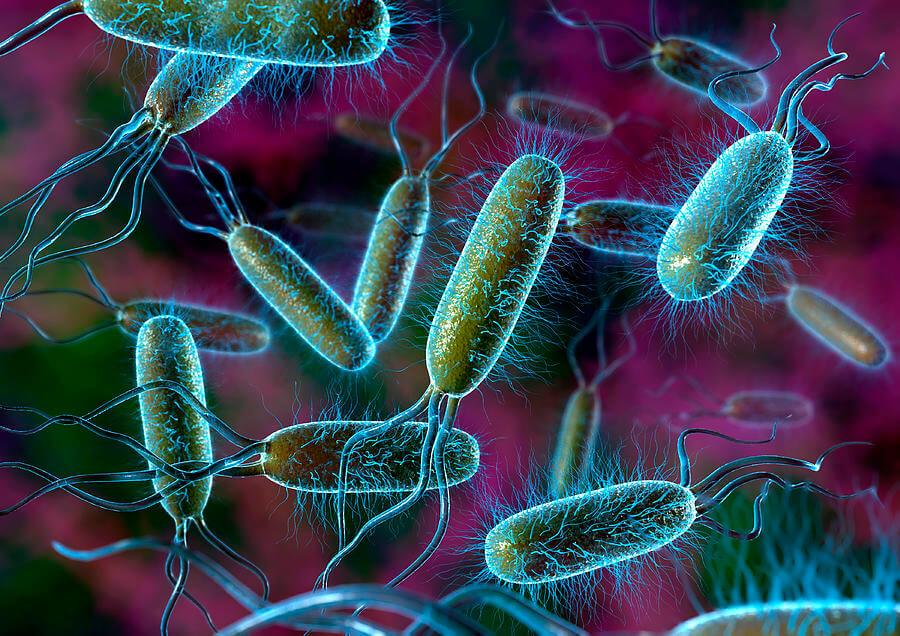
This illustration shows a computer-generated image of drug-resistant Neisseria gonorrhoeae, the bacterium that causes gonorrhea. Image credit: CDC/James Archer
A tarnish on the Golden Age
This is nothing new. Even if the Los Angeles Times announced in a 2016 series that “The golden age of antibiotics is over.” According to the Times:
The golden age of antibiotics appears to be coming to an end, its demise hastened by a combination of medical, social and economic factors. For decades, these drugs made it easy for doctors to treat infections and injuries. Now, common ailments are regaining the power to kill.
Harvard University infectious disease epidemiologist William P. Hanage cautions that “we will not be flying back into the dark ages” overnight. Hospitals are improving their infection control, and public health experts are getting better at tracking new threats. But in a race against nature, he said, the humans are losing ground.
We’re seeing more drug-resistant infections,” Hanage said. “And people will die.
One thing the Times didn’t overhype, however, was the role of genetics in antibiotic resistance. In fact, the series cites the case of a woman with a urinary tract infection that stubbornly held on despite multiple antibiotic treatments. The culprit was finally found: a gene named mcr-1, which helped the bacteria resist treatment.
Antibiotics and resistance—a package deal from the beginning
Resistance to antibiotics has been an issue from the first use of antibiotics. In the 1930s, when sulfonamides were introduced, they were hailed as a medical breakthrough against previously fatal and incurable infections. But at the same time, resistance to sulfonamides was reported. Reports of resistance continued to arise with nearly every introduction of a new antibiotic. As time and research went on, it became clear that the mechanisms of resistance were genetic.
Most bacteria can acquire resistance. A bacterium with a resistance gene can easily share that gene with other bacteria, through lateral gene transfer. Bacteriophages and plasmids can also carry resistance genes, and be taken up and shared (again) by bacteria, thus building the population of resistant bugs.
And there are probably 20,000 resistance genes, divided into 400 types, pointed out Dorothy and Julian Davies, microbiologists at the University of British Columbia, in a recent review article. For example, there are 200 different varieties of the beta-lactamase gene alone–which chemically cleave penicillin and cephalosporin, rendering them useless. As to the question, which came first? The antibiotic or the resistance? The answer is probably “both.”
Mis- and disinformation are distorting science and public policy. Subscribe to our Daily and Weekly Digests for incisive coverage of ‘disruptive’ innovations in AI, agricultural biotechnology, food, chemicals, nuclear energy, vaccines, and other disruptive innovations.
While public health specialists and governments urge doctors to reduce antibiotic use, urge patients to avoid taking antibiotics, and use the complete dosage regimen if they do, and for hospitals and public facilities to use more stringent cleaning methods, it may be the enormous diversity of resistance genes that could eventually turn the tide of this growing health threat:
New databases have been developing that can use next generation sequencing data to create a more detailed picture of the antibiotic resistome (yes, another ‘ome’), classifying genes in pathogens and environmental microbes, identifying new genes behind new antibiotic resistant isolates, detailing horizontal gene transfer of those genes, all with the goal of being able to predict antibiotic resistance form a genotype. The Comprehensive Antibiotic Resistance Database (CARD) is one of these new databases, created by Canadian and British government and university researchers.
After a prolonged period of stagnation, pharmaceutical companies are showing fresh interest in developing new antibiotics that could overcome resistance. This effort has paid off in the discovery by Northeastern University scientists of the first new antibiotic in 30 years, Teixobactin, a compound found in soil microbes like most other antibiotics. And another possible new class of antibiotics, lugdunin, was discovered by two scientists at the University of Tuebingen in Germany, by examining interactions in the microbes of the human nose.
Maybe there will be a better list to review, even a new golden age. Though, there’s no reason to believe these new antimicrobials won’t create resistance; in many ways, it’s the nature of the beast.
Andrew Porterfield is a writer, editor and communications consultant for academic institutions, companies and nonprofits in the life sciences. He is based in Camarillo, California. Follow @AMPorterfield on Twitter.
A version of this article was originally published by the GLP in September 2016.
This is part four of a four-part series attempting to separate fact from fiction regarding pesticide use on organic farms. In the first installment, we looked at the common claim that organic farms actually use more pesticides and more dangerous pesticides than convention farms through the lens of a few simple observations and talking to actual organic farmers. In part two, we looked at the factoids that have been taken out of context and twisted into a dishonest narrative. In part three, we looked at the special cases of pest control in organic orchards and vineyards. Here, we take a critical look at a widely circulated article purportedly busting myths about organic farming that managed to create a few myths.
For a lot of people, a lot of keyboard warriors, the entirety of their knowledge of pesticide use in organic production comes from a single Scientific American blog post titled “Mythbusting 101: Organic Farming > Conventional Agriculture” written by Christie Wilcox and published on July 18, 2011.
The article sets about to dispel a number of widely held misconceptions about organic farming, but after clearing up the initial misunderstanding Wilcox makes a hash of the whole affair in playing up every “Dog Bites Man” bit of information she comes across for dramatic effect, along with heavy doses of unwarranted chemophobia (and here the dose does make the poison), leaving most readers more misinformed by the end than when they started. This is unfortunate, as we are all hard-wired to accept just-so stories or those that confirm our biases based on little evidence, but once accepted, those just-so stories are notoriously hard to dislodge, with the goalposts for standards of evidence moved down the field as needed in order to maintain a belief that was initially accepted based on flimsy evidence and reasoning.
The errors in the piece are legion, but I’m going to confine myself largely to the section on pesticides, although I can’t help but point out that the entire thing gets off on the wrong foot from the first sentence.
“Certified organic didn’t exist ten years ago. Yet in 2010, a mere eight years after USDA’s regulations officially went into effect, organic foods and beverages made $26.7 billion.”
Certified organic products have been sold in the U.S. since shortly after the formation of Organic Crop Improvement Association (OCIA) in 1985. What the USDA was tasked with was creating a national standard for certification. That began with the 1990 Organic Food Production Act and the National Organic Program Final Rule was first published in 2000. But the OCIA and other groups had been certifying organic farms prior to that. It’s a small thing, but it shows a writer out of their depth.
When informed by her boyfriend at the time that organic farms do in fact use pesticides, Wilcox didn’t want to believe it:
His family owns a farm in rural Ohio. He was grumbling about how everyone praised the local organic farms for being so environmentally-conscientious, even though they sprayed their crops with pesticides all the time while his family farm got no credit for being pesticide-free (they’re not organic because they use a non-organic herbicide once a year). I didn’t believe him at first, so I looked into it: turns out that there are over 20 chemicals commonly used in the growing and processing of organic crops that are approved by the US Organic Standards.
So far, so good. It also sounds like the boyfriend’s farm was a no-till operation with a serious commitment to conservation agriculture principles. Unfortunately, it goes off the rails in the next sentence:
Shockingly, the actual volume usage of pesticides on organic farms is not recorded by the government. Why the government isn’t keeping watch on organic pesticide and fungicide use is a damn good question, especially considering that many organic pesticides that are also used by conventional farmers are used more intensively than synthetic ones due to their lower levels of effectiveness.
ALL pesticides used by ALL farmers on ALL types of farms are subject to exactly the same EPA, state and county rules and regulations. All organic-approved pesticides are available to conventional farmers as well. One of the things that surprised me in researching this story was that I could not find a single organic-approved pesticide that wasn’t used in a significant way by conventional farmers somewhere. The vast bulk of organic-approved pesticides sold are used on conventional farms. That’s not surprising, but my expectation was that for all the talk of some of the mineral and horticultural oils being less effective and more expensive, there would be a list I could put together of products used exclusively on organic farms. I couldn’t. In talking to a range of experts, there wasn’t a commonly used organic pesticide that conventional farmers don’t also find useful under the right circumstances.
The actual volume usage of pesticides on organic farms is recorded by the government as part of their record-keeping on the pesticide use on all farms. It’s just not broken out separately for organic farms. As far as the USDA National Agricultural Statistics Service or CalPIP (the California Pesticide Information Portal) which keeps meticulous records, if you have an organic farm, it’s just a farm and how you market your product is not of interest to them. Your survey information on total pounds used, acres applied to, number of applications, application rates, etc. goes into the database with everyone else’s.
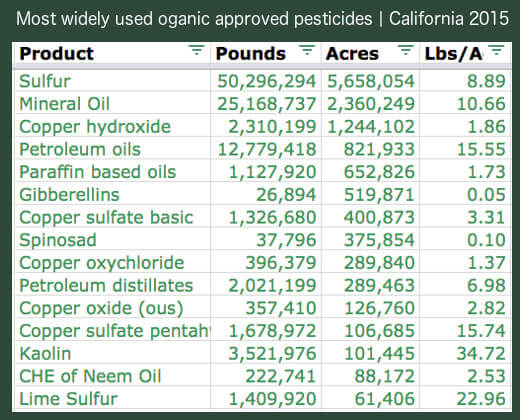
That might be annoying to people who would like to do head to head comparisons (and I include myself in that group) but it’s not a dastardly plot. It’s not a cover-up. Here’s the data on the most widely used pesticides approved for organic in California for the year 2015:
And here are the most widely used pesticides not approved for organic in California that year:
We can see that sulfurs are the most widely used chemicals in California at 5.6 million acres, tied with glyphosate at 5.6 million acres. In 2015, organic acreage in California stood at 790,413. So, even if we were to assume that sulfur was used on every acre of organic production, that would leave 4.8 million conventional acres. Likewise, of the 2.1 million acres where various copper-based products were applied, assuming copper was applied to every acre of organic production – an even less plausible assumption – that leaves copper products applied to at least 1.4 million conventional acres, nearly double organic acreage. Pyraclostrobin, the top synthetic fungicide in California, was only applied to 1.2 million acres, so sulfurs and coppers are applied to more conventional acres than the top synthetic fungicide (at least according to the CalPIP database).
While it’s true that organic farmers use greater applications of these fungicides because the conventional farmers who use them are often complementing them with synthetics, it’s become clear to me that the difference in use has become exaggerated for polemic effect in the organic/conventional debate.
Wilcox blunders on:
According to the National Center for Food and Agricultural Policy, the top two organic fungicides, copper and sulfur, were used at a rate of 4 and 34 pounds per acre in 1971. In contrast, the synthetic fungicides only required a rate of 1.6 lbs per acre, less than half the amount of the organic alternatives.
For starters, there were vanishingly small numbers of organic farms in 1971 – coincidentally the year Chez Panisse was founded and created the first commercial demand for organic produce. As late as 1992, the year of the first survey tracking organic farms in California, there were only 45,493 acres. In 1971, I’d be surprised if there were more than 1000 acres of what we would recognize today as organic farms. That means the outdated application rates she cites for coppers and sulfurs were for the conventional farms of the time. As we can see from the spreadsheet, 3.31 is the upper bound on rates for coppers and the rate for sulfur is 8.89. Anyone who is taking data from 1971 and thinks it tells us anything about pesticide use in 2011 or 2018 doesn’t know what they are talking about.
Also note that the main organic insecticide, Spinosad, is widely used by conventional farmers as well. Dow sells the organic version under the Entrust label and the conventional version (different adjuvants) is sold under the name Success. Spinetoram, a synthetic derivative chemistry, is sold as Radiant.
But now with all of the concern over copper accumulation in soils and the restrictions on copper use from organic certifiers, a new option recently hit the market. It is a low load copper soap called Cueva [PDF]. Using Cueva instead of Basic Copper Sulfate or Cuprous Oxide cuts the actual amount of copper applied per acre by 90-98%. More importantly, it is so safe it has a very short re-entry of 4 hours compared to the 12-48 hour periods for other popular copper products.
Take the example of Rotenone. Rotenone was widely used in the US as an organic pesticide for decades. Because it is natural in origin, occurring in the roots and stems of a small number of subtropical plants, it was considered “safe” as well as “organic“. However, research has shown that rotenone is highly dangerous because it kills by attacking mitochondria, the energy powerhouses of all living cells. Research found that exposure to rotenone caused Parkinson’s Disease-like symptoms in rats, and had the potential to kill many species, including humans. Rotenone’s use as a pesticide has already been discontinued in the US as of 2005 due to health concerns***, but shockingly, it’s still poured into our waters every year by fisheries management officials as a piscicide to remove unwanted fish species.
Rotenone is an excellent example of a natural substance that is very dangerous, especially if not handled properly — a point Wilcox clarifies in her next paragraph. But as she originally noted, it had been removed from agricultural uses in 2005, so it was no longer a good example of how organic-approved pesticides could be more dangerous than their conventional counterparts, with a 2006 report on botanical insecticides finding that recent amounts used in California had been about 400 pounds statewide. This seems to frustrate her, so she takes a gratuitous and probably unfair swipe at the people who manage lakes in wild lands. The strikethrough and asterisks are further evidence of how far out of her depth she is, without realizing it. See the second installment of this series for a further discussion of the rotenone story.
*** Oh, it turns out Rotenone got re-approved for organic use in 2010. See for yourself.
What Wilcox has stumbled upon here, and didn’t understand, is the Organic Materials Review Institute’s page for rotenone. What she is seeing is that rotenone is on the list of approved products by the National Organic Program. That essentially allows organically-grown imported bananas to be sold under the NOP label. Rotenone has not been re-approved for use by the EPA. And it’s an easy mistake to make. When I followed her link to see for myself, I was confused, because I would have heard that rotenone was back. So I asked some people who would know before shooting my mouth off. That’s not just journalism, it’s a pretty good rule of thumb in life.
Just last year, nearly half of the pesticides that are currently approved for use by organic farmers in Europe failed to pass the European Union’s safety evaluation that is required by law. Among the chemicals failing the test was rotenone, as it had yet to be banned in Europe.
This was actually a pretty big deal. Thirteen of twenty seven [PDF] organic approved substances up for review got the ax in 2009. Important to note, despite the increased application of precaution and higher standards, copper hydroxide, copper oxide, copper oxychloride, copper sulfate, and Bordeaux mixture (copper sulfate and calcium hydroxide) were all re-approved. Another important bit of context: earlier in 2009, the EU had banned 22 conventional pesticides. They were doing an across-the-board house cleaning, and due to the political climate surrounding both agriculture and chemicals in Europe, the event may well say more about the application of the precautionary principle in Europe than the relative safety of the pesticides pulled from the market. It’s worth noting that of the thirteen organic products that the EU banned, ten are banned in the US as well, with neem oil, lime sulfur, and mineral oil still approved for use in the US.
Furthermore, just over 1% of organic foodstuffs produced in 2007 and tested by the European Food Safety Authority were found to contain pesticide levels above the legal maximum levels – and these are of pesticides that are not organic. Similarly, when Consumer Reports purchased a thousand pounds of tomatoes, peaches, green bell peppers, and apples in five cities and tested them for more than 300 synthetic pesticides, they found traces of them in 25% of the organically-labeled foods, but between all of the organic and non-organic foods tested, only one sample of each exceeded the federal limits.
This is all true, but what does it really tell us? We aren’t given any comparison with conventional produce. We aren’t told if the levels suggest drift from conventional neighbors or cheating. In testing, organic produce routinely is found to have lower pesticide residues. But the tests are only for synthetic pesticides and not all of those either. They current still don’t have a test for glyphosate residues. But they don’t test for organic pesticide residues. The whole thing is such a mess, it’s hard to get worked up about since the vast majority of produce tested finds residues well below threshold levels, and those are set very conservatively.
Not only are organic pesticides not safe, they might actually be worse than the ones used by the conventional agriculture industry. Canadian scientists pitted ‘reduced-risk’ organic and synthetic pesticides against each other in controlling a problematic pest, the soybean aphid. They found that not only were the synthetic pesticides more effective means of control, the organic pesticides were more ecologically damaging, including causing higher mortality in other, non-target species like the aphid’s predators.
Let’s parse this.“Not only are organic pesticides not safe.”As a blanket statement, this is just false. Most organic pesticides are considered very safe. They are all regulated in the same way that conventional pesticides are. Some are more risky than others and were removed from use in 2009 by the EU. Same goes for conventional pesticides.
“They might actually be worse than the ones used by the conventional agriculture industry.” Again, as a blanket statement, this is false. Some organic pesticides are more risky than their synthetic counterparts. That’s true. But those products are also used by conventional farmers.
The Canadian study she cited as evidence that organic pesticides are “worse” was a theoretical exercise – not based on any data about how organic farmers actually control aphids in soybeans. Rob Wallbridge, former organic farm inspector and vegetable, berry, and grain producer, current organic agronomist, and consultant in Ontario, Canada, pointed out to me that the study did not test actual organic pest control strategies as practices by farmers in the real world. As best as I’ve been able to gather, that’s true.
So, the evidence that organic pesticide use is more dangerous:
• Application rates of sulfur from 1971, mostly from conventional farms.
• An insecticide that was phased out starting around a decade earlier (from 2011) and then banned by the EPA in 2005.
• That the EU removed a number of products in 2009, ostensibly to make organic farming safer, as they also did that year for 22 synthetic products.
• And a laboratory study that shows that two organic pest strategies that nobody uses could possibly be worse for the environment three conventional products.
And notice how the at each step of the way the particular becomes universal. “Rotenone was banned in 2005, but is a good example of how dangerous natural compounds can be” and “Some risky organic pesticides were taken off the market” turns into “Not only are organic pesticides not safe” ignoring that the not safe ones were just removed but applying that property to the remaining organic pesticides that are considered relatively safe. Which in turn gets “They might actually be worse than the ones used by the conventional agriculture industry.” layered on top of it. But that’s spreading a little too much mustard on the sandwich. An organic pesticide can have a somewhat worse risk profile than a synthetic counterpart and also be relatively safe. It also might be applied to more conventional acres than organic. Which is the point of the first chart. There’s no need to fear monger to get the point across that some organic pesticides have higher risk profiles than their synthetic counterparts. The vast majority of pesticides used today are Category IV “essentially non-toxic”.
CORRECTION: The initial draft as published took issue with Ms. Wilcox’s opening sentence,“Certified Organic didn’t exist ten years ago. Yet in 2010, a mere eight years after USDA’s regulations officially went into effect, organic foods and beverages made $26.7 billion.” I pointed out that organic farms had been certified by various agencies since 1985, and it was only the USDA’s National Organic Program that went into effect eight years prior.
A reader pointed out that in the capitalization of C and O shows that she was referring to the NOP label in particular and not to organic certification in general. I regret the error – MB
She tried to compare the top organic insecticide to the top conventional insecticide and the top organic fungicide to the top conventional fungicide but ended up doing two insecticide vs. fungicide comparisons.
She used the LD50 of the compound copper sulfate which is only used as an aglaecide (sused to kill algae) rather than the LD50 of an copper based fungicide formulations approved for use in agriculture (they are all much lower). The LD50 of Basic Copper 53 [PDF], a very popular product, is 1502 mg/kg, much less toxic than straight copper sulfate at 30 mg/kg. (Remember, the higher the number, the lower the toxicity.)
The correct comparisons show organic fungicide to be more toxic than the conventional fungicide, and the organic insecticide less toxic than the conventional insecticide. (OA = organic approved)
While both copper hydroxide and pyraclostrobin are considered moderately toxic pyraclostrobin is significantly less toxic . However, looking at insecticide match ups, spinosad, like pyraclostrobin is at the lower bound of moderately toxic, on the tipping point of slighly toxic where we find stylet oil and Bt, while the top three insecticides are highly toxic. In fact, abamectin is considered extremely toxic.
Nor does she address that conventional farmers use those organic pesticides.
Here are some Environmental Impact Quotient (EIQ) comparisons (the lower the number, the lower the impact) for rotenone and a few other relevant insecticides.
Organic approved
Bt – 8
Spinosad – 17
Pyganic – 18 (pyrethrin based)
Rotenone – 33
Synthetics
Abamectin – 38
Imidachlorprid – 37
Chlorpyrifos – 43
Disulfoton – 104
It remains the case that for a lot of non-ag readers the initial blog post was essentially the source of bulk of what they thought they knew about organic pesticide use and people continue to share the link to this day as evidence that organic pesticide use is more concerning than conventional use.
Marc Brazeau is the GLP’s senior contributing writer focusing on agricultural biotechnology. He also is the editor of Food and Farm Discussion Lab. Follow him on Twitter @eatcookwrite
Just three weeks ago, law enforcement in California announced the arrest of the Golden State Killer using DNA.
…
On Friday, police in Washington State announced the arrest of William Earl Talbott II for a double murder in 1987, and this time, they proudly announced the use of the same method of tracing distant relatives through DNA a field known as genetic genealogy.
…
On May 8, [Parabon NanoLabs] announced the creation of a new genetic-genealogy unit led by [genealogist CeCe] Moore. The company recently told BuzzFeed it had uploaded DNA from about 100 crime scenes to GEDmatch.com, with about 20 of them generating matches of a third cousin or closer.
…
In the double murder in Washington State, the suspect’s DNA matched two relatives, both fairly close by the standards of this research: a second cousin and a half–first cousin once removed. The former relative was on the mother’s side, the latter the father’s side, so the suspect was not hard to identify. “No cases are easy, but when they are straightforward, it really falls into place very quickly,” says Moore.
…
The strangest part of this story may be that a small, volunteer-run website, GEDmatch.com, has become, as the genealogist Debbie Kennet has similarly observed, the de facto DNA and genealogy database for all of law enforcement.
Gene-edited super-crops are to be sown in Britain in a European-first after scientists exploited a legal loophole.
The Government has quietly approved the farming of gene-edited (GE) Camelina oilseed crops as part of a trial to super-charge the plants to produce Omega 3 fish oils, one of the most popular food supplements.
The pilot was approved because, unlike genetically modified (GM) plants, the Camelina oilseed crops contain no foreign DNA. Instead, they had their genetic code altered in a way that could have happened naturally.
Scientists say gene-editing can cut the time it takes to engineer new plants from decades to months. They argue embracing the new technology is vital if Britain is to benefit from GE crops and help maintain a sustainable source of fish oils in face of depleted ocean stocks
The trial starts as the European Court of Justice prepares to decide whether GE plants can be legally treated as if they were conventional crops across the EU.
Critics, however, accused Defra (Department of Environment, Food and Rural Affairs) of pre-empting a decision by the court which could end up requiring GM-style regulation of GE crops.
On one side, activists and advocacy organizations have blamed glyphosate exposure for everything from autism to celiac disease. Agribusiness companies and their allies, on the other hand, insist glyphosate has no negative effects at all.
So is glyphosate benign, does it pose some kind of clear and present threat, or is the truth somewhere in between? That’s where things get complicated. In theory, scientific research should be able to provide a sober, objective assessment of the risks. But the intensity of the debate has made it very difficult to sort out science from personal bias and industry spin.
…
When each concerned faction accuses the other of distorting the facts, and even independent organizations and regulatory bodies have struggled to stay above the fray, it can be hard to know what to believe. The result is that, while glyphosate [is] everywhere in the global food system, there’s little consensus about what that actually means for human health. And so the question isn’t just whether or not the world’s most popular herbicide is safe. It’s also about how we determine what “safe” is in the first place, and who gets to decide.
Hundreds of genes influence how tall a person is, but most make an imperceptible difference—perhaps a millimeter, for example. Now, a group studying the genetics of Peruvians, one of the world’s shortest populations, has turned up a gene variant that cuts a person’s height by more than 2 centimeters, on average. “It’s amazing that they saw such a change,” says Emma Farley, a genomicist.
…
Short Peruvians have a version, or allele, of a gene called FBN1 that differs by one base from the gene’s usual DNA sequence. That subtle shift alters an amino acid in a carbohydrate-coated protein called fibrillin-1, which provides structural support in connective tissue. Other FBN1 mutations are known to affect height in rare disorders: Marfan syndrome, which affects the skeleton, heart, and eyes and generally produces tall, thin people; and “stiff skin” syndrome, marked by shortness and a very thick, hard skin.
…
Her group estimates that 5% of Peruvians carry the newly identified FBN1 allele, suggesting that evolution has favored short stature and perhaps thick skin among Peruvians. Many live at high altitudes, and animal studies show that species living at such elevations tend to be smaller, an apparent evolutionary adaptation to the scarcity of food in those places. Thick skin might also protect the body from the strong ultraviolet light at high altitudes.
When future historians look back on the 21st century, one of the most iconic photos may be of a smiling, dark-haired man in blue scrubs protectively holding a newborn — the world’s first commercially produced “three-parent” baby.
This is John Zhang, the Chinese-born, British-educated founder and medical director of a Manhattan fertility center that is blowing up the way humans reproduce.
…
In a feature about 10 people who matter in science, the journal Nature dubbed Zhang a “fertility rebel.” For others — including U.S. regulators — the baby’s birth marked an unnerving step down the slippery slope of tinkering with human life in ways that are not fully understood.
…
Last August, the FDA ordered Zhang to stop marketing the technology, effectively shutting down the program.
…
Zhang himself declined to discuss regulatory matters. But, he said, “my personal opinion is very simple: Any technology will eventually benefit mankind and should be allowed. Look at history: People were against antibiotics, general anesthesia, vaccines” — scientific developments that wound up saving millions of lives.
…
[D]octors should “not be gatekeepers, but educators and counselors.”
“Too often, we think we are big doctors and we know everything. Too many times we talk about ‘expert opinions,’ ” Zhang said. “But very often I have found when we discuss everything we have not thought enough about what the patient really wants.”
Colorado farmer Steve Kelly brushes aside a small mound of dry yellow dirt to reveal a sugar beet seed that’s no larger than a peppercorn. It seems insignificant, but the seed is different from what he planted more than 20 years ago.
“The quality of the beet wasn’t as good and yield and everything that way wasn’t as good either,” he said.
Now all but 5 percent of sugar beet seeds in the U.S. are genetically modified, or GMO.
The genetically engineered sugar beet was introduced ten years ago and has allowed farmers to grow more beets on less land, the 2012 U.S. Agricultural Census said. Farmers also report using less water.
Industry experts say GMO has revolutionized sugar beet farming, but an upcoming decision from the U.S. Department of Agriculture has many farmers, Kelly included, wondering whether they’ll have to return to conventional seed.
GMO foods must be labeled by 2020 under a federal regulation. Beet sugar looks molecularly identical to any other refined sugar, but if the USDA decides it and all the products its used in get a GMO label, sugar cane will get a leg up because it’s a non-GMO crop — hurting sugar beet farmers and possibly raising consumer prices.
In Mozambique, a country where 64 percent of the population is food insecure, no one cares about the processes used to produce food. They are only glad to have it.
As a result, though Mozambique has not yet approved the use of genetically modified crops, supermarkets there are already selling imported GM products to excited consumers. The nation’s citizens, it seems, are ready to accept the commercialization of GMOs — if it means more food on their tables.
…
“People in Mozambique are not worried about GMOs,” Rose Moreira, who works with National Agricultural Research Institute of Mozambique, told the Alliance for Science. “They are willing to have very good products from industry, commerce and technology. People are not looking at what they have on the shelves. They are looking at the way they will have it on their plates.”
…
The residents say they look forward to the GM products hitting the market to increase production and cut down on importation. Nelson Salvador Balate, local youth leader for Mozambique’s governing political party at Bilene, told the Alliance for Science: “If we get technology, for example, genetic modification, we can get more production. If we get it locally, it will be good for us.”
A team of researchers from the United States and New Zealand took a look at how likely species were to go extinct and how likely new species were to appear during a 60-million-year period, long before humans evolved. Upon analyzing fossil data, it seemed to them as if astronomical cycles led to climactic effects that ultimately aligned with new species of plankton appearing and going extinct on Earth.
…
The researchers looked specifically at data on 1,794 fossilized species of zooplankton, and how they appeared and disappeared during the time period from 481 million to 419 million years ago. They compared this to their model of Milankovitch “grand cycles,” regular changes to the shape of the Earth’s orbit around the Sun that occur every 1.3 million and 2.6 million years, that may have had effects on the climate. They thought these cycles could explain statistical changes in the number of new zooplankton species appearing and going extinct.
…
But perhaps it’s not so outlandish to think that cosmic forces could be driving species turnover. Just last week, scientists hypothesized that the orbits of Jupiter and Venus planets could have an influence on our planet’s climate.
…
[C]osmic forces actually might be influencing life here on Earth. How and why, we don’t quite know—but it’s safe to say Earth’s history is influenced by more than just the Moon and the Sun.
Editor’s note: Read the full study (behind paywall)
Scientists in Japan have used CRISPR-Cas9 technology to stop human immunodeficiency virus type 1 (HIV-1) replication in latently infected T cells that can’t be controlled using existing drug treatments. The gene-editing approach effectively disrupts two regulatory HIV-1 genes, tat and rev, which are essential for viral replication.
…
[W]hile lifelong antiretroviral therapy (ART) can help convert what is otherwise a deadly infection into a more “manageable chronic disease,” current treatments are not a cure because they can’t completely eradicate the virus, which inserts its genes into the host cells’ DNA, the authors explain. Despite treatment using ART, HIV-1 continues to replicate at a very low level in some latently infected immune system cell types, such as CD4+ cells, macrophages, and follicular dendritic cells. ”
…
The scientists generated six guide RNAs (gRNAs)—three targeting tat and three targeting rev—to direct the DNA-cleaving Cas9 enzyme to the relevant sites in the proviral DNA. They packaged gRNAs and the Cas9 enzyme system into a lentiviral vector, which they could then introduce into cultured cells.
…
They claim that the ability to transduce nondividing cells, such as resting CD4+ T cells, using lentiviral constructs and achieve long-term Cas9 transgene expression supports the feasibility of using the system to eradicate cells that act as latent reservoirs of HIV-1.
Indigo Agriculture CEO David Perry grew up raising corn and cows on his family’s farm in Arkansas. While he wasn’t the type to set up a lemonade stand, he did show early entrepreneurial tendencies. He remembers gathering receipts and diving into the books of the family business at age 11 to figure out whether corn or beef was more profitable.
Now Perry is on a mission to help all farmers maximize their profits, while minimizing their impact on the environment.
His company has developed something of a weedkiller killer, which may also prove a Monsanto or Bayer killer. The company uses naturally occurring microbes instead of genetic modifications or chemicals to help plants survive and grow in rough conditions.
Indigo Agriculture’s beneficial microbes can be applied as a liquid or powder coating to seeds (a standard process in agriculture already). They also can be sprayed onto flowering plants, which take the beneficial microbes into their seeds.








 A