Compare the sprinting Shetland sheepdog with the sluggish St. Bernard, and it’s clear a dog’s genes play a large role in how athletic it is. Now, at the Biology of Genomes meeting here, scientists report identifying 59 genes linked to canine athletics, which apparently affect everything from heart rate to muscle strength. Early results suggest some may eventually help us understand human superstars.
…
[Jaemin Kim] decided to start with the genes that turn sport dogs such as pointers, setters, and retrievers into the Michael Jordans of the canine world. He and colleagues compared the genomes of 21 individuals from 10 sport hunting breeds with 27 individuals from nine terrier breeds.
…
He and his colleagues could not easily verify [the genes’] effects on athletic performance, but most are linked to traits including blood flow, heart rate, muscle strength, and even pain perception. One seems to help dogs remain calm after they hear a gunshot, he added, which may make them stable hunting companions; a different version in terriers may account for their well-known neuroticism.
…
[Canine genomicist Elaine] Ostrander says the new results might one day help us better understand the genetic basis of athleticism in humans. Already, other researchers have implicated one of the 59 genes in improving human performance by improving blood flow, and it’s likely, she says, that others will also prove important.
On Thursday 17th March, the International Agency for Research on Cancer (the IARC), appointed Dr. Elisabete Weiderpass as its new Director. She will replace Christopher Wild, the outgoing director.
…
Certainly the IARC’s critics will consider Dr Weiderpass’s election preferable to that of Mr Christofer Portier who – despite a history of polemics –was among the 33 candidates in the election. But they may well be surprised that this blood is not as new as it may appear. Parts of Dr Weiderpass’s CV show that she was connected with the institution as long as 20 years ago.
In fact, she did a post doc at the IARC in 1994 and since then seems to have been a strong supporter of the institute. She is also one of the authors of a 2015 study that rejected widespread criticism of the IARC. Her husband, Harri Vainio – a member of the Ramazzini Institute whose studies on glyphosate have been heavily criticized by the scientific community – is also linked to the IARC, where he was in charge of monographs from 1983 to 1987 and from 1990 to 1993. Finally, she was deeply involved in the glyphosate dispute as she co-authored a paper with Christopher Portier in which the authors sought to discredit EFSA’s work. We bet that scientists who have criticized the IARC’s bias will take a dim view of these details….
After I received a vaccine as a child, my mom would take me to get ice cream. While I inhaled my vanilla twist, my body was mounting a response to the inactive virus or bacteria injected into my left arm.
In an orchestral sequence of events, the body processes antigens, substances that provoke an immune reaction, in the vaccine and produces antibodies to defend itself. In vaccines, these antigens are commonly live, weakened, parts of, or dead pathogens. When we encounter these invaders in the future, antibodies identify the antigen, call in backup, and the threat is eliminated. This specific reaction is known as the adaptive immune response, one of two pillars that make up our immune system.
This symphony is wildly successful in many cases – the vaccine is the most important invention in medicine. Hundreds of millions of people saved, millions of disease cases and deaths prevented, billions of dollars saved in healthcare. Take polio, for example: an injection of inactivated poliovirus has nearly wiped it from existence.
However, in some of the biggest threats in our generation, current attempts to produce a vaccine for HIV, malaria, RSV-F, and Tuberculosis are struggling. To be clear, the reasons behind these failures are complex and could range from how the clinical trial was conducted to the design of the vaccine. But new studies suggest that the innate response has immense potential to help fix these failures. It’s time to design therapies aimed at both pillars of the immune system, not just the adaptive response.
Before the doctor injected that vaccine into my arm all those years ago, the other pillar, termed the innate immune system, was prepared to respond to invaders. This response is the natural, front-line defense we are born with. If the adaptive immune response is the SWAT backup, then our innate response consists of the physical barriers, alarm systems, and first responders. These two systems work hand in hand against enemies of our cells. All walks of life have innate immune systems, from plants to fungi to our multicellular ancestors.
Until recently, our innate immunity was thought to lack the memory that makes our adaptive response so powerful in response to specific disease-causing pathogens. This idea is now being challenged: Maziar Divangahi at McGill University and his team recently published evidence suggesting that the cells and processes that form our innate immunity can be trained to respond more effectively the second time it encounters that pathogen.
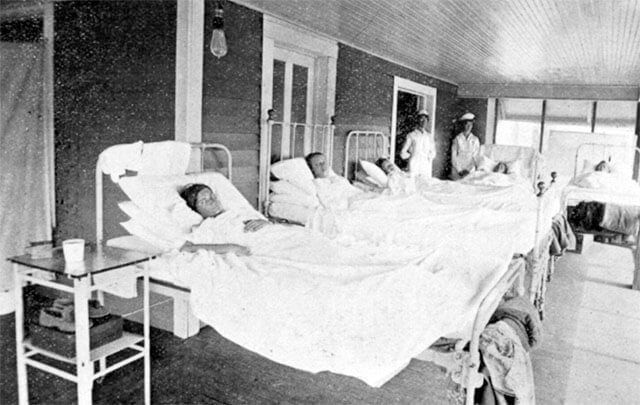
Early tuberculosis ward.
Divangahi studied this phenomenon using the most administered vaccine in the world, Bacillus Calmette-Guerin (BCG). BCG contains live Mycobacterium bovis, a non-pathogenic strain closely related to Mycobacterium tuberculosis.
The BCG vaccine does a good job at preventing childhood tuberculous meningitis, but its performance for other Mycobacterium tuberculosis-caused diseases is debated and unconvincing. Considering 1.7 million people die annually from tuberculosis, primarily in the lungs, this is an issue. Motivated by efforts to develop an effective tuberculosis vaccine and by growing tuberculosis (TB) antibiotic resistance, Divangahi and his team tested if administering the BCG vaccine directly into the bloodstream, rather than in the top skin layer, in mice could improve the response to Mycobacterium tuberculosis.
Intravenous, rather than localized, administration allows the vaccine to reach the bone marrow, home to hematopoietic stem cells, a self-renewing factory that produces an army of immune and blood cells. In this army of cells are those commonly responsible for our innate immune response: macrophages, natural killer cells, neutrophils, and dendritic cells.
Mis- and disinformation are distorting science and public policy. Subscribe to our Daily and Weekly Digests for incisive coverage of ‘disruptive’ innovations in AI, agricultural biotechnology, food, chemicals, nuclear energy, vaccines, and other disruptive innovations.
Instead of relying on the vaccine to ignite the adaptive immune response, the researchers hypothesized that they could educate the stem cells to produce better-trained innate immune cells – better first responders. And they were right. Exposure to the live, weakened bacteria from the BCG vaccine resulted in greater protection in the mice they studied. This protection was sustainable for several weeks afterward. To make their case stronger, mice without T-cells in their bone marrow were used to compare, which allowed them to confirm it was the innate system at work, not the adaptive. The changes researchers found in which genes were expressed and how they were regulated in the study suggests that how and where we administer vaccines can fundamentally alter the ability of our innate immune system to respond to disease-causing pathogens.
Despite these convincing results, this research is still in its infancy. For starters, the study was done in mice, and mice are not humans. Any vaccine design stemming from this study or others like it, like all vaccines, will face a gauntlet of excruciating safety and efficacy testing before reaching patients. Nevertheless, Divangahi and his co-authors explicitly consider the failure of T cell-targeted vaccines combined with their results as reason to revisit the design of TB vaccines.
Trained immunity may be a viable option, alone or as a supplement, to bolster our defenses. Interestingly, we may have already been doing this without fully realizing it. Numerous studies have shown that live vaccines, like BCG, provide protection beyond their intention. In fact, BCG has been used to treat bladder cancer, leukemia, melanoma, and lymphoma. This vaccine, created in 1921 for tuberculosis, is still the primary immunotherapy for bladder cancer for its ability to attract and prime our immune cells – to eat cancer cells, in this case.
This idea of trained immunity is catching on. Cancer chemotherapies are being tested in combination with tiny fragments of protein derived from the wall of Mycobacterium. A new pertussis vaccine seeks to utilize both the innate and adaptive responses. Even the widely covered cancer vaccine, from Ronald Levy at Stanford, that cured nearly 97 percent of mice of solid tumors all over their bodies, employs a similar strategy. Direct administration of immunotherapy and an innate activating chemical caused an incredibly effective response.
Two themes emerge: where and how the immune system is engaged can dramatically impact the outcome. In the case of tuberculosis vaccination, exposing the birthplace of our immune cells to bacteria trains them to be more fundamentally more effective defenders against tuberculosis and, as it turns out, many other invaders.
It’s also worth mentioning the blurring of lines between what is considered innate and adaptive. And this response may not always be desired. Researchers have shown issues arising in innate immunity during vulnerable states like sepsis or chronic inflammatory conditions.
These insights about how and where we administer vaccines hold promise about new strategies to tackle diseases. Compounded with new curative, mRNA vaccines – a topic for another time – and economics in favor of widespread commercial support, I feel optimistic that the next decade will be the vaccine’s time to shine.
Josh Peters is a PhD student in Biological Engineering at MIT. He looks at how both human and bacteria cells change on a genetic level in response to each other, as a member of the Blainey Lab, located in the Broad Institute, and Bryson Lab, located in the Ragon Institute and MIT. Follow him on Twitter @joshpetepeters.
It is morning time, we are in a hotel based at the center of Kampala, the capital city of Uganda, attending a stakeholders meeting on the subject how biotechnology cuts across all science-related sectors.
Among the attendees are students and recent graduates with degrees biotechnology. Among those is Jonan Twinamatsiko, who stops to discuss the idea of using genetic engineering in Uganda.
He explains that, despite what the average person might think, modern biotechnology has applications far beyond the realm of agriculture. The same technology can be used for human health and for the environment. Too many people in this region have come to associate the words “genetic engineering” with tainted, or even poisonous, foods.
“I remember during my first year, lecturers introduced the topic of GMO’s as part of the course unit. I became curious and asked my lecturer Dr Arthur Tugume all sorts of questions. I did not like the topic and I wanted to change the course. But when the teaching about molecular biology and how to select genes from a given biological species was introduced, I developed interest in the course,” Twinamatsiko said.
After attending a number of educational meetings where scientists present papers on genetic engineering, he has come to appreciate the science and its potential.
“I was particularly impressed when we were taught that insulin a drug used by patients suffering from diabetes. I liked it because genetic engineering is used to save lives in the health sector,” he said.
Twinamatsiko has urged his fellow university students to stand up for the technology and ignore those who oppose it and was among those who pushed other students at Makerere University to participate in the recently concluded “March for Science”. The team raised the voice of the youth to Uganda’s legislators, demanding that they embrace science, technology and innovations for the growth of the county’s economy.
History of application of modern biotechnology in Uganda
Modern biotechnology’s introduction to Uganda came in 1993, according to Dr. Yonna Baguma, deputy general director in charge of research coordination at the National Agricultural Research Organisation (Naro). That’s when, according a paper Baguma, the animal science department Makerere University proposed testing a transgenic growth hormone for increased milk production in Ugandan cattle.
This was at the time that the US and the European Union were engaged in debate over trade on GMO’s. Later EU suspended the sale of the hormone, prompting Uganda’s scientists to halt the research.
Scientists conducting HIV research. Image credit: Lominda Afedraru
Two years later, a proposal was made to conduct phase 1 clinical trial of HIV vaccine referred to as ALVAC vCP 205. It was the first preventative HIV-1 vaccine study in Uganda, which led to the formulation ofnational biosafety guidelines and consequent establishment of the National Biosafety Committee.
In 2008, the government passed a national biotechnology and biosafety policy for Uganda.
To date, laboratory-based investigations of genes conferring resistance to pathogens, drought and other stresses, along with field trials of transgenic crops continue in the nation. Other works include ongoing research on animal vaccines and improved diagnostic tools for respiratory cattle diseases, such as East Coast Fever and Foot and Mouth Disease.
In the health sector, molecular markers are being used to study characterization of drug resistance to anti-malarial, anti-tuberculosis and antiretroviral drugs for HIV/AIDS.
In the field of environment, genetic markers are being developed to characterize various species of wildlife including elephants, hippopotamuses, buffalos and wild pigs. Among those efforts is a project by a team of scientists from Makerere University’s College of Natural Sciences. The group, led by Professor Charles Masembe, is studying the transmission of African Swine Fever in pigs and with hopes of coming up with vaccines to eradicate it.
Scientific view on genetic engineering in agriculture, health and environment
The use of modern biotechnology in Uganda, however, has deeper roots, suggests Dr. Stephen Buah, who leads research into vitamin A fortified bananas at the National Research Laboratories. He explains that the breakthrough that laid the groundwork for modern biotechnology came when the structure of DNA was discovered in the early 1950s. Mankind has been using it in a rudimentary form since ancient brewers began using yeast cultures to make beer, wine, bread, yogurt and antibiotics.
In Uganda scientists are using artificial media to grow products such as banana plantlets multiplied using tissue culture. And in medical and health care applications, more than 250 biotech healthcare products, 400 biotech drugs are under clinical trial in Uganda. They include tests for HIV, cancer and malaria which are safer and more accurate.
Mis- and disinformation are distorting science and public policy. Subscribe to our Daily and Weekly Digests for incisive coverage of ‘disruptive’ innovations in AI, agricultural biotechnology, food, chemicals, nuclear energy, vaccines, and other disruptive innovations.
Worldwide, treatments also are being developed for diseases such as diabetes, stroke, anemia, growth deficiency, rheumatoid arthritis, hemophilia, leukemia and various cancers. Key examples include a hepatitis B vaccine developed in 1986; Erythropointin developed in 1988 for treating anemia; interleukin-2 developed in 1989 for treating cancer in the kidney; and Gardasil developed by Australian scientists in 2006 for immunization against cervical cancer.
In Uganda, scientists at Makerere University and the Walter Reed Project are working on a malaria vaccine, RTS, S/AS01, which has been approved by the World Health Organization for pilot testing. Work also is underway on a promising HIV vaccine.
Ebola and Marburg vaccine tests have been ongoing. And the results published last year by Dr. Hannah Kibuuka, director of MUWRP, suggest the vaccine is safe, while inducing antigens with immune responses.
In environmental science many people believe we are in the midst of a crisis. The air, soil and water bodies are getting contaminated as a result of our activities. Non-renewable resources are being depleted. And we are producing massive amounts of non-biodegradable waste. One of the solutions here could be the use of genetically modified microorganisms that break down industrial waste.
But always, it seems that use of biotechnology in the agricultural sector is what draws the most attention – in part, because it is controversial.
Dr. Buah sees the technology as a way to improve farmers’ ability to grow crops, by producing seeds with traits that offer protection against drought, pests and disease.
As of 2009, he said, the number of food insecure people globally was estimated at about 1 billion. So, we need to do more to improve crop yields by introducing genes that confer resistance to insects, tolerance to herbicides and resistance to environmental stresses, he said.
Lominda Afedraru is a freelance science journalist in Uganda who specializes in agriculture, health, environment, climate change and marine science. Follow her on the Daily Monitor website www.monitor.co.ug, Facebook or Twitter @lominda25.
With today’s environment of anti-GMO fearmongering, marketing, and mandatory labeling, who would have guessed that there would be somany thinkpiecesonImpossible’sWhite Castle launch with hardly any mention of the fact that the slider is GMO-based? Did the hysteria around GMOs suddenly stop? Unfortunately, despite the occasional lifestyle piece taking a reasoned look at GMOs, the hysteria is still here. But there’s a strange, near-Beyoncé-level halo surrounding the Impossible Slider and its big brother, the Impossible Burger. Why?
I believe the explanation is straightforward: the Impossible Burger is better.
It is a better plant-based burger. For those seeking an non-meat experience as close as possible to eating a real meat burger, Impossible Foods’ “beef” is more meat-like than any other vegetarian burger on the market. And that alternative is only possible because of genetic engineering. Impossible Foods uses bioengineered yeast to create the key ingredient — “heme” — that imparts the burger’s blood red color and iron-rich, meat-like taste.
The lesson for other synbio startups worried about anti-GMO sentiment is simple: use bioengineering to make a better product.
Editor’s note: Stephen Lamb is a co-founder of ZBiotics, a company that makes bioengineered probiotics
Read full, original post: How GMOs Go Mainstream: Lessons From Impossible Foods
Ingestible sensors—pill-sized electronics that ping your smartphone with data after you pop and swallow—have started to arrive on the market. They don’t do much yet: Mostly they measure pH, temperature, and pressure or monitor whether or not patients have taken their meds. But researchers are cooking up novel sensing technologies to detect a much broader range of medical molecules.
Like say, cramming millions of genetically engineered glowing bacteria inside a AAA-battery-sized capsule to diagnose stomach bleeds—as demonstrated by scientists in Timothy Lu’s lab at MIT.
…
Lu’s team took L. lactis’s on-switch DNA, coupled it with some code for bacterial bioluminescence, and stuck the whole genetic circuit inside a gut-friendly strain of E. coli commonly sold as a probiotic. Those modified cells went into a body-safe capsule equipped with a semipermeable membrane on one side to let in liquid from the gut. Wireless semiconductors powered by a teeny battery were packed in the capsule too—separated from the cells by a tiny see-through window.
The scientists tested their bacteria-on-a-chip prototype in mice with induced gastrointestinal bleeding and in pigs that had blood piped into their stomachs. When the bacteria hit the heme, they lit up. Not much, but enough for a custom phototransistor to capture it and relay that information to a microprocessor—which sent the signal to an Android app.
France will continue to work towards removing the herbicide glyphosate from use by 2021, President Macron has confirmed, despite MPs overwhelmingly rejecting the proposals in a vote on Monday [May 28] night.
Benjamin Griveaux, spokesperson for the President, declared today that “it will be done”, even if it is not “written in law”.
“The commitment of the President of the Republic towards removing glyphosate within three years is clear,” he said, in a radio interview with news source France Info….
The announcement comes less than one day after MPs in the Assemblée Nationale overwhelmingly rejected amendments that would aim to remove the herbicide – which is the most-used in France – from circulation.
An amendment that would have legislated to remove the herbicide from May 1 2021, was rejected by 63 votes to 20.
Yet, President Macron had already promised that the substance would be forbidden in France by 2021, despite the European Union’s controversial decision to renew the herbicide’s licence for the next five years.
[S]ince the dawn of civilisation, humanity has caused the loss of 83% of all wild mammals and half of plants, while livestock kept by humans abounds.
…
The new work reveals that farmed poultry today makes up 70% of all birds on the planet, with just 30% being wild. The picture is even more stark for mammals – 60% of all mammals on Earth are livestock, mostly cattle and pigs, 36% are human and just 4% are wild animals.
[O]ur impact on the natural world remains immense, said [Ron] Milo, particularly in what we choose to eat: “Our dietary choices have a vast effect on the habitats of animals, plants and other organisms.”
“I would hope people would take this [work] as part of their world view of how they consume,” he said. ”I have not become vegetarian, but I do take the environmental impact into my decision making, so it helps me think, do I want to choose beef or poultry or use tofu instead?”
Is the conflict between religion and science as deep as some think? We talk to three scientists about how they reconcile their faith with their work.
…
While science is a “wonderful tool for understanding the physical universe”, [Christian astrophysicist Jennifer Wiseman] says her religious beliefs give her the answers to the bigger philosophical questions in life — like how mere humans can be significant at all in the context of the universe.
…
[Immunologist Andrew Harman] is fascinated by cosmology — his favourite book is A Brief History of Time by Stephen Hawking — but he sees Buddhism as answering different kinds of questions to science. Buddhism, Andrew says, is interested in “creating the conditions for enlightenment to arrive” — a state in which people feel “unconditional love, deep spiritual peace, completely free of inner conflict”.
…
[Muslim geneticist Fahad Ali believes] the Koran encourages “compassion, common decency, generosity and intelligence”. Fahad is yet to complete his honours year but meanwhile has been assisting in research using CRISPR to streamline genetic modification in plants at The University of Sydney Institute of Agriculture.
While there are “big moral questions” about how to apply genetic modification, he believes it should be used to cure disease and increase food production. “Science should be in the service of humanity,” Fahad says.
[T]he U.S. Secretary of Agriculture, Sonny Perdue, issued a statement on March 28th providing clarification on the U.S. Department of Agriculture’s (USDA) oversight of plants produced through new breeding technologies, which include genome editing.
This statement is an unequivocal endorsement of genome editing as a safe and effective tool for plant breeders to adopt in order to generate new varieties of crops with superior performance and better nutritional quality. It was a very welcome statement of support for continued innovation in agriculture at a time when the issue of global food security is becoming more evident to policymakers and the general population.
The EU, which has been very cautious about embracing the cultivation of GM crops (despite importing large quantities of GM soybeans), is undergoing a drawn-out consultation and debate on the nature of genome editing. … [a] move by the EU commission towards something closer to Secretary Perdue’s statement would have a profound, positive impact on innovation in food and agriculture, food security and trading in agricultural products.
We can only live in hope, and encourage unity around the use of this important technology for better crops and improved nutrition worldwide.
Editor’s note: Maurice Moloney is Executive Director & CEO of the Global Institute for Food Security
Scientists have debunked claims that Genetically Modified Organism (GMOs) cause cancer after assertions by a doctor that the products are deadly.
Dr Borneges Quarshie Nkosana Nartey of Sinel Specialist Hospital in an interview on Adom FM’s Burning Issues claimed according to his research, GMOs are cancer activators.
…
But Alliance for Science Ghana, a network of farmers, scientists, researchers, etc in a statement issued by its Chairman John Awuku Dziwornu and Executive member Reuben Nana Yaw Quainoo debunked the claim.
“No credible study has ever proven that GMOs have caused cancer among the population in countries like America, Brazil, South Africa, etc where they are consumed widely.
“In fact, there is evidence that cancer rates have been lower over the last 20 years in countries where GMOs are consumed than in countries where they are not on the market,” the statement said.
According to Alliance for Science Ghana (AfS Ghana), statistics show in America where a majority of their foods are GMOs, the rate of cancer per every 10,000 people is 318.0.
But in European countries like Denmark, France, Belgium and Norway where GMOs have not been commercialized, the rate is 338.1, 324, 321 and 318.3 respectively.
[M]any experiments have shown that sleep promotes creative problem-solving. Now, Penny Lewis from Cardiff University and two of her colleagues have collated and combined those discoveries into a new theory that explains why sleep and creativity are linked. Specifically, their idea explains how the two main phases of sleep—REM and non-REM—work together to help us find unrecognized links between what we already know, and discover out-of-the-box solutions to vexing problems.
…
“Suppose you’re working on a problem and you’re stuck,” [Lewis] says. In REM sleep, “the neocortex will replay abstracted, simplified elements [of that problem], but also other things that are randomly activated. It’ll then strengthen the commonalities between those things. When you wake up the next day, that slight strengthening might allow you to see what you were working on in a slightly different way. That might just allow you to crack the problem.”
…
Essentially, non-REM sleep extracts concepts, and REM sleep connects them.
…
Her team tried to get sleeping volunteers to replay memories during slow wave sleep and REM sleep, and found different effects in each. Those results should be published in the near-future. In the meantime, the team is also developing ways of boosting or suppressing the two sleep stages to see how that affects people’s problem-solving skills.
Federal antitrust regulators have granted agribusiness giants Bayer and Monsanto permission to merge after the two companies agreed to spin off $9 billion worth of assets, the largest such sale of corporate assets ever required by the Department of Justice.
Under the proposed settlement filed Tuesday [May 29], Bayer will sell its seed and herbicide businesses to a third party, the German chemical company BASF. It also will sell its emerging digital farming business as well as a range of intellectual property and R&D projects.
The targeted spinoffs are aimed at preventing Bayer and Monsanto from using their combined control over seeds and seed treatments to raise the price of agricultural products to farmers and consumers, Justice Department officials said. Just six companies, including Bayer and Monsanto, have historically dominated the global trade in seeds and agrochemicals.
The deal already has received approval from regulators in the European Union, Russia and Brazil, making the U.S. approval one of the last major hurdles.
About eight weeks earlier, [Jack Hogan had] been the first person to get an $850,000 therapy called Luxturna since it had hit the market. It was intended to replace a mutant gene in Jack’s retinal cells that impaired his vision.
…
[Jack’s mother Janette Hogan] could only hope that the drug had worked. Now, the family had driven five hours — from Fair Haven, N.J., to Massachusetts Eye and Ear in Boston — to find out.
…
Jack normally needed a personalized screen to help him see what was going on at the front of the class. But on April 16, a few weeks after his second eye was operated on, he could see the board without a visual aid. “It’s amazing,” she said. “He’s in eighth grade, and he’s never seen the whiteboard before.”
…
The stories were quotidian — but that was the point. “That’s what they were telling me when he was 5 years old: ‘There’s no cure, he’s probably going to lose his vision by the time he’s 30,’” Jeanette told another family in the waiting room. Now, the everyday seemed miraculous.
…
[Jack] can now make sense of what is going on in places with three times less light than he could before. In one eye, at least, his vision has also grown sharper, allowing him to read smaller text.
Evolution may be responsible for a range of complex traits, including height and waist-to-hip ratio, and diseases such as schizophrenia, research from The University of Queensland shows.
The findings improve understanding of how natural selection shapes human populations, and could lead to better prevention, diagnosis and treatment of complex diseases through an enhanced knowledge of their underlying genetics.
…
“Many human complex traits are concentrated in different populations around the world,” Professor [Jian] Yang said. “For example, populations in the Northern Hemisphere tend to get taller the further north you go, and European Americans have a lower body mass index (BMI) than African Americans, but higher than Chinese, Indonesians or Thais.”
…
“The question is whether or not these differences are the consequence of natural selection or simply the result of what we call ‘genetic drift’ – where gene mutations (also called genetic variants) become more or less frequent in a population by chance.”
Professor Yang and his colleagues set out to answer the question.
…
If genetic variants associated with a complex trait resulted from natural selection they should appear more frequently than expected under genetic drift. The analysis supported this, showing that the genetic variants associated with height, weight-to-hip ratio and schizophrenia were more differentiated than expected by random drift.
The U.S. Department of Agriculture (USDA) awarded approximately $2 million to pursue research on stakeholder and public engagement on new plant breeding innovation techniques, such as gene-editing, intended for use in agricultural production.
“Recent advances in gene editing technologies promise opportunities for meeting challenges that come with a rapidly growing global population,” said Tom Shanower, NIFA acting director. “However, these advances also raise important questions about their acceptability and potential unintended impacts, so NIFA created the Social Implications of Emerging Technologies program in 2017 to fund research on stakeholder and public engagement with gene drive and other gene editing techniques for agricultural use.”
…
One of the research projects, totaling $466,202, was awarded to the University of Florida to define consumer preferences for regulation and consumption of food derived from gene-edited crops and determine the most effective way to communicate with the public and change consumer attitudes about the use of gene-editing technology. Meanwhile, researchers at Iowa State University were given $494,513 to identify key inducements and impediments to public trust of gene-edited foods and their governance.
In 47 CE, Scribonius Largus, court physician to the Roman emperor Claudius, described in his Compositiones a method for treating chronic migraines: place torpedo fish on the scalps of patients to ease their pain with electric shocks. Largus was on the right path; our brains are comprised of electrical signals that influence how brain cells communicate with each other and in turn affect cognitive processes such as memory, emotion and attention.
The science of brain stimulation – altering electrical signals in the brain – has, needless to say, changed in the past 2,000 years. Today we have a handful of transcranial direct current stimulation (tDCS) devices that deliver constant, low current to specific regions of the brain through electrodes on the scalp, for users ranging from online video-gamers to professional athletes and people with depression. Yet cognitive neuroscientists are still working to understand just how much we can influence brain signals and improve cognition with these techniques.
Brain stimulation by tDCS is non-invasive and inexpensive. Some scientists think it increases the likelihood that neurons will fire, altering neural connections and potentially improving the cognitive skills associated with specific brain regions. Neural networks associated with attention control can be targeted to improve focus in people with attention deficit-hyperactivity disorder (ADHD). Or people who have a hard time remembering shopping lists and phone numbers might like to target brain areas associated with short-term (also known as working) memory in order to enhance this cognitive process. However, the effects of tDCS are inconclusive across a wide body of peer-reviewed studies, particularly after a single session. In fact, some experts question whether enough electrical stimulation from the technique is passing through the scalp into the brain to alter connections between brain cells at all.
Notably, the neuroscientist György Buzsáki at New York University presented research conducted with cadavers, concluding that very little of the current administered through tDCS actually travels into the brain, perhaps under 10 per cent. Other researchers report the opposite. Recent neuroimaging studies have shown significant increases in neurotransmitter levels and bloodflow at the site of tDCS stimulation during a single session. Still, in response to growing concern, many researchers have begun to administer tDCS over a period of days for an additive effect. Studies have shown enhanced treatment effects (yet no increase in side effects) attributable to repeated sessions as opposed to a single session of tDCS.
Even more basic concerns about tDCS research need to be addressed; particularly, tDCS protocols are rather inconsistent between research labs. For example, one lab might administer tDCS for 20 minutes at the maximum voltage of 2 mA while another lab might administer tDCS for 25 minutes at 1 mA, and another still might administer for 15 minutes at 1.5 mA. Combining each of these studies into a literature review proves time-consuming and confusing. We do not know yet what the optimal time and voltage levels are for tDCS. Let’s say 1 mA is too low to initiate neural changes and improve cognitive abilities. Then handfuls of papers and years of research could turn out to be quite uninformative.
Lately, the technology has been combined with cognitive training to achieve long-term improvements. This is a natural progression of the work. It is thought that tDCS allows neurons to fire more readily. Then on top of that, just like working out a muscle, a cognitive training task is an exercise that will work out the neurons in brain regions heavily involved with employing that cognitive process (muscles). To take advantage of both of these techniques, shouldn’t we then encourage those neurons and brain regions to work even harder during tDCS by engaging the specific brain areas being targeted with a cognitive task? In fact, studies confirm this theory, and show that heightened performance and longer-lasting improvements result from the combination of cognitive training with tDCS.
In a several-year collaboration between the Cognitive Neuroimaging Lab at the University of Michigan and the Working Memory and Plasticity Lab at the University of California at Irvine, we have been investigating working-memory training in conjunction with tDCS. During the training task, participants are asked to hold progressively more information in their working memory while simultaneously undergoing tDCS. Although the results are still limited and somewhat mixed, evidence suggests that the combination of brain stimulation and training is more effective in improving working memory than either technique alone. For the experimental tDCS group, better performance could be measured even a year after our sessions, an improvement not found with placebo controls. And our collaboration has even uncovered a nuance of combined working-memory training and tDCS: participants who began training with a lower baseline working memory improved more than those who began with a higher baseline performance.
Clearly there is much more work to do to understand tDCS and cognitive training. To create more consistency in the literature, researchers will need to investigate optimal parameters (such as time length and current intensity) for tDCS as a form of cognitive and therapeutic enhancement. A next step is to understand the underlying neural mechanisms of tDCS and cognitive training, which will require a multidisciplinary approach using neuroimaging techniques such as fMRI. This would then make it possible for researchers to visualise (1) activation of brain regions due to tDCS, (2) activation due to tDCS and a cognitive task, and even (3) changes in activation specifically due to combined tDCS and cognitive training over cognitive training alone.
I am cautiously optimistic about the promise of tDCS; cognitive training paired with tDCS specifically could lead to improvements in attention and memory for people of all ages and make some huge changes in society. Maybe we could help to stave off cognitive decline in older adults or enhance cognitive skills, such as focus, in people such as airline pilots or soldiers, who need it the most. Still, I am happy to report that we have at least moved on from torpedo fish.
Tessa Abagis is a graduate student in cognition and cognitive neuroscience at the University of Michigan.
An incredible 155 million children around the world are chronically undernourished, despite dramatic improvements in recent decades. In view of this, the UN’s Sustainable Development Goals include Zero Hunger. But what do we understand by the word hunger?
It may refer to lack of food or widespread food shortages caused by war, drought, crop failure or government policies. But as researchers, we are particularly interested in a different kind of hunger – one that is less visible but equally devastating.
Micronutrient deficiencies, also known as hidden hunger, occurs when there is a lack of essential vitamins and minerals in a person’s diet. This condition affects more than two billion people globally, and can contribute to stunted growth, poor cognitive development, increased risk of infections, and complications during pregnancy and childbirth. The wider impacts of micronutrient deficiencies socially and economically are also well established.
Supplementation and food fortification have long been used around the world to alleviate micronutrient deficiencies. Both strategies boast high cost/benefit ratios. But as they require repeated investment, their sustainability is limited. Supplements may be used to treat multiple micronutrient deficiencies, but this is a resource-intensive approach and does not address the cause of the problem – dietary inadequacy.
Micronutrient supplements
Food fortification, on the other hand, improves the nutritional quality of food itself. Here, micronutrients are added to commonly consumed foods at the processing stage. This strategy can be implemented at population level, and does not require individuals to change their eating behaviors.
In the UK, for example, flour has been fortified with calcium since World War II, when a reduced supply of dairy products was anticipated. Today, many of our foods are fortified, including bread, cereal products and fat spreads.
In developing countries, food fortification has gained momentum in recent years through the work of organizations like the Global Alliance for Improved Nutrition (GAIN). Large-scale food fortification programmes have enhanced the micronutrient content of a range of staple foods in over 30 countries. For example, the GAIN/UNICEF Universal Salt Iodization Partnership has protected 466m people in 14 countries against the debilitating effects of iodine deficiency – such as mental impairment and goiter, a swelling in the neck resulting from an enlarged thyroid gland.
But one major disadvantage of food fortification is that some of the poorest families may not have access to commercially processed foods. And it is these remote rural communities – that grow and process food locally – that are often the most affected by hidden hunger.
Mis- and disinformation are distorting science and public policy. Subscribe to our Daily and Weekly Digests for incisive coverage of ‘disruptive’ innovations in AI, agricultural biotechnology, food, chemicals, nuclear energy, vaccines, and other disruptive innovations.
An alternative approach is to add micronutrients at the agricultural production stage. This approach, known as biofortification, uses conventional plant breeding techniques to enhance the micronutrient concentration of staple crops. This is achieved by cross-breeding standard varieties with their wild relatives, over several generations.
This innovative strategy was first developed in the 1990s, and is now pioneered by an organization called HarvestPlus, which is supported by the UK Department for International Development. HarvestPlus has focused its efforts on iron, zinc and vitamin A – identified as the three most prevalent micronutrient deficiencies globally.
Biofortified crops include: vitamin A maize, vitamin A cassava, vitamin A sweet potato, iron beans, iron pearl millet, zinc rice and zinc wheat. These crops have been introduced into many countries in Africa, Asia and Latin America. And HarvestPlus aims to reach 100m people with biofortified crops by 2020.
Some extra vitamin A with your sweet potato?
Biofortification has several advantages over food fortification. After the initial investment to develop the biofortified seed, it can be replicated and distributed without any reduction in the micronutrient concentration. This makes it highly cost-effective and sustainable. Biofortified crops are also often more resilient to pests, diseases, higher temperatures and drought – essential qualities as many countries become increasingly susceptible to climate change. And perhaps most importantly for nutrition, biofortified crops reach the world’s poorest and most vulnerable people.
Each new biofortified crop requires meticulous development and evaluation to ensure the micronutrient concentration is sufficient to make a significant impact on nutritional status, and that farmers and consumers will adopt the new biofortified varieties. Research has shown high levels of consumer acceptance, especially when information and awareness campaigns were implemented.
At the University of Central Lancashire, in partnership with international collaborators, we are currently investigating the impact of biofortified zinc wheat in a rural community in northwest Pakistan – where over 40% of women are zinc deficient. The diet is very limited in this community but wheat flour is used every day to make chapattis.
The zinc concentration of the soil is very low and this provides an opportunity to experiment with “agronomic biofortification”, or the application of zinc-enriched fertilizer. Our study will determine the cost-effectiveness of these combined strategies.
Of course, biofortification is a partial solution, which must go hand in hand with efforts to reduce poverty, food insecurity, disease, poor sanitation, social and gender inequality. But it has the potential to contribute to the eradication of hidden hunger, and the UN’s aim to end all forms of hunger and malnutrition by 2030.
Heather Ohly is a postdoctoral research assistant in nutrition at the University of Central Lancashire in Preston, England. Follow her on Twitter @heatherohly. Nicola Lowe is a professor of nutritional sciences at the University of Central Lancashire.
Devang Mehta has been working in virus suppression in cassava, a key food staple in the developing world. In this week’s podcast, he speaks about the RNAi and gene editing approaches that are used to engineer resistant plants. Mehta describes the nuts and bolts and successes and failures in applying new technology, and the things that are learned along the way.





 However, in some of the biggest threats in our generation, current attempts to produce a vaccine












 Notably, the neuroscientist György Buzsáki at New York University presented