The startup accelerator Y Combinator is known for supporting audacious companies in its popular three-month boot camp.
There’s never been anything quite like Nectome, though.
…
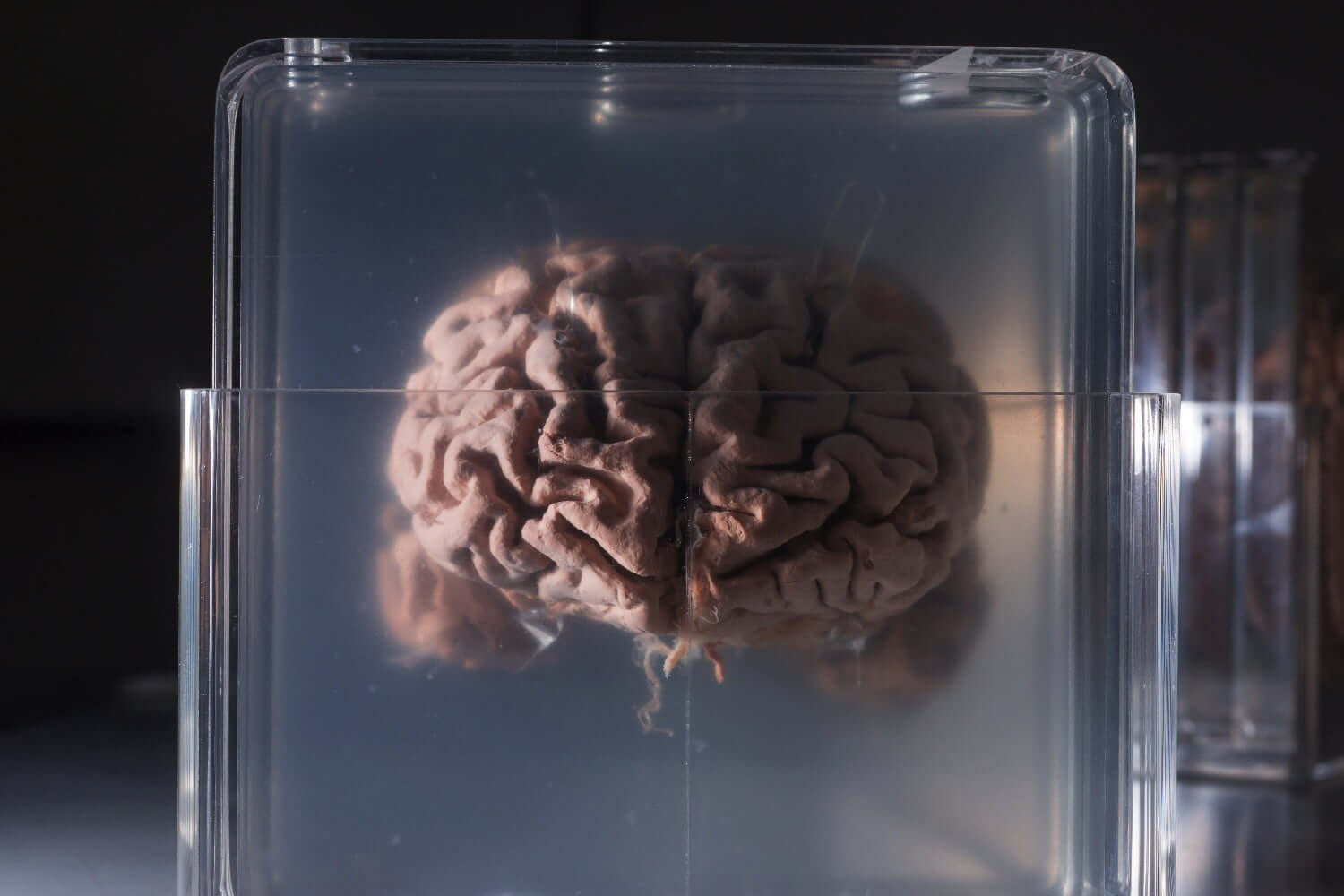
Nectome is a preserve-your-brain-and-upload-it company. Its chemical solution can keep a body intact for hundreds of years, maybe thousands, as a statue of frozen glass. The idea is that someday in the future scientists will scan your bricked brain and turn it into a computer simulation…
This story has a grisly twist, though. For Nectome’s procedure to work, it’s essential that the brain be fresh. The company says its plan is to connect people with terminal illnesses to a heart-lung machine in order to pump its mix of scientific embalming chemicals into the big carotid arteries in their necks while they are still alive (though under general anesthesia).
The company has consulted with lawyers familiar with California’s two-year-old End of Life Option Act…and believes its service will be legal. The product is “100 percent fatal,” says McIntyre…
Nectome’s storage service is not yet for sale and may not be for several years. Also still lacking is evidence that memories can be found in dead tissue…Following the example of electric-vehicle maker Tesla, it is sizing up demand by inviting prospective customers to join a waiting list for a deposit of $10,000, fully refundable if you change your mind.
In the USA, the Food and Drug Administration (FDA), which is responsible for regulating food and agricultural products, has made it clear that it sees its jurisdiction as a regulator of products, not technologies. The FDA has already decided not to attach special regulations to a number of products that have been edited using CRISPR-Cas9, the most publicised being a mushroom product. For more information on the regulators thinking, a longer explanation is available here.
After headlines such as ‘Gene editing in legal limbo in Europe’ in Nature in February 2017, the EU has taken steps to clarify its position. In the EU, an opinion from the ECJ recently stated that ‘Crops and drugs created using powerful gene-editing techniques such as CRISPR–Cas9 might not need to be regulated by the strict European Union rules that govern genetically modified organisms (GMOs), according to a formal opinion from an advocate general in the European Court of Justice.’
Virginie Tournay, of CEVIPOF, a scientific research institute at the famous Science Po [Paris Institute of Political Studies] published the following article on her Huffington Post blog “Reconquering scientific culture”. A week later, the Science Technologies Action group ,published an article on the website of the business newspaper Les Echos entitled : “Don’t give up on science!”Each of these two texts was signed by forty opinion leaders: scientists, heads of laboratories, academics, politicians close to the scientific community.
…
Whether it is a question of Glyphosate, GMO, nuclear technology or endocrine disruptors, the authors make no bones about pointing out that “France is cutting itself off”, “The government does not trust its own new product approval committees”, “The public decision-makers are aligning themselves with the scare-mongers” or “Political horse trading takes place at the expense of technology”, and to emphasise their exasperation: “We are dismayed that the complex issue of “endocrine disruptors” became a matter for electoral point-scoring, that a government would take a position based on a phobia of “chemicals”, that basic sub-soil exploration for hydrocarbons is banned, that a relay-antenna installation can be banned as a result of misinformation, etc.
By all accounts, the 2017–18 influenza season has been a bad one. It feels like everyone’s family has been hit, sometimes twice. Schools have had to shut down to disinfect; hospitals are overcrowded.
…
A major reason this flu season has been so rough is that the vaccine just wasn’t that good.
…
[Anthony S. Fauci, director of the National Institute of Allergy & Infectious Diseases] and many other flu experts argue what’s really needed is a so-called universal flu vaccine. Ideally, this kind of immunization would provide protection against all flu strains and would last for years, maybe even for someone’s entire lifetime. The tricky ways the virus mutates make it a tough proposition. But around 20 companies and government agencies are chipping away at it, using a range of strategies and technologies to create broadly protective flu vaccines. Some are even being tested in the clinic.
“It turns out to be a pretty challenging goal,” says Jesse Bloom, who studies the molecular evolution of viruses at Fred Hutchinson Cancer Research Center.
The problem begins with flu’s ability to change faster than most other infectious diseases. Bloom explains that the flu virus can make small tweaks to the two main proteins on its surface: hemagglutinin and neuraminidase.
…
“It’s conceptually simple but technically difficult,” says Neil King, a biochemistry professor at the University of Washington who designs nanomaterials for use in potential universal flu vaccines.
This Article confronts a dangerous contemporary trend: the political harassment of public university professors by activists on the right and left, through the mechanism of open records requests. It is timed to a moment when universities and state legislatures are grappling with the consequences of escalating public-records intrusion into scholars’ work that threatens enterprises as diverse as climate change research and biomedical experiments.
…
In the past decade, scholars in states with broad open records laws have increasingly received harassing records requests from requesters politically or economically threatened by the intellectual work they seek to reveal. Such requests undermine the peer review process and the communications through which scholars explore and contest ideas, impairing the core intellectual functions of the university. Equally worrisome, harassing record requests chill research on critical contemporary issues — a knowledge-generation role of universities that is essential to a democracy, which depends on an informed citizenry.
[P]rofessors should never have been subject to public records laws in the first instance, both because they are not engaged in public governance, and because open records laws are fundamentally incompatible with academic freedom. It further argues that the best way to stanch the present records request intrusion into scholars’ work is to create a broad scholar-records exemption from existing state laws.
Editor’s note: Claudia Polsky is an Assistant Clinical Professor of Law and Director of the Environmental Law Clinic at UC Berkeley Law
Exposure to air pollution doesn’t just lead to illnesses like asthma and lung ailments, it can also alter the way genes are expressed in our bodies, according to a new study published March 6 in the journal Nature Communications.
The study, conducted by a team of scientists and biostatisticians in Canada, suggests that the impact of air pollution on an individual’s gene expression is much more significant than a person’s ancestry.
…
The study’s 13-member research team, led by Philip Awadalla of the Ontario Institute for Cancer Research, assembled a cohort of 1,000 individuals living in different parts of Canada’s Quebec province, including Montreal, Quebec City, and Saguenay—Lac-Saint-Jean.
The group was comprised of men and women between the ages of 40 and 70 years. Each of the participants provided information to a biobank and health database called CARTaGENE, including blood pressure, blood cell counts, blood sugar levels, cardiovascular function, and disease history…They also reported information on environmental factors like their proximity to green space, residential history, and exposure to ultraviolet radiation. All individuals studied were of French-Canadian descent in order to minimize variability in ethnicity, Awadalla said.
…
“This helped us show how most gene expression is not derived by ancestry, and that environmental exposures associated with living in a particular city or region are more impactful on gene expression associated with disease traits,” Awadalla said.
A study into the presence of neonicotinoids in Canadian waterways suggests a ban or restriction of neonicotinoid seed treatments is not necessary.
The Environmental Monitoring Working Group (EMWG) was set up to monitor the presence of imidacloprid, clothianidin and thiamethoxam in waterways after Health Canada’s Pest Management Regulatory Agency (PMRA) 2016 decision to phase out imidacloprid in three to five years.
The PMRA cited acute and chronic risks to aquatic invertebrates as reasons for the ban, and its final decision on whether to ban imidacloprid is expected in December.
The PMRA is also reviewing and may ban two other neonicotinoids, thiamethoxam and clothianidin, because of their effects on aquatic insects. The final decisions on these neonicotinoids are expected to be made in 2020.
…
“Detection frequency and concentration of imidacloprid, clothianidin and thiamethoxam were low, with majority being below the limits of detection. When detected, the insecticides were typically well below the chronic or acute endpoints established by PMRA for imidacloprid. By the middle or end of July, the insecticides were no longer detectable, said Warren Ward of the Canola Council of Canada during the University of Saskatchewan’s Soils and Crops event in Saskatoon.
…
“The data does not support any kind of restriction or ban on neonicotinoid seed treatment use, especially for field crops such as canola, pulses, cereals,” Ward said.
Read full, original post: Study says neonicotinoid ban not the answer
Gregor Mendel discovered fundamental rules of genetics by raising pea plants. He realized that hidden factors — we now know them to be genes — were passed down from parents to offspring.
…
Today, scientists have identified over 7,000 Mendelian diseases, and many are discovered with screenings of children and adults. But a new study suggests that many disorders go undetected.
With a database of electronic health records and DNA samples, a team of scientists has found that 3.7 percent of patients in a hospital system carried a genetic variant linked to a disease. It’s possible that as many as 4.5 percent of cases of apparently nongenetic diseases, from infertility to kidney failure, are the result of such mutations.
The study also suggests that it may be possible to catch more of these hidden disorders with a computer program that flags suspicious clusters of symptoms in groups of patients. That would be an enormous step forward for patients coping with unexplained ailments.
The study, published Thursday [March 15] in Science, represents the first large-scale search of electronic health records for hidden Mendelian diseases. But Dr. Joshua C. Denny, a biomedical informatics researcher at the Vanderbilt University School of Medicine and co-author of the new study, suspected that it only revealed the tip of a genetic iceberg.
When the Today Show reported on March 15 that the DNA of Scott Kelly, who spent a year on the International Space Station while identical twin Mark stayed earthbound, had changed in space, you’d think he’d returned bearing the genome of a rutabaga compared to that of his boringly human terrestrial twin.
NASA’s several webpages of information on the Twins study offered just one sentence about changed genes – and most of the rest, about gene expression, was widely misinterpreted in the media.
John Timmer’s takedown in ARS Technica: “Scott Kelly’s medical monitoring has spawned some horrific press coverage,” ends with a suggestion that reporters spend 10 minutes talking to a biologist before accepting claims that they don’t know enough to realize are ridiculous.
Well, I’m a biologist. In fact, a geneticist. Timmer couldn’t finish his analysis without suffering a stress response, so now I’ll take a closer look – at the issues, as well as NASA’s attempts to clear the air.
Bio 101 anyone?
The major problem is distinguishing gene expression from gene mutation – an error that’s hardly new. A classic example is NPR’s “A Workout Can Change Your DNA. The interviewee, though, explained that it can’t.
As Hoda and Savannah on Today gee-whizzed over the supposed news, other media followed. A few places got parts right.
I cheered CNN’s “Astronaut’s gene expression no longer same as his identical twin, NASA finds,” until I went on to read about “the transformation of 7 percent of Scott’s DNA.” John Timmer pointed out that if that happened, he’d be dead. Not only that, but the magnitude of purported genomic change is similar to that between astronaut Scott and a cat, with whom we share about 90 percent of our gene sequences.
Time agreed that “Scott Kelly Spent a Year in Space and Now His DNA Is Different From His Identical Twin’s.” The Verge got it right, but then defined “genetic code” as “the pattern and sequence of genes that make up the blueprint for the body.” No. It’s the correspondence between DNA, RNA, and protein, and is universal, from aardvarks to zinnias.
Scott Kelly, on the right, spend nearly a year in space. (NASA, Robert Markowitz, 2015)
Nature versus nurture: A false dichotomy?
By the end of the day, so many news outlets had botched the genetics that NASA tacked a two-paragraph editor’s note onto the introductory webpage explaining that what mostly changed was gene expression. Oddly, the date was January 31, making it unclear whether the info is a news release or meant for the public.
Whatever it is, the date remains stagnant and the document remains a lesson in obfuscation and misuse of terminology, peppering research descriptions with so many “omics” that it’s little wonder so many in the media couldn’t figure it out. How did these two-month-old “preliminary findings” make it into the news cycle last week at all? In honor of the 50th anniversary of 2001: A Space Odyssey or Netflix’s April reboot of Lost in Space?
Despite NASA’s hurried revisions, the underlying error persists in the NASA statement that refuses to go away: Tthe comparison of Scott and Mark Kelly is “the perfect nature versus nurture study.” (First paragraph beneath the “editor’s note.”)
“Versus” is the wrong word to describe how genes are turned on or off in highly regulated, constantly changing suites of expression, reacting to changing environmental conditions. That is, the environment activates or silences genes, which affects physiology. Nature and nurture interact. They aren’t adversaries. It isn’t the simple story that NASA is trying to feed the media.
Gene expression isn’t gene mutation
Francis Crick introduced the “central dogma” of molecular biology back in 1958 to explain how genes work: DNA is transcribed into RNA in the nucleus, which is translated into protein outside the nucleus in the cytoplasm. The idea has been fundamental to genetics ever since.
It’s the proteins that determine traits, including enzymes that control production of other types of biochemicals.
“Gene expression” is the transcription of a gene’s information — the base sequence — into messenger RNA, which is then translated into a specific protein. The expression of thousands of genes continuously waxes and wanes as we go about being alive.
Smell pizza and salivary amylase floods the mouth — that’s a protein, so a gene controls its production.
Sprint and metabolism shifts from aerobic to anaerobic, requiring an enzyme to recycle lactic acid.
Blood clots. Endorphins soothe. Muscles contract. Hormones release an egg. Cells take up glucose from the bloodstream. Hair and nails grow.
It’s all due to the ever-changing mix of gene action and inaction. The DNA itself doesn’t change. People can read the same copy of Fire and Fury, but the letters and words don’t change. Likewise, the genome stays put, copied exactly, unless mutation occurs, into each new cell with each division.
DNA stretches out and spools around blobby histone proteins, contorting to expose some areas, hide others, as three types of small molecules flit on and off in ways that regulate which genes dictate production of which proteins. To express a gene, methyl groups leave and acetyl and phosphate groups bind. These are epigenetic changes, which means “outside genetics.” The DNA base sequence beneath is unchanged as the cell knits amino acids into encoded proteins.
An actual change in the sequence of a gene — the bases A, T, C, and G — is a mutation. It may be spontaneous due to a quirk of chemistry in which bases are fleetingly in unstable forms, or from exposure to a DNA-damaging agent such as radiation. DNA repair systems in cells correct most errors. But if not, a genetic change is passed on when the cell divides; an epigenetic change is generally not.
Because living on a spaceship for a year is quite different from whatever it is Mark Kelly did on Earth during that time, the twins’ gene expression will differ! It would do so even if one man lived in Arizona and the other in Antarctica, one in an apartment and the other on a farm, or one was a vegan and the other addicted to Five Guys. Experience matters.
The mysterious DNA changes
Perusing the curious NASA pages, I skimmed past the cringeworthy “space genes,” searching for some actual information about mutations, until I found the lone sentence about genetics (not epigenetics), describing work from Chris Mason at Weill Cornell Medicine in New York: “Whole-genome sequencing showed each twin has hundreds of unique mutations in their genome, more than expected, and some were found only after spaceflight, circulating in the blood as ‘cell-free DNA.’”
That’s it.
I had many specific questions, so I emailed Dr. Mason. He referred me, unhelpfully, to the NASA website that he claimed would be updated soon (the tacked-on paragraphs about gene expression). I emailed again, asking for data. And that’s when Dr. Mason responded that his
team’s findings were still under review, so he couldn’t
answer my questions. He did, however, speak to the anchor of the NBC Evening News on Saturday, who then gushed on air, “After nearly a year in space, an astronaut returns a changed man. Some of his DNA is permanently changed.” But of course he didn’t say how much had changed or what it meant.
So there’s still no story. I’d like to know:
• If Scott’s genome was sequenced from DNA snippets in his blood, what can that reveal about mutation rates in other tissues? Bone? Skin? Sperm?
• To what degree did the mutation rate in Scott’s somatic cells in space differ from the rate in the same cell types before the journey or after?
• What spiked the mutation rate? Cosmic rays? Food in tubes?
• Was the mutation rate elevated in protein-encoding genes, or non-coding genome regions?
• Which genes changed and what was the effect on Scott’s body?
• Why is this news now?
Hodgepodge of findings
The other “preliminary findings” from the ten research groups probing the Kelly twins are only tangentially related to their genomes, and most changes were short-lived. Clicking on each subtopic goes to a template-like page that still doesn’t include links to the scientific literature.
Scott’s telomeres (chromosome tips) grew, then shrank once back on earth, according to findings from Susan Bailey of Colorado State University. Longer telomeres are associated with longer cell life, but also with cancer or being a sperm or an egg. In which cell types were Scott’s telomeres measured? The exercise and diet routine in space might explain Scott’s transient telomere lengthening, as well as his slightly lower body mass index and increased folate level, the researchers speculate.
Emmanuel Mignot from Stanford tracked response to flu vaccine in Scott and Mark, dubbed the immunome. Both men responded. So they both have antibody genes that respond to a flu virus challenge. Why would that differ?
Scott and Mark Kelly, identical twin astronauts. Image: NASA
Also along the lines of immunology, the inflammatory response was apparently stronger in space, found Mike Snyder, from Stanford, tracking cytokine levels. Stuart Lee of KBRWyle and NASA used ultrasound to show greater inflammation in Scott’s arteries than Mark’s.
Brinda Rana of UCSD looked at levels of proteins in urine, such as aquaporins, that could indicate changes in fluid pressure under long-term spaceflight conditions that might impair visual function and increase intracranial pressure. I read her research blurb a few times and noted that “genome change” became “gene expression change.”
Looking at protein levels – antibodies, cytokines, aquaporins – is a measure of gene expression, not mutation.
Fred Turek and his team at Northwestern tackled the microbiomes of the twins, specifically the bacteriome in the GI tract. Did Scott’s differ before and after space? Were those differences the same that Mark experienced over that time? Of course they differ! Scott’s changes were reportedly not significant and vanished once back on Earth.
Space. The final frontier.
What’s next?
The 7 percent of Scott’s genome that appears to have been expressed differently when he was in space intrigues me – that sounds high. The various incarnations of the NASA news document mention possible effects of the differential gene expression on the immune response, DNA repair, bone formation, and breathing air with less oxygen and more carbon dioxide than the Earth’s atmosphere.
Yet the NBC Nightly News anchor on Saturday March 17, after three days of the collective heads of biologists bursting at the continuing cluelessness, repeated the mantra that “7% of the genes had not returned to normal.”
I can’t wait for publication of NASA’s promised “integrated paper” on all ten research projects in a real scientific journal with actual data, so we can finally figure out what the space twins experiment reveals. The mutating missives about ill-defined ‘omics and “space genes” fly in the face of efforts to improve STEM education.
Ricki Lewis has a PhD in genetics and is a genetics counselor, science writer and author of The Forever Fix: Gene Therapy and the Boy Who Saved It, the only popular book about gene therapy . Follow her at her website or Twitter @rickilewis.
Over the past months, the European Union and several member nations have vigorously debated re-authorizing glyphosate, the herbicide maligned by anti-GMO and pesticide activists.
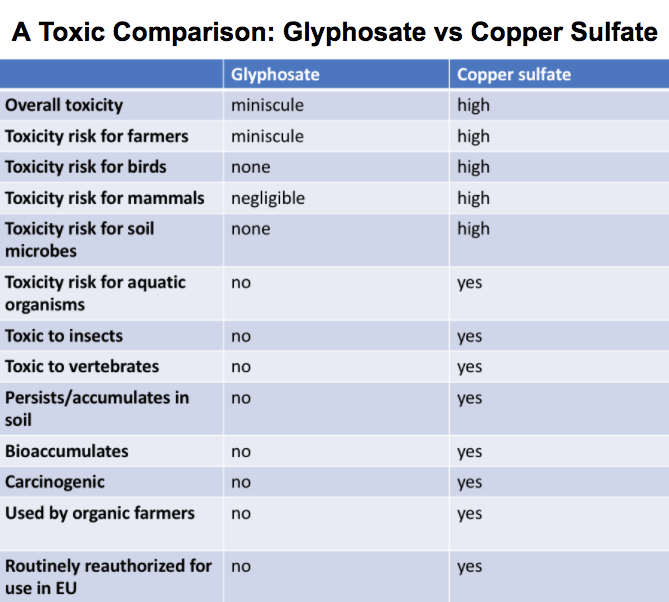
Recently, the European Union — without anything near the debate surrounding glyphosate — decided to reauthorize the fungicide copper sulfate, a popular pesticide among organic farmers that has a more toxic rap sheet than glyphosate.
The European Commission and its member states reauthorized the use of copper sulfate, a widely used pesticide in organic farming but which also is used in some conventional applications, although the European Food Safety Authority (EFSA) and European Chemicals Agency (ECHA) considered toxicity risks for farmers, birds, mammals and soil organisms, and the chemical’s overall environmental impact. This decision extended permission for the use of copper sulfate in the EU, against bacteria and fungus.
Copper sulfate is used a great deal in organic farming, especially with potatoes, grapes, tomatoes and apples. In comparison, glyphosate — one of the world’s most popular herbicides — is focused on weed control and is not used in organic farming. Instead, it has attracted the attention of anti-GMO activists and members of the EU because it works hand-in-hand with genetically modified crops bred to resist it.
But which is safer?
According to the European Chemical Agency (ECHA), Copper Sulfate “is very toxic to aquatic life, is very toxic to aquatic life with long lasting effects, may cause cancer, may damage fertility or the unborn child, is harmful if swallowed, causes serious eye damage, may cause damage to organs through prolonged or repeated exposure.”
In addition, the European Food Safety Authority (EFSA) pointed to risks to farmers, birds, mammals and soil organisms. Both the EFSA and the US Environmental Protection Agency say more data is needed on the potential health effects on consumers.
Copper sulfate.
While organic food does not contain as much pesticide residue as conventionally grown food, copper sulfate is the most common pesticide residue in organic food, according to a 2015 European Parliament research report. It is bio-accumulative, meaning it can build up to toxic levels in the soil and possibly even animal tissue. In fact, many organic wine growers, in the US and in Europe (including France) have opted out of their organic designation in order to use alternatives to copper sulfate fungicide. Their fears? Accumulation of the chemical in soil.
The European Commission, when it extended copper sulfate use in 2014, did so on the condition that its use would be reduced and other environmental studies would be carried out. In 2015, the EU listed the same chemical as a “candidate for substitution” due to concerns over its effects on health and the environment. It was this extension that expired in January, and was re-extended by the EC.
So far, however, no realistic organic alternatives have been created. According to the European Parliament report: “Some promising alternatives include potassium bicarbonate (which is safe for humans and the environment) and milk by-products. In the meantime, restrictions limit the use of copper salts.”
Meanwhile, glyphosate has shown no bioaccumulation, and next to no toxicity, except for possible health problems among workers who are exposed to very high doses of the pesticide. Only one agency — the International Agency for Research on Cancer — has connected glyphosate to health problems (in this case, cancer), through a methodology that is not risk-based, and through a process that has gathered accusations of unrealistic results to outright corruption.
This comparatively healthy profile did not prevent the European Commission and member states from seriously considering banning glyphosate in Europe. Eventually, the herbicide’s use was re-authorized, although the European Parliament has vowed to re-evaluate pesticide approvals in the wake of criticism from certain member states (which themselves have moved to ban glyphosate) and anti-GMO groups that have long opposed glyphosate’s existence as a legal agricultural chemical.
Glyphosate also does not have an alternative that possesses the same ability to kill weeds as well as the same low toxicity profile. Copper sulfate, meanwhile, can be used by conventional farmers, though they tend to prefer other fungicides.
Copper sulfate has a history. Steve Savage, a San Diego, California-based geneticist, remarked that “copper sulfate was a state-of-the-art fungicide, in 1885!” Its use began in the early 1880s in Europe, as wineries began noticing downy mildew in their plants. This raised more than a little fear, because it was the same type of infestation that resulted in the great Ireland potato famine, just 40 years previous.
Savage talks more about this history in his webcast, “Plants Get Sick, Too:”
There was a fellow named Pierre Millardet who was a professor of botany at the University of Bordeaux. In October of 1882 he was driving his carriage along a road in St.-Julien. The vineyards he passed were a sad sight, and as a Frenchman and a plant scientist, he was concerned about the future of the crop. But Then he noticed one vineyard by the road that looked much healthier than the rest. The vines still had leaves. He stopped and looked closer. The leaves and fruit looked good, but were covered with a powdery blue substance.
He found the vineyard manager and asked what was going on. The manager explained that he and other growers in the area had grown tired of having people come along the road and steal their grapes. So, they had come up with a mixture of copper sulfate and hydrated lime to spray onto the grapes by the road to make them look unappealing.
What Millardet realized was that in an effort to prevent theft, these growers had accidentally discovered a “medicine” for the vines – what we now call a fungicide.
Italian vineyard. Image credit: Decanter
Since, copper sulfate has been used in organic farming as an allowed synthetic substance (most modern copper comes from reusing non-iron scrap metal in a factory and then precipitating the compound from sulfuric acid), as well as in conventional growing. In California, the largest agricultural region in the United States, 54 different variants of the chemical are used, largely for fungal disease control. Some of these uses include rice production, fighting walnut blight, and in aquatic control of algae (this is a big part of its use in rice, too).
According to a 2015 USDA technical report on copper sulfate, it is registered with the EPA for these uses:
As an algicide, copper can control or eliminate algae and invasive aquatic weeds from aquaculture facilities, drainage systems ponds, crop and non-crop irrigation canals, and sewage lagoons and potable water lines.
As a molluscicide, a dilute solution of copper sulfate can be used to remove snails from an aquarium, and control freshwater snails that may be a vector for harmful trematodes. Copper sulfate and has been used to control invertebrates, specifically tadpole shrimp, in rice production.
An estimated 9-11 million pounds of elemental copper in the form of copper sulfate pentahydrate are applied each year solely for algae and weed control.
As a footbath antiseptic to help control and prevent infectious hoof disease problems that affect the skin adjacent to the claw horn of dairy cattle and sheep i.e., digital dermatitis (DD) (hairy heel warts), foot rot lesions (interdigital area and invading the subcutaneous tissue), and heel erosions.
Copper compounds also have run into organisms that developed a resistance to them. This is similar to the common accusation by organic activists against glyphosate is that weeds have developed resistance to the herbicide. In tomatoes in the Southeastern US, copper compounds have been used for decades to combat bacterial leaf spot. Today, however, Xanthomonas, the microbe behind the spot, has developed resistance to copper compounds. Researchers are now looking to genetics for an alternative to copper compounds, focusing on two genes that confer disease resistance in tomatoes. However, given popular attitudes toward GMOs and aggressive lobbying and public opposition by anti-GMO organizations, its future is hazy, at best.
Andrew Porterfield is a writer and editor, and has worked with numerous academic institutions, companies and non-profits in the life sciences. BIO. Follow him on Twitter @AMPorterfield
The FDA has imposed a full clinical hold on Solid Biosciences’ Phase I/II trial for its lead candidate, the Duchenne muscular dystrophy (DMD) gene therapy SGT-001, the company acknowledged.
GNITE DMD had been on a partial clinical hold since November pending submission to the FDA of “additional CMC [chemistry, manufacturing, and control] information that demonstrates that manufacturing capacity and product attributes can support the high-dose group,” Solid disclosed in a January 25 update to its preliminary prospectus for its S-1 initial public offering (IPO) filing.
…
Concerns over the dosing of patients in IGNITE DMD led to gene therapy pioneer James M. Wilson, M.D., Ph.D., resigning from Solid’s Scientific Advisory Board. According to an amended IPO filing, Dr. Wilson’s resignation followed “emerging concerns about the possible risks of high systemic dosing of AAV [adeno-associated virus].”
Days after the resignation disclosure, on January 30, Dr. Wilson and colleagues raised concerns about high-dose gene therapy by publishing a study that detailed instances of severe, life-threatening toxicity in monkeys and piglets given high doses of gene therapy delivered using an adeno-associated virus serotype 9 (AAV9) vector capable of accessing spinal cord neurons.
The emphasis, at least in the House of Lords, where the bill started, very soon switched from remedies for infertility to the new concept of eliminating some heritable diseases…
I remember being astonished by how little this had to do with infertility, which was, after all, in the title of the bill, and what the committee I chaired had been set up to consider.
…
The motivating force behind the survey was the thought that the new possibilities of curing disease by genetic modification could be of benefit to large numbers of people, many of whom suffered from conditions hitherto untreatable. It is therefore essential that these new possibilities should be widely understood and that there should be no room for suspicion that research is being carried out behind closed doors or that there is help available to which no one has access.
…
Many of those surveyed expressed the hope that such regulation should be global; however, that seems to me pure fantasy. Think of the difficulties in establishing global agreement on the management of pollution. In this case, we must simply try to regulate for ourselves and hope that, if we can get it right, others will follow.
Parents are used to getting the blame for their children’s emotional defects. When it comes to empathy, it turns out they are partly responsible. Scientists studied the empathy of 46,861 people who analyzed their DNA through the personalized genetics company 23andMe and found that genetics explains a significant chunk of differences in abilities to understand others’ emotions.
…
Researchers from the University of Cambridge, the Institut Pasteur, Paris Diderot University in Paris, and genetics company 23andMe evaluated empathy based on participants’ Empathy Quotient (EQ) scores. EQ uses self-reporting to evaluate both cognitive empathy (the ability to understand others’ thoughts and feelings) and affective empathy (responding to others’ emotions with an appropriate emotion.)
In the study, published in Translational Psychiatry on March 12, the researchers ran a statistical analysis known as genome-wide association studies to show that variations in genetics are linked with changes in empathy.
They looked at 10 million genetic variants, explains Varun Warrier, co-author of the paper and postdoctoral researcher at University of Cambridge’s Autism Research Centre, and found that these tiny variants collectively contribute to around 10% of differences in empathy.
…
The influence of genes doesn’t mean that empathy is beyond our control. It might simply mean that those with a certain genetic predisposition find it harder to adjust their levels of empathy.
Farming is poised for a gene editing revolution that could overcome some of the world’s most serious livestock diseases, the UK’s top animal scientist has said.
Prof Eleanor Riley, director of the Roslin Institute in Edinburgh, said new techniques will soon allow breeders to genetically engineer disease resilience and, in some cases, immunity into pedigree animals, saving farmers millions of pounds a year.
“Genes can be modified to massively increase resistance and resilience to infection,” she said. “The health and welfare benefits of this could be enormous.”
Roslin, one of a handful of sites in the world with the capacity for both gene editing and running animal trials, recently announced it had made pigs that appear to be completely immune to Porcine Reproductive and Respiratory Syndrome Virus (PRRSV), also known as blue ear disease, which costs the swine industry £120m a year in pig deaths and expensive biosecurity. In a separate trial, Roslin is testing pigs designed to be resistant to African swine fever, a highly infectious disease that has recently swept across the Baltic countries and into Poland, causing alarm among farmers.
Riley, who took over as director in September, said the PRRSV-resistant pigs could be approved for use on farms within three to five years, if a trial that has just finished involving a dozen pigs confirms the animals are immune.
[A]s much as human history is the history of agriculture, it’s also the history of genetic modification of plants, animals and microbes — which enabled humanity to overcome the myriad obstacles they faced over the millennia. It is safe to say that, without systemic genetic modification of crops and livestock, civilization would not exist.
…
Critics of genetic engineering portray contemporary agricultural scientists as playing God — messing with nature in dangerous ways with unknown consequences. But in reality, the level of control these new tools give us demonstrates that it was our ancestors who were playing an unpredictable game of genetic roulette. Every time farmers and ranchers of yore bred a plant or animal from among domesticated stock, or crossed them with wild varieties, they created a genome entirely new to the planet.
…
In contrast, today’s genetically modified organisms are incredibly modest. They involve smaller, more carefully considered, controlled and conservative changes to DNA than were ever before possible in human history.
Editor’s note: Michael Eisen is a professor of molecular and cell biology at UC Berkeley
When an 84-year-old man in Ireland showed up at the doctor with complaints about being unsteady, the team found a strange reason for his new clumsiness. CT scans of the patient’s brain showed a large portion of his right frontal lobe appeared to be missing.
…
Because increased loss of balance and unilateral weakness presented together are often the sign of a stroke, the doctors sent the patient for a CT scan.
The result was baffling – a large black hole, nine centimetres (3.54 inches) across, where his right frontal lobe should be.
An MRI confirmed that the man’s brain matter wasn’t actually gone; rather, he had an air cavity inside his skull called a pneumatocoele.
…
The MRI also revealed the presence of an osteoma, a common type of benign bone tumour, on the man’s ethmoid bone, which separates the nasal cavity from the brain.
This eroded part of the bone, which in turn allowed air to be pushed into his skull under what the doctors called a “one-way valve effect.”
…
In the end, it also turned out that the doctors’ initial concerns were spot-on – because of the pressure on his brain, the patient did also have a minor stroke.
…
The doctors have published their paper in the journal BMJ Case Reports.
THE lawyer who spearheaded Kojonup farmer Mike Baxter’s legal defence in the landmark legal test case over Genetically Modified (GM) crops has issued a stern warning about a political inquiry that’s considering setting-up a compensation fund for GM “contamination” in WA.
Brian Bradley of Bradley Bayley Legal says the inquiry is “looking for a solution to a problem that doesn’t exist”, based on the findings of the legal battle in the WA Supreme Court, as ruled by Justice Ken Martin in his 150-page judgment handed down in 2014 and confirmed by subsequent appeals.
Mr Bradley’s legal team won the litigation claim that was pursued by Mr Baxter’s neighbours, Steve and Sue Marsh, seeking compensation for losing their organic certification, when GM canola swaths were detected on their farm in late 2010.
Mr Bradley said the legal test-case cleared the GM farmer of any wrongdoing and showed GM canola was considered scientifically safe.
He said at trial, the defence called Dr Patrick Rudelsheim – an expert witness from Belgium – who gave evidence that GM canola wasn’t toxic or harmful and was incapable of causing any damage to people, animals or the land.
His evidence established that GM canola was incapable of cross-pollination with just about any other plant, except canola, and had a “remote chance” of cross pollination with some turnip varieties.
It’s a rare person who goes out of their way to spend time with psychopaths, and a rarer one still who repeatedly calls a prison to do so…Arielle Baskin-Sommers from Yale University finally persuaded a maximum-security prison in Connecticut to let her work with their inmates, and to study those with psychopathic tendencies.
Psychopaths, by definition, have problems understanding the emotions of other people, which partly explains why they are so selfish, why they so callously disregard the welfare of others, and why they commit violent crimes at up to three times the rate of other people.
But curiously, they seem to have no difficulty in understanding what other people think, want, or believe—the skill variously known as perspective-taking, mentalizing, or theory of mind…
Most of us mentalize automatically. From infancy, other minds involuntarily seep into our own. The same thing, apparently, happens less strongly in psychopaths. By studying the Connecticut inmates, Baskin-Sommers and her colleagues, Lindsey Drayton and Laurie Santos, showed that these people can deliberately take another person’s perspective, but on average, they don’t automatically do so to the extent that most other people do.
The U.S. prison system doesn’t assess psychopathy at intake, so Baskin-Sommers administered a standard test herself to 106 male inmates from the Connecticut prison. Of them, 22 proved to be psychopaths, 28 were not, and the rest fell in a gray zone. Baskin-Sommers did all the interviews in a makeshift psychology lab within the prison itself—a simple room with a desk, computer station, and no barriers.
We rarely portray Neanderthals, our close relatives, as telegenic…But to mock Neanderthals is to mock ourselves: Homo sapiens had lots of sex with Homo neanderthalensis. Neanderthal genes supply between 1 percent and 4 percent of the genome in people from homelands on several continents…
Two waves of Denisovan ancestry have shaped present-day humans. Image credit: Browning et al. 2018, Cell
DNA from another human-like primate, the Denisovans, lurks in modern genomes, too. A molar and a chip of pinkie bone found in a Siberian cave provide what little information we have about this species…Yet a new study in the journal Cell shows the ancient hanky-panky did not stop in Siberia: Humans who traveled across South Asia mated with a separate group of Denisovans, as well.
…
Humans and Neanderthals divided into separate groups as far back as 765,000 years ago. Denisovans and Neanderthals were closer cousins who split more recently and then vanished — perhaps because we absorbed their lineages…
In the new study, [University of Washington biostatistician Sharon R.] Browning and her colleagues examined more than 5,500 genomes of modern humans from Europe, Asia and Oceania, looking for any possible archaic DNA.
…
The surprise was a third cluster — not like the Neanderthal DNA and only partially resembling the Altai Denisovans. This, the authors concluded, was a second and separate pulse of Denisovan genes into the DNA blender.
“The geography is quite suggestive,” Browning said. The authors hypothesize that, as ancestral humans migrated eastward, they came across two different Denisovan populations.