Wading through California’s coffee-cancer controversy

coffee stock photo e b f b f

California might soon start requiring Starbucks to warn its customers that coffee causes cancer. Has California gone nuts, or is there something to this?

[B]rewing hot coffee produces acrylamide, which is on a list of substances that California claims cause cancer or reproductive toxicity. (It’s a very long list.)

It turns out the evidence against acrylamide is pretty sketchy. If you give it to mice in the lab, at doses 1000 times greater than the amounts found in food, it does seem to increase their risk of cancer. But mice are not people, and 1000 times is a whole lot of acrylamide. The ACS concludes that “it’s not yet clear if acrylamide affects cancer risk in people.” It’s just as easy to find claims that coffee prevents cancer. A 2017 review found that one cup of coffee a day is associated with a slight reduction in the risk of liver cancer and endometrial cancer.

Finally, in answer to my own question at the top of this article: yes, California has gone a bit nuts. Or, as the nonprofit American Council on Science and Health put it: “If coffee is deemed carcinogenic, then the State of California will be required to give up all pretense at common sense and sanity.”

Editor’s note: Steven Salzberg is a professor of biomedical engineering, computer science, and biostatistics at Johns Hopkins University

Read full, original post: Coffee Causes Cancer. Coffee Prevents Cancer. Wait, What?

Lost resistance: GMO cassava project demonstrates difficulties of crop improvement

d ad aae d e c arc x w us

In Sub-saharan Africa, cassava serves as a major staple for most people; in fact it is the third largest carbohydrate source after rice and maize. Some of the more than 500 million cassava consumers in the region eat is as often as three times a day. It’s a dependable crop because cassava grows well in poor soils with little rainfall.

But two main diseases continue to damage the crop on the continent, causing farmers huge losses.

There are a number of cassava varieties in East Africa that have natural resistance to the [cassava mosaic disease (CMD) virus]. The VIRCA Plus project used modern biotechnology processes to introduce the genes responsible for resistance to [cassava brown streak disease (CBSD) virus] into the ones with natural resistance to CMD. The result: the natural CMD resistance was lost.

[Andrew Kiggundu, project manager of the Institute for International Crop Improvement at the Donald Danforth Plant Science Center] attributes the situation to inexplicable circumstances that demonstrate how complicated plant science can be. But he says work is ongoing to correct that and re-introduce the lost resistance into the variety so it can have both.

Read full, original post: Unraveling the complexities of plant science

Sickle-cell disease targeted by CRISPR in potential first human application

sickle

The breakthrough gene-editing technology CRISPR-Cas9, which was co-discovered by Jennifer Doudna, a UC Berkeley professor of biochemistry and molecular biology, may soon be applied to humans for the first time to treat sickle cell disease.

Currently, sickle cell disease is most often treated with extended hospitalizations and constant medication. The only curative treatment currently available is a bone marrow transplant, which is an invasive treatment and requires a donor.

CRISPR, on the other hand, would not require a donor, as it targets the patient’s own stem cells. Because stem cells give rise to all other cells, CRISPR could alter the genetic code of a stem cell and fix all red blood cells downstream.

The first clinical trials could begin within the next couple of years according to pediatric hematologist Mark Walters, who is heading the project through UCSF and will be performing the clinical trials.

CRISPR as a treatment for sickle cell disease is the first step in what could become a common way to treat genetic diseases. While there remains a great deal of skepticism about gene-editing technology, there also exists a great deal of hope where none previously existed. Diseases that have long been mitigated but never fully addressed could soon be curable using this technology.

Read full, original post: 1st human application of CRISPR could end sickle cell disease

‘The taste of pesticides in wines’: Dissecting Gilles-Eric Seralini’s latest ethically and scientifically questionable study

c x

The notorious Gilles-Eric Seralini published a paper recently called “The Taste of Pesticides in Wines.” As a part of the study, people were asked to choose a preference between organic and conventional wines. Okay, fine. But then the participants were given glasses of water, some of which were spiked with pesticides at doses purportedly found in bottles of wine. This is bizarre on so many levels.

For years, Seralini has claimed that ultra low levels of pesticides can be damaging, and he has co-authored numerous papers purporting to show this damage. Many (most?) of those papers have been scrutinized or dismissed by many in the scientific community for various reasons.

[Editor’s note: Read the GLP’s profile on Gilles-Eric Seralini]

Seralini apparently believes that these pesticides at these levels are dangerous. So it is baffling to me, that if he truly believes that these low doses are harmful, that he would knowingly ask 71 people to consume these pesticides….

After reading this paper twice, though, I still have no idea what they could taste, or how accurate they were at tasting it, or anything else really. The inconsistencies and weird data reporting and incomprehensible metrics and unreported observations made it impossible to even critique the paper in any meaningful way.

Editor’s note: Andrew Kniss is a weed scientist at the University of Wyoming

Read full, original post: What does a pesticide taste like?

GMO coffee is on the horizon—but will we drink it?

Caffeine genetics
Remember the Gros Michel banana? If you’re under the age of seventy, you probably don’t. That’s because in the 1950s a fungal disease called Panama disease essentially wiped out commercial production of the Gros Michel. In just a few years, growers were forced to switch from the rich, creamy, and physically hearty Gros Michel to the bland, easily bruised, “junk” cultivar of banana we’re familiar with today: the Cavendish.

Now, the same fate that befell the banana could swallow up the most popular drink in the world: coffee.

Between 60 and 65% of the coffee produced in the world is produced from the Arabica plant, with the more bitter Robusta variety making up almost all of the rest. While vastly inferior in taste and often relegated to instant coffee swill, Robusta is undeniably more robust to produce, yielding 60% more beans at a greater growing temperature range while resisting insects and disease, including the dreaded coffee rust.

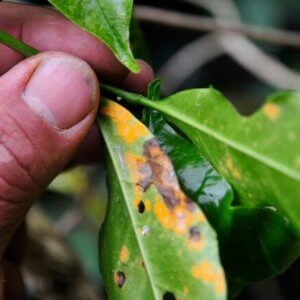
coffee rust e
Coffee rust

It is coffee rust that now threatens the global supply of Arabica. As Chemical and Engineering News recently reported, roughly 15 percent of production is lost to rust each year and it affects crops worldwide. Forty percent of Colombia’s coffee crop was wiped out by rust in 2008 alone, destroying livelihoods and impoverishing families in the process. Considering that Arabica is basically inbred, with just 1.2 percent genetic diversity, there is little chance it will ever develop resistance. Conventional breeding efforts are underway to create a more resilient version of Arabica, and have been for fifty years, but they probably won’t be able to keep up with coffee rust forever, especially considering the disease’s effects and scope are exacerbated by climate change, which is producing hotter, more humid conditions in prime growing areas – perfect for fungus. Fungicides and strategic growing practices help, but they are imperfect solutions which are difficult to implement on a wide scale.

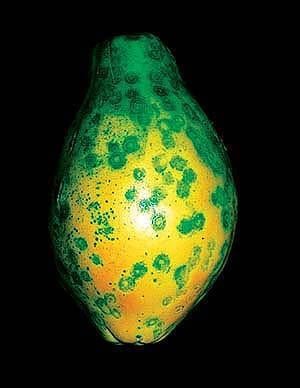
To anyone familiar with Hawaii’s papaya industry, the solution to save Arabica coffee is obvious and exciting: genetic modification! In the 1990s, Hawaii’s papaya crops were being devastated by a plant virus called ringspot, and by 1998 production had declined 50 percent. That year, Hawaiian horticulturalist Dennis Gonsalves, along with researchers from Cornell University, delivered the Rainbow papaya variety to farmers, essentially identical to the previous papaya but for the addition of a harmless viral gene conferring immunity to ringspot. Farmers eagerly planted Rainbow papaya all across the islands, and ringspot hasn’t troubled Hawaii papayas ever since.

papaya with ringspot virus Univ Calif
Papaya infected with ringspot virus

By one learned estimate, GMO coffee could be just 10-15 years away. Genetically-modified Arabica coffee resistant to disease would bring economic stability to the developing nations of Brazil, Vietnam, Colombia, Indonesia, Ethiopia, Honduras, India, and Uganda, which collectively produce three-quarters of the world’s coffee. According to Investopedia, “Ethiopia’s 1.2 million smallholder farmers contribute over 90% of production, and an estimated 15 million Ethiopians depend on the coffee industry for their livelihood.” To help lift hundreds of millions of people in the developing world out of poverty, GMO coffee resistant to disease is a humanitarian necessity.

And yet, as Christophe Montagnon, director of World Coffee Research, essentially the science division of the coffee industry, told Chemical and Engineering News, “The coffee world and story is not yet compatible with genetic modification.” Translation: First World consumers won’t accept GMO coffee. He may be right. Sadly, over half of Americans wrongly believe that genetically modified foods are unsafe, in sharp contrast to the scientific community, where 88% of AAAS researchers say that GM foods are generally safe. Correcting the public’s misplaced fear is paramount to protecting our morning cup of Joe, but more importantly, the livelihoods of millions.

Arabica coffee could go the way of the Gros Michel banana or the Hawaiian papaya. The choice is ours.

Ross Pomeroy is Chief Editor of Real Clear Science and a zoologist and conservation biologist by training. Follow him on Twitter @SteRoPo.

This article was originally published at Real Clear Science as “Why We Should Genetically Modify Coffee” and has been republished here with permission.

Getting to the roots of insomnia and what you can do about it

insomnia
The reality is that most people have transient periods of sleeplessness. But persistent sleep disorders are a plague for those who have them. Think about common reasons why people say they can’t sleep:

  • Travel
  • Different sleeping locations (hotels, etc.)
  • Stress
  • Medications

Do any of these ring true for you? If so, you’re in an overwhelming majority.

Notice how I separated ‘travel’ from the sleeping conditions that are incurred during travel. This is because there are two separate operating factors here: One is the stress that accompanies the act of traveling itself, and the other is the change in sleeping environment. We become well-calibrated to expect certain pre-sleep rituals at home (perhaps brushing teeth, reading books, etc.), and a change in the order or format of these rituals can spell the end for deep sleep. Part of the reason is because of certain cells in the brain devoted to location (the place and grid cells): When we are in a different location, the way we know this (besides that the wallpaper and hanging art may be strange and distasteful) is because there are activations of different arrangements of these pyramidal place cells.

One set of activity lets your brain know that it’s ‘at home in the living room,’ another neuronal firing pattern in this region lets it know that it’s ‘in aisle five of the local grocery store.’

The effect that novel places have on our sleep is well-known and is referred to as the ‘First night effect.’ Current research and brain imaging has indicated that sleeping in new locations keeps the left hemisphere of the brain active, scanning for threats. Sounds picked up by the right ear (more direct pathways to the left hemisphere of the brain) seem to induce wakefulness more effectively in new environments.

insomnia 2 28 18 3Where this gets even more interesting is thinking about the survival benefit of why these phenomena exist. Certainly, sleeping lightly and being roused by small noises or other environmental changes was likely responsible for the preservation of many of our ancestors: Those who slept too soundly may not have been able to defend against or evade emergent environmental stressors. Many animals rest one brain hemisphere at a time, with the other hemisphere passively patrolling for danger.

Back to the travel example as a common source of insomnia: We optimize our behavior when under stress, and so getting stressed allows us to perform slightly better during travel. This is the modern-era equivalent of fight-or-flight: the preparation for battle is the metaphor for our approach to getting on public transportation, airlines, etc. However, too much stress can make people less effective at battle (travel), and so hence the 268,000,000 Google hits I was just rewarded with by typing in ‘travel stress.’

When we travel, we’re on high alert, which activates our sympathetic nervous system and causes us to be more vigilant. This directly leads to reduced sleep duration and/or lower quality of sleep.

Also, there are several medications which can cause or contribute to insomnia, either by directly interfering with neurochemicals involved in sleeping, or by affecting (nor)epinephrine levels, blood pressure, heart rate, etc. For these situations, there are effective pharmaceutical treatments, however some can have very long half-lives and remain in physiologically-relevant levels in the blood stream well into the next day, leading to grogginess.

The other causes and contributors of insomnia are in a certain way more difficult to identify than those on the list above, because they are part of genetics and brain structure. They are innate, and therefore difficult to separate out as a background variable. I’ve written previously about genes associated with sleep, most notably ‘Chrono.’ The genetic predisposition toward insomnia is a hypothesis still in its early stages of research, though several influential genes have been identified.

Depression is also often ironically associated with insomnia. The relationship between mental status and sleep is one in which the direction of causality has not been unequivocally determined: Often those with clinical depression have a difficult time sleeping properly; but it could also be that an underlying sleep disorder is contributory to the presence of the depression.

Another factor which appears to be associated with insomnia is the presence—or lack thereof—of white matter in the brain. Specifically, researchers observed less white matter in the right hemisphere in people who had reported suffering from insomnia. Interestingly, lower levels of white matter tend to be found as a causative mechanism in certain strokes and dementia. Problems or deficits in white matter lead to poorer information transfer across different brain regions.

Limitations

The newest research focusing on white matter in the brain used a novel technique called diffusion-weighted magnetic resonance imaging, which is able to detect small variations in diffusion of water molecules within tissues of the body. Though fundamentally, there is not enough empirical data as to what a diffusion MR image should look like for nominal white matter levels, so determining certain features and considering them aberrant is a bit of a stretch. Also, the finding regarding white matter content in the brain is associative in nature, meaning that less white matter structure was associated with—but not necessarily causal in—the respondents’ insomnia. The sample size was also very small: 23 people, and a control group (regular sleep patterns) of 30 people. Additionally, the 23 people who reported insomnia were self-reporters, meaning that there were no comparative objective measures of sleep comparing the quality, type, or duration of sleep within and between the two groups.
insomnia 2 28 18 2Sleep clinics have had good success improving sleep outcomes in those suffering with sleep disorders. As we learn more about the mechanisms and physiological architecture involved in sleep, future treatments will be targeted to deal with specific types and aspects of insomnia, making the therapy more effective. Until then, the most effective practices to optimize sleep remain:

  • No consumption of caffeine, nicotine, or alcohol before bed (which can all interrupt sleep phases in different ways).
  • Establishing and maintaining a nighttime ritual, which prepares the body for sleep expectancy.
  • Limiting blue-spectrum lights (as found in smartphone and computer screens), which can be done by limiting viewing, using certain apps (which limit the flux of light in the blue end of the spectrum), or using blue light-blocking glasses.
  • And limiting stress, especially ruminative thoughts, prior to sleeping.

For those of you who have tried these palliative methods and still haven’t found substantive relief, the new recommendation for first-line treatment of chronic insomnia is to seek out cognitive behavioral therapy (CBT), which teaches more positive psychological approaches to sleep hygiene and beliefs about insomnia.

“By engaging patients to be active participants in their sleep health, CBT-I therapists teach cognitive and behavioral skills that resolve or attenuate chronic insomnia in 70% to 80% of treated persons, often without supplemental medication.” – Roger G. Kathol, MD, from the University of Minnesota in Minneapolis, and J. Todd Arnedt, PhD, from the University of Michigan Medical School in Ann Arbor

Kathol and Arnedt also note that psychological alternatives to pharmacologic therapy for insomnia will accomplish better and safer patient outcomes. Ensuring receipt of proper care is a patient’s right, and some health practitioners don’t consider insomnia to be a health problem — but it is. Sleep is an important part of good health, and the important takeaway is that it can be properly managed.

Ben Locwin is a behavioral neuroscientist and astrophysicist with a masters in business, and a researcher on the genetics of human disease. BIO. Follow him on Twitter @BenLocwin.

Bill Gates: GMO foods ‘perfectly healthy’, could reduce starvation and malnutrition

bill gates e

Bill Gates has a message for anti-GMO advocates: I’m disappointed.

In a Reddit “Ask Me Anything” on Tuesday, Gates said that he not only views GMO foods as “perfectly healthy,” but also that he sees them as a promising tool in a wider array of resources in the fight to reduce world hunger.

“GMO foods are perfectly healthy and the technique has the possibility to reduce starvation and malnutrition when it is reviewed in the right way,” Gates wrote. “I don’t stay away from non-GMO foods but it is disappointing that people view it as better.”

Gates’ view may strike some as controversial. Many people believe genetically modified foods are dangerous. In recent years, companies have submitted more than 35,000 products to the Non-GMO Project, an organization that certifies products that don’t contain genetically modified ingredients. And sales of GMO-free products are skyrocketing: Today, they represent roughly $16 billion in yearly sales.

But Gates’s stance also puts him in line with a majority of scientists who study the topic.

Organizations like the National Academy of Sciences, the American Association for the Advancement of Science, and the European Commission have publicly proclaimed GMO foods to be safe to eat. A large 2013 study on GMOs found no “significant hazards directly connected with the use of genetically engineered crops.”

Read full, original post: Bill Gates calls GMOs ‘perfectly healthy’ — and scientists say he’s right

Trump brain test inspires creation of online version for consumers

SP

Weeks after [President] Trump posted his perfect [Montreal Cognitive Assessment] score (30/30), the researchers started working on a new tool, dubbed the “mini-MoCA,” an online, self-administered exam for people worried about possible cognitive decline.

Such a test could potentially expand detection of mild cognitive impairment, or MCI, the earliest stage of dementia. Up to 1 in 5 people age 65 and older have MCI, and more than half progress to dementia within five years. Learning about problems early allows affected people to arrange their finances, seek out clinical trials and otherwise make plans for future care.

[Dr. Ziad] Nasreddine said his team is working now to validate the mini-MoCA, which will be a scaled-down version of the original tool. The MoCA was developed more than 20 years ago to help detect MCI. It has been translated into several versions and multiple languages and is used in all of the National Institute on Aging’s Alzheimer’s Disease Centers.

The original MoCA is a 10-minute, 30-question exam. Instead, the mini-MoCA will be a five-minute, six-question test, Nasreddine indicated. Like the original test, it will include exercises focused on naming objects and animals, verbal fluency, calculation, clock time, abstraction and memory.

And, like the original, if people score fewer than 26 of 30 possible points, they’d be urged to consult a doctor for further screening.

Read full, original post: Trump’s Perfect Score On Brain Test Spawns DIY Cognitive Exam

Viewpoint: Why environmentalists should support GMO crops

shutterstock
[G]enetic modification increases corn yields, by a lot. This is not surprising: pests account for a loss of almost one-third of yields, and weeds for a loss of another 10%. Genetic modification addresses these two sources of loss, and thus crops resistant to either pest or weeds yield on average 10% more grain, and crops resistant to both deliver a 25% increase in grain yield. Consider the global importance of such an effect: the world could use one-fifth less farmland to produce its food. This means less deforestation. It also means less greenhouse gas emissions, by as much as one-eighth of the annual emissions from automobiles. There is no other policy that a true environmentalist should support more vigorously than the transition of the rest of the world to GMO-based agriculture.

Overall, there is no substantial effect on insect biodiversity. And other studies have found a dramatic reduction in the use of herbicides and insecticides.

[E]nvironmentalists should be at the forefront of advocating in favor of GMO technology. And yet, paradoxically, the more resounding the statements of scientific unanimity about the environmental benefits of GMOs, the stronger the ongoing campaigns in retail markets to promote non-GMO foods.

Editor’s note: Omri Ben-Shahar is a law professor at the University of Chicago

Read full, original post: The Environmentalist Case In Favor Of GMO Food

How will climate change and genetics affect migratory songbirds?

px

An article published in January 2018 connected genetic variations in migratory songbirds with population changes due to climate change. UC Davis evolution and ecology postdoctoral scholar Rachael Bay is the lead author of the study into a songbird common throughout the Americas, the yellow warbler.

[Yellow warblers require] adaptations to multiple types of environments to remain competitive. This study of the yellow warbler shows vulnerabilities to climate change and is an extension of a larger investigation by the Bird Genoscape Project at the Center for Tropical Research at UCLA, which is currently mapping the migratory patterns and genetic variation of many birds across the world. “The way we extended this analysis is to ask, ‘Well, if these birds are adapted to these types of environments now, what’s that going to look like in the future?’” Bay said.

Areas of greatest genomic vulnerability — the mismatch between what climate the bird’s genes are adapted to and what the predicted climate will be — include areas of the Rocky Mountains and, to a lesser extent, around the Great Lakes.

Of the 25 genetic vulnerabilities to climate change calculated, Bay’s analysis found yellow warblers were most vulnerable to changes in precipitation, followed next by changes in temperature and vegetation levels.

The new climate vulnerability tools will help research and conservation efforts to protect birds around the world.

Read full, original post: Migratory songbirds, genetics, climate change

Trying to lose weight? Don’t expect help from a personal genetics test

maxi climber weight loss

There are [genetic] tests tailored to tell you about your diet, your fitness, your complexion—even your wine preference.

But researchers will tell you to approach lifestyle-tailored testing kits with extreme skepticism. “What you see in the consumer genetics market is that legitimate genetic findings, often from studies with very large sample sizes, are being turned around and marketed to people in a way that implies it’s going to be actionable for individuals,” says Harvard geneticist Robert Green.

[S]cientists led by Christopher Gardner, director of nutrition studies at the Stanford Prevention Research Center, published one of the most rigorous investigations to date on whether dieters can use personal DNA results to identify more effective weight-loss strategies

[T]he results, which appear in this week’s issue of the Journal of American Medicine, found no association between test subjects’ genetic profiles and their success with either program; test subjects lost the same amount of weight, regardless of which diet they were assigned. And study participants who were assigned diets that “matched” their genetic profile fared no better than those who weren’t.

A lot of people hear “genetics” and think “destiny,” but the vast majority of the time, that’s not how genes work. Which means that the vast majority of the time, you don’t need a personal genetics test to take charge of your future.

Read full, original post: You don’t need a personal genetics test to take charge of your health

What will the GMO debate look like 20 years in the future?

image

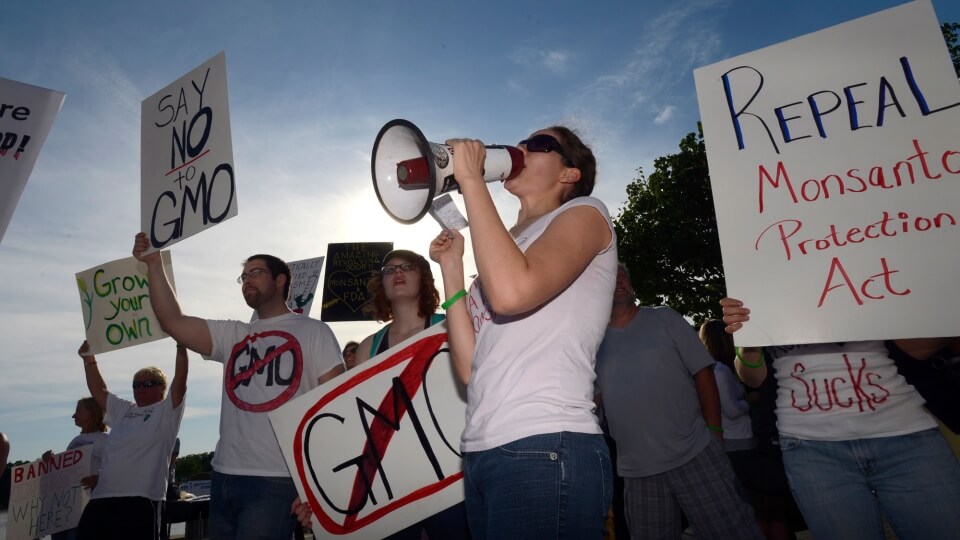
When Monsanto created RoundUp, it plunked itself in the centre of a public throng that had never seen its likes — a throng that had not been with them throughout the process. Knee-jerk responses are rarely measured, and in this case they were highly destructive.

Holding power to account is always a good thing, but you’re not holding power to account when you’re yelling in a different language or when the things you’re opposing are driven underground.

Twenty years from now, agriculture will look different than it does today. The GMO debate will have ended, but it will continue in spirit under a different name. Biotechnology is not slowing down. It’s a busy arena, and a needed one.

If the people, organizations and/or governments at the forefront of the GMO debate — at the forefront of the anti Big Ag movement, at the forefront of reforms that debilitate the very people growing their food — want to drive positive change and write themselves into agricultural history, they need to meet me on my farm.

My grandpa would have been impressed with how things in ag have advanced.

I hope that the next generation on this farm impresses me some day.

Editor’s note: Toban Dyck is a farmer and Director of Communications at Manitoba Pulse & Soybean Growers

Read full, original post: In 20 years, ag will look very different — let’s just hope the technology isn’t evolving in secret

Employing gene drives to protect rare species comes with risks

tristan

There is an ambitious poison baiting campaign currently being planned for Gough [island] in an attempt to control rodent numbers and give [rare] birds a chance to recover.

[A]ttention is now turning to new technologies that could offer more targeted solutions [to pest problems].

One derivative system, synthetic RNA guided gene drives (gene drive), which is based on CRISPR/Cas9, has provided new hope of delivering much needed solutions for threatened species conservation.

Gene drives occur in nature, and so the potential for these naturally occurring gene drives to be used to introduce engineered genes to a genome have been studied for quite some time by molecular biologists.

For example, researchers have successfully used this artificial gene drive technology in the lab to disperse a trait through a group of mosquitoes that made them no longer able to carry the malaria parasite.

While the possibilities for such applications seem endless, the excitement generated by these technologies is tempered by the need to consider the associated risks.

One thing is clear, we will never get closer to answering the questions raised by gene drive without undertaking fundamental research in this area of science. Without developing our understanding of gene drive technologies in the lab, we won’t know if they are a viable solution or not.

Read full, original post: Taking a responsible approach to new genetic technologies for conservation

Bayer-Monsanto merger stalls Burkina Faso’s GMO cotton plans

BF Sofitex main banner x

Talks with Bayer to reintroduce genetically modified (GM) cotton in Burkina Faso are on hold pending the German drug and crop chemicals maker’s acquisition of U.S. rival Monsanto, the head of the West African nation’s top cotton company said on Tuesday.

Burkina Faso – Africa’s leading cotton grower in recent years – became a showcase for GM cotton technology on the continent when it introduced varieties containing Monsanto’s Bollgard II trait in 2008.

However, in 2016 it abandoned the Monsanto varieties, complaining they led to a drop in cotton fiber length resulting in around $85 million in lost earnings for Burkina Faso’s cotton companies.

Wilfried Yameogo, the director of Sofitex, Burkina Faso’s biggest cotton company, said it initially approached Bayer in 2014 amid its troubles with Monsanto.

Bayer produces cotton traits under the TwinLink Plus and TwinLink trademarks that, like Monsanto’s Bollgard II, also use genes from the soil bacterium Bacillus thuringiensis (Bt) to protect against pests.

“We expressed our wish to establish a partnership with Bayer … Bayer had shown its agreement in principle,” Yameogo told Reuters.

However, it subsequently launched a $63.5 billion bid to purchase Monsanto and talks to introduce Bayer’s GM cotton traits in Burkina Faso were suspended, Yameogo said.

Read full, original post: GM cotton’s return to Burkina Faso on hold over Bayer-Monsanto deal

Should we fear all of these ‘toxins’ alternative medicine warns us about?

sugar

“Detox diets” and “detox kits” are dietary interventions that are claimed to support or promote the elimination of toxins. They are often simultaneously marketed at weight-loss strategies, although they are routinely promoted to those without any weight or health problems whatsoever. Detoxification strategies are very popular with alternative-health providers such as naturopaths.

Britt Marie Hermes was once a naturopath that promoted the alternative medicine view of detoxification to her clients. In her post “The Anatomy of a Detox Scam,” Hermes (who subsequently quit naturopathy, and is now its harshest critic) described how she invented a detoxification scheme she called The Right Detox:

Detox programs are created with one goal: make money. I am not generalizing here. I’ve helped create detox programs at more than one clinic. In each instance, the decisions to include specific detox supplements, protein powder shakes, or therapies were based on profit margins. Detoxers doing The Right Detox could purchase different “tiers” of the program. The scheme was simple. The “deeper” the detox, the higher the tier, and the more expensive the package.

Like all other over-the-counter or alternative medicine detox plans, there is a lack of robust evidence to show that these types of detox strategies do anything at all.

Editor’s note: Scott Gavura is a registered pharmacist in Ontario, Canada

Read full, original post: Are we all contaminated with chemical toxins?

Neonicotinoid insecticides pose risks to wild bees and honeybees, European Food Safety Authority says

hunts bumblebee blogheader Tom Koerner USFWS fw x e

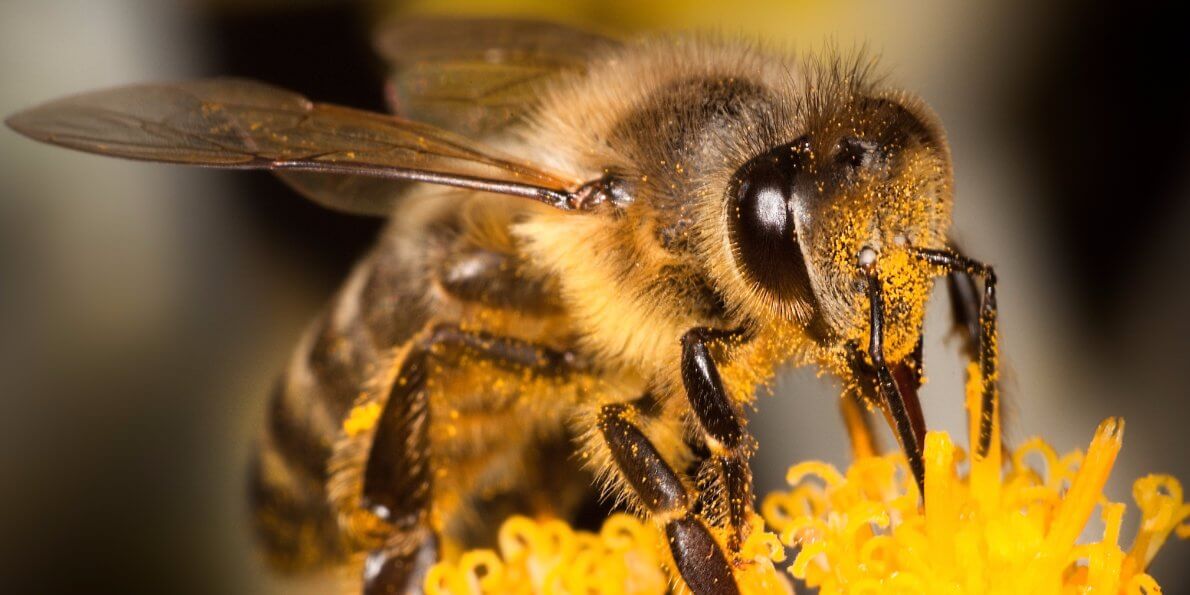
The world’s most widely used insecticides pose a serious danger to both honeybees and wild bees, according to a major new assessment from the European Union’s scientific risk assessors.

The conclusion, based on analysis of more than 1,500 studies, makes it highly likely that the neonicotinoid pesticides will be banned from all fields across the EU when nations vote on the issue next month.

The report from the European Food Safety Authority (Efsa), published on Wednesday, found that the risk to bees varied depending on the crop and exposure route, but that “for all the outdoor uses, there was at least one aspect of the assessment indicating a high risk.”

The Efsa assessment includes bumblebees and solitary bees for the first time. It also identified that high risk to bees comes not from neonicotinoid use on non-flowering crops such as wheat, but from wider contamination of the soil and water which leads to the pesticides appearing in wildflowers or succeeding crops.

[A] spokesman for Syngenta, a neonicotinoid manufacturer, said: “Efsa sadly continues to rely on a [bee risk guidance] document that is overly conservative, extremely impractical and would lead to a ban of most if not all insecticides, including organic products.”

Read full, original post: Total ban on bee-harming pesticides likely after major new EU analysis

Video: Watch DNA organization in real time

ganji HR

Your body is truly amazing. Every cell inside of it is capable of organizing massive messes of DNA into chromosomes as a cell prepares to divide. That DNA, when unraveled, can span more than two meters in length, but your body’s cells whip it into tidy bundles. We’ve long known that the body can do this. But how it accomplishes this biological feat is another thing. Now, researchers from Delft University in the Netherlands and EMBL Heidelberg in Germany have succeeded in actually catching the process on video, observing how DNA gets structured in real time. It’s pretty nuts.

Understanding the basics of DNA architecture, said Stephen Montgomery, a Stanford geneticist, has important implications for understanding many aspects of how our cells function and how genes are expressed in the body. “Stretched out from a cell, DNA is about two meters long, so the process of its compaction and disentanglement is highly influential in gene regulation and maintenance of cellular state and homeostasis,” he said.

Finding the answer to this long-standing mystery was as simple as just recording the process in action, Cees Dekker, the senior author on the study, told Gizmodo. Improved camera and lab technology finally made such a video possible.

Read full, original post: Unprecedented Video Shows How DNA Is Organized in Real Time

Viewpoint: Bans on neonicotinoid insecticides may not actually help bees

what to do when your kid gets a bee sting

Public pressure is growing in Australia to ban the sale of pesticides called neonicotinoids because of their harmful effects on bees.

The retail chain Bunnings will stop selling the Confidor pesticide brand for homes and gardens by the end of 2018.

Neonicotinoids along with fipronil, another systemic insecticide that has also been blamed for bee deaths, are widely used in Australia on major crops such as maize, canola and cotton.

Between them they account for up to 30% of global insecticide sales. Will banning these insecticides stop the decline of bees worldwide?

Mites and disease

Insects are in trouble. A recent study found an 80% decline in flying insects, including butterflies, moths and wild bees, in German nature reserves. This has prompted questions about the impact of large-scale intensive agriculture.

Colony collapse disorder, in which worker bees dramatically disappear from honey bee hives, increased hugely in the decade up to 2013, particularly in the United States and Europe. This caused international concern and led to a ban on neonicotinoids and fipronil by the European Union in 2013.

Follow the latest news and policy debates on sustainable agriculture, biomedicine, and other ‘disruptive’ innovations. Subscribe to our newsletter.

However, there are no reports of colony collapse disorder in Australia, according to the Australian Pesticides and Veterinary Medicines Authority, which regulates the use of pesticides and monitors the effect of insecticides on bees. Why not?

We don’t fully understand the causes of colony collapse in honey bees, but it appears that a likely culprit is the Varroa mite and the lethal viruses it transmits. This parasite feeds on both larvae and adult bees, and has been blamed for infecting vast numbers of bees with several viruses including deformed wing virus.

Australia’s honey bees, in contrast to the rest of the world, are still free of Varroa mites. A CSIRO survey of 1,240 hives across Australia found that deformed wing virus is also not present. The absence of both the mite and the viruses it carries may help to explain why colony collapse has not (yet) been observed in Australia.

Pesticide and fungicides, oh my!

While there is clear evidence of harm to bees from the use of neonicotinoids and fipronil, particularly from drift during application, their role as the direct cause of colony collapse is not proven.

Spraying an OSR field c Tim ScrivenerAnd while they can be harmful, neonicotinoids are not necessarily the biggest chemical threat to bees. Perhaps surprisingly, fungicides appear to be at least as significant.

One study found that bees that eat pollen with high levels of fungicide are more likely to be infected with a pathogen called Nosema. Other research showed that presence of the fungicide chlorothalonil was the best predictor of incidence of Nosema in four declining species of bumblebees. What’s more, the toxicity of neonicotinoids to honey bees doubles in the presence of common fungicides.

This is not to say that Australian bees are safe, or that neonicotinoids are not harmful. Australia has more than 5,000 native bee species, and studies suggest that the main impacts of neonicotinoids are on wild bees rather than honey bees in hives. The combination of widescale use of multiple agrochemicals, loss of plant and habitat diversity, and climate change is a significant threat to both wild and domesticated bees.

And if the Varroa mite and the viruses it carries were to arrive on our shores, the impact on Australia’s honey bees could be catastrophic.

Banning pesticides affects farmers

The EU insecticide ban left Europe’s farmers with few alternatives. Surveys of 800 farms across the EU suggest that farmers have adapted by increasing the use of other insecticides, particularly synthetic pyrethroids, as well altering planting schedules to avoid pests, and increasing planting rates to compensate for losses. Most farmers reported an overall increase in crop losses, in costs of crop protection and in time needed to manage pests.

A ban on fipronil and neonicotinoids would create similarly significant problems for Australian farmers, increasing costs and reducing the efficacy of crop protection. As in Europe, they would potentially increase use of synthetic pyrethroids, organophosphates and carbamates, many of which are even more harmful to bees and other insects.

Reliance on a more limited range of insecticides could also worsen the incidence of insecticide resistance and destabilise Australia’s efforts to balance resistance management and pest control with preserving beneficial insects.

Further development of these sophisticated pest management strategies, with emphasis on the use of less harmful alternatives such as microbial and biological controls, offers a route to a more effective, long-term solution to the decline in insects and bee health.

A ban on neonicotinoids might give campaigners a buzz, but it might not save the bees.

Caroline Hauxwell is an associate professor at the Queensland University of Technology in Australia. Follow her on Twitter @CarolineHauxwel.

This article was originally published at the Conversation as “Pesticide bans might give us a buzz, but they won’t necessarily save the bees” and has been republished here with permission.