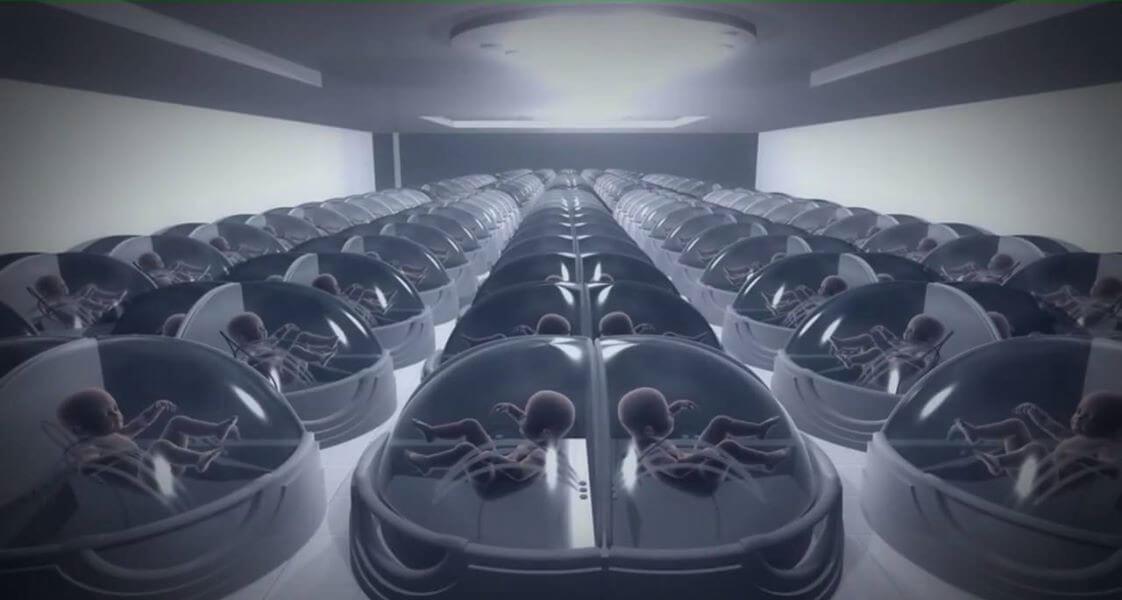
Ectogenesis, that is the gestation outside of a biological womb, sounds like science fiction. But one of the top stories of 2017 was the success of one group in making artificial wombs a reality—at least for lamb fetuses in later stages of their gestation.
The science is in large part motivated by the high, and steadily rising, number of babies born preterm or before 37 weeks of gestation. According to the Centers for Disease Control and Prevention, one in ten babies are born prematurely in the United States. According to the World Health Organization, that same statistic is true globally, and the United States is one of the ten countries with the highest number of preterm births (although not the highest rate).
…
Critically or extremely preterm babies, those born before 28 weeks of gestation, have survival rates that are highly dependent on income levels. In the United States, preterm births have been linked to 17% of infant deaths in recent years, while those babies that do survive have a high likelihood of major complications like cerebral palsy, breathing problems, vision problems, and developmental delays.
But what if babies born prematurely, instead of having to fight for life before they are fully equipped to do so, could be put into an artificial womb-like environment to complete their gestation?
When we talk about food and farming, Nick Saik has been excited to tell the story through the camera lens. Nick has built quite an empire by telling the story of food and farming technology. Please check out Nick’s videos and support his efforts.
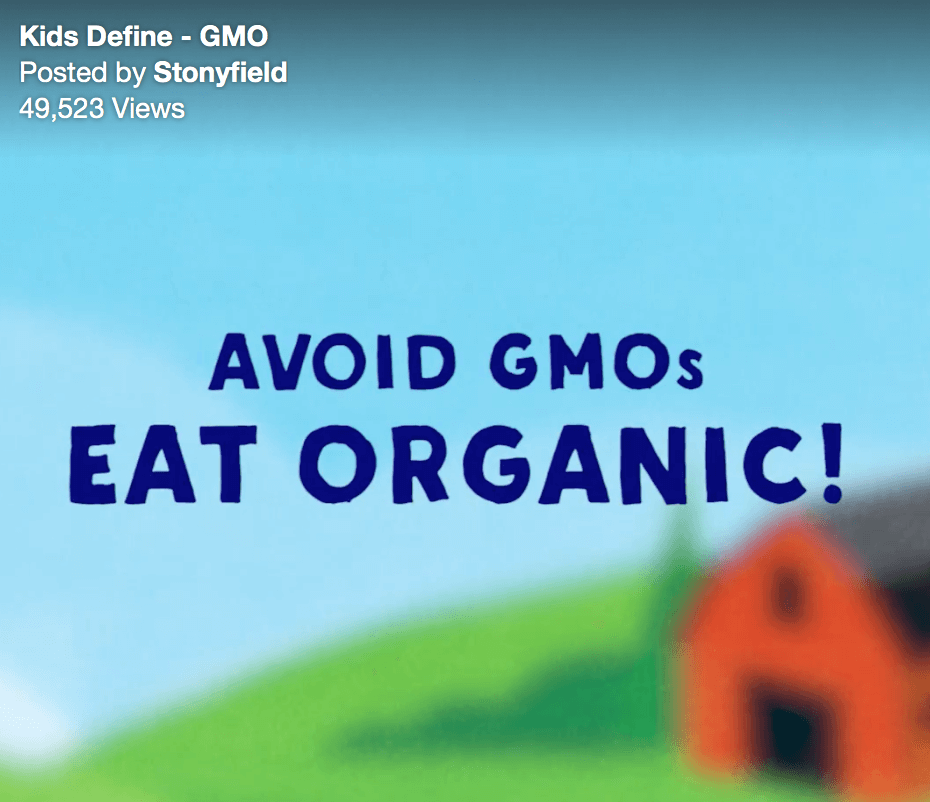
Usually, a video with kids talking is cute, funny, perhaps poignant. However, scientists’ and farmers’ reactions to a promotional video posted by the yogurt maker and organic dairy company Stonyfield featuring children talking about GMOs have been anything but.
The video, accessible below, supposedly depicts children who are innocently trying to define ‘What are GMOs?’:
Several of these children have appeared in other Stonyfield videos, as part of an apparent series where, according to the company’s website, “we asked cool kids…” something about topics that appeal to Stonyfield’s message–organic foods and safe and healthful while foods grown conventionally pose hidden dangers, and those grown with genetically modified seeds are the most insidious of all.
The “cool kids” make these key points–staple of anti-GMO activists for years, and often found on Stonyfield’s website:
“You take a gene from a fish and put it into a tomato.” This misconception refers to a tomato with a gene from a winter flounder that helps the fish survive freezing temperatures, this technique was developed in the 1990s to help tomatoes tolerate frost, but the product was never commercialized.
“I think it’s better if we get informed of it before we, like, eat it.” This refers to efforts by Stonyfield’s chairman and co-founder, Gary Hirshberg (learn more about him from this Genetic Literacy Project Profile), as part of the Just Label It campaign to require labeling of GMOs in food, ignoring other genetic modifications that are not transgenic, other techniques such as RNAi or CRISPR (which don’t require DNA from another species), and accepted techniques such as irradiation of site-directed mutagenesis.
The video also has emotional appeals, including statements from the kids like, “That sounds monstrous” and, “Are you kidding me?”
Reactions from scientists, science communicators and farmers? They are not amused.
Amanda Zaluckyi, whose family runs a farm in Michigan and posts on the popular Farmer’s Daughter USA blog, wrote:
Even though Stonyfield doesn’t believe eating GMOs is harmful, they are more than willing to keep manipulating children to scare people. They are willing to lie to their customers to move their product. They know full well being non-GMO does not make their product better in any way, yet they are more than happy to act like it does if it sells. Does anyone actually feel comfortable buying from a company like that?
Filmmaker Natalie Newell, who directed the Science Moms short documentary that follows five moms (including me) as they discuss some of the most fraught issues in parenting today, was quoted as saying:
If you want to talk about GMOs, awesomeFind experts (and there’s no shortage of folks who can talk on genetic modification and biotechnology) to define the term. But do not use children. Don’t use children to perpetuate these myths and further demonize biotechnology, all in the name of selling your yogurt pouches.
University of Florida plant scientist Kevin Folta volunteered to teach a science lesson at the schools attended by the child video stars:
What made this video paralyzingly egregious was that scientific ignorance was propagated by young women.
They should be extolling the beauty of medicine, the promise of technology, and how they can one day participate in sustainable food production. Instead, they are ecstatic about science-free industry talking points to sell a product.
We need to fix this.
I volunteer to travel to the schools where these girls attend, at my personal expense, and teach a day’s lessons about plant science. We’ll talk about plant domestication, how plants function, what they do for us, and how farming provides food. We’ll talk about environmental impacts, conventional and organic cropping systems, and also about biotechnology. I’ll bring plenty of seeds for kids to start their own gardens.
And Iowa farmer and writer Michelle Miller, who Tweets and blogs as “Farm Babe,” responded in an email interview on what children should learn about science, genetics and food:
Kids should understand that science should be celebrated! Just because we don’t know what something is, that doesn’t mean we should fear it. The word “GMO” sounds like some creepy mutation we shouldn’t put in our bodies, I get that (Who came up with this acronym, seriously?). But once you actually dig in on the science it is really cool! It’s important to talk to real farmers and scientists and farming and science and there are excellent high paying careers in agriculture and plant science. The sky’s the limit with these in-demand jobs. Farmers are the experts in the fields, not a big city food marketing executive that’s never even been inside a combine. Let’s connect.
Stonyfield’s response
First, the company went to social media to accuse its accusers of being trolls, citing “fake names” that couldn’t be verified.
Later, after a few hundred complaints, the company issued a more serious, longer statement that also contained serious misconceptions about genetically modified food, including the carcinogenicity of glyphosate:
We do not believe that eating GMOs has been proven harmful to your health. The majority of GMO crops used by farmers today require the use of toxic herbicides.
The use of glyphosate, which has been categorized as a probable carcinogen by the IARC (International Agency for Cancer Research), has increased nearly 15-fold since so-called “Roundup Ready,” genetically engineered glyphosate-tolerant crops were introduced in 1996. (source: https://www.ewg.org/…/study-monsanto-s-glyphosate-most-heav…).
We believe consumers have the right to choose whether or not to support the above practices, and that the only way this can happen is if food companies that use GMO ingredients or that feed their cows GMO feed declare this on their packaging.
Since USDA Organic regulations forbid the use of GMOs, we will continue to rigorously avoid their use and we are proud to offer consumers this choice in the dairy aisle.”
The foundation of Stonyfield’s justification of its video is IARC. The only regulatory or official advisory organization in the world to link glyphosate to cancer, IARC, the WHO’s cancer research arm, has come under intense criticism for, at best, being wrong, and at worst, corrupted by conflicts of interest with anti-GMO activists. No other reputable organization has fingered glyphosate as carcinogenic. Bernhard Url, executive director of the European Food Safety Authority (which did not find glyphosate carcinogenic), commented recently in Nature on the brouhaha:
That the agencies reached different conclusions is not surprising: each considered different bodies of scientific evidence and methodologies. Other independent assessments — by the European Chemicals Agency and regulatory bodies in the United States, Canada, Japan and Australia — agreed with EFSA. So did an expert body on pesticide residues convened by the Food and Agriculture Organization of the United Nations and the World Health Organization.
Url also pointed to organizations (like Gary Hirshberg’s Just Label It and others) that continue to encourage doubt about glyphosate in particular and genetic engineering in general:
Why the frenzy? Agencies that find low risk of regulated products are often accused of undue industry influence. We at EFSA believe that some campaigners are unwilling to accept any evidence that certain regulated substances are safe, and will tout weak scientific studies showing the opposite. The same groups applauded EFSA for reviews on other pesticides, such as neonicotinoids, that it deemed dangerous.
It seems to us that some campaigners contest the science of safety assessments in pursuit of greater political arguments. These arguments deserve airing — but they belong with policymakers.
Stonyfield’s history of spreading misinformation
As for Stonyfield and Hirshberg, they have been at the front line of this dissemination of misinformation about food and agriculture for years.
In another video produced by Hirshberg and other organic industry members in 2015, children performed a fake elementary school performance about Old MacDonald vs New MacDonald–a critique of conventional farming. Hirshberg described the video as “playful” and” turns the spotlight on the true costs of conventional farming and the harm it does to environmental health.” Watch the video below:
Plant geneticist Steve Savage described it as corrupt play for financial gain, because “It is a malicious distortion that demonizes the work of the small minority of citizens who still farm. It is designed to make consumers believe they must buy organic food to be safe and responsible. This is hate speech for profit! The indoctrination of the child actors only makes it more despicable.”
Hirshberg also has been involved in politics, attempting to disseminate his pro-organic, anti-GMO message, at least to Democratic candidates. A number of emails distributed by WikiLeaks showed that, during the 2016 Presidential election campaign, Hirshberg acted as a “bundler”, handling donations of $600,000 to Hillary Clinton’s efforts, and advocating that her campaign strongly support labeling of so-called GMO food. Hirshberg was hoping to be an an unofficial advisor to Clinton on farm policy if she had been elected president.
What the children’s video and Stonyfield defense ignore is the role of genetics in farming. As “Farm Babe” Michelle Miller explained:
GMOs allow us as farmers to have a number of benefits. They may eliminate our need to spray insecticides, (which helps beneficial insects like bees) they may give us the ability to use safer herbicides, or make it easier and more cost effective to do no-till farming which is better for soil health and the environment. GMOs can also be fortified with more nutrients or be saved from diseases… The list goes on. There’s a reason why 95% of farmers are choosing to grow them. If we can produce more with less resources and reduce our chemical pesticide sprays, while being better stewards of the land, this is a win-win for farmers, consumers, and the environment.
Stonyfield’s censorship
Meanwhile, Stonyfield has consistently been deleting Facebook and other social media comments that challenge their marketing decisions to exploit young children to spread scientifically incorrect information about farming and GMOs. Michelle Jones is a farmer and mother who saw her thoughtful comments removed within minutes after she posted them:
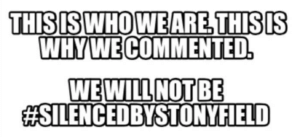
Stonyfield purged its site of hundreds of mostly thoughtful pushback on its misinformation crusade. A Facebook page, Banned by Stonyfield, was even formed to capture what the large organic company has tried to suppress.
This group is created to capture how many people Stonyfield has blocked from their facebook page for posting feedback on their recent ads and the subsequent follow-up post. Currently their chairman is claiming they are under a coordinated attack by fake accounts. This kind of outright lying isn’t ok, and we have the ability to bring to light their deceptive practices by posting OUR voices. Once this group is large enough, I’ll change the settings to public and work to have this shared across different Facebook pages to counter Stonyfields message. Please write a comment with your name, a few word blurb about you and why you commented on the page. We are real people, we really don’t like the message that Stonyfield company is putting forth. We won’t be #SilencedByStonyfield.
University of Florida horticulturalist Kevin Folta was one of those banned, for posting this:
As Folta has written, Stonyfield, like many organic companies, have turned their marketing from extolling the virtues of their own products to vilifying competitors, using misinformation as their battle tool. They’ve transformed themselves into crude ideologues, no better than than the science deniers that make up growing portions of the political right and left. Here are excerpts from a letter sent to Stonyfield by Ag Daily:
We are real people, with real names, real jobs and real concerns. We are the more than 400 social media users — scientists, farmers, educators, students, mothers and fathers — who you tried to silence when we responded to your recent marketing video. You have deleted thousands of comments, and your chairman and former CEO has called us “trolls” with “fake accounts.” …
Instead of focusing on the merits of your yogurt, you chose to exploit parents’ concerns about the safety of the food they give to their families. You used children as props to spread your message. We question your ethics and deride your efforts to disparage and divide large segments of the agricultural community. …
Fear-based food messages are negatively impacting the buying and eating habits of consumers, especially among the poorest demographics. It demonizes safe and beneficial technology — technology that allows farmers to grow more food on less land, using fewer resources and reduce the environmental impact of the agricultural sector. Marketing messages like yours work to take choices away from farmers and make consumers feel like they don’t have safe choices at the grocery stores.
Andrew Porterfield is a writer and editor, and has worked with numerous academic institutions, companies and non-profits in the life sciences. BIO. Follow him on Twitter @AMPorterfield.
When anthropologists meet in France at the end of January, one of the most provocative fossils in the study of human evolution will not feature on the agenda. The approximately 7-million-year-old femur was examined more than a decade ago by scientists in the French city of Poitiers, but has yet to be thoroughly described in a published scientific paper.
The fossil may belong to the earliest known hominin, the group that includes humans and their extinct relatives.
…
“This specimen is really important. It’s critical,” says [paleoanthropologist Roberto] Macchiarelli, who has shared his unpublished report with Nature’s news team. The femur probably belongs to a species called Sahelanthropus tchadensis, he says. The bone is important because it could settle whether the species is the earliest hominin yet found.
…
Macchiarelli doubts that Sahelanthropus is a hominin, but thinks a conclusion should be made only after more careful study of all its remains, including the femur.
The femur and other Sahelanthropus remains are crucial to determining the status of the species, because individual anatomical parts can often be misleading about evolutionary history, says Bernard Wood, a palaeoanthropologist at George Washington University in Washington DC. And even if the species turns out not to be a hominin, he says, it is an incredibly important fossil because it might identify a now-extinct lineage of great ape that once roamed Africa.
Moving to the United States helped [Hortense Dodo, a food scientist and entrepreneur from Ivory Coast] reach her academic goals, but it also introduced her to a health problem that would become her career focus—life-threatening peanut allergies. These allergies are much more prevalent in industrialized nations than in the developing world, killing an estimated 150 people in the US per year, and causing many thousands more to suffer hives, breathing problems, and other reactions that can require hospitalization.
…
In her laboratory, Dodo experimented on standard peanuts using RNA interference technology (RNAi), which is a method of genetically engineering organisms by “silencing” the expression of certain proteins and traits. In this case, Dodo singled out three proteins that produce the most extreme reactions in allergy sufferers, known as Ara h1, Ara h2, and Ara h3, and was able to develop a patented process that eliminated the impact of those dangerous components.
By exposing the peanut to blood serum from people with allergies, and examining the response of antibodies to it, Dodo and her team can test the peanut’s hypoallergenic properties. The results have been extremely promising, inspiring Dodo to found her own biotechnology company, called IngateyGen, LLC, in order to bring her hypoallergenic peanut into the commercial sector.
Products containing traces of golden rice, which is genetically modified to produce beta-carotene, should be able to be sold in Australia and New Zealand, regulators have ruled.
It follows an application to Food Standards Australia New Zealand (FSANZ) from the humanitarian organisation International Rice Research Institute, which cultivated the GR2E rice line to mitigate vitamin A deciency in developing countries.
…
In approving the application, FSANZ stated that food derived from Golden Rice would have to be labelled as ‘genetically modied’ because it would contain novel DNA and novel protein.
…
The Institute wants the GR2E rice to be cultivated for humanitarian purposes in developing countries including Bangladesh, Indonesia and the Philippines which are at high risk of vitamin A deciency (VAD) and where 30– 70% of energy intake is derived from rice.
While acknowledging that GR2E rice will not solve the issue of population-based VAD for these countries, it believes it can be a major part of an overarching strategy to reduce deciency.
…
Similar applications are currently under review in the USA, Canada and the Philippines.
In an effort to develop a safer vaccine substitute, Canadian researchers have resurrected a close relative—the extinct horsepox virus—from scratch. Critics say the exercise was pointless, and because the results were published in an open access journal, they fear the smallpox virus can now be manufactured by virtually anybody—terrorists included.
Researchers from the University of Alberta revived the horsepox virus by referencing a publically available genome sequence and by chemically manufacturing DNA fragments from scratch…
News of this work first emerged in July 2017, but the publication of the results in the open access journal PLoS One on January 19, 2018 has sparked fresh waves of concern
…
[T]he general public hasn’t been inoculated against smallpox for decades. There’s a chance that smallpox could re-emerge naturally, or be manufactured as a bioweapon. [Pharmaceutical company] Tonix is working on a synthetic version of horsepox to create a potentially safer vaccine substitute. In tests, the resurrected lab-grown virus was shown to protect mice from lethal doses of vaccinia. Looking ahead, Tonix would like to test the synthetic stuff on humans in carefully controlled trials.
…
Regardless of whether this work is safe or necessary, this should have been part of a larger conversation, given the seriousness of smallpox’s threat to humans.
Some companies, such as the Athena Institute, which, according to its founder, Winnifred Cutler, published its 108th consecutive ad in The Atlantic this month, assert that scientific studies back up their claims [that human pheromones exist].
…
[P]heromones are broadly defined as chemical signals released by an animal that induce specific effects on other members of the same species. Although these substances are typically associated with sexual attraction, researchers have found they can have a broader range of influence, such as prompting aggression or modifying parental behaviors.
…
[T]he presence of such molecules in humans remains controversial. “I still have an open mind about whether human pheromones exist,” says Ron Yu, an investigator at the Stowers Institute for Medical Research who studies rodent pheromones. “But I just don’t find any of the published studies convincing enough.”
…
[Athena Institute’s] formulations, which Cutler says are synthesized copies of chemical substances isolated from armpit extracts, were tested in three published, double-blind, placebo-controlled investigations.
…
All three papers reported that individuals who received the pheromone formulation reported increased frequencies of sexual behaviors, including kissing, formal dates, and sexual intercourse.
[I]ssues associated with these studies, according to Yu, are the relatively small sample sizes and their reliance on self-reported behaviors. As a result, he says, “I don’t think [these studies] are powerful enough to draw a solid solution.”
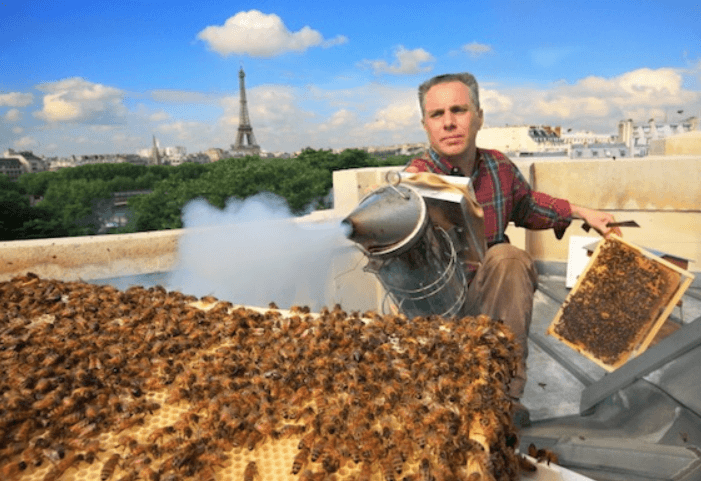
The rise in amateur beekeepers keeping hives on roofs and gardens is contributing to the decline of wild bees, Cambridge University has claimed.
Experts at the Department of Zoology said the growth in urban keeping was leaving wild bees struggling to gather enough pollen and nectar.
…
“Keeping honeybees is an extractive activity. It removes pollen and nectar from the environment, which are natural resources needed by many wild species of bee and other pollinators,” said [Juan] González-Varo, [a bee researcher in] Cambridge’s Zoology Department.
“Honeybees are artificially-bred agricultural animals similar to livestock such as pigs and cows. But this livestock can roam beyond any enclosures to disrupt local ecosystems through competition and disease.”
The conservationists argue there is a “lack of distinction” in public understanding – fuelled by misguided charity campaigns – between an agricultural problem and an urgent biodiversity issue.
“The crisis in global pollinator decline has been associated with one species above all, the western honeybee.
“Yet this is one of the few pollinator species that is continually replenished through breeding and agriculture,” said co-author Jonas Geldmann.
“Saving the honeybee does not help wildlife. Western honeybees are a commercially managed species that can actually have negative effects on their immediate environment through the massive numbers in which they are introduced.”
Exposure to trees and other greenery has been shown to stave off depression in adults, and a new study finds the same may be true for teenagers.
Researchers looked at more than 9,000 children 12 to 18 and found those who lived in areas with a lot of natural vegetation were less likely to display high levels of depression symptoms. The effect was strongest among middle schoolers, the study team reports in the Journal of Adolescent Health.
…
Based on the mental-health assessments, the researchers found that 11.5 percent of children had depression symptoms. They categorized the top 11.5 percent of that group with the highest levels of depression symptoms as having “high depression” and looked at how nearby green and blue space influenced whether they fell into that category.
“We saw that living in an area that was greener was associated with lower depression among this population,” Bezold said.
Overall, after adjusting for family and economic factors, researchers found that young people living near the highest-quality green space were 11 percent less likely than peers with the poorest-quality green space to be in the high depression group.
…
[A] possibility is the biophilia hypothesis, [health geographer Kirsten Beyer] said, which argues that humans have this inherent biological tendency to respond positively to natural environments.
In 2018, the inherently slow process of crossbreeding may seem as quaint as Web 1.0. New technology has helped speed up the process; adjustments that might have taken 30 years in the field in the past can now be made almost instantly on a single machine in a lab.
…
The problem: There’s still no standardization in place to alert consumers to which of the produce in a grocery store has been genetically manipulated, much less how.
When you’re standing in front of, say, a neat pyramid of tomatoes, you’re missing some crucial insight into how that produce came to be. The results of the different ways to manipulate a crop (crossbreeding, GMOs, and a third category of gene-edited crops) look the same, but there’s no transparency about how those tomatoes — or mushrooms, or onions, or whatever — you buy in the supermarket have been grown, nor is there clear regulation of the science that goes into making this produce, which has been a controversial issue since GMOs were first commercially introduced in the 1970s. None of it is unsafe, necessarily, but don’t we deserve to know how food we’d otherwise presume weren’t subjects of science was made regardless?
Recently, New Zealand has been at the center of a heated debate over whether it is either feasible or ethical to use a cutting-edge genetic-engineering technique known as a gene drive to kill off the land-dwelling mammals that were brought to New Zealand by European settlers and that threaten its native birds.
…
[T]he high-tech solution is not always the most effective one. In the case of [the parrot species] Kaka, it was breeding them behind fences that rise high into the sky and deep below the ground to keep out pests like possums. Now, New Zealand is close to perfecting a new conservation strategy that merges 21st century science with an age-old pest control technique: genetically targeted poison.
…
Scientists mine the genome of a predator species for DNA sequences specific to only that animal. It’s similar to how pharmaceutical companies mine human DNA for clues to curing disease, only in this case, they’re hunting for a sort of Achilles’ heel that would kill the animal if tinkered with.
…
The idea is to then use that molecule to make a new toxin that would harm only the targeted animal when ingested. That means the toxin could be distributed more liberally and effectively, with (hopefully) no consequences to other animals in the same ecosystem.
Give a man a fish, and he will eat for a day. Give a man a hybrid supercow with the udders of a heifer and the ruggedness of Masai cattle, and he will eat cheese for a lifetime. Or a cow’s lifetime at least.
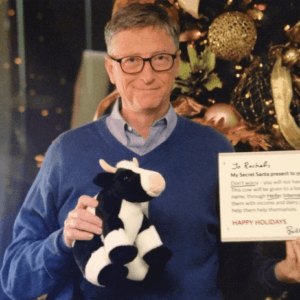
Bill Gates
That is why Bill Gates is investing in British research to improve livestock health and yield — so cows can make more milk for longer. In particular, he is funding studies that will help to create cows with the genes for the bumper milk production of a northern European heifer but also an African cow’s ability to survive in the blistering sun.
…
[Appolinaire Djikeng, director of the Centre for Tropical Livestock Genetics and Health] said that their first goal was to pin down the parts of the genome on different breeds of cow that were responsible for their desirable traits. “We are looking for disease resistance. Some locally adapted breeds do well with infestation. We are also looking at animals with the ability to have a high rate of feed conversion, and others that tolerate extreme variations of temperatures,” he said.
Their intention is not to create a genetically modified cow but to provide the genetic tools to breeders to make crossbreeding far more efficient — by, for instance, screening embryos that have the desired traits for a particular environment.
There is no better barometer of the values and fears of our society than the monsters our culture creates…
What these types of interpretations often ignore, however, is the thread that stretches across all countries and their zombie films: the role of science…
…
The 21st-century zombie renaissance began in 2002 with 28 Days Later and Resident Evil, two films whose plots were dependent upon the abuse of genetic engineering (and questionable scientific methods). For the next decade, the majority of mainstream zombie films followed the same premise, demonizing scientific intervention as the harbinger of the apocalypse.
…
But that’s changed…in the past eight years, zombie movies and television shows have shifted focus…No longer do zombie viruses emerge from the lab. Instead, science becomes a mechanism for survival. Zombie apocalypse survivors are now shown dedicating time and effort to developing a cure or developing personal relationships in a demolished world.
…
Instead of fearmongering, the modern zombie movie is concerned with social relationships and personal development. Zombies no longer represent the past returning to haunt us. Instead, current zombie films look toward the future, to a “cure” that can take the form of a vaccine or an altered system of ethics. Either way, today’s zombie narratives are not about the mistakes of the past, but the uncertain future.
Croatian lawmakers, discussing proposed amendments to the Genetically Modified Organisms Act in Parliament on Friday [Jan. 26], called for a ban on cultivation in Croatia.
The amendments bring Croatian legislation into accord with EU rules by providing for the possibility of restricting or banning GMO cultivation in part of or throughout the country, the State Secretary at the Ministry of Health, Željko Plazonić, said.
…
The strongest criticism came from Živi Zid party, whose member Branimir Bunjac called the proposed bill “criminal”, claiming it would “destroy our beautiful land, the soil, the air, the water and the health of the people.”
…
Bunjac said that, apart from banning GMO cultivation, Croatia should also fully ban GMO food imports, warning of the destructive consequences of GMO for human health and the economy. “Already now there are over 400 GMO products on the shelves in Croatian shops,” he claimed.
“We are undoubtedly against GMO cultivation in Croatia, said Josip Križanić of the ruling Croatian Democratic Union (HDZ).
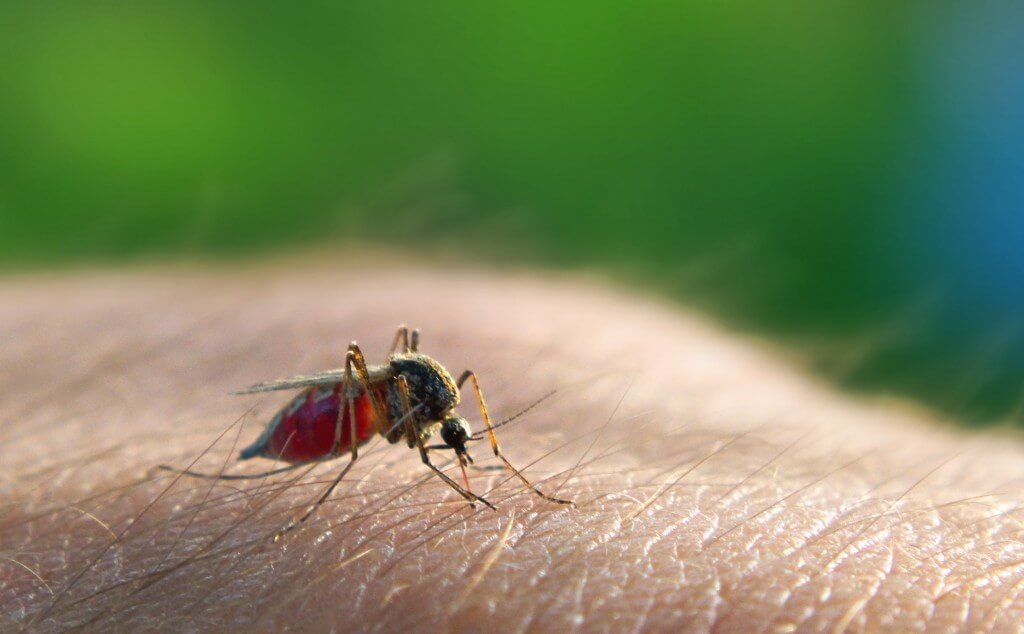
Gene drives hold great promise for thwarting mosquito-borne diseases. The concept is tantalizing: Just pop your desired gene into some mosquitoes — maybe it’s a gene that stops them from biting humans, or one that fends off Zika virus infection — and then rig it so that all of the larvae inherit the gene, every time. And with that, your gene spreads effortlessly throughout the wild population, reducing the danger of mosquito-borne diseases.
But nature is complex, and the idea of a universally inherited gene unleashed in the wild, with no way to call it back, gives many people pause. Scientists and activists agree the technology needs to be carefully designed and rigorously evaluated for possible risks before insects bearing gene drives are released into the wild. To keep the self-propelled genes under control, researchers are pursuing various strategies for containing the spread of these modified organisms.
One way to do this is to make the gene drive dependent on a second gene, which is inherited normally. The power of the gene drive then fades as the number of bugs carrying the helper gene dwindles in the population. The more genes you want to stitch in, however, the higher the technical hurdle. Even with CRISPR gene editing tools, it’s still daunting to splice foreign genes stably into the mosquito genome.
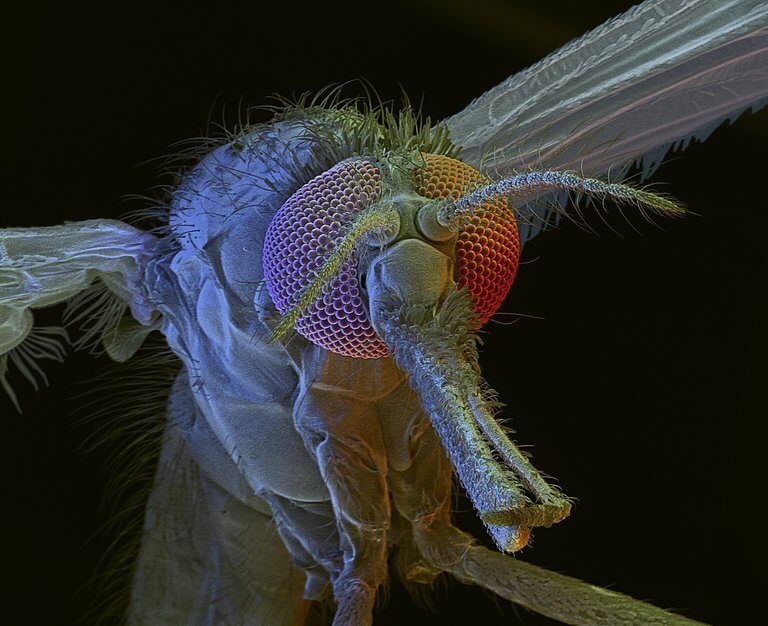
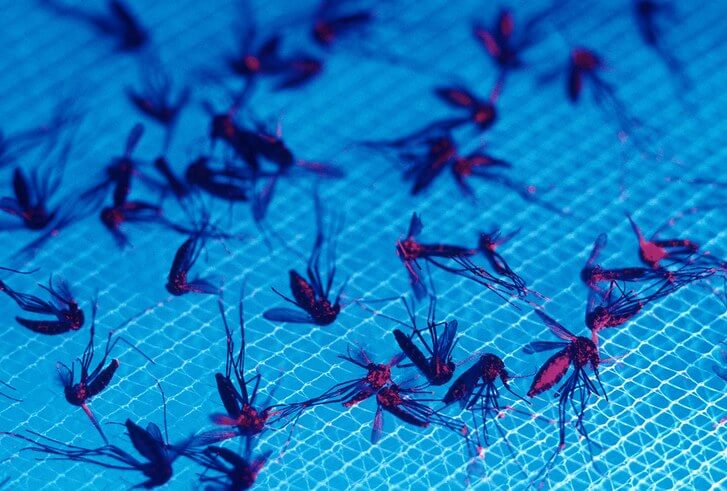
A newly created strain of Aedes aegypti mosquito, the pest that carries Zika, dengue and yellow fever, lowers that hurdle significantly. Created by entomologist Omar Akbari and his team, then at UC Riverside, the mosquitos make their own Cas9, the DNA-cutting component of the CRISPR gene editing system. With the bugs doing half the work, it becomes much easier to insert or remove genes.
Normally, scientists editing genes with CRISPR must inject into the cell both the Cas9 protein and a guide RNA that dictates where the Cas9 should cut. “You can co-inject the Cas9 and the guide RNA, and it will go in, but the efficiency of that is low compared to having Cas9 that’s being dumped maternally into the egg,” said Akbari, who spoke to the GLP from his new lab at UC San Diego. To show how well it works, the team created double and triple mutant mosquitoes with a single guide RNA injection, something that’s never been done before in these mosquitoes.
Mosquitoes that make their own molecular scissors will make it easier to construct a split-gene drive, which Akbari hopes could eventually be deployed for environmentally friendly mosquito control. “One of the beauties of this system is that it’s species-specific,” Akbari said. “You’re not targeting all insects, or all mosquitoes. You’re targeting just one at a time, and then you can assess to see what happens.” Chemical insecticides, by contrast, kill good and bad insects indiscriminately, and once spraying stops, the bugs return. “It’s a horrible approach, and it probably has consequences on the environment,” Akbari said.
Gene drives, on the other hand, only target the organism they’re designed for. Like all animals, mosquitoes have two copies of each chromosome. Only one of each chromosome gets passed down from each parent, meaning that if a gene is engineered into one chromosome, the offspring has only a 50/50 chance of inheriting that gene. In a gene drive, the desired piece of DNA is patched into one chromosome, but then tricks the cell into copying it into the other chromosome. At that point, because it’s present on both chromosomes, it’s guaranteed to be passed down to the next generation. But it could never be passed to a different species of insect, nor harm a predator that eats the mosquito.
“It looks good on paper, but the practicalities are pretty challenging,” said Luke Alphey, of the Pirbright Institute in the UK, in an interview. He is also working toward split-gene drives in Aedes aegypti, sometimes called a “daisy-chain” drive, containing three or more linked elements. In these multi-part systems, the parts that enable the copying and pasting are broken up into different locations in the chromosome. Gene A can copy itself as long as Gene B is present; Gene B can only copy itself in the presence of Gene C. Gene C can’t copy itself at all; call it the “driving license.” Ordinary selection pressures ensure that gene C, because it confers no evolutionary benefit, will eventually drop out of the population. The first element will spread rapidly at first, while the driving element is common, but it too will fade away. “So that means it isn’t going to spread around the world because as soon as it starts to spread into an adjacent population, it doesn’t have it’s ‘licensing factor’ with it at a high enough concentration,” Alphey said,
While they might not spread around the world, the engineered insects could certainly cross national boundaries, so multinational cooperation is critical for developing responsible guidelines. Accordingly, parties to the UN Convention on Biological Diversity have been studying the potential impact of gene drives on biodiversity. At their December 2016 meeting, they considered, and ultimately rejected, a moratorium on any gene drive research.
Some advocacy groups, unhappy with this decision, have tried to raise suspicion that scientists who oppose the moratorium are inappropriately organizing to influence the process. Edward Hammond of Prickly Research obtained emails detailing the effort to recruit scientists to the Online Forum for Synthetic Biology, where participants discuss concerns about synthetic biology, including gene drives. The correspondence shows that the Gates Foundation, which also funds gene drive research via Target Malaria, paid a PR firm to reach out to scientists who have expert knowledge of gene drive, and encourage them to participate in the online forum and argue against a moratorium.
Whether this organizing was inappropriate is debatable. Robert Friedman, of the J. Craig Venter Institute in La Jolla, California, said gene drive scientists simply wanted to achieve the same level of coordination as activist groups, who presented a letter at the 2016 meeting signed by representatives of 160 organizations, urging a halt to any gene drive research. “The gene drive research community hadn’t really participated in these meetings before,” Friedman said in an interview with the GLP. “I think they felt pretty out-gunned.” Friedman is a member of the UN Ad Hoc Technical Expert Group (AHTEG) on Synthetic Biology, which uses the opinions and concerns raised in the online forum to craft recommendations for biosafety protocols. He points out that in the online forum, when technical questions arise, it’s important to have people who works directly in the field available to answer them. “It helps to have scientists participating in what’s supposed to be an expert group,” he said.
Once the technical challenges are overcome, if some type of self-limiting gene drive system could be successfully created, how exactly could it be deployed to fight mosquito-borne diseases? “There’s a lot of applications, actually,” Akbari said. Mutants could be made that resist pathogenic viruses, for instance, or that can’t detect human odors, meaning they don’t bite us. Because the Cas9-expressing strains make it much easier to create mutants, Akbari said, “this really opens up the door to studying gene function in this organism in a major way.”
Work is already underway to understand the mosquitoes’ ability to smell humans. Matthew DeGennaro leads the Laboratory of Tropical Genetics at Florida International University, where he spends his days making mutant mosquitoes. “In my lab, our bread and butter is knocking out genes and then seeing what they do,” DeGennaro told the GLP. He’s identified a gene that allows the mosquitoes to seek out people by their scent, and by studying the network of gene interactions in play, he hopes to develop new ways to hide humans from mosquitoes. The new Cas9-expressing strains will make this process a whole lot more efficient. The more genes from Aedes aegypti whose functions are known, the more strategies can be constructed to stop them from spreading disease. Maybe that’s engineering the mosquitoes to be “blind” to human odors, or maybe it’s designing new insect repellents that target particular biochemical pathways for long-lasting protection. “Whatever you can dream of, and we know something about, eventually you’ll get there,” DeGennaro said.
What some dream of, however, is engineering these mosquitoes to simply die off. This isn’t as horrific as it sounds, and in fact, it’s already being done. The British company Oxitec created male mosquitoes genetically altered to require a supplement. When the modified males are released into the population, they mate with the wild females, creating doomed progeny that die off before reaching adulthood. In Piracicaba, Brazil, where these mosquitoes have been in use since 2015, the Aedes aegypti population has declined markedly, and cases of dengue dropped by half.
If this sounds drastic, keep in mind there are over 3,500 species of mosquito in the world, so killing off one may not make much impact. Plus, it’s still an improvement over insecticides, which kill indiscriminately. “It’s important to have as many tools as possible to deal with mosquitoes,” DeGennaro said. “We only have so many insecticides that are somewhat safe, and there’s resistance developing to them. Genetically modified insects may be something that we really need.”
To stay up to date on all the news in human and agricultural genetics, subscribe to our daily and weekly email newsletters, and follow us on Facebook and Twitter.
A small bit of human jawbone found in Israel has been dated to between 177,000 and 194,000 years ago. Before this discovery, most evidence suggested Homo sapiens hadn’t left the African continent until 122,000 years ago.
It’s a big deal. The research was published [January 25] in Science, and if it holds true, then humanity’s story just got a lot more complex. (Our species is believed to have arisen around 315,000 years ago from some common ancestor with the Neanderthal in Africa.)
…
This skull fragment is older than any previously found outside of Africa, and that’s not all. It also has more modern features than those associated with East African sapiens fossils. This might place our species something closer to 500,000 years old.
…
As fossil evidence has accumulated, a new picture of human history has been painted: we shared the Earth with at least four different human relatives, including the Neanderthals, the Denisovans (an Asian relative of the Neanderthals), Homo erectus, and the diminutive and regionally isolated Homo floresiensis. DNA evidence shows interbreeding with the Neanderthals and the Denisovans, and the Denisovans likely mated with an ancient human ancestor—possibly Homo erectus, though its DNA has never been sequenced.
…
But “anatomically modern” people may have been a result of interbreeding with several human cousin species known to be living alongside modern humans.
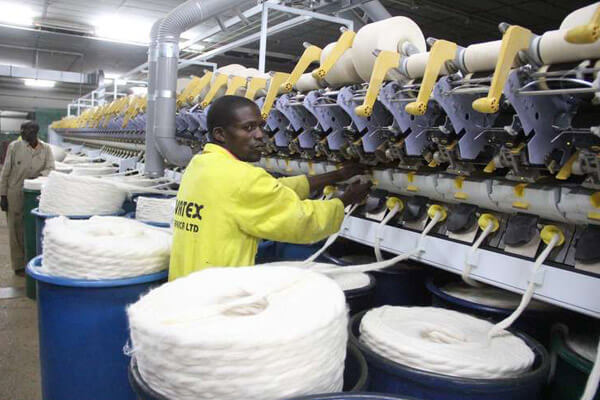
President Uhuru Kenyatta [of Kenya] is betting on mass production of genetically modified cotton to create 50,000 jobs and generate Sh20 billion [$195.6 million USD] in apparel export earnings this year as part of his final term economic revival plan.
The plan, which includes policy review and crafting of new incentive schemes, is also expected to generate 10,000 jobs in the apparel sector.
In a draft Budgetary Policy Statement (BPS) seen by the Business Daily, Treasury secretary Henry Rotich says the plan will start with the training of 50,000 youth and women to engage in biotechnology (BT) cotton production.
Uhuru Kenyatta
By the end of 2018, the State expects to have expanded acreage under cotton to 200,000 hectares, up from 29,000 currently.
…
BT cotton is resistant to drought and pests. While genetically modified plants are generally banned in Kenya, the National Biosafety Authority gave a nod to open field trials of BT cotton last year.
The fact that the government is banking on it to rev up manufacturing sector implies the State may soon approve its open cultivation.
Underperformance of the cotton industry has exposed Kenya to the volatility of the international market as it has to import nearly every textile product for consumption and export generation, official data indicates.
Read full, original post: Uhuru banks on biotech cotton for 50,000 jobs