Members of the House Appropriations Committee are threatening to withhold funding for the International Agency for Cancer Research (IARC), whose methods have been under fire recently not only from Congress, but also in the courts.
IARC is a member of the World Health Organization, which receives some funding from U.S. taxpayers via the National Institutes of Health (NIH). A new bill put in play last week from House appropriators tells the NIH that it cannot transfer funding to IARC unless the center increases the transparency behind its cancer research and adds other reforms.
The move comes amid a flurry of activity related to IARC’s controversial research in 2015 culminating in a decision to label the chemical glyphosate as a probable carcinogen. That label carries enormous implications because glyphosate is the key ingredient in the herbicide RoundUp, which besides being a popular home and garden retail product is also used in large-scale farming.
…
The American Council on Science and Health, self-described as a “pro-science consumer advocacy organization,” issued a 2017 staff report saying that, “IARC has continued to apply its classification system largely as if the last half-century of scientific research hadn’t happened, completely ignoring issues of dose and exposure that are fundamental to risk assessment as it has been practiced around the world for several decades.”
[One] DNA test found that my family’s dog, Teddy, is part pit bull, which comes as no surprise. Many rescue pooches have pit bull roots. The test also says Teddy is to a great extent of Saint Bernard stock, which maybe you can see if you really squint, but which, to my mind, is a bit of a stretch.
…
These results raise questions many people ask (or should ask) when they approach the multibillion-dollar business of home DNA tests, which are readily available online:
Are they accurate?
Are they worth the money?
What good is the information?
I spoke with a number of geneticists, and the consensus was that you should approach home DNA tests with a degree of skepticism. It’s not that the test results are routinely wrong. It’s more that they may not be entirely right.
…
“I’d say these tests are reliable up to a certain point,” said Sheldon Krimsky, a professor of urban and environmental policy
…
As with the ancestry results, maybe some of [medical DNA test] findings will be spot on. But do you really want to start planning for a future with Lou Gehrig’s disease based on a $100 test kit purchased through Amazon?
[There is one form of] special pleading that is gaining some currency, and that’s basically carving out an exception to the requirement for rigorous science for “traditional medicine,” be it Ayurveda, traditional Chinese medicine (TCM), aboriginal medicine, or folk medicine practiced around the world.
…
This is the basic narrative of [Indigenous Ways of Knowing]: “Western” biomedical science is a cultural construct whose dominance is due not to its success in diagnosing, treating, and, in some cases, eradicating disease but rather to past imperialism and colonization by European powers.
…
Science is portrayed as being just another way of knowing whose preeminence in medicine is due more to cultural and national hegemony than to actual effectiveness.
…
“Western” scientists who promote IWK are, in essence, saying that we should trust “ancient knowledge” and that such ancient knowledge is just “another way of knowing” that is no worse or better than science, just different.
…
The example of the Nobel Prize for Artemisinin shows that some traditional medicines can be turned into highly effective medicines, although it’s hard not to note that the experience of screening natural products for medicinal properties (i.e. pharmacognosy) suggests a high wheat-to-chaff ratio. Respect for cultural knowledge, however, does not justify exempting ancient claims about medicine from scientific scrutiny or using a lower bar of evidence to use and regulate traditional medicines than we do for science based medicine.
One of the great purported boons of GMOs is that they allow farmers to use fewer pesticides, some of which are known to be harmful to humans or other species. Bt corn, cotton, and soybeans have been engineered to express insect-killing proteins from the bacterium Bacillus thuringiensis, and they have indeed been successful at controlling the crops’ respective pests. They even protect the non-Bt versions of the same crop that must be planted in adjacent fields to help limit the evolution of Bt resistance.
But new work shows that Bt corn also controls pests in other types of crops planted nearby, specifically vegetables. In doing so, it cuts down on the use of pesticides on these crops, as well.
Entomologists and ecologists compared crop damage and insecticide use in four agricultural mid-Atlantic states: New Jersey, Delaware, Maryland, and Virginia. Their data came from the years before Bt corn was widespread (1976-1996) and continued after it was adopted (1996-2016). They also looked at the levels of the pests themselves: two different species of moths, commonly known as the European corn borer and corn earworm. They were named as scourges of corn, but their larvae eat a number of different crops, including peppers and green beans.
After Bt corn was planted in 1996, the number of moths captured for analysis every night in vegetable fields dropped by 75 percent. The drop was a function of the percentage of Bt corn planted in the area and occurred even though moth populations usually go up with temperature. So the Bt corn more than counteracted the effect of the rising temperatures we’ve experienced over the quarter century covered by the study.
Input-intensive crop monocultures and industrial-scale feedlots must be consigned to the past in order to put global food systems onto sustainable footing, according to the world’s foremost experts on food security, agro-ecosystems and nutrition.
The solution is to diversify agriculture and reorient it around ecological practices, whether the starting point is highly-industrialized agriculture or subsistence farming in the world’s poorest countries, the experts argued.
The International Panel of Experts on Sustainable Food Systems (IPES-Food), led by Olivier De Schutter, former UN Special Rapporteur on the right to food, released its findings [June 2nd] in a report entitled ‘From Uniformity to Diversity: A paradigm shift from industrial agriculture to diversified agroecological systems’.
De Schutter said: “Many of the problems in food systems are linked specifically to the uniformity at the heart of industrial agriculture, and its reliance on chemical fertilizers and pesticides. Simply tweaking industrial agriculture will not provide long-term solutions to the multiple problems it generates.”
He added: “It is not a lack of evidence holding back the agroecological alternative. It is the mismatch between its huge potential to improve outcomes across food systems, and its much smaller potential to generate profits for agribusiness firms.”
…
[Emile Frison, former Director General of Bioversity International] explained that some of the key obstacles to change are about who has the power to set the agenda. “The way we define food security and the way we measure success in food systems tend to reflect what industrial agriculture is designed to deliver – not what really matters in terms of building sustainable food systems,” Frison stated.
Read full, original article: How to Leave Industrial Agriculture Behind: Food Systems Experts Urge Global Shift Towards Agroecology
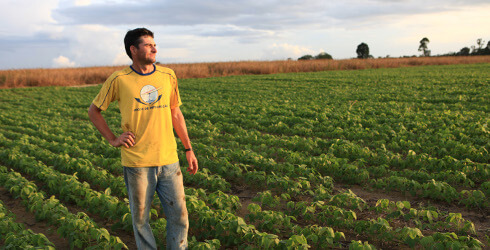
The savannah scrubland where Chief João Ponce once hunted deer and wild boar in Brazil has given way to neat rows of soy and corn that a tractor sprays with herbicide. In the next field, silver grain silos shimmer in the hot sun.
Ponce is head of the Uirapuru indigenous community which has allowed local farmers to produce crops on one-third of its 44,500-acre (18,000-hectare) reservation in southwestern Mato Grosso state.
…
“We’re surrounded by farmers. We can’t live off hunting anymore. The animals are gone,” he said, sitting in a hammock in his thatched hut.
But the partnership with non-native farmers, fueled by an insatiable demand for Brazilian soy in China and other markets, is illegal and has alarmed environmentalists.
Brazil’s environmental regulator Ibama [the week of June 3rd] fined six native communities and a dozen farmers on reservation land for using genetically modified crops (GMO) and engaging in large-scale mechanized agriculture. Both are banned on reservation land.
The unprecedented fines totaling 129 million reais ($33 million) mark an unexpected escalation in a dispute between rival federal agencies, environmentalists, farmers and native advocacy groups over Indian tribes getting into commercial agriculture in Brazil’s rapidly expanding farm belt.
…
Ibama fined communities of the Pareci, Nambikwara and Manoki tribes and embargoed 40,000 acres of their land that were being used for large-scale GMO plantations in the municipalities of Campo Novo do Parecis and Conquista do Oeste, or “Conquest of the West,” near the border with Bolivia.
The tribes are pressing to change environmental and Indian laws so that they can keep their plantations and sell their harvests legally. The issue has put Ibama at odds with the Indian affairs agency Funai, which wants to allow the tribes to become farmers.
Earlier this year, [Boston Dynamics founder Marc] Raibert said the company planned to start selling its SpotMini robot dogs in 2019, and onstage this week, he said the company plans to produce about 100 of the robots by the end of this year. The goal is to begin mass production at the rate of about 1,000 robots per year in the middle of 2019.
…
[T]he robots will become the ubiquitous open-source platform for robots that Android has become for smartphones. He envisions the robots being modified to work in a range of fields, such as construction, security, last-mile delivery, and even helping out around the home.
…
[H]ow many of you want one of these soulless, metallic robot dogs carrying your laundry basket or dropping Amazon packages off at your front door? But some seem more realistic in the near-term. He showed off a demonstration of a SpotMini that had been fitted with cameras and programmed to patrol the corridors of a facility. Although there are already security robots, they’re generally slow, massive, and terrible at handling uneven terrain. SpotMini can easily manage staircases, and get around just about any object in its path.
Raibert didn’t get into how much these robots would cost.
In a windowless London basement, behind three sets of locked steel doors and a wall of glass, thousands of Anopheles gambiaemosquitoes cling like Marvel supervillains to the sides of white mesh cubes…
If some future version of the mosquitoes were released, these deadly modifications could spread through the African tropics, crashing the population as they went. And because Anopheles is the primary African vector for the parasite that causes malaria, its collapse would likely take down malaria with it…
Many traditional conservationists were horrified by the prospect, yet other groups embraced it. The Gates Foundation made gene drive a centerpiece of its anti-malaria efforts…New Zealand is considering using a gene drive in its push to eliminate invasive rodents, weasels, and possums by 2050….
With earlier-generation GMOs, such as Monsanto’s Roundup Ready crops, arguments often hinged on the potential for those genes to escape into the environment. Conservationists believed escape was inevitable, while corporations downplayed the risk, but nobody was suggesting that GMOs be let loose in nature—until now.
…In theory, a single lab could alter the entire planet. And the technology has arrived far quicker than our ability to grapple with its staggering implications.
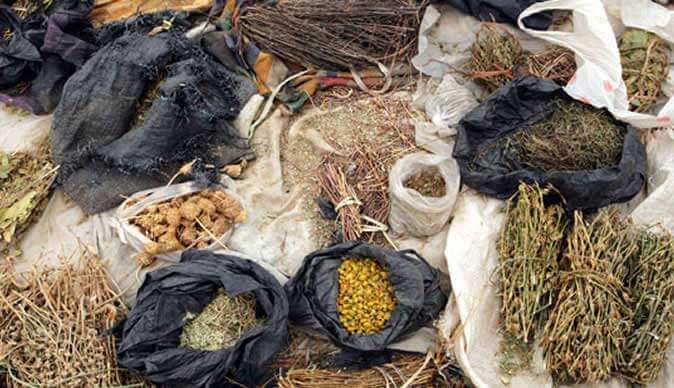
For farmers, protecting fields from pests and plagues is a constant battle fought on multiple fronts. Many insects have a taste for the same plants humans do, and pathogenic microbes infect leaves, shoots and roots. Then there are the weeds that compete with crops for soil and sun.
Although academics and companies are looking for technical alternatives such as sprays made from biological compounds, a recent review by researchers at North Carolina State University cautions that society may not be able to science its way out of this thorny problem. There is a “considerable chance,” the authors write, “that the evolution of pest resistance will outpace human innovation.” Addressing the situation requires a collective effort between funding agencies, regulators, farmers and others, the authors add in the review, published in Science.
…
Herbicide resistance dates at least as far back as the 1950s. But the idea that weed control is a collective problem requiring collective action emerged relatively recently, says George Frisvold, an agricultural and resource economist at the University of Arizona, who was not involved in the new review. “People thought that weeds aren’t as mobile as insect pests,” Frisvold says. “But then more and more research came out to suggest that even if they aren’t as mobile, they’re still mobile enough” to spread resistance.
In The Neonic Ban: A Scientific Fraud Becomes Enshrined In EU Regulatory Law, I described the many elements of corruption that led to Europe’s recently announced ban on neonic insecticides (“neonics”) which is based on the fallacy that they are responsible for a supposed collapse in bee populations. In fact, bee populations are rising on every habitable continent in the world, and have been since neonics first came on the market.
So far, despite some worrisome signals from EPA early on, U.S. farmers appear to have escaped the regulatory fate of their European counterparts. Largely unreported by the mainstream media, the agency recently released draft final assessments on neonics that reach dramatically different conclusions from Europe’s counterpart agency EFSA.
A few unresolved issues notwithstanding, EPA’s magnum opus – 12 separate, voluminous reviews of effects on non-pollinators, human health, drinking water and aquatic environments for the four major products — imidacloprid, clothianidin, thiamethoxam and dinotefuran — re-affirms the critical importance of neonics to U.S. agriculture and largely refutes the claims of environmental activists. Combined with earlier, positive assessments on bees and other pollinators, EPA has now effectively given neonics a clean bill of health.
As the Duke of Wellington said of his victory over Napoleon Bonaparte at Waterloo, however, “it was a close run thing.” This is not because the science concerning bees and neonics was in doubt. The campaign to ban neonics was never about science and facts — it was about politics. While the U.S. regulatory system has more structural safeguards against manipulation than Europe’s — which has practically none — it is far from immune to political pressure. During the last U.S. administration, especially, it too often appeared that activists were calling the shots at EPA.
Activists were calling the shots
When the EU banned neonics in 2013, the environmental movement smelled blood in the water. Much of the activist cash used to promote the false bee-pocalypse narrative in Europe was subsequently targeted on the U.S. As usual, many in the mainstream media were willing accomplices in spreading their apocalyptic narrative.Time magazine’s iconic cover story, “A World Without Bees,” was just one of thousands declaring that honeybees were going extinct and that we’d all soon starve to death because bees “are responsible for one-third of everything we eat” (the latter part being yet another fictitious and endlessly repeated claim).
Like EFSA, the U.S. EPA knew full well that
1)honeybee populations are rising, not falling 2) pesticides as a whole play only a minor role in bee health, 3) some of the most problematic pesticides are those used directly in the hive by beekeepers to control the deadly Varroa mite 4) neonics are significantly more benign than the older pesticides they replaced, such as organophosphates and pyrethroids, and 5) the real cause of honeybee health problems is the global spread of parasites and the myriad diseases that currently infect beehives.
It was clear that mere facts weren’t going to matter very much, however. At the time of the EU ban, the head of the EPA office in charge of pesticides, Jim Jones, complained that the intense political pressure then being exerted on EPA would force the agency to either ban or tightly restrict neonics in this country as well. That pressure only became more intense when President Obama took a “personal interest” in bees and formed a White House Task Force on Pollinators.
EPA caved to political pressure from the White House
At first, EPA appeared to be capitulating. Neonics had already undergone rigorous assessments before they were commercialized, of course, but without any scientific justification those initial tests were now deemed insufficient, and new, more stringent standards were set up for an accelerated re-assessment. ThenEPA released a bizarre and unprecedented “efficacy” study of neonicotinoid seed treatments on soy that found they had little value to farmers.
That analysis was remarkable in several ways: EPA had never conducted such a study before; its authors neglected to actually ask soy farmers what they thought; and the overwhelming weight of evidence from other studies clearly showed substantial benefits. In fact, EPA’s manipulation of the facts and data was so egregious that USDA issued a public rebuke to the agency! Calling the report “incomplete,” “premature,” and damaging to farmers, they strongly urged EPA to withdraw it.
What canola fields really look like without neonics: Left has not been treated, while the right has. (Image credit: Gregory Sekulic, Canola Council of Canada Agronomy Specialist)
Undaunted and unrepentant, EPA started laying the groundwork to restrict or even ban neonic use on citrus and cotton, in spite of the fact that neither crop requires bees for pollination. Inasmuch as orange and cotton farmers only allow hives to be placed on their property as a favor to beekeepers, who can charge a significant premium for orange and cotton blossom honey, it seemed as if EPA was punishing the farmers for being good neighbors.
Moreover, neither crop would survive without neonics, as EPA knew full well. Neonics are Florida orange growers’ last line of defense against the Asian psyllid thatcarries citrus greening disease, an incurable infection that has alreadyslashed Florida’s orange productionby 70 percentover the last 20 years. The loss of neonics would be just as devastating for cotton, collapsing the industry and turning cotton-dependent communities throughout America’s southeast into ghost towns. Talk about the “Deep State” conspiring to injure the nation’s economy.
Something happened on the way to the activists’ party, however. The neonics kept passing EPA’s doubly rigorous scientific tests. Even before the first preliminary assessments, Reuters reported that the EPA official in charge of regulating pesticides admitted that that neonic seed treatments – which account for thevast majority of neonic uses – do not pose a threat to bees
If nectar brought backto the hive from worker bees had more than 25 parts per billion of the chemical, “there’s a significant effect,” namely fewer bees, less honey and “a less robust hive,” said Jim Jones, EPA’s assistant administrator for chemical safety and pollution prevention.
But if the nectar chemical level was below 25 parts per billion, it was as if there were no imidacloprid at all, with no ill effects, Jones said. It was a clear line of harm or no harm, he said.Levels depended on the crop, Jones said.
While nectar of cotton and citrus fruits were above the harmful concentrations, the levels were not harmful for corn — the nation’s top crop by far — most vegetables, berries and tobacco. Other crops weren’t conclusive and need more testing, including legumes, melons, tree nuts and herbs.
Also, the controversial practice of treating seeds with the chemical seemed not to harm bees, Jones said.
Given that crop residues from neonic seed treatments fall far below 25 parts per billion – usually between undetectable and the low single digits — it was becoming clear that there simply was no scientific justification for a widespread ban.
The recent draft assessments should cut off the last hope the activists have for significant restrictions. Effective reversals on restrictions of neonics on cotton and citrus acknowledge how critical these chemicals are. And on soy, EPA essentially issued a mea culpa, admitting that seed treatments are critical to crop survival in much of the United States.
Interestingly,Canada’s EPA-equivalent, PMRA, issued a parallel briefing in December on its long-awaited review of neonics’ health, safety and environmental risks in Canadian agriculture. In spite of intense lobbying by environmental activists in Ontario and Quebec for an outright ban on neonics, PMRA found that nothing more was justified to cope with a handful of minor and isolated risks than to prescribe a few targeted mitigation measures. That will likely be EPA’s final finding as well for the few unresolved issues that remain concerning birds and aquatic systems.
Neonics are OK in the United States for now – but environmentalists hate to lose against science
For now, neonics are OK in the United States. But how long will this last? Central to Europe’s regulatory dysfunction is the so-called “precautionary principle,”which as I’ve written about before, is neither a principle nor truly precautionary. By writing into law the idea that hypothetical (and often,imaginary) threats are more important than actual evidence, the EU has fundamentally abandoned the field to the activists, who are masters at whipping up public hysteria over imminent crises, even if, as with the bee-pocalypse, they’re entirely fictional.
In the United States, by law, EPA regulation must still be based on science. Unfortunately, the activists are becoming increasingly adept at manipulating the process, producing junk studies by the boatload, continually pushing for relaxed evidential standards (such as greater reliance on easily fudged epidemiological studies), and proposing ever more novel theories of environmental and biological harm.
Science-based regulation can’t withstand political pressure forever if it’s intense enough.It would be naïve to think that we would be where we are with neonics if the2016 presidential election had gone differently, or that regulatory policy couldn’t deteriorate if the House and/or Senate majorities were to switch next year. For the time being, science is winning this battle, but the best we can say going forward is that it will continue to be a “close run thing.”
Henry I. Miller, a physician and molecular biologist, is the Robert Wesson Fellow in Scientific Philosophy and Public Policy at Stanford University’s Hoover Institution and a former trustee of the American Council on Science and Health. He was the founding director of the Office of Biotechnology at the FDA. Follow him on Twitter @henryimiller
A new study from researchers at the University of Iowa reveals a link between food allergies and autism, though many questions remain.
The study showed 11.25 percent of American children diagnosed with autism spectrum disorder (ASD) also have a food allergy, more than double the 4.25 percent of kids without ASD who suffer from a food allergy.
“It is possible that the immunologic disruptions may have processes beginning early in life, which then influence brain development and social functioning, leading to the development of ASD,” Wei Bao, assistant professor of epidemiology at the UI College of Public Health and corresponding author of the study, told Iowa Now.
…
The results, which also showed that children with ASD were significantly more likely to have respiratory and skin allergies than kids without the condition, add to a growing body of research revealing links between immunological problems and ASD.
“This indicates there could be a shared mechanism linking different types of allergic conditions to ASD,” Bao told Iowa Now, adding that it’s still unclear how these conditions interact, or whether one causes the other.
…
Some medical professionals say parents shouldn’t overreact to the new study.
“I wouldn’t want people to misinterpret this to say that a food allergy is causing autism,” pediatric allergist Scott H. Sicherer [said].
The merger has been a laboured one: in order to please regulators, Bayer had to sell its seed and herbicide department to BASF, and Monsanto agreed to retire its brand name. But the new conglomerate argues that their union was dictated by the need to consolidate their respective positions and face down future challenges: namely, feeding a global population likely to exceed ten billion by 2050.
As is to be expected with mergers of this size, there has been no shortage of voices denouncing this new behemoth, which will control 70% of the chemicals and pesticides used by farmers worldwide.
…
[T]he simple fact is that feeding 10 billion people will require even more technology. Fortunately, the future is already here: artificial intelligence, big data and precision agriculture. [Liam] Condon’s [head of Bayer’s crop science division, who will take the reigns as CEO] priority should therefore be how to communicate that it is with ‘precision’ agriculture that the world will be able to do more and better with less.
…
Big Agro is … not at a loss for coming up with forward thinking solutions, and one can imagine that the Bayer-Monsanto merger will play a major part in this transformation.
Glyphosate, neonicotinoids, drinking water initiative – renouncing pesticides is currently the subject of fierce discussion. For while on the one hand our nutrition system cannot function without crop protection, especially pesticides carry undisputed risks for humans and the environment.
…
I believe we have no option but to significantly reduce the risks to humans and the environment posed by pesticides, and that this should be our objective. However, bans and restrictions are not always effective because they can have undesirable side-effects.
For example, imposing a ban on a specific product may encourage crop-growers to turn to other, more toxic ones. Other environmental objectives could get compromised and the cost of crop protection could increase. Both the quantity and quality of food could fall while prices could rise. It is conceivable too that fruit and vegetables would increasingly be grown under netting and foil, which would change the face of our landscape.
…
Instead of simply banning active substances, the environmental damage caused by pesticides should be internalised when drawing up policies: for example, a steering tax could provide an incentive to replace harmful products either with less hazardous products or non-chemical strategies.
Editor’s note: Robert Finger is an agricultural economist at ETH Zurich
If you listen closely to the sound of birds chirping, you’ll hear that they’re taking turns. The same goes for croaking frogs and dolphin whistles. Fireflies flirt in alternating flashes, called “courtship dialogues.” And monkey parents will refuse to respond to offspring if they’re interrupted.
Scientists have long observed that creatures seem to convey a wide array of information in their exchanges. Up until now, however, the research on how different species communicate has been fractured. A new study in the Philosophical Transactions of the Royal Society B examines over 50 years of work on animal exchanges on land, in the sea, and in the sky, in an attempt to “peel away the layers” that make human language so elusive.
…
The researchers propose a framework for further research on all non-human animals that focuses on four key elements characterizing human social action during conversation: Flexibility of turn-taking organization; who takes the next turn; when responses occur; what the next turn does. Looking at animal behavior in the context of human language and social behaviors could shed light on how our tongues evolved, apart from unifying animal conversation studies.
We may yet learn that the birds and the beetles are doing much more than wooing each other or signaling danger when exchanging calls and clicks.
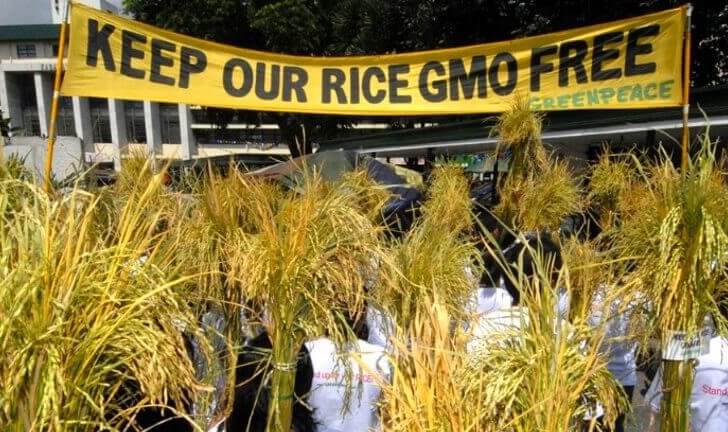
[W]hy are so many people highly sceptical of GMOs? One reason could be non-governmental organisations (NGOs). Although they are perceived as trustworthy, some of their “facts” about GMOs are not sufficiently researched or are even blatantly false, leading to a spread of misinformation amongst the general public.
…
As the creators of the biotechnological tools which make GMOs possible, scientists are understandably highly supportive of their application. Economic and health benefits are discussed in numerous scientific reports, but the language used is complex and hardly accessible to the public. NGOs, on the other hand, design colourful infographics with less complex language. It is understandable that non-scientists would rather look at a well-designed leaflet than read a 20-page scientific report. This is a big problem science faces. Without the right means of communication, scientific findings fail to be appreciated by the average consumer. In the case of GMOs, competing companies capitalise on this lack of understanding to spark confusion and doubt in consumers.
Science should be accessible to everybody. In an era in which “fake news” can be spread so easily, science aims to provide factual statements. Translating findings from scientific lingo to a style which everybody understands is of the utmost importance. Making science more understandable ultimately makes it more accessible.
This past March, headlines suddenly flooded the Internet about a startup company called Nectome. Founded by two graduates of the Massachusetts Institute of Technology, the new company was charging people $10,000 to join a waiting list to have their brains embalmed, down to the last neuron, using an award-winning chemical compound.
…
Almost immediately this story gained buzz with punchy headlines: “Startup wants to upload your brain to the cloud, but has to kill you to do it,” “San Junipero is real: Nectome wants to upload your brain,” and “New tech firm promises eternal life, but you have to die.”
In this case, a combination of the hyperbolic press, combined with some impressively researched expose pieces, led MIT to cut its ties with Nectome on April 2nd, 2018, just two weeks after the news of their company broke.
Because of its multi-layered nature, science hype carries several disturbing consequences. For one, exaggerated coverage of a discovery could mislead the public by giving them false hope or unfounded worry. And media hype can contribute to a general mistrust of science.
“Mother Nature” is changing quickly and this requires the adoption of technology-driven solutions that will help both growers and consumers, Jim Collins, the chief operating officer of Corteva Agriscience, the Agriculture Division of DowDuPont, told EURACTIV.
…
Collins also referred to the discussion in Europe about the so-called “new plant breeding techniques” (NPBTs), a term that describes a number of scientific methods for the genetic engineering of plants to enhance traits like drought tolerance and pest resistance.
The European Court of Justice (ECJ) will decide most probably after summer whether these techniques should be classed as GMOs and, therefore, fall under the strict GMO approval process.
…
“It’s hard for me to speculate about the exact outcome of the ECJ. At the end of the day, I do believe that we have some new plant breeding techniques that can dramatically improve the speed of things that we already do today.”
“So, we are excited about the debate moving from the science to what outcomes can we generate.”
He noted that with the NPBTs, growers will improve water utilisation or even crops – something they were not able to do before. Referring to Europe in particular, he cited wheat as an example of a crop whose productivity we have not been able to improve.
In the past few years, [David] Liu’s become one of the most brightly-shining luminaries in the rapidly advancing field of gene editing.
…
Now he’s setting his custom-built evolution engines loose on the molecular machines that cut, paste, erase, and edit DNA. His goal is to create a massive library of disease-targeting tools—so that one day when scientists want to make a genetic fix, they can just pull whichever one they need off the shelf.
…
[A] “base editor” [was] a modified Cas9 enzyme that didn’t cut DNA. Instead, it worked more like a pencil, rewriting single nucleotides to convert C:G base pairs to T:A. That kind of a fix could cure about 15 percent of the 32,000 single base errors that cause genetic disease. [Researcher Nicole] Gaudelli wanted to go after a bigger piece of the pie. If she could make an editor that flipped A:T to G:C, that would address half those diseases.
…
Seven rounds and two grueling years later she had her new base editor. Liu submitted their paper describing a way to fix half the disease-causing single base snafus to Nature.
…
“Taxpayers don’t support our research so that we can just publish more papers,” he says. “We have an obligation to return these technologies to the public for the benefit of society.”
Biologics are complex molecules, modifying our immune responses to specific chronic inflammatory conditions like rheumatoid arthritis, psoriatic arthritis, or irritable bowel disease. They are manufactured by placing genes into host cells who through transcription and translation provide the core protein. Biosimilars are biologics “generic” equivalents, except they are not.
…
Biosimilars have an identical primary structure as their biologic but other factors, influencing shape may and do differ.
…
[The FDA believes] if a biosimilar works for one indication and it is clinically equivalent to the biologic, then we can infer that it will work for all the indications. That logic stands on firm ground when drugs are identical, but biosimilars are not, they are similar. For example, some biosimilars have gained approval for pediatric indications, by extrapolation from studies on the biologic, they have never been clinically tested on children.
…
Insurance companies and their pharmacy benefits managers earn income based upon a percentage of the drug’s cost; costs we have no real way to determine. Irrespective of the actual price, income’s is predicated upon a percentage of the average wholesale price, so there is no incentive to lower prices.
…
Physicians have raised two concerns. First are these drugs clinically equivalent? Second, will the market forces we have seen in generics be the same as for biologics – will there be sufficient competition to significantly lower cost and improve access?