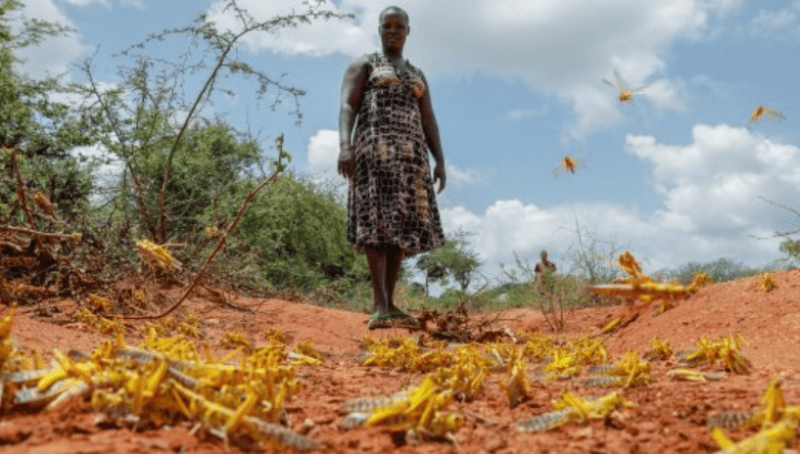

Despite the COVID-19 pandemic and other challenges, significant gains have been made against Desert Locust encroachment in East Africa and Yemen, with an estimated 720,000 tonnes of cereal saved from the swarms of migratory pests across 10 countries: enough to feed five million people a year, the UN Food and Agriculture Organization (FAO) said on [May 11].
However, agency chief Qu Dongyu stressed that more action is still needed to avert a food security crisis as the ongoing rainy season, which benefits farmers and pastoralists, also provides favorable conditions for locusts to breed.
“Our gains have been significant; but the battle is long and is not yet over”, he said. “More people are at risk of losing their livelihoods and worsening food security in the coming months.”
Protecting crops and livelihoods
FAO has released its first progress report on the locust control campaign which began in January and now covers 10 countries: Djibouti, Eritrea, Ethiopia, Kenya, Somalia, South Sudan, Sudan, Uganda, Tanzania and Yemen.
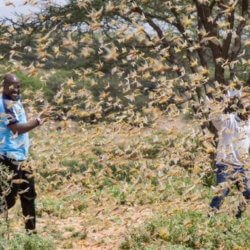
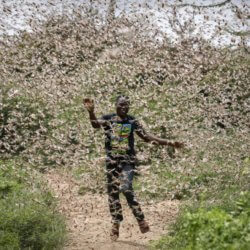
It was launched to protect crops and livelihoods from what are considered the most destructive migratory pests in the world. A single Desert Locust swarm, which can contain up to 150 million insects per square kilometre, is capable of eating as much food in a day, as 35,000 people.
Through FAO’s support, more than 365,000 hectares have been controlled, and an additional 350,000 pastoral households have been spared from distress.
While swathes of treated land are now relatively locust-free, the agency warned that a second wave of locusts will transition to the young adult phase in June, at a critical time when many farmers prepare to harvest their crops.
Second locust wave and food insecurity looming
FAO said the upsurge is “particularly alarming” in the broader context.



Forecasts made prior to the COVID-19 crisis indicate that more than 25 million people in the East Africa region will face acute food insecurity in the latter half of the year. An additional 17 million people in Yemen are already affected.
“We can and must protect vulnerable people from the impact of multiple crises: conflicts, climate extremes, desert locusts and COVID-19, which threaten to cause a further dramatic deterioration in their food security,” said Mr. Qu, the FAO Director General.
“To do this, we need to intensify our efforts further and focus not just on controls but on supporting the livelihoods of farmers and pastoralists so they can get through this.”
Intensifying efforts
An FAO appeal launched in January has netted $130 million. While funding has been largely concentrated on locust control activities, more support for livelihoods is needed.
Governments have been working with the UN agency to design, monitor and implement control operations. FAO has also been providing pesticides, bio-pesticides, equipment, aircraft and training.
Given the favorable conditions for locust reproduction, the agency has called for sustained efforts, and a revised appeal will be launched in the coming weeks.
The appeal will request additional resources for Iran and Pakistan, which are also facing locust infestations, and for scaling up efforts in the Sahel region, which risks being affected.