Viewpoint: Don’t waste your money on banking your baby’s umbilical cord blood

private cord blood bank public cord blood banking x
Credit: SAMAA
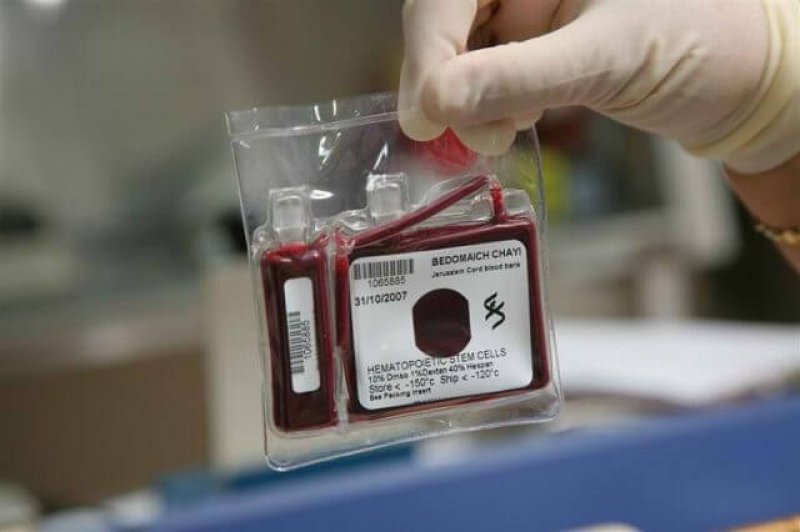
[I]n the U.S., the practice of storing umbilical cord blood is steadily on the rise. Banking cord blood in case a bone marrow transplant is needed in the future is appealing on so many levels. The umbilical cord attaching the developing fetus to its mother’s placenta is rich in those juicy bone marrow stem cells that are so effective at making the blood components.

The cost for using commercial cord blood banking companies, however, can be substantial. Upfront charges with what’s called an enrollment fee can range from $1,500 to $3,500. On top of that, a yearly storage fee is assessed, with the total amount for 18 to 20 years of storage cresting $5,000 in some cases.

Mis- and disinformation are distorting science and public policy. Subscribe to our Daily and Weekly Digests for incisive coverage of ‘disruptive’ innovations in AI, agricultural biotechnology, food, chemicals, nuclear energy, vaccines, and other disruptive innovations.

[One study] estimated that the incidence rate of transplant for children and adolescents was a little over 2 per 100,000 per year in the United States during their first two decades of life. Analyzed another way, the probability a child will need a transplant by the time he or she reaches age 20 is 0.04 percent.

The lifetime chance of getting struck by lightning is similar, at about 1 in 3,000, or 0.033 percent.
Would you pay thousands of dollars for a medication right now, in the event that sometime in your life you may be struck by lightning, and that medication may help you survive the lightning strike?

Seems excessive to me.

Read the original post

Related Articles

Infographic: Global regulatory and health research agencies on whether glyphosate causes cancer

Infographic: Global regulatory and health research agencies on whether glyphosate causes cancer

Does glyphosate—the world's most heavily-used herbicide—pose serious harm to humans? Is it carcinogenic? Those issues are of both legal and ...

Most Popular

ChatGPT-Image-Sep-17-2026-12_28_43-PM
Vitamin D, omega-3 fish oil and glucosamine supplements could cause brain damage 
ChatGPT-Image-Mar-10-2026-01_39_01-PM
Viewpoint—“Miracle molecule” debunked: Why acemannan supplements don’t work
ChatGPT-Image-Sep-17-2026-10_17_15-AM
Viewpoint: Why are the less intelligent more likely to be conservative—and smarter people more socially liberal?
Screenshot-2026-08-12-at-11.31.46-AM
AI is helping develop new vaccines
Screenshot-2026-09-10-at-12.20.19-PM
'Jet fuel didn't melt the steel': 9/11 conspiracy theories debunked
Screenshot-2026-09-17-at-10.24.54-AM
Viewpoint: Dubious environmental fears: Why the AI buildout is critical to America’s ecological future
Screenshot-2026-09-16-at-12.07.47-PM
The heated debate over trans athletes in the WNBA
ChatGPT-Image-Sep-9-2026-02_48_24-PM
Viewpoint: Trump-RFK Jr. report on “Gender Ideology & Left-wing Ideology’ targets LGBTQ community—and science
Screenshot-2026-09-10-at-11.50.46-AM
Did COVID vaccines kill 2,500 service members? RFK Jr. hires an investigator who compares vaccine promoters to Nazi doctors
Screenshot 2026-09-11 at 12.39
Child-monitoring apps: When the cure is worse than the harm—and how the technology could be tweaked
glp menu logo outlined

Get news on human & agricultural genetics and biotechnology delivered to your inbox.