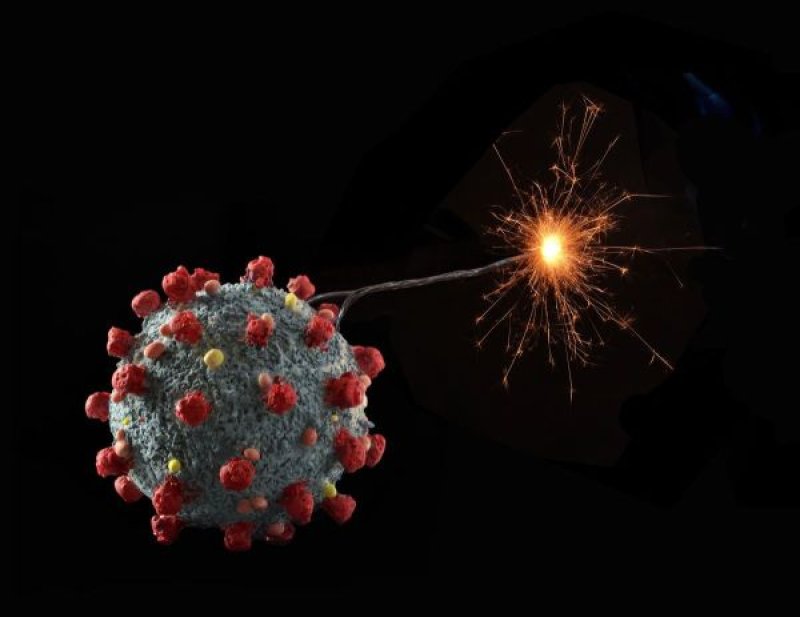
Testing irony: Explosion in new COVID-19 infections could speed up vaccine development

https specials images forbesimg com imageserve x
Credit: Getty Images

More than 20 coronavirus vaccines are in human testing, according to the World Health Organization. So far, small, early studies of most advanced vaccines found they were generally safe and triggered immune responses but weren’t designed to prove whether they actually protected people.

A series of large, final-stage trials are getting under way that, for the first time, will decisively test whether coronavirus vaccines prevent or reduce risk of Covid-19, including 30,000-person studies for vaccines from Moderna Inc. and from Pfizer Inc. and its partner, BioNTech SE, slated to start by the end of July.

The new studies will be “event-driven,” which means researchers expect to learn whether the vaccines are working once a certain number of study subjects come down with Covid-19, the disease caused by the new coronavirus.

Initially researchers thought it could take many months to accrue enough Covid-19 cases among study subjects to yield answers because lockdown measures slowed the spread of the virus and the hot summer weather threatened to slow it further.

Follow the latest news and policy debates on sustainable agriculture, biomedicine, and other ‘disruptive’ innovations. Subscribe to our newsletter.

But Covid-19 counts are rising in countries such as Brazil, Peru and South Africa. Cases have also flared in parts of the U.S. since mid-June, particularly in states such as California, Texas and Florida.

“Because of the bad situation in the U.S., we might actually get a very quick readout for vaccines,” possibly in October, [said Moderna’s Stephane Bancel.]


Read the original post

{{ reviewsTotal }}{{ options.labels.singularReviewCountLabel }}
{{ reviewsTotal }}{{ options.labels.pluralReviewCountLabel }}
{{ options.labels.newReviewButton }}
{{ userData.canReview.message }}

Related Articles

Infographic: Global regulatory and health research agencies on whether glyphosate causes cancer

Infographic: Global regulatory and health research agencies on whether glyphosate causes cancer

Does glyphosate—the world's most heavily-used herbicide—pose serious harm to humans? Is it carcinogenic? Those issues are of both legal and ...

Most Popular

Picture1-5
Science Disinformation Gap: The transatlantic battle over social media and censorship
Screenshot-2026-04-23-at-11.00.36-AM
Regulators' dilemma: Thalidomide, Metformin, and the cost of getting drug approvals wrong
ChatGPT-Image-May-12-2026-08_39_41-PM
GLP podcast: Big Pharma, Big Ag, Big Food—health harming industries or life-saving innovators?
Screenshot-2026-05-12-at-9.58.31-PM
'He seems fine': Marty Makary out as FDA commissioner
ChatGPT Image May 10, 2026, 08_16_59 PM 2
Overmedicalization? RFK Jr.’s antidepressant crackdown raises conflict questions over his fee stake in Wisner Baum, the tort firm built on suing drug makers
Screenshot-2026-05-12-at-10.05.11-AM
Pro-vaccine “hero” vs. an anti-vax “villain”: ‘Bad Vaxx’ video stirs MAHA backlash
Picture1-1
Cooling the planet with balloons: Could a geoengineering gamble slow global warming?
Screenshot-2026-05-01-at-1.29.41-PM
Viewpoint: What happens when whole grains meet modern food manufacturing? Labels don’t tell the whole story.
ChatGPT-Image-Apr-13-2026-02_20_22-PM
Viewpoint: Misinformation infodemic? Why assessing evidence is so challenging 
ChatGPT Image May 12, 2026, 10_19_00 AM 2
Viewpoint— 'Muscular governance': How authoritarianism is surging corporate-linked energy misinformation
Screenshot-2026-05-11-104424
Hantavirus outbreak research: Trump administration shut down study last year on rodent-to-human transmission
images
The never-ending GMO debate: Pros and cons
glp menu logo outlined

Get news on human & agricultural genetics and biotechnology delivered to your inbox.