Vaccine resistance remains high, as only 20% of Americans say they would ‘get the vaccine as soon as possible’

merlin ea c b f d e f a mobilemasterat x
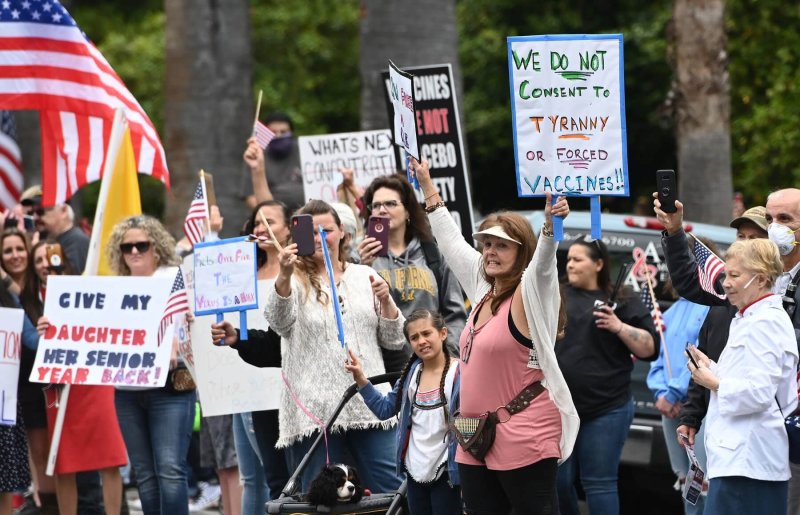
Credit: Josh Edelson
[Many registered voters] want to wait until [a COVID vaccine] has been available for a while to see if there are major problems or side effects, a new Wall Street Journal/NBC News poll shows.

The survey found that 20% of respondents said they would take a vaccine as soon as one becomes available, while about half the respondents wanted to wait until they learned more information about the shot.

If too many people refuse to get the shots, businesses, schools and other establishments won’t be able to safely reopen, according to health authorities, because vaccines’ effectiveness hinges not only on how well each works in an individual but also on how widely they are used.

To reach so-called herd immunity for Covid-19, public-health authorities estimate that around 60% to 70% of a given population would need to develop an immune response to the virus, either through infection or vaccination.

Follow the latest news and policy debates on sustainable agriculture, biomedicine, and other ‘disruptive’ innovations. Subscribe to our newsletter.

“Unfortunately this pandemic and the vaccine development have become politicized,” said Dr. Archana Chatterjee, dean of the Chicago Medical School at Rosalind Franklin University of Science and Medicine, who sits on a committee advising the U.S. Food and Drug Administration about vaccines.

“What we would usually rely upon, which is you trust the doctors, you trust the scientists and the governmental processes by which safety and efficacy of vaccines are assured, really have been undermined,” she said.


Read the original post

{{ reviewsTotal }}{{ options.labels.singularReviewCountLabel }}
{{ reviewsTotal }}{{ options.labels.pluralReviewCountLabel }}
{{ options.labels.noReviewsLabel }}
{{ options.labels.newReviewButton }}
{{ userData.canReview.message }}

Related Articles

Infographic: Global regulatory and health research agencies on whether glyphosate causes cancer

Infographic: Global regulatory and health research agencies on whether glyphosate causes cancer

Does glyphosate—the world's most heavily-used herbicide—pose serious harm to humans? Is it carcinogenic? Those issues are of both legal and ...

Most Popular

ChatGPT-Image-Mar-10-2026-01_39_01-PM
Viewpoint—“Miracle molecule” debunked: Why acemannan supplements don’t work
Picture1
Hiroshima at 81: America’s new nuclear bomb, a buried Iranian target, and a question no one wants to ask
Screenshot-2026-07-09-at-1.09.25-PM
Anti-vaccine myths rattle health care
ChatGPT Image Jul 29, 2026, 06_26_01 PM 2
Facts & Fallacies podcast: Organic food myths make a comeback on Instagram, with Dr. Kevin Folta
ChatGPT-Image-Jul-10-2026-12_21_03-PM
Viewpoint: Is there new evidence that the animal deworming drug ivermectin decreases the risk of Covid and cancer? Don’t waste your money.
ChatGPT-Image-Jul-10-2026-09_42_12-AM-1
Peptides, patient autonomy, and the limits of medical freedom
ChatGPT-Image-Jun-25-2026-12_23_17-PM
No, Bill Gates did not secretly engineer ticks to promote veganism
ChatGPT-Image-Jul-22-2026-09_13_07-AM
Viewpoint—The Strategic Litigation boom: Understanding the tightening coalition among NGOs, foundations, journalists, and tort lawyers
organic scaled
Facts & Fallacies podcast: Organic food cuts pesticide exposure? A response to Dr. Rhonda Patrick
leeteam
How Kennedy and his family could pocket millions from Merck’s $50 million vaccine injury settlement that he oversaw

Sorry. No data so far.

glp menu logo outlined

Get news on human & agricultural genetics and biotechnology delivered to your inbox.