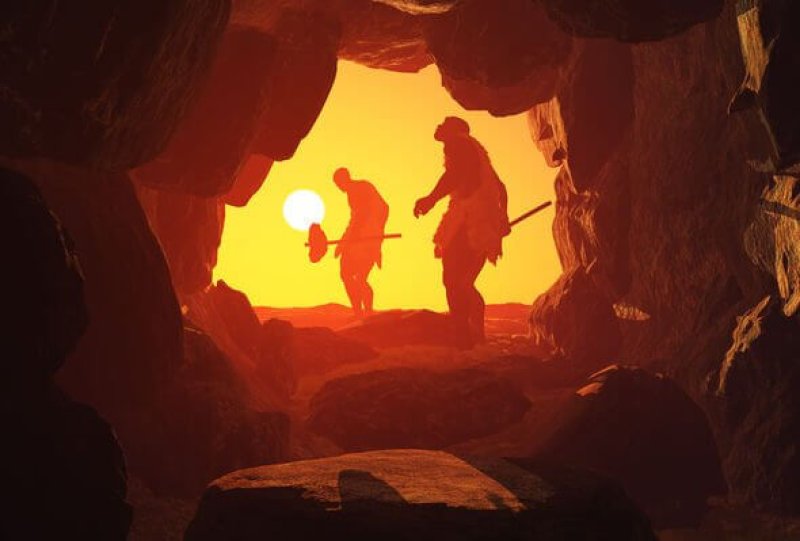
Evidence from bones found at one of the world’s most important fossil sites suggests that our hominid predecessors may have dealt with extreme cold hundreds of thousands of years ago by sleeping through the winter.
The scientists argue that lesions and other signs of damage in fossilised bones of early humans are the same as those left in the bones of other animals that hibernate.
…
The conclusions are based on excavations in a cave called Sima de los Huesos – the pit of bones – at Atapuerca, near Burgos in northern Spain.

Over the past three decades, the fossilised remains of several dozen humans have been scraped from sediments found at the bottom of the vertiginous 50-foot shaft that forms the central part of the pit at Atapuerca. The cave is effectively a mass grave, say researchers who have found thousands of teeth and pieces of bone that appear to have been deliberately dumped there. These fossils date back more than 400,000 years.
The researchers admit the notion “may sound like science fiction” but point out that many mammals including primates such as bushbabies and lemurs do this. “This suggests that the genetic basis and physiology for such a hypometabolism could be preserved in many mammalian species including humans,” state [researchers Juan-Luis] Arsuaga and [Antonis] Bartsiokas.