In light of this information, Prime Minister Boris Johnson, Environment Minister George Eustice and DEFRA Chief Scientific Advisor Gideon Henderson have called for new regulations that would allow the commercial production of crops and animals developed with NBTs.2 3 DEFRA may seek to amend the definition of a “GMO” so that existing legislation would “no longer apply to organisms produced by [gene editing] and other genetic technologies if they could have been developed using traditional breeding methods.”4
Although NBTs are the focus of current regulatory reform proposals, DEFRA is also gathering evidence concerning the broader regulation of GMOs, since the existing legislation governing their use is more than 30 years old.5
GMOs have been safely utilized in food production since the mid-1980s, beginning with US approval of an enzyme used in cheese production.6 The first GMO animal, a fast-growing salmon, was developed in 1989, while GMO crops were initially commercialized in the mid-1990s.7 The UK does not cultivate any of these crops, but it imports roughly $140 million worth of soy, vegetable oils and animal feed 5 from the US annually, much of which is derived from GMO plants.8 9
Evidence gathered since their introduction has consistently shown that GMOs streamline food production in a variety of ways and cut associated costs.10 Producers have passed these benefits on to consumers in the form of lower food prices.11
Twenty-nine countries cultivate GE crops, both GMO and gene-edited varieties.12 Several nations have already approved the commercial production of GE animals for use as food, and more are poised to do the same. This paper will explain how the UK can follow in their footsteps and implement even more sensible regulations.
The safety of a product is determined by its characteristics and how it is used, not how it was produced — a standard DEFRA explicitly endorses.13 As a result, each novel product should be evaluated based on the potential risk it poses to human health and the environment. Whether an organism is GMO, gene edited or nonGE is of little consequence. If a new organism is shown to be no riskier than similar products already in commercial use, regulators should approve it.
The benefits of science-based policy
Twenty-nine countries commercially produce GE organisms today, but none of them regulate these products using a consistent set of risk-based standards like those outlined above. Although policies vary from nation to nation, regulators in these countries generally apply greater scrutiny to GMOs, while subjecting geneedited and traditionally bred products to far fewer hurdles.14
Despite their often Byzantine GE regulations, countries that utilize biotechnology in food production have reaped tremendous benefits. If the UK transitioned to product-based regulations, it could accrue the same environmental and consumer gains while avoiding the opportunity costs that come with the process-based rules enacted by other governments. DEFRA recognizes the need to produce abundant, healthy food while “reducing the environmental impact of a growing global population.”15 Allowing the commercial production of gene-edited and GMO products would aid that cause.16
Comprehensive research has shown that GMO crop cultivation has been a net positive for the environment. Since 1996, GMOs have facilitated an 8.6 percent decrease in global pesticide use, representing roughly 800 million fewer kilograms of insecticides and herbicides. In terms of overall toxicity, this translates to a 19 percent reduction in the environmental impact of pesticide use.17
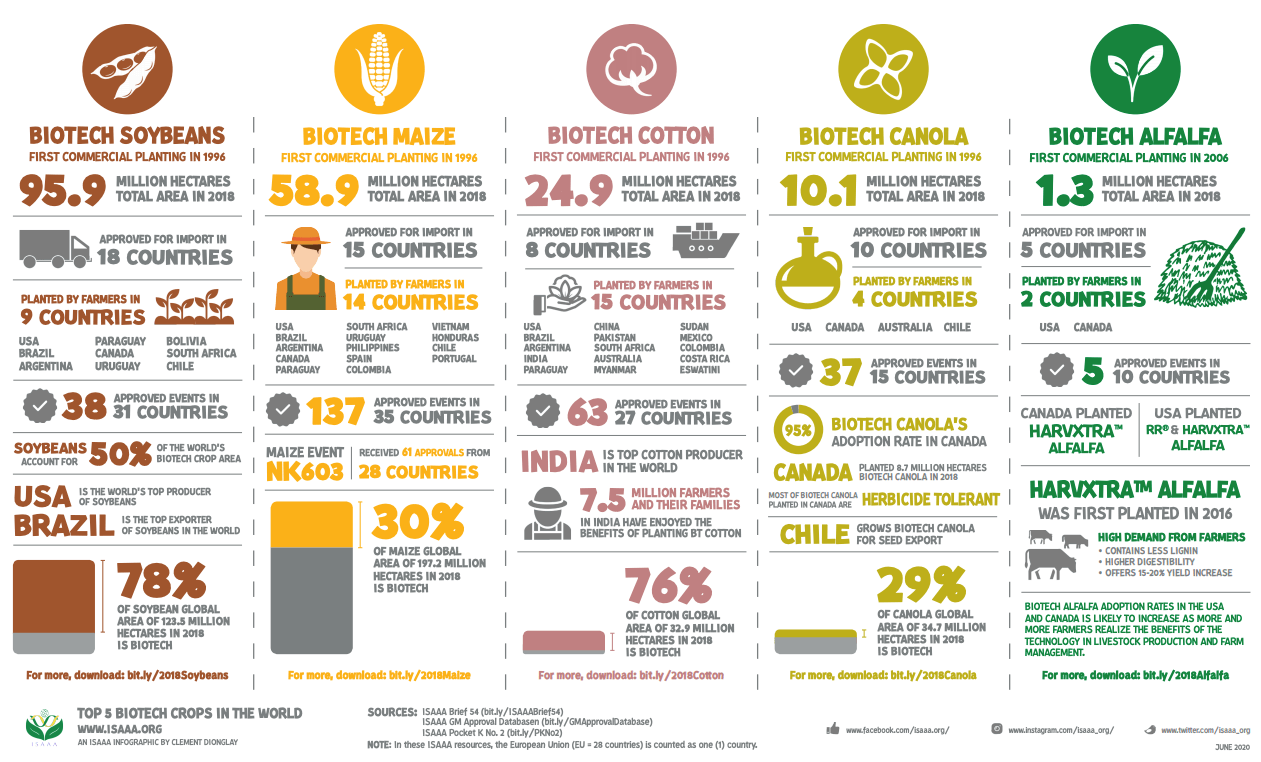
GMO crops have also slashed greenhouse gas emissions by reducing fuel use on farms. “Over the period 1996 to 2018,” economists Graham Brookes and Peter Barfoot noted in a June 2020 analysis, “the cumulative permanent reduction in fuel use is estimated at 34,171 million kg of carbon dioxide (arising from reduced fuel use of 12,799 million liters).”18
GMO crops have further contributed to this trend by increasing yields and thus limiting the amount of additional land that must be cultivated to produce the same amount of food. This is significant because “Land-use change accounts for almost half of all [greenhouse gas] emissions from agriculture.”19
Brookes and Barfoot also documented significant economic gains over the same 1996 to 2018 period. Farmers who grew GMO crops over those 22 years earned an additional $225 billion for their efforts. Breaking the numbers down in more detail, the pair of economists wrote:
In 2018, farmers in developing countries received $4.42 as extra income for each extra dollar invested in [GMO] crop seeds, whereas farmers in developed countries received $3.24 as extra income for each extra dollar invested in [GMO] crop seeds. The net farm level economic benefit was just under $19 billion in 2018, equal to an average increase in income of $103/hectare.
In earlier research, Brookes and colleagues found that consumers also benefit from the production increases spurred by GMO crops. Modeling global food production with and without existing GMO crops in 2009, they reported that the cost of consumption would increase by $20 billion, despite the fact that “an additional 2.64 million hectares of land would probably be brought into grain and oilseed production. 20 A 2016 study conducted by agricultural economists at Purdue University also found that retail food prices would rise $14 billion to $24 billion annually if existing [GMO] crops weren’t available to farmers.21
The UK has incurred significant costs over the decades by denying its farmers access to GMO crops. According to one study, Britain lost between £428 million and £534 million in farm income benefits between 1996 and 2006 because of its refusal to approve suitable GMO crops like herbicide-tolerant sugar beet and oilseed rape. Ongoing annual losses may range from £65 million to £82 million.22 That would mean up to £1.7 billion in lost farm income since 1996.
Europe’s long history of biotech skepticsm
The EU is widely recognized as a stronghold of anti-biotechnology sentiment by the scientific community. While the history of this development is complicated, three primary factors contributed to Europe’s “hyper-precautionary” outlook on technological innovation and thus its later skepticism of biotechnology: the destruction caused by two world wars and the advent of postmodernism and modern environmentalism in 1962.23
This confluence of forces incentivized the EU to pursue policies designed to achieve “no technological risk,” meaning that innovations, including biotechnology, were tightly regulated out of an abundance of caution, even if they offered substantial environmental and human health benefits.24 To this day, the EU only cultivates a single variety of insect-resistant, GMO corn. Following a landmark decision by the European Court of Justice in 2018, the EU began regulating geneedited organisms and GMOs the same way.25
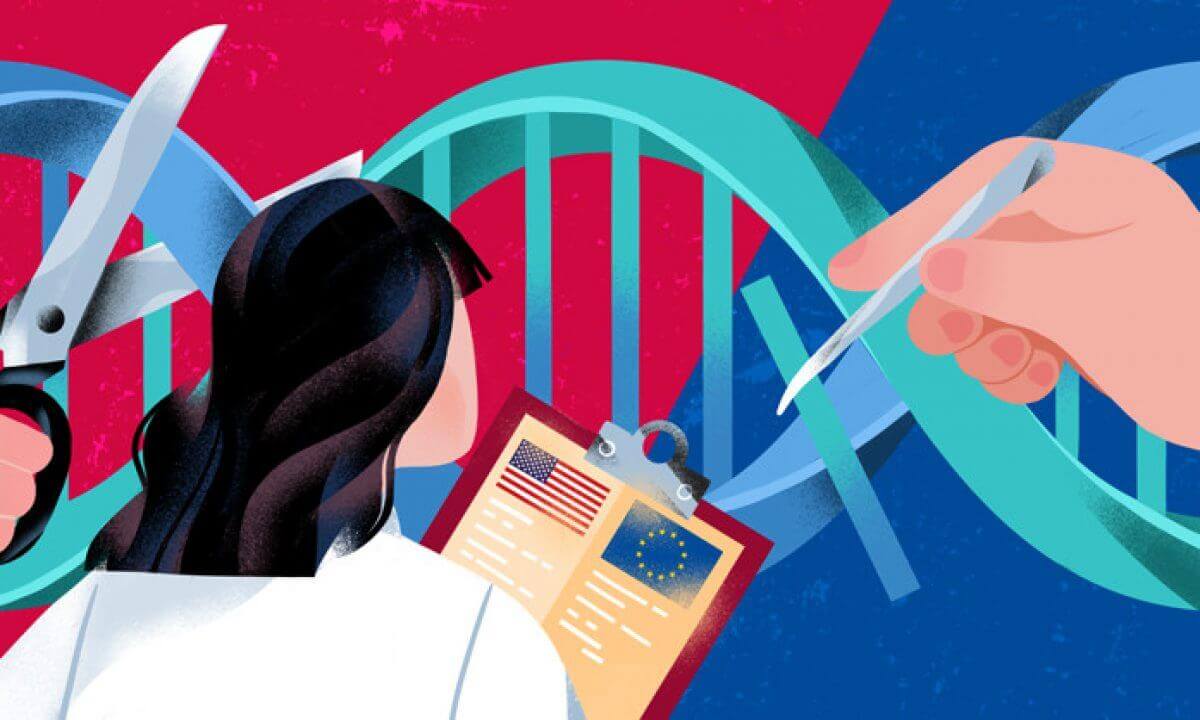
Nonetheless, EU member states import large amounts of GMO grain annually for use as animal feed, and the European Food Safety Authority (EFSA) has consistently found that these imported crops pose no unique risk to human health or the environment.2627 The European Commission recommended in April 2021 that the EU revise its biotechnology rules to allow the commercial use of NBTs, but the political debate around the possibility continues and no reforms have been implemented.2
Regulatory reform in the UK
Post-Brexit, the UK is pursuing policy reforms that would exempt organisms developed with NBTs from existing regulations that restrict the production of GMOs. DEFRA announced in September 2021 that the government will initiate its reforms by relaxing rules regulating the development of gene-edited plants, though scientists will still be required to report such research to DEFRA.29
Officials will then seek to amend the definition of a “GMO” to exclude “organisms produced by gene editing and other genetic technologies if they could have been developed by traditional breeding.” The government will then “consider the appropriate measures needed to enable gene edited products to be brought to market safely and responsibly.”30 According to DEFRA, the justifications for these reforms are three-fold: 31
 3-years and counting: GLP contributing writer and geneticist Ricki Lewis highlights 100 articles on the COVID pandemic
 PEW global survey: Caution about research on gene editing, but wide support for treating diseases in human embryos
 Anti-biotechnology critics say the Genetic Literacy Project is a Monsanto-funded ‘corporate front’. It’s not true. Here is the documentation — and a review of the critics behind the disinformation



- NBTs generally do not involve moving genetic material between different species. Therefore, products developed through these new techniques should not be regulated like GMOs, which typically do contain DNA from other species. NBTs should be considered more efficient forms of traditional breeding and regulated as such.
- Products developed through gene editing and other NBTs are poised to boost sustainable food production, for example, by cutting chemical pesticide use and increasing crop yields. In practice, this means farmers can grow more food on less land with fewer inputs, protecting biodiversity while feeding a growing population.
- The use of NBTs does carry some risk, as implementing any new technology does, but the UK’s existing non-GE food safety and environmental rules afford regulators all the tools they need to ensure the proper use of NBTs.
What does the evidence show?
The available evidence strongly supports each of DEFRA’s arguments.
NBTs like CRISPR gene editing, for example, are generally used to edit an organism’s existing DNA instead of adding foreign genetic material to its genome.32 This underscores that NBTs are more similar to traditional breeding than to transgenesis. A single September 2020 study funded by the environmental group Greenpeace concluded that mutations in plant DNA induced by NBTs can be uniquely identified, suggesting that new breeding techniques shouldn’t be classified as traditional breeding. However, experts were quick to point out deficiencies in the paper.33 Molecular biologist Dr. Mary Mangan noted in her analysis of the study that existing detection methods can only confirm that an organism’s genome contains a
mutation; they cannot determine the source of the mutation:
There is no way to detect gene edits in most cases. These changes look just like natural mutations found in wild plants, or the genetic changes induced by old-fashioned and EU-approved practices like bathing seeds in mutagens or irradiating them, or changes that occur in plants produced via tissue culture. The tests at our disposal cannot—I repeat, cannot—distinguish mutations caused by any of these techniques. 34
A wide variety of gene-edited crops already in development have been shown to reduce pesticide use and increase yields.35 36 Gene editing has also been used to immunize agricultural animals against deadly diseases and reduce their environmental footprints. These traits improve animal welfare and lower production costs, cutting food prices for consumers and reducing pollution.37 Unfortunately, DEFRA’s proposed reforms don’t yet apply to animal gene-editing research. This is a significant oversight since British scientists have already bred pigs that are resistant to porcine reproductive and respiratory syndrome (PRRS),38 a highly transmissible infection that may cost farmers more than $600 million annually. 39
Although NBTs can introduce unintended mutations into an organism’s DNA, this is relatively rare. Traditional breeding methods induce far more mutations than any new breeding technique. Studies have confirmed that NBTs are quite precise compared to earlier techniques.40 According to a systematic review published in the prestigious journal Nature:
CRISPR-Cas9 is remarkably specific and efficient at generating on-target genome edits. While CRISPR-Cas9 has the potential to generate off-target cutting in genomic sites that are substantially similar to the target site, off-target edits are likely to be negligible in the background of existing natural variation and continuous unintended changes being generated during the plant breeding process. 41
In light of this evidence, the US has already reformed its gene-editing regulations and spurred significant research and development gains. In 2020 alone, the United States Department of Agriculture deregulated 70 gene-edited crop traits, a massive increase from just seven in 2019.42 Excessively regulating gene-edited organisms just because they are gene-edited is not scientifically justifiable and puts the UK at a competitive disadvantage.
Reforming 30-year-old GMO regulations
The UK would take an important step if it exempted organisms developed through NBTs from existing legislation. Going one step further, policymakers could further revise current regulations that effectively prohibit the commercial production of most GMOs. As Science Magazine reported on May 26, 2021, GMO technology enables the development of useful traits that NBTs cannot yet produce:
Proponents also need to have realistic expectations about gene editing, says Johnathan Napier, a plant biotechnologist at Rothamsted Research. Knocking out a few genes might improve disease resistance or remove an allergen. But more complicated traits powered by many genes, such as drought tolerance, will be much more difficult to engineer without transgenic modifications, Napier warns. ‘This really is not a magic bullet,’ he says. 43
There is no scientific reason the UK should limit itself to the use of NBTs. As DEFRA has noted, “There are a number of existing, non-GM regulations that control the use of organisms and/or products derived from them.”44 These existing rules are sufficient to regulate the use of all novel organisms, regardless of how they were produced. This is because the production method has little bearing on the safety of the end product it yields. DEFRA correctly outlined this argument in its January 2021 gene editing consultation:
Our position follows the science, which says that the safety of an organism is dependent on its characteristics and use rather than on how it was produced. 45
The department has so far refused to apply this standard to GMOs on the grounds that they could not have been produced by “the natural breeding process.” But this policy contradicts a growing body of research which shows that transgenesis is indeed natural. A wide variety of microbes, insects and plants naturally exchange DNA with distant species, including globally important food crops such as rice, maize, wheat and sugarcane.46
More to the point, the scientific community recognizes that transgenesis and the various NBTs, while technically different processes, can all be used to develop safe products for use as human food, animal feed and medicine.47 48 Applying greater scrutiny to some products because of how they were produced is nonsensical. The US National Research Council reached the same conclusion more than 30 years ago. In a 184 page report published in 1989, the council concluded that “[N]o conceptual distinction exists between genetic modification of plants and microorganisms by classical methods or by molecular techniques that modify DNA and transfer genes.”49
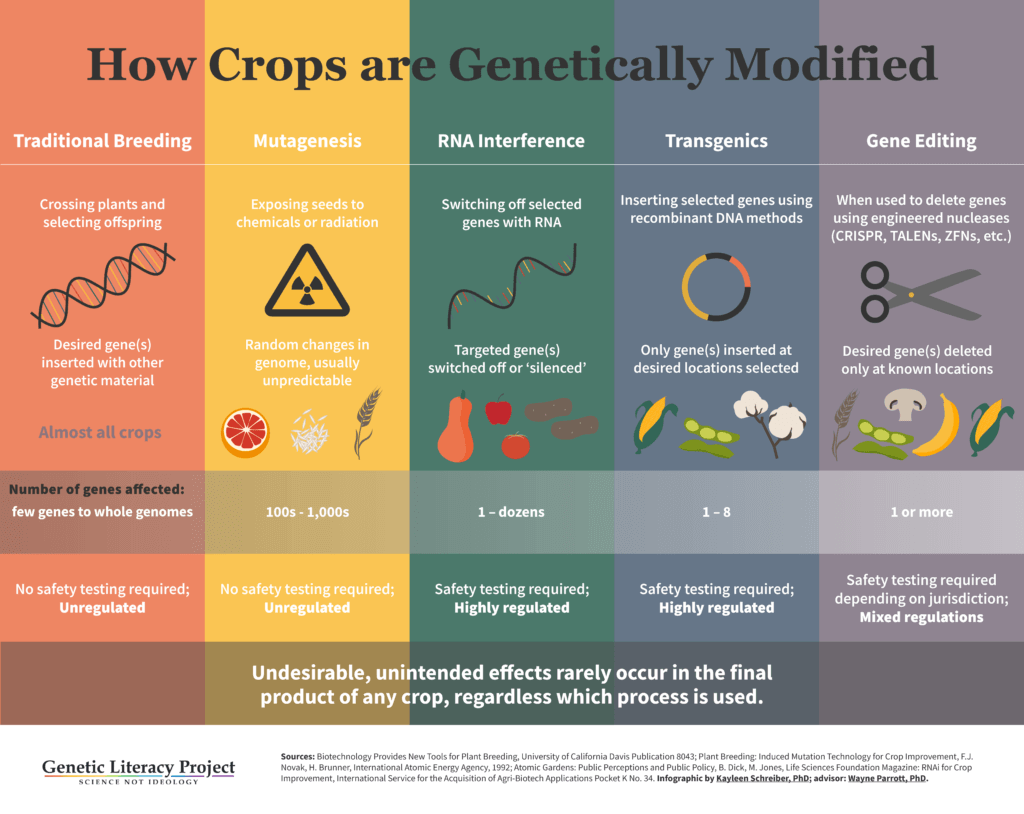
An evidence-based regulatory framework would therefore subject all products, however they were produced, to a case-by-case risk assessment.50 Officials would require additional safety data for products that may pose a greater threat to human 12 health or the environment. However, the organism’s characteristics and intended use would determine the degree of scrutiny applied by regulators. For example, plants modified to produce a potent toxin that kills insects would probably deserve stricter oversight.
Current legislation in the UK and EU ignores these considerations and regulates the production process instead of just the end product based on the precautionary principle. According to the European Commission, the principle applies:
where scientific evidence is insufficient, inconclusive or uncertain and there are indications through preliminary objective scientific evaluation that there are reasonable grounds for concern that the potentially dangerous effects on the environment, human, animal or plant health may be inconsistent with the chosen level of protection. 51
It is questionable whether such a regulatory approach is appropriate, particularly considering the substantial benefits that could come from this technology. But in any case, this is no longer a problem faced by the UK. There is no longer an absence of evidence. Research conducted over the last 30 years has consistently failed to identify any unique risk inherent in GMO technology. As an April 2018 review of the available evidence noted:
Decades of testing food and feed products from insect resistant, herbicide tolerant and stacked traits of previously approved single traits, and other types of [GMO] crops in laboratory and livestock animals have shown that the technology used to produce them is not inherently hazardous. No adverse effects have been observed to date. 52
More than 2,000 studies have confirmed that existing GMO crops pose no greater threat to human health or the environment than plants produced through other breeding methods.53
Conclusion
The UK is moving in the right direction by considering more liberal biotechnology rules. Regulating NBTs like traditional breeding methods would accelerate Britain’s efforts to sustainably produce more food while offering significant economic 13 benefits to producers and consumers.
Yet this is only a half-measure. A large body of evidence indicates that commercially producing GMOs yields substantial economic and environmental gains while posing no unique risk to human health or the environment.
Studies have occasionally challenged these conclusions, but this research has rarely survived expert scrutiny and the case against all forms of genetic engineering remains unconvincing.54 Indeed, several prominent institutions that once led the opposition against GE organisms have begun to abandon their advocacy, or even cautiously endorse genetic engineering in some circumstances, most notably the Sierra Club in the US.55
The ideal biotech regulatory framework is a risk-based approach that evaluates novel organisms based on the harms they may pose to humans and the environment, regardless of how they were developed. Any other policy proposal is logically inconsistent and out of step with the available scientific evidence.
References:
- Ventura, Luis. “As the CRISPR Revolution Advances, Here’s How Gene Editing Will Actually Help Farmers and Consumers.” Genetic Literacy Project, December 20, 2020. https://geneticliteracyproject.org/2020/12/15/as-the-crispr-revolution-proceeds-heres-how-gene-editing-will-actually-helpfarmers-and-consumers/.
- Menary , Jonathan, and Sebastian Fuller. “Gene-Edited Crops Are Now a Reality – but Will the Public Be on Board?” The Conversation, May 2, 2021. https://theconversation.com/gene-edited-cropsare-now-a-reality-but-will-the-public-be-on-board-153663.
- English, Cameron. “Anti-GMO Groups Struggle to Preserve Europe’s Stringent Crop Gene-Editing Rules in Post-Brexit UK.” Genetic Literacy Project, March 31, 2021. https://geneticliteracyproject.org/2021/03/30/anti-gmo-groups-struggle-to-preserve-europes-crop-gene-editing-rules-in-postbrexit-uk/.
- “The Regulation of Genetic Technologies.” Department for Environment, Food, and Rural Affairs (DEFRA), January 2021. https://consult.defra.gov.uk/agri-food-chain-directorate/the-regulation-ofgenetic-technologies/supporting_documents/20210106%20Gene%20editing%20consultation%20document%20FINAL.pdf.
- Ibid.
- Thompson , Paul. “How We Got to Now: Why the US and Europe Went Different Ways on GMOs.” The Conversation, November 5, 2015. https://theconversation.com/how-we-got-to-now-why-the-usand-europe-went-different-ways-on-gmos-48709.
- Delaney, Bryan, Richard E Goodman, and Gregory S Ladics. 2017. “Food and Feed Safety of Genetically Engineered Food Crops.” Toxicological Sciences 162 (2): 361–71. https://doi.org/10.1093/toxsci/kfx249.
- “United Kingdom 2020 Export Highlights.” USDA Foreign Agricultural Service. Accessed May 28, 2021. https://www.fas.usda.gov/united-kingdom-2020-export-highlights#overlay-context=unitedkingdom-2019-export-highlights.
- “GMO Crops, Animal Food, and Beyond.” U.S. Food and Drug Administration, Center for Food Safety and Applied Nutrition. https://www.fda.gov/food/agricultural-biotechnology/gmo-cropsanimal-food-and-beyond.
- Brookes, Graham, and Peter Barfoot. n.d. “GM Crops: Global Socio-Economic and Environmental Impacts 1996-2018.” https://pgeconomics.co.uk/pdf/globalimpactfinalreportJuly2020.pdf.
- Brookes, Graham, Edward Yu, Simla Tokgoz, and Amani Elobeid. 2010. “The Production and Price Impact of Biotech Crops.” https://www.card.iastate.edu/products/publications/pdf/10wp503.pdf.
- “ISAAA Brief 55-2019: Executive Summary.” ISAAA Brief 55-2019: Executive Summary | ISAAA.org. International Service for the Acquisition of Agri-biotech Applications, February 17, 2021. https://www.isaaa.org/resources/publications/briefs/55/executivesummary/default.asp.
- DEFRA, above n4.
- Entine, Jon, Maria Sueli S. Felipe, Jan-Hendrik Groenewald, Drew L. Kershen, Martin Lema, Alan McHughen, Alexandre Lima Nepomuceno, et al. “Regulatory Approaches for Genome Edited Agricultural Plants in Select Countries and Jurisdictions around the World.” Transgenic Research, May 10, 2021. https://link.springer.com/article/10.1007/s11248-021-00257-8.
- DEFRA, above n4.
- DEFRA, above n4.
- Brookes, above n10.
- Ibid
- Kovak, Emma, Matin Qaim, and Dan Blaustein-Rejto. “The Climate Benefits of Yield Increases in Genetically Engineered Crops.” bioRxiv. Cold Spring Harbor Laboratory, January 1, 2021. https://www.biorxiv.org/content/10.1101/2021.02.10.430488v1.
- Brookes, above n11.
- Taheripour, Farzad, Harry Mahaffey, and Wallace Tyner. “Evaluation of Economic, Land Use, and Land Use Emission Impacts of Substituting Non-GMO Crops for GMO in the US.” AgEcon Search, January 1, 1970. https://ageconsearch.umn.edu/record/204907.
- Brookes, Graham. “UK plant genetics: a regulatory environment to maximise advantage to the UK economy post Brexit.” PG Economics. September 2018. https://pgeconomics.co.uk/pdf/UKagritechregulatiopostbrexitfinalpapersept2018.pdf
- Kuntz, Marcel. “Technological Risks (GMO, Gene Editing), What Is the Problem With Europe? A Broader Historical Perspective.” Frontiers, October 20, 2020. https://www.frontiersin.org/articles/10.3389/fbioe.2020.557115/full.
- Ibid
- “European Union: Animals.” Global Gene Editing Regulation Tracker. Genetic Literacy Project, May 5, 2020. https://crispr-gene-editing-regs-tracker.geneticliteracyproject.org/european-union-animals/.
- Colman, Dorien. “European Union: Agricultural Biotechnology Annual.” European Union: Agricultural Biotechnology Annual | USDA Foreign Agricultural Service. USDA, December 31, 2020. https://www.fas.usda.gov/data/european-union-agricultural-biotechnology-annual-0.
- Naegeli, Hanspeter, Jean-Louis Bresson, Tamas Dalmay, Ian Crawford Dewhurst, Michelle M Epstein, Leslie George Firbank, Philippe Guerche, et al. “Assessment of Genetically Modified Maize MON 89034 for Renewal Authorisation under Regulation (EC) No 1829/2003” EFSA Journal 17, no. 11 (November 7, 2019). https://doi.org/10.2903/j.efsa.2019.5845.
- Pistorius , Magdalena. Industry, NGOs clash over role of genetics in agricultural transition. Euractiv, November8, 2021. https://www.euractiv.com/section/agriculture-food/news/industry-ngos-clashover-role-of-genetics-in-agri-ecological-transition/.
- “Plans to unlock power of gene editing unveiled.” Department for Environment, Food, and Rural Affairs (DEFRA), September 2021 https://www.gov.uk/government/news/plans-to-unlockpower-of-gene-editing-unveiled
- Ibid
- English, above n3.
- Shew, Aaron M., L. Lanier Nalley, Heather A. Snell, Rodolfo M. Nayga, and Bruce L. Dixon. “CRISPR versus GMOs: Public Acceptance and Valuation.” Global Food Security. November 9, 2018. https://www.sciencedirect.com/science/article/pii/S2211912418300877.
- Mangan, Mary. “Viewpoint: Greenpeace-Funded Study Backfires, Undermining Case to Treat GeneEdited Crops as GMOs.” Genetic Literacy Project, October 17, 2020. https://geneticliteracyproject.org/2020/10/13/viewpoint-greenpeace-funded-study-backfires-undermining-case-to-treat-geneedited-crops-as-gmos/.
- Ibid
- Ahmar, Sunny, Rafaqat Ali Gill, Ki-Hong Jung, Aroosha Faheem, Muhammad Uzair Qasim, Mustansar Mubeen, and Weijun Zhou. “Conventional and Molecular Techniques from Simple Breeding to Speed Breeding in Crop Plants: Recent Advances and Future Outlook.” International Journal of Molecular Sciences, April 8, 2020. https://www.ncbi.nlm.nih.gov/pmc/articles/PMC7177917/.
- Lombardo, Luca, Gerardo Coppola, and Samanta Zelasco. “New Technologies for Insect-Resistant and Herbicide-Tolerant Plants.” Trends in Biotechnology, January 2016. https://www.sciencedirect.com/science/article/abs/pii/S0167779915002243.
- Eenennaam, Alison Van, Kevin Wells, and James Murray. “Proposed U.S. Regulation of Gene-Edited Food Animals Is Not Fit for Purpose.” Nature News, March 20, 2019. https://www.nature.com/articles/s41538-019-0035-y.
- Ridley, Matt. “We’re wasting our big Brexit gene-editing opportunity.” The Telegraph, October 6, 2021. https://www.telegraph.co.uk/news/2021/10/06/wasting-big-brexit-gene-editing-opportunity/
- Nathues, H., Alarcon, P., Rushton, J., Jolie, R., Fiebig, K., Jimenez, M., Geurts, et al. “Cost of porcine reproductive and respiratory syndrome virus at individual farm level – An economic disease model.” Preventive Veterinary Medicine, April 17, 2017. https://www.sciencedirect.com/science/article/pii/S0167587716305517.
- Aglawe, Supriya B, Kalyani M Barbadikar, Satendra K Mangrauthia, and M Sheshu Madhav. “New Breeding Technique ‘Genome Editing’ for Crop Improvement: Applications, Potentials and Challenges. Biotech, August 2018. https://www.ncbi.nlm.nih.gov/pmc/articles/PMC6056351/.
- Young, Joshua, Gina Zastrow-Hayes, Stéphane Deschamps, Sergei Svitashev, Mindaugas Zaremba, Ananta Acharya, Sushmitha Paulraj, et al. “CRISPR-Cas9 Editing in Maize: Systematic Evaluation of OffTarget Activity and Its Relevance in Crop Improvement.” Nature , April 30, 2019. https://www.nature.com/articles/s41598-019-43141-6.
- Bomgardner, Melody. “Cibus advances gene-edited crops.” Chemical and Engineering News, October 14, 2020. https://cen.acs.org/food/agriculture/Cibus-advances-gene-edited-crops/98/i40
- Stokstad, Erik. “U.K. Set to Loosen Rules for Gene-Edited Crops and Animals.” Science, May 26, 2021. https://www.sciencemag.org/news/2021/05/uk-set-loosen-rules-gene-edited-crops-andanimals.
- DEFRA, above n4.
- Ibid
- Dunning, Luke. “Natural GM: How Plants and Animals Steal Genes from Other Species to Accelerate Evolution.” The Conversation, April 23, 2021. https://theconversation.com/natural-gm-how-plantsand-animals-steal-genes-from-other-species-to-accelerate-evolution-159468.
- Doxzen, Kevin, and Hope Henderson. “Is This Safe? Addressing Societal Concerns About CRISPREdited Foods Without Reinforcing GMO Framing.” Environmental Communication, September 7, 2020. https://www.tandfonline.com/doi/full/10.1080/17524032.2020.1811451.
- “Why Is There Controversy over GMO Foods but Not GMO Drugs?” Genetic Literacy Project, January 24, 2020. https://geneticliteracyproject.org/gmo-faq/why-is-there-controversy-over-gmofoods-but-not-gmo-drugs/.
- Miller, Henry, and Kathleen Hefferon. “Is There a Difference between a Gene-Edited Organism and a ‘GMO’? The Question Has Important Implications for Regulation.” Genetic Literacy Project, May 12, 2021. https://geneticliteracyproject.org/2021/05/12/is-there-a-difference-between-a-gene-editedorganism-and-a-gmo-the-questin-has-important-implications-for-regulation/.
- Conko, Gregory, Drew Kershen, Henry Miller, and Wayne Parrott. “A Risk-Based Approach to the Regulation of Genetically Engineered Organisms.” Nature News, May 6, 2016. https://www.nature.com/articles/nbt.3568?WT.feed_name=subjects_plant-sciences.
- Papademetriou, Theresa. “Restrictions on Genetically Modified Organisms: European Union.” Restrictions on Genetically Modified Organisms: European Union . Law Library of Congress, March 1, 2014. https://www.loc.gov/law/help/restrictions-on-gmos/eu.php.
- Delaney, above n6.
- Entine, Jon. “With 2000+ Global Studies Affirming Safety, GM Foods among Most Analyzed Subjects in Science.” Genetic Literacy Project. October 8, 2013. https://geneticliteracyproject.org/2013/10/08/with-2000-global-studies-confirming-safety-gm-foods-among-most-analyzedsubject-in-science/.
- Sánchez, Miguel A., and Wayne A. Parrott. 2017. “Characterization of Scientific Studies Usually Cited as Evidence of Adverse Effects of GM Food/Feed.” Plant Biotechnology Journal 15 (10): 1227–34. https://doi.org/10.1111/pbi.12798.
- Kovak, Emma. “GMO Chestnuts Splinter Anti-Biotech Environmentalists.” The Breakthrough Institute, March 17, 2021. https://thebreakthrough.org/issues/food/gmo-chestnut-trees.
Cameron English is the Director of Bio-Sciences at the American Council on Science and Health (ACSH), a consumer advocacy group dedicated to promoting evidence-based public policy and refuting health scares. Prior to joining ACSH, Cameron was the Managing Editor at the Genetic Literacy Project. Find the ACSH on Twitter @ACSHorg
A version of this article was originally posted at the Adam Smith Institute and is reposted here with permission. Find the Adam Smith Institute on Twitter @ASI