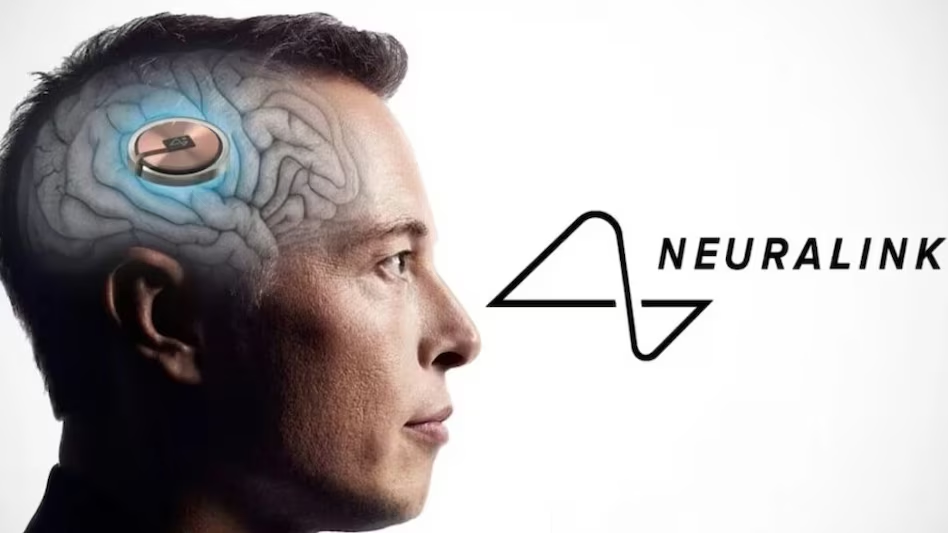

[Neuralink] is not yet a commercial product. The current studies are small-scale—they are true experiments, explorations of how the device works and how it can be improved. For instance, at some point last year, more than half the electrode-studded “threads” inserted into Aurbaugh’s brain retracted, and his control over the device worsened; Neuralink rushed to implement fixes so he could use his remaining electrodes to move the mouse.
Before Neuralink ever seeks approval to sell its brain interface, it will have to lock in a final device design that can be tested in a “pivotal trial” involving perhaps 20 to 40 patients, to show it really works as intended. That type of study could itself take a year or two to carry out and hasn’t yet been announced.
…



Neuralink has attracted plenty of scrutiny from news reporters, animal-rights campaigners, and even fraud investigators at the Securities and Exchange Commission. Many of the questions surround its treatment of test animals and whether it rushed to try the implant in people.