They employ ambulance-chasing litigation tactics and attack campaigns similar to the methods long-used by tobacco companies to intimidate scientists and mainstream journalists. Their goal: to mortally damage the biotechnology industry and its advancement of GMOs and gene-edited crops, while scaring scientists and journalists from reporting on their tactics.
[irp]Scientology v. Science
First some background on the Church of Scientology and its connections to the anti-GMO movement. Scientology’s controversial history has been well reported. Accounts from ex-church members and a series of investigative books and documentaries have alleged financial fraud, harassment of journalists, support for dubious medical practices, criminal behavior, aggressive litigiousness against critics and abuse of its members, both physical and psychological.
Scholars of religion have debated to what degree Scientology, founded by science fiction writer L. Ron Hubbard in 1952, is similar to other belief systems in its essentials, and deserves Constitutional protections. Originally founded as a nonprofit, and after a 37-year dispute with the IRS, Scientology was officially recognized as a religion in 1993, a decision reaffirmed by a federal court in 2012. But most every critic agrees with University of Alberta sociologist Stephen Kent, who has noted that the church preaches far more than religious doctrine, including “pseudo-medical practices [and] pseudo-psychiatric claims ….”
Hubbard was deeply skeptical of mainstream medicine. For most of its history, Scientology has been at war with the science establishment, which takes exception to the church’s claims about mental health, especially its conspiratorial assertions about the dangers of psychiatry as a medical practice and the use of anti-depressants. Expert criticism has had little influence on the church. Scientology has launched multiple “Psychiatry Busted” campaigns to create an “anti-psych climate” in America and spark government action against psychiatrists, according to David Miscavige, “the ecclesiastical leader” of Scientology.
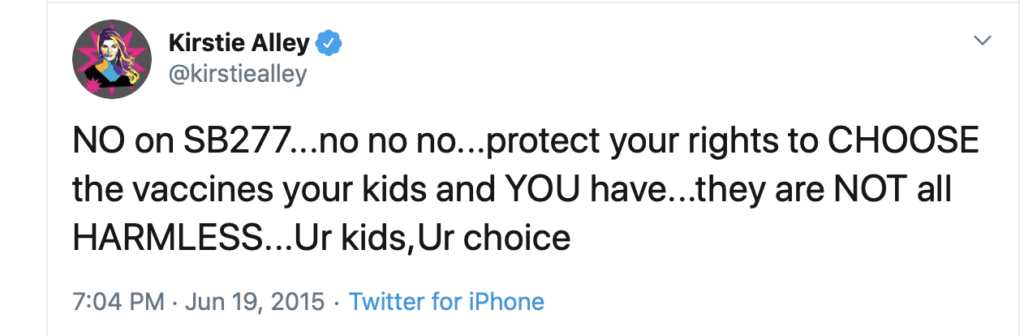
Scientology is decidedly anti-vaccine. Church-affiliated consultants and nonprofits have also played a prominent role in the ongoing battle over medical exemptions for vaccines in California, with celebrity Scientologists urging their social media followers to oppose the state’s restrictions on exemptions. Jenna Elfman, Danny Masterson, Juliette Lewis and Kirstie Alley, all outspoken Scientologists, have lobbied against California legislation requiring all students to be vaccinated.
In 2020, the Scientology cruise ship Freewinds, whose passengers take advanced courses that can run an estimated $2 million, was quarantined in St. Lucia due to a measles outbreak. (Former Scientologist Valeska Paris told The Village Voice in 2011 that she was held against her will aboard the boat for 12 years in an effort to prevent her from leaving the religion.)
But mental health and immunology are not the only fields of research in which Scientologists have turned their backs on mainstream science. While the church hasn’t taken an official position on pesticides or biotechnology, “people who are susceptible to Scientology’s ideas are also the sort open to any sort of wacky conspiracies,” journalist Tony Ortega, who has covered the church since 1995, told the Genetic Literacy Project by email.
GLP—Anti-GMO links
The GLP, with the help of numerous other scientists and researchers, has uncovered deep links between prominent Scientologists and the anti-GMO/anti-chemical movement. Many Scientologists embrace the belief that Monsanto has long known that its glyphosate weedkiller causes cancer, but lied about it to government officials, scientists and the media—the central claims in the more than 18,000 lawsuits filed against Bayer, which acquired Monsanto two years ago. Three suits have already gone to trial, resulting in billions of dollars of judgments against the biotech giant. Bayer is appealing the verdicts. Every major regulatory agency in the world has issued a report rejecting claims that glyphosate or its formulation as Roundup are likely to cause cancer.
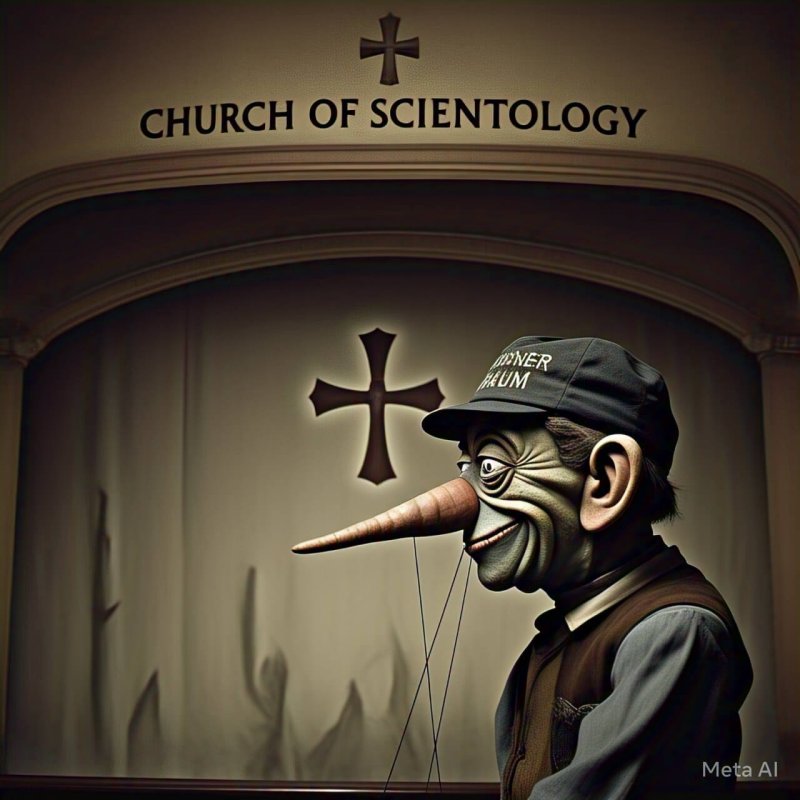
The GLP has found that several plaintiffs lawyers with the lead firm involved in the ongoing legal action are closely connected to Scientology. Wisner Buam (previously named Baum Hedulund), represented the first three plaintiffs that took Bayer to court,It tilized a litigation strategy and public relations tactics to demonize agricultural science in the media that were first perfected in service to Scientology, allegedly to the point of breaking the law.
These facts alone do not address the question of whether glyphosate poses health hazards, but they raise an awkward question about the anti-pesticide crusade that members of the Church of Scientology have joined. If there is sound evidence showing that the herbicide is dangerous, why have the environmental and organic activist groups behind these lawsuits partnered with lawyers who are linked to or members of a group known for its conspiratorial thinking and rejection of mainstream science, and which has faced decades of allegations of money laundering, murder and even child slavery? Some key Scientology figures have been convicted of criminal behavior as part of the burglaries and lies of “Operation Snow White” and served prison sentences as a result.
Wisner Baum: A law firm staffed by Scientologists
Wisner Baum has an oddly intimate history with Scientology. The firm has been lead counsel in the Scientologists’ campaign to destroy modern psychiatry. In 2001, the firm sued drug maker GlaxoKlineSmith for “fraudulent deception,” (p 271) alleging the company failed to warn patients they could become dependent on its antidepressant, Paxil.
Scientology views the drug and other selective serotonin reuptake inhibitors (SSRIs) as very dangerous, and claims the pharmaceutical industry and regulators have engaged in “FDA/Psychiatric-Pharmaceutical Cover-Ups” to hide evidence revealing how harmful these medications can be.
Baum Hedlund has employed multiple Scientologists (p 138) over the years, and the church has relied heavily on the firm’s litigation to justify its claims about SSRIs, as the reference section of this report from Scientology’s Citizens Commission on Human Rights illustrates. The report cites Baum Hedlund 12 times. The firm has been suing antidepressant manufacturers for 30 years, a fact it advertises on its website.
At least two of the firm’s attorneys, including founder Michael Baum and one of his partners Brent Wisner—both involved in the Bayer litigation—have been active members in the church for years. Wisner has been involved since at least 1992 and went “clear” in 2002, an official Church designation meaning he is free “of irrational behavior, unreasonable fears, upsets and insecurities,” which requires substantial donations to Scientology. His father Michael Wisner is also a longtime church member, “environmental health activist” and advocate for Scientology’s Purification Rundown, a detox program designed to rid the body of “food preservatives, pesticides, atmospheric poisons and the like.”
Scientology and Operation Snow White
Baum has been a Scientologist since the 1970s and is considered a “founding patron” for contributing $40,000 to the church. Given his firm’s close connection to Scientology and the church’s aggressive solicitation policy, positive verdicts in the glyphosate litigation could represent a substantial windfall for Scientology. But Baum’s personal history raises even more troubling questions about Baum Hedlund’s conduct in the legal battle with Bayer.
In the 1970s, Baum was allegedly involved in the infamous Operation Snow White, a covert attempt by the church to infiltrate the US government and purge damaging records about Scientology and its founder, L. Ron Hubbard as the organization was being reviewed for nonprofit designation as a religion. Working for the church’s Guardians Office, Baum, the federal government later claimed, helped forge IRS credentials and stole documents from the Justice Department (p 71, 82) as part of the operation.




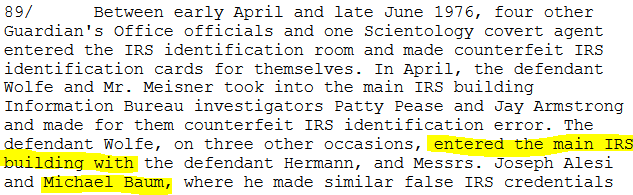
In 1977, the FBI raided church offices in Los Angeles and recovered enough stolen documents to fill a 16-ton truck (p 378). It was one of the largest infiltrations of the United States government in history, with up to 5,000 covert agents. This operation also exposed the Scientology plot Operation Freakout, it’s covert, unsuccessful plan to ruin the reputation and life of a journalist who had written a critical article about the church’s campaign to vilify psychiatry.
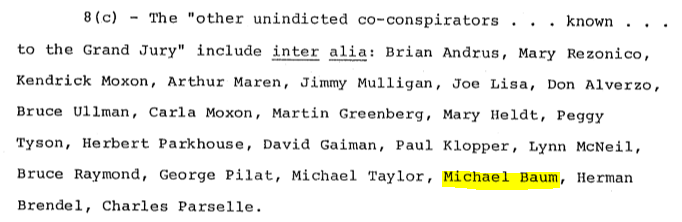
Eleven highly placed Church executives, including Mary Sue Hubbard (wife of the founder and second-in-command of the organization), pleaded guilty and were convicted in federal court of obstructing justice, burglary of government offices, and theft of documents and government property. In total, as part of a plea bargain, seven church members were found guilty of conspiracy to obstruct justice, and one was found guilty of conspiracy to obtain government documents. Baum and several other Scientologists, including L. Ron Hubbard (who went into hiding for the rest of his life), were identified as “unindicted co-conspirators” (p 7) but never charged in the case.
The legacy of the case—what the Church learned as the best tactics to defend itself and put its attackers on the defensive—has curiously resurfaced in Baum Hedlund’s ambulance-chasing glyphosate strategy.
As Operation Snow White was in full swing, the Church of Scientology initiated a FOIA lawsuit against the IRS as it battled for tax-exempt status. The IRS refused to release certain documents, but it told Scientology lawyers which items they’d been denied access to. This information from the FOIA suit, the government later argued, was used to steal the exempted documents from the IRS (p 87). The Church of Scientology attempted to defend this spying program in 1978, but under pressure eventually acknowledged that “the acts of the former Guardian’s Office staff were reprehensible.”
The church now boasts on its website that it has played a pioneering role in promoting the use of FOIA to attack enemies:
In the 1970s, the Church of Scientology established itself as a leader in the promotion and utilization of the Freedom of Information Act (FOIA) to protect not just the rights of Scientologists, but also those of all citizens. The Church engaged in an extensive public education campaign to ensure citizens knew how to use the FOIA for exposing wrongdoing and guaranteeing transparency in government.
Scientology’s deep ties to environmental groups attacking crop chemicals
Baum Hedlund appears to have learned these lessons well. Its lawsuits against Bayer are based primarily on a collection of internal company documents, which it dubbed “The Monsanto Papers” [Read GLP’s analysis here], which allegedly reveal the biotech firm’s effort to suppress evidence of glyphosate’s carcinogenicity, and discredit a 2015 ‘hazard assessment’ published by the International Agency for Research on Cancer (IARC) that concluded glyphosate was a “probable carcinogen.” Not one other international agency has concurred with IARC’s conclusion. Journalists, including at Reuters, have sharply criticized IARC’s manipulation of the data.
Baum Hedlund has teamed with the California-based anti-GMO outfit U.S. Right to Know (USRTK) in the glyphosate litigation, acquiring these Monsanto documents through FOIA requests. USRTK was launched with seed funding from the anti-vax Organic Consumers Association (not the trade group), which has been its largest funder, and is notorious for its attacks on the world’s top biotechnology scientists and science journalists. [Read GLP USRTK profile here].
During the trial, USRTK acted as the litigators’ scribes, recording all testimony, which the two organizations then shared. USRTK re-purposed the testimony in repeated attacks against biotechnology scientists, journalists and independent government officials. USRTK and similar fringe anti-GMO activist groups have been behind numerous campaigns attacking university scientists, including the fabrication of alleged conspiratorial links with Monsanto that don’t exist.
As the litigation has unfolded over the past year, much of the testimony and the documents have been deployed by Carey Gillam, the former journalists who was let go at Reuters after repeated accusations of biased and botched reporting. She subsequently signed on with USRTK as a public relations consultant and later producing a controversial conspiracy book on Monsanto. The book was widely criticized by scientists and science journalists (though it was mostly ignored) because of its misrepresentation of the science involving glyphosate and Gillam’s vast conflicts of interest as an anti-GMO activist and unofficial plaintiff advisor.
Gillam, with the help of sympathetic journalists, has alleged that “Monsanto’s intelligence center” attempted to discredit her work, failing to mention that independent academics and science journalists have similarly and frequently challenged her reporting publicly without any input or solicitation from the company.
Gillam is now an online blog writer for the Environmental Working Group, where she writes an ocassional essay under the title The New Lede. Much of EWG’s activist outreach effort and Gillam’s work in particular is finanded through black box donations from Wall Street hedge funds that supply seeed money to mass tort litigation (including hundreds of suits targeting the production of glyphosate). She also writes for the UK The Guardian, but does not disclose her financial ties to the mass tort industry.
USRTK’s activist attacks appear designed to generate public support for the lawsuits targeting Bayer for producin lyphosate. . EU risk and science gcommunications specialist professor David Zaruk, who examined depositions and emails released as part of the litigation, noted:
Activists, NGOs, organic food lobbyists, scandal-driven media and the law firms themselves energized anti-pesticide chemophobic campaigns …. One of the failed leaders of the GMO labelling campaign, [USRTK co-founder] Gary Ruskin, found a more profitable venture by teaming up with Scientologists, the organic lobby and the anti-vax movement to undermine trust in the US academe. And all around them were the lawyers quietly pulling the strings from the shadows, ensuring that fear turned to outrage – the necessary mix to prime any jury into demanding blood.
Vaccine denial, GMO skepticism
Michael Baum’s personal history isn’t the only link between Scientology and anti-pesticide activism. Scientists and educators have noted striking similarities between the tactics of the anti-vaccine and anti-GMO movements. Many of the same activists belong to both groups. Baum Hedlund has a history of suing vaccine manufacturers, for “injuries from vaccines containing Thimerosal,” profiting off the public’s fears of immunizations stirred by such groups as the Organic Consumers Association, long known for its kooky, anti-science views. Experts have repeatedly debunked the myth that mercury in vaccines poses a risk to children.
Vocal vaccine denier and environmental lawyer Robert F. Kennedy, Jr. spoke at a 2015 Scientology-sponsored event (See video here) to raise opposition to S.B. 77, a California law that requires students to be vaccinated before entering public school. Kennedy claimed that the government knows vaccines are dangerous, but nonetheless urges them on the public. “Because of the economic strength of the pharmaceutical industry,” he told the audience, “it’s almost impossible to get this story out to the American public” (7:18 mark in the video).
The addled celebrity attorney also serves as co-council with Baum Hedlund on the glyphosate litigation, claiming that Monsanto/Bayer, much like the pharmaceutical industry, has bought off government regulators. “I don’t think it’s a surprise that after 20 years Monsanto has known about the cancer-causing properties of [glyphosate] and has tried to stop the public from knowing it,” said Kennedy.
USRTK says it works “to expose how powerful food and chemical industry interests impact the food we eat and feed our children.” That’s a laudable pursuit, although scientists and regulators familiar with glyphosate believe the group is misrepresenting the science to make a faux, but potentially lucrative, case.
It’s worth asking why USRTK emulates the smear tactics of and collaborates with Scientology-affiliated lawyers who have a long track record of spreading unscientific nonsense, possibly breaking the law, and serving an organization that allegedly damages the lives of many former members and critics. These are the actions of unswerving ideologues with a political agenda, not corporate watch dogs who have evidence on their side and the public’s well being in mind.
Jon Entine is the founder and executive director of the Genetic Literacy Project, author of 7 books, and winner of 19 major journalism awards, including two Emmys. Twitter: @JonEntine