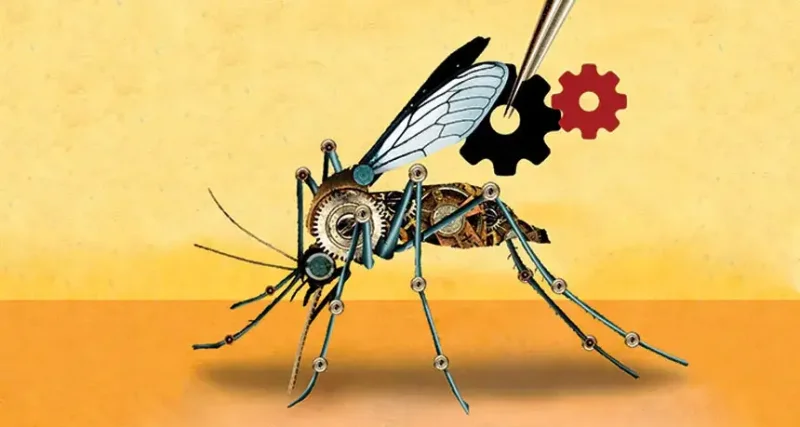
Gene editing holds the potential of suppressing mosquito species that carry deadly diseases — and raises ethical concerns

121215_CRISPR_opener.jpg

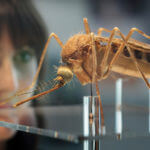
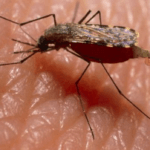
[S]ome doctors and scientists say it is time to take the extraordinary step of unleashing gene editing to suppress mosquitoes and avoid human suffering from malaria, dengue, West Nile virus and other serious diseases.

“There are so many lives at stake with malaria that we want to make sure that this technology could be used in the near future,” said Alekos Simoni, a molecular biologist with Target Malaria, a project aiming to target vector mosquitoes in sub-Saharan Africa.

Follow the latest news and policy debates on sustainable agriculture, biomedicine, and other ‘disruptive’ innovations. Subscribe to our newsletter.

Yet the development of this technology also raises a profound ethical question: When, if ever, is it okay to intentionally drive a species out of existence?

But some researchers and ethicists warn it may be too dangerous to tinker with the underpinnings of life itself. … [T]he Hastings Center for Bioethics, a research institute in New York, and Arizona State University brought together a group of bioethicists to discuss the potential pitfalls of intentionally trying to drive a species to extinction. In a policy paper …  the group concluded that “deliberate full extinction might occasionally be acceptable, but only extremely rarely.”


This is an excerpt. Read the original post here

Related Articles

Infographic: Global regulatory and health research agencies on whether glyphosate causes cancer

Infographic: Global regulatory and health research agencies on whether glyphosate causes cancer

Does glyphosate—the world's most heavily-used herbicide—pose serious harm to humans? Is it carcinogenic? Those issues are of both legal and ...

Most Popular

ChatGPT-Image-Mar-10-2026-01_39_01-PM
Viewpoint—“Miracle molecule” debunked: Why acemannan supplements don’t work
ChatGPT-Image-Aug-28-2026-03_33_46-PM
Viewpoint: Bad science—Five bogus Trump administration claims about vaccines and autism
Screenshot-2026-09-10-at-12.20.19-PM
'Jet fuel didn't melt the steel': 9/11 conspiracy theories debunked
ChatGPT-Image-Sep-2-2026-10_30_14-PM
Zero: That is the official American measles death toll for 2026. Here is what RFK Jr.’s CDC leaves out.
ChatGPT-Image-Sep-14-2026-11_36_25-AM
How the reckless AI race among Anthropic, OpenAI and China spawned today’s safety crisis
ChatGPT-Image-Sep-13-2026-10_24_17-AM
Bayer urges court to approve $7.25 billion Monsanto Roundup settlement that could limit its future liabilities
Screenshot-2026-09-14-at-10.52.30-AM
AI is being used in dangerous bioscience experiments
ChatGPT-Image-Sep-15-2026-06_05_13-PM
CRISPR fine-tuning unlocks vitamin C-rich potatoes without yield loss
screenshot at  am
‘Glyphosate is not carcinogenic’: Independent EU chemical oversight agency reaffirms—for the 3rd time in 9 years—that the herbicide is safe-as-used
Screenshot-2026-09-14-at-3.07.56-PM
Trump EPA rolls back power-plant climate rules—and moves to block future carbon limits
ChatGPT-Image-Sep-14-2026-02_57_24-PM
Viewpoint: 6 Atlantic Council expert opinions on the U.S., China and the AI safety crisis
Screenshot-2026-08-04-at-11.36.16-AM
Viewpoint: Emotion-driven stories of doctors allegedly ignoring patient concerns are driving vaccine hesitancy
ChatGPT-Image-Sep-15-2026-05_59_18-PM
RFK Jr. spent two years distancing himself from Children’s Health Defense. Now he’s keynoting its anti-vaccine DC conference.
glp menu logo outlined

Get news on human & agricultural genetics and biotechnology delivered to your inbox.