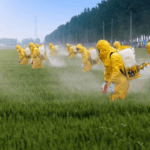
The use of modern seed genetics (which includes genetically modified (GM) crops, chemical and fertilizer use) greatly contributes to improved agricultural sustainability and climate change mitigation. The integration of these various inputs and technologies highlights how food production is a highly technical system, requiring all three to be efficient and cost-effective. Potential bans or reductions to one or more of these technologies threatens to undermine the climate mitigation successes achieved to date.
Innovation is the key
Since 1960, food production has increased by 390% while land use has increased by a mere 10%. One estimate of the impact that GM crops have had on land use undertaken in 2010 found that without GM crops, an additional 13 million hectares of land would have been globally required to produce the amount of food that was available. Those that advocate for a return to crop production that doesn’t rely on integrating any of the above technologies, is advocating for agricultural production practices prior to 1960, where increases were entirely due to increased land used to produce crops. Increasing land use every year, is not a sustainable way to produce crops.

Improved soil health
One of the most valuable assets farmers transfer to the next generation is the health of the soil that is farmed. Innovations greatly contribute to improving soil health. The efficient weed control resulting from GM crop production facilitates continuous zero-tillage crop production, which has significant soil benefits, with one study finding carbon storage increased from 0.3 Mt/yr to 6.4 Mt/yr. With the positive correlation between GM crops and reduced tillage, both technologies reduce agricultural impacts on the environment and often improve soil and water quality through reduced erosion. Reduced chemical applications have prevented millions of kilograms of chemical active ingredients from being applied to crops, further benefiting soil health.
Adaption to, and mitigation of, climate changes
In many GM crop-producing regions, the adoption of GM varieties of canola, corn, cotton and soybeans exceeds 90%, indicating that farmers have opted to produce these varieties as part of their adaption to changing climates. The efficient use of synthetic chemicals and fertilizers contributes to mitigating climate change by ensuring that yields are as high as they can be with reduced environmental impacts on the, resulting in more sustainably produced food. The continued use of these technologies provide ongoing benefits to mitigation due to lowered greenhouse gas (GHG) emissions.
 Viewpoint: The US government and corporations are funneling billions into cover crop research to combat climate change. Is the money and the hype worth it?
 Breakthough Institute: Are cover crops the silver bullet to reduce agricultural carbon emissions as regenerative-farming enthusiasts claim? Time for a rethink




Benefits to farmers
The on farm benefits are substantial. Reductions in tillage and chemical use lower the input costs of producing a crop. Improved disease, insect and weed controls increase crop yields. The result of reduced input costs and higher yields is that farmers are more profitable. A further human health benefit is that reduced chemical use by small landholders results in fewer incidences of accidental pesticide poisoning. The loss of, or potential to use, innovative crop genetics, chemicals and fertilizers would negatively impact farmers by reducing their profits and increasing chemical exposures.

Benefits to the broader society
Innovative agricultural technologies provide economic benefits to farmers, but the benefits also spill over to broader societies. Reduced chemical use coupled with decreased tillage, results in less chemical run-off into watersheds, which lowers the potential for societal exposure as a whole. Genetic innovations contribute to ensuring food product availability, such as with papaya in Hawaii or vitamin-enhanced rice in the Philippines. Finally, the increased yields from GM crops and efficient chemical and fertilizer use contribute to providing food to consumers that have a reduced impact on the environment and results in fewer GHG emissions, thereby contributing to mitigating climate change.