In a rare but pointed rebuke of federal health policy, the American Academy of Pediatrics (AAP) filed a federal lawsuit on July 7 against the Department of Health and Human Services (HHS) and Secretary Robert F. Kennedy Jr., accusing them of endangering maternal and child health by politicizing vaccine policy.
The AAP challenged Kennedy’s May directive to remove COVID-19 booster recommendations for pregnant women and healthy children—set aside longstanding CDC guidance supported by decades of clinical trial data and real-world evidence. The suit called it a “baseless and uninformed policy decision. … This is not a hypothetical concern, but a pressing public health emergency that demands immediate legal action and correction.”
In June, Kennedy further destabilized federal vaccine oversight by dismissing all 17 members of the CDC’s Advisory Committee on Immunization Practices (ACIP), appointing vaccine-skeptic allies in their stead.
“We’re taking legal action because we believe children deserve better,” said Dr. Susan J. Kressly, the AAP’s president, emphasizing that unilateral decisions not grounded in evidence could cost lives.
AAP hypocrisy
While the AAP deserves our appreciation for resisting Kennedy’s anti-vaccine directives, its recent record is marred by a public position that undermines Kressly’s claims. In December 2023, in its flagship journal Pediatrics, the AAP published the “Use of Genetically Modified Organism (GMO)–Containing Food Products in Children.” This was accompanied by an educational article meant for parents titled, “Are GMO Foods Safe for My Child? AAP Policy Explained” on the AAP’s healthychildren.org website.

The AAP articles advised parents to not feed their children food made from ingredients derived from genetically engineered crops. While it acknowledged that novel genes in GM crops present no known hazards, it echoed long-discredited claims by of unproven risks from herbicide exposure, advising families and institutions to consider avoiding safe GM foods altogether —echoing alarmist narratives also promoted by anti-biotechnology advocacy groups, including RFK Jr.’s Children’s Health Defense. The entire report was a dense tome of disinformation and tired claims that have been long dismissed by a robust scientific consensus.
Scientists familiar with the debate over genetically engineered crops and pesticides were stunned that Dr. Philip Landrigan—known for promoting fringe views and alarmist claims—was co-author of both the report and the article posted on HealthyChildren.org. Although once a respected pediatrician and environmental health advocate, Landrigan has increasingly partnered with organizations promoting pseudoscientific attacks on genetically engineered crops—claims consistently dismissed by regulatory bodies such as the U.S. Food and Drug Administration, European Food Safety Authority (EFSA), World Health Organization (WHO) and hundreds of other globally respected independent risk agencies, including the , and the National Academies of Sciences, Engineering, and Medicine (NAS) and the World Health Organization.

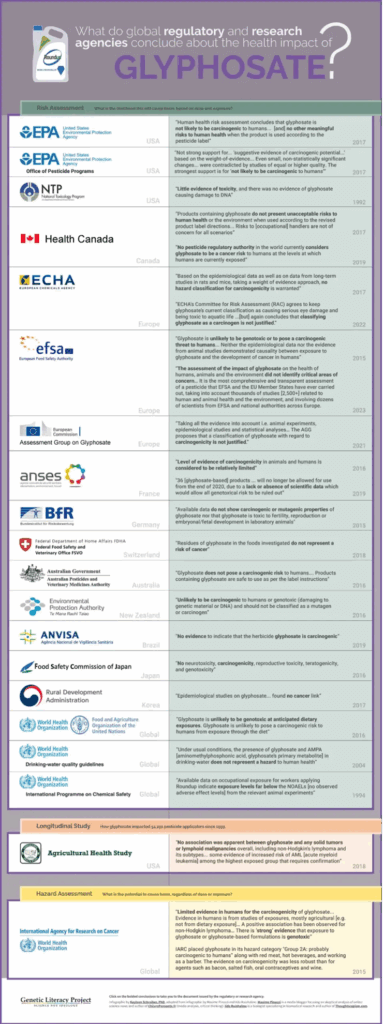
Landrigan specifically called out the pairing of GM crops with herbicides. Landrigan claimed that glyphosate and other herbicides such as dicamba and 2,4‑D could pose dangers to developing bodies, though clear thresholds or evidence showing low-level exposures harm in kids have not been demonstrated and are borderline implausible. According to the EPA’s glyphosate risk assessment, there is no evidence that trace exposures of glyphosate or any approved pesticides pose a cancer risk or developmental hazard to children. More than 15 independent global agencies that have reviewed more than 3,000 studies of glyphosate over 30 years concur.
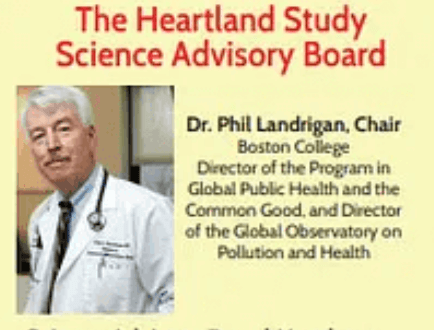
More recently, Landrigan collaborated with The Heartland Institute, a controversial think tank, funded by tort lawyers that target crop chemicals and notorious for denying climate science and promoting corporate misinformation—raising red flags about his judgment and objectivity in public health debates.
AAP = RFK, Jr.?
The American Academy of Pediatrics stance echoes many of the same conspiracy-adjacent narratives that RFK. Jr. advances through his Children’s Health Defense (the website Media Bias/Fact Check calls CHD “a strong conspiracy and quackery level advocacy level advocacy group.”

Kennedy continues to claim—falsely—that chronic illnesses in children such as autism, asthma, food allergies, and neurological disorders are the result of GM crops and the “toxic chemicals” used to grow them. In a 2023 CHD publication, he called glyphosate “one of the most poisonous substances ever developed” and blamed biotech agriculture for a wide range of ailments without offering causal evidence (there is none).
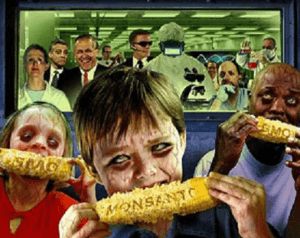


The irony is striking: while Kennedy and the AAP publicly clash over vaccines, both have used similar rhetorical tactics—anchored in precaution, suspicion of established science, and cherry-picked studies—to cast doubt on agricultural biotechnology. In the case of the AAP, this alignment undercuts its moral clarity on public health messaging and creates a perception of selective skepticism.

In contrast to the AAP’s dissimulation, the American Medical Association (AMA) has adopted a clear and consistent position: GM foods are safe and beneficial, and there is no scientific justification for blanket warnings or labeling. The AMA has even highlighted how biotechnology can improve food security and nutrition for vulnerable populations, especially children. Likewise, the National Academies of Sciences concluded in its comprehensive 2016 report that GE crops can support global health by reducing pesticide use, increasing yields, and creating vitamin-enriched foods. These benefits, the report emphasized, are especially relevant for populations suffering from malnutrition and food insecurity—including children in low-income communities.
Challenging the AAP—Hopelessly
The entire AAP report was a dense tome of disinformation and tired claims that have been long dismissed by a robust scientific consensus. I—University of Florida horticulturist Kevin Folta—wrote to the editor of Pediatrics, pointing out the flaws and misinformation in the report. The editor invited me to provide a 250 word rebuttal to the extensive, errant Clinical Review that would footnote the online version of the article.
In defiance of Brandolini’s Law (e.g., the amount of energy needed to refute bullshit is an order of magnitude bigger than that needed to produce it), I submitted a careful, evidence-based rebuttal. The journal refused to amend the online document as promised.
Next, I offered the authors the opportunity to defend their work on the Talking Biotech Podcast that I host. I never received the courtesy of a reply.
In a last ditch attempt to correct the record, microbiologist/immunologist Andrea Love Ph.D., pediatrician Nicole Keller M.D. and I prepared a comprehensive and referenced rebuttal to the Pediatrics AAP Clinical Review, to Pediatrics. It was sent out for peer review, and many months later was rejected, the reviewers citing the correctness of the original work as a synthesis of many inputs within the AAP. I suspect that reviewers were recruited to insulate the AAP from critical evaluation, and let its anti-ag biotech agenda stand. It was subsequently posted on the Genetic Literacy Project website.
In the current lawsuit the AAP decries the HHS assault on established science that can affect children and families. It denounces RFK, Jr.’s circulation of errant claims that demonstrate a clear pattern of hostility toward established scientific processes, a disregard for expert guidance, an affinity for placing persons who align with … views in positions of authority.” Yet, HHS’s obviously misguided and science rejectionist position is identically parallel to the precedent established by the AAP’s science-rejectionist anti-genetic-engineering stance.
Glass houses, AAP
Condemning (and suing) RFK Jr. for politicizing vaccines while perpetuating his brand of anti-biotech misinformation is not a defensible position—it’s institutional hypocrisy. The American Academy of Pediatrics apparently only adheres to science it finds acceptable. If the AAP truly believes—as it insists—that “children deserve better,” it must stop picking and choosing its science. In an era when public trust in medical institutions is fragile, hypocrisy is dangerous. Whether it’s vaccines or food safety, science demands unwavering adherence to evidence, not ideology.
Kevin Folta is a Professor in the Horticultural Sciences Department at the University of Florida. His Ph. D. is in molecular biology, and his research program examines the molecular/genomic control of various wavelengths of light on plant growth and development. Follow Professor Folta on X @kevinfolta
Jon Entine is the Executive Director of the Genetic Literacy Project and a life-long journalist with 20 major journalism awards. Follow him on X @JonEntine