
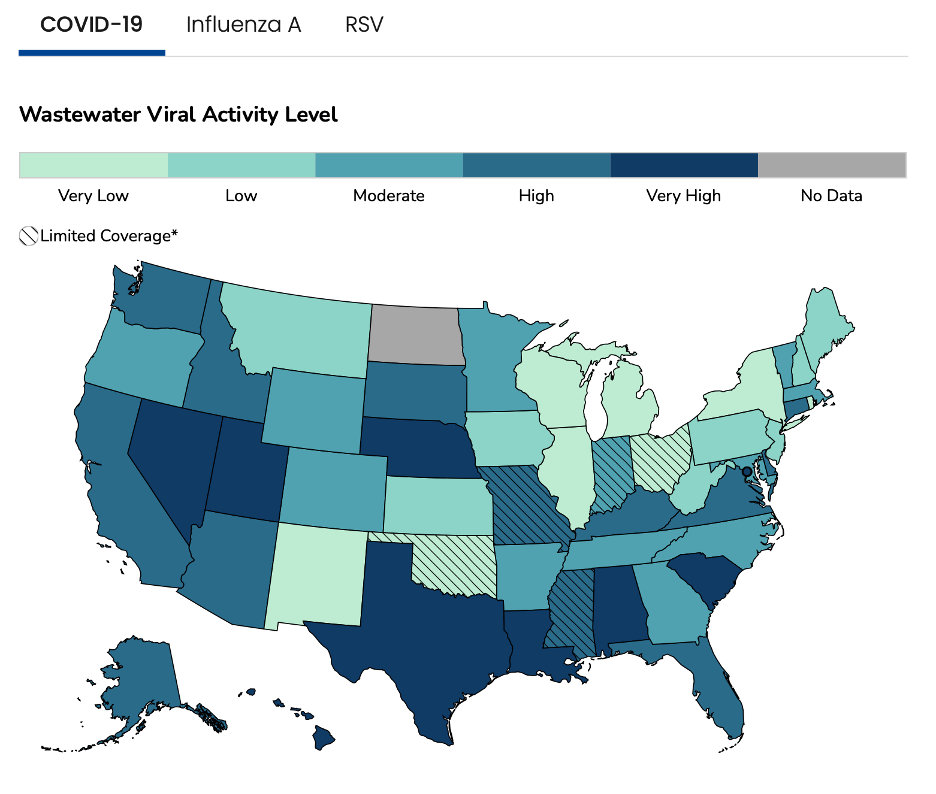
COVID-19 has not disappeared. According to the most recent weekly update from the CDC, wastewater levels of SARS-CoV-2, the virus that causes COVID — an early predictor of cases — are rising in at least 16 states. For the first time, it is hitting the hardest in red states, where vaccine skepticism runs highest.
No, it’s not “just a bad cold;” it is often far more serious than that and, in some instances, is devastating. An estimated 6-7% of U.S. adults are battling a still mysterious condition that can be life-altering.
What Is ‘long COVID’?
The term “long COVID,” coined by patients themselves, describes a cluster of symptoms that persist or even emerge for the first time after the initial infection has resolved. More than 200 different health problems have been linked to the condition, affecting virtually every organ system, including the lungs, heart, kidneys, and especially the brain.
Far from being a single disease, long COVID is what’s known as an “umbrella diagnosis” that covers overlapping conditions. It can strike those hospitalized with COVID and those who had only mild initial symptoms. severe cases as well as people who initially experienced only mild or asymptomatic infections. In some, it worsens pre-existing illnesses; in others, it sparks entirely new problems, from chronic fatigue to severe cardiovascular and neurological dysfunction.
In 2024, the National Academies of Sciences, Engineering, and Medicine (NASEM) issued a formal definition:
Long COVID is an infection-associated chronic condition that occurs after SARS-CoV-2 infection and is present for at least 3 months as a continuous, relapsing and remitting, or progressive disease state that affects one or more organ systems.
This complexity makes long COVID exceptionally difficult to study — and even harder to treat. Two of its more concerning conditions — chronic cardiovascular and neurological effects — are explored below.
Cardiovascular sequelae
Heart disease is the leading cause of death in the U.S. Well-established risk factors for cardiovascular events include high blood cholesterol, hypertension, diabetes, obesity and a sedentary lifestyle. Managing these conditions greatly reduces the likelihood of heart attacks and strokes. But mounting evidence suggests that COVID may represent a novel contributor to this risk.
One especially concerning trend in recent years has been the increase in heart attacks among younger adults. This pattern emerged during the COVID pandemic, raising the possibility the virus plays a role in these outcomes. Early reports showed that those hospitalized with severe COVID cases had unusually high rates of thrombotic events, such as heart attacks and strokes, in hospitalized patients. What remained unclear until recently were the longer-term consequences of infection for cardiovascular health.
To address this gap, researchers at the University of Southern California and the Cleveland Clinic analyzed data from the UK Biobank, a large cohort of more than 250,000 participants. This resource allowed investigators to explore long-term cardiovascular outcomes following COVID infection. By focusing on individuals who tested positive for SARS-CoV-2 in 2020 — before vaccines were widely available — they were able to track subsequent incidence of heart attacks, strokes and deaths over a three-year follow-up period.
The results were both striking and worrisome. Individuals who tested positive for COVID faced twice the risk of serious cardiovascular events compared with those who had not been infected. Notably, this elevated risk was independent of traditional factors such as high blood pressure, diabetes and high cholesterol.
Perhaps most concerning was the persistence of this elevated risk over time. At one, two, and three years post-infection, the heightened likelihood of heart attacks and strokes did not diminish. This suggests that COVID may trigger lasting physiological changes that continue to predispose individuals to cardiovascular disease.
Severity of the initial illness also mattered. Patients hospitalized with severe COVID had a four- to seven-fold increase in risk on par with people with a history of coronary disease, one of the strongest known markers of cardiovascular risk. This finding suggests that severe COVID should be treated as a major cardiovascular risk factor in its own right, warranting the same level of vigilance and preventive measures as established chronic conditions.
Neurological sequelae
Some of the most common — and disruptive — symptoms of long COVID involve the nervous system. Patients report persistent “brain fog,” difficulties with memory and attention, heightened sensitivity to light and noise, and overwhelming fatigue. Others develop conditions such as dysautonomia (malfunctioning of the autonomic nervous system) or peripheral neuropathy (tingling, pain, or numbness in the limbs).





Strikingly, many of these symptoms resemble those found in myalgic encephalomyelitis/chronic fatigue syndrome (ME/CFS), a poorly understood disorder often triggered by infections and long dismissed by parts of the medical community. The overlap between long COVID and ME/CFS is currently the subject of serious research and may provide a long-overdue window into post-viral illnesses more broadly
Although long COVID can strike anyone, certain patterns have emerged. Women appear to be disproportionately impacted, and pre-existing health conditions may increase risk. Some studies have identified genetic polymorphisms that may influence susceptibility.
Vaccination reduces the risk of long COVID — particularly by preventing severe disease — but it does not eliminate it. Many cases develop after mild or even asymptomatic infections. Reinfections and viral variants may also play a role, although those relationships remain only partly understood.
Because the virus continues to evolve, each new variant may interact with the body in different ways, potentially influencing which organs are affected.
No easy answers—and no cure
Despite the enormous global burden of long COVID, effective treatments remain elusive. Clinical trials are underway, but the diversity of symptoms and absence of clear biomarkers make it difficult to predict which therapies will help which patients.
Personalized treatment, tailored to individual symptoms and immune markers, is likely to be required. In the meantime, patients often face diagnostic and therapeutic uncertainty.
The National Academies’ 2024 consensus report urges a more compassionate and inclusive approach. It emphasizes that long COVID cannot always be confirmed through laboratory testing, and that patients’ experiences must be taken seriously.
Lessons Beyond the Pandemic
Long COVID may well lead to a broader health crisis, but it is also a scientific opportunity. It forces medicine to confront complex chronic conditions that defy easy categorization. It also renews attention to post-viral illnesses such as ME/CFS, and invites deeper investigation into how immune responses interact with various organs.
Most importantly, long COVID highlights the need for a new framework that bridges the divide between acute infection and chronic illness. The search for answers may illuminate far more than one disease. It may ultimately reveal how infection, inflammation, and immunity interact to shape long-term health — and how we might better respond when that delicate balance is disrupted.
Henry I. Miller, a physician and molecular biologist, is the Glenn Swogger Distinguished Fellow at the Science Literacy Project. A veteran of the NIH and FDA, he was the founding director of the FDA’s Office of Biotechnology. Contact him on his website: henrymillermd.org