The Food and Drug Administration is looking less and less like a regulator than a circus, with fresh, disconcerting episodes erupting week after week.
Last week, the FDA stunned scientists and energized MAHA-land by declining to even review Moderna’s mRNA flu vaccine application. The agency issued a rare “refusal-to-file” decision — a highly unusual move that contradicted earlier FDA feedback. The decision stunned many in the medical community, which viewed the vaccine as an important advance built on a proven platform. The Wall Street Journal called it “arbitrary government at its worst.”
Days earlier, Rep. Jake Auchincloss (D-Mass.) had demanded records about the agency’s new “Commissioner’s National Priority Voucher” program — a fast-track pathway that promises drug reviews in as little as one to two months — warning that it is “shrouded in secrecy” and noting that key financial disclosure forms for senior officials involved in selecting winners have not been made public either.
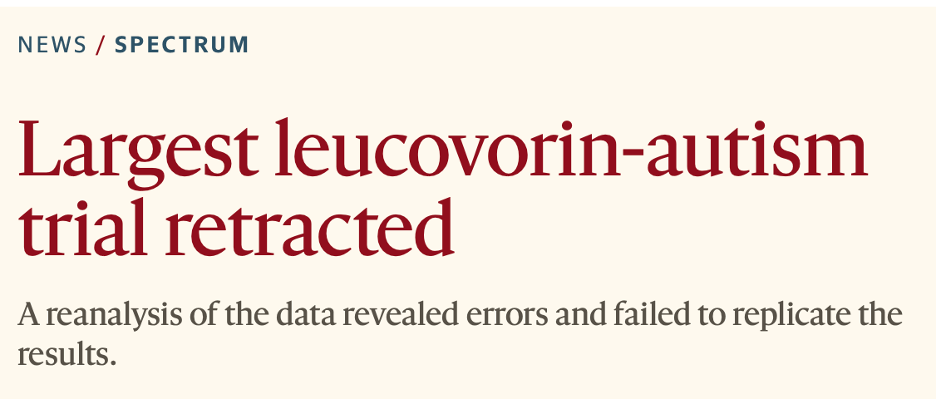
On February 3, the largest randomized trial of leucovorin for autism traits was retracted for data inconsistencies and statistical problems — even as top administration officials continue to tout the drug as an evidence-backed breakthrough. In any normal evidence-first system, a retraction like that would cause the FDA to hit the brakes. Here, it barely dents the talking points.
Paraphrasing the Wall Street Journal, does the White House know the harm the FDA is doing to public health? Taken together, the recent flare-ups sketch a portrait that current and former FDA staff describe in private as the new normal: rapid-fire reversals, ad hoc decision-making, and ethical questions that would once have triggered internal firewalls or prompted Congressional investigations. Now, it’s just another day in the accelerating deterioration of the credibility of Robert F. Kennedy, Jr.’s FDA.
The turmoil did not begin this month. It has been building since early 2025, when the Trump administration’s HHS restructuring and mass layoffs hit FDA operations, hollowing out labs, inspection capacity, and the ranks of experienced reviewers, even as leadership insisted that “critical services” would not be affected. Throughout 2025, the agency lurched from controversy to controversy — from leadership upheavals and staff attrition to novel fast-track programs and nontraditional (read: highly ideological) “expert panels” that skirt the conflict-of-interest and transparency norms of FDA advisory committees.
Leucovorin—autism link fiasco
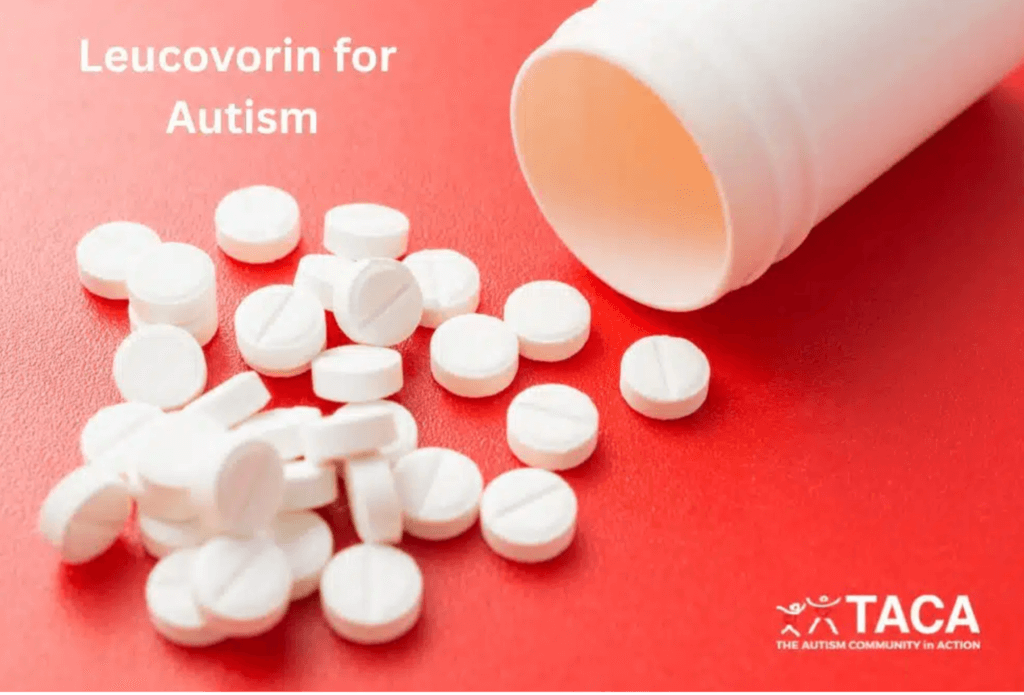
The leucovorin episode is worth exploring in more detail as it exemplifies the agency’s willingness to compromise established science to pander to MAHA hysteria. For almost a year, the administration has been obsessed with turning leucovorin — a decades-old chemotherapy adjunct — into a federally “recognized” treatment pathway for autism. At issue in the leucovorin case is not merely a single drug or condition, but the institutional principle of regulators’ scientific independence.
Last summer, leucovorin became the centerpiece of a now all-too-frequent FDA circus. The director of the center that regulates prescription drugs, a Trump 2.0 hire, sent out a mass email proposing that leucovorin’s label should say it treats autism. That idea hit career scientists as particularly odd. Leucovorin is a form of folic acid (vitamin B9), but it is not approved as a treatment for autism. It is used to treat certain types of colorectal cancer and to protect healthy cells from the toxic effects of certain chemotherapy drugs on healthy tissue.
What prompted the email? A strange pressure campaign from the MAHA masses. In the months leading up to that email, social media influencers and wellness true believers had been feverishly pitching the drug—often framed simply as “folinic acid” — as a near-miraculous, low-risk fix. Breathless parent testimonials and “medical freedom” threads portrayed it as a breakthrough deliberately suppressed by Big Pharma and the old guard science establishment colluding with them.
The request puzzled and alarmed FDA staff: Having regulators initiate relabeling a drug based on “perceived promise” and social media hype rather than robust data was a reversal of the FDA’s foundational norms. What followed — political pressure, public claims, label changes, and internal demoralization and revolt — offers a cautionary tale of what can happen when science becomes subservient to politics.
The stakes are huge. The FDA exists at the nexus of public health, law, and biomedical innovation. Its legitimacy rests on the credibility of its scientific rigor – the assurance that new drugs, generics, vaccines, medical devices, and food additives are judged by evidence, not by political whims or biases. When that legitimacy cracks, the entire fabric of regulation, trust, and safety begins to unravel.
The leucovorin labeling controversy offers a window in the growing incompetence and bias at the FDA. Last summer, senior official, Center for Drug Evaluation and Research director George Tidmarsh, proposed pushing the FDA to reexamine leucovorin for autism — although there was scant evidence and no large, randomized trials. The proposal struck many agency scientists as arbitrary and unmoored from the usual evidentiary standards.
After internal pushback, the idea was reframed: Instead of relabeling for autism broadly, the director asked GSK (the original manufacturer) to apply to add to the label treatment of cerebral folate deficiency, a rare neurological condition with some phenotypic overlap with autism.
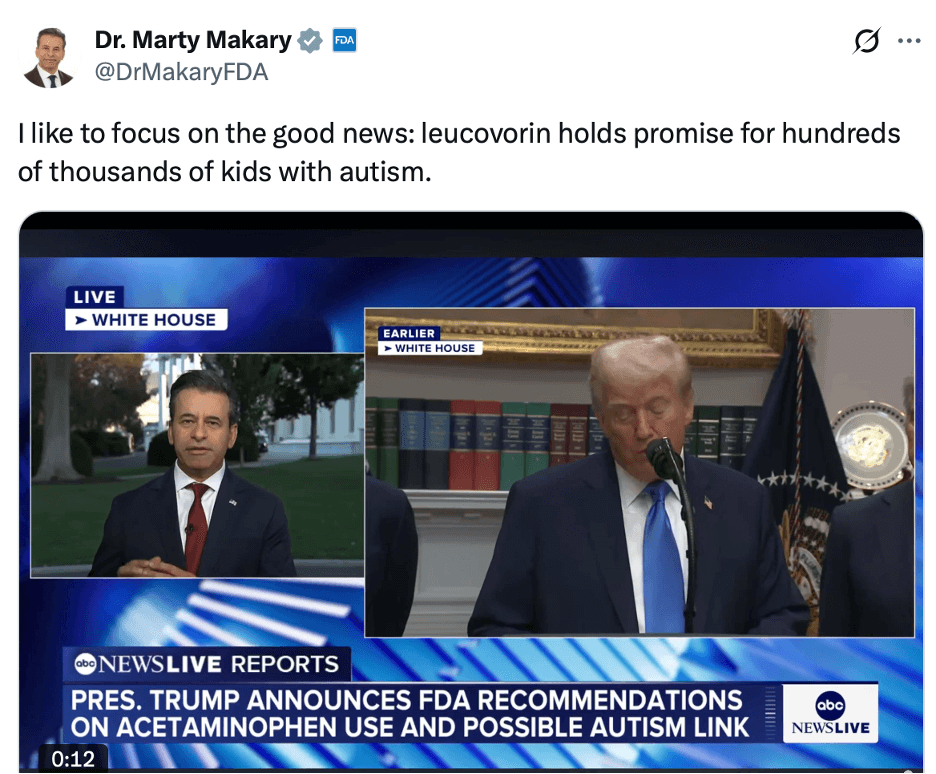
It was only a matter of time before Trump gave the myth rocket fuel. At Charlie Kirk’s September funeral, he bizarrely segued into a promotion of the MAHA-obsessed theory, claiming, “I think we found an answer to autism.” The next day, at a White House press conference, FDA Commissioner Marty Makary — appearing alongside HHS Secretary Robert F. Kennedy, Jr. and other senior health officials — announced that the agency was beginning the process to change leucovorin’s labeling to expand access for children with autistic symptoms, even though no new clinical trial had been completed.
“Leucovorin holds promise for hundreds of thousands of kids with autism,” Makary subsequently boasted in interviews. That precipitated an avalanche of requests from parents of autistic children, which perversely exacerbated an existing leucovorin shortage, further straining access to the drug for some established uses.
The unprecedented nature of the escapade sharpened in October when Emma Walmsley, CEO of the drugmaker GSK, which makes leucovorin, said the company had “no commercial interest, we have no scientific research” underway — “so it’s just the administration [proposal] at this stage.”





At RFK, Jr.’s FDA, scientific caution and rigor now matter less than political messaging and wishful thinking. One veteran described the agency’s culture as “go find data to support this, go find data to support that.” I spent 15 years at the FDA in the 1980s and 1990s as medical reviewer, Special Assistant to the Commissioner, and office director, and these developments are unprecedented and heartbreaking.
Breaking the public trust
It is tempting to regard the leucovorin saga as an outlier, but it reflects structural vulnerabilities and discouraging historical trends. The FDA’s strength has long been its independent assessments of safety and efficacy, grounded in scientific evidence and legal frameworks. An early precedent was the 1962 Kefauver–Harris amendments to the Federal Food, Drug, and Cosmetic Act, which require proof of effectiveness and disclosure of risks. When politically motivated actors compel regulators to adopt predetermined conclusions that are not backed by data, the risk-benefit calculus becomes corrupted. Political expediency, biases, and insupportable claims supersede data.
The FDA has long relied on the institutional memory and integrity of its scientific staff to defend its decisions in litigation, peer review, and public scrutiny. When staff are marginalized or pressured into “data-finding missions,” the agency’s effectiveness becomes compromised. We see that happening under Trump 2.0: staff attrition from mass firings and resignations, and plunging morale.
Regulation is ultimately a pact of trust between government agencies and citizens, including clinicians, patient advocacy groups, and foreign regulators. If stakeholders come to believe that decisions are driven by politics, that pact is weakened. Surveys show declining public trust when regulatory decisions appear capricious or politicized— a trend that predates the Trump Administration. Now it’s in overdrive.
Regulatory decisions shaped by politics are generally more vulnerable to legal reversal, which further erodes the authority and finality of FDA judgments. President Barack Obama’s HHS Secretary Kathleen Sebelius’s rejection of the FDA’s plan to make the Plan B oral morning-after pill available over the counter despite overwhelming evidence of its safety was struck down by the courts.

Such incidents used to be exceedingly rare. That’s changing under Trump and RFK, Jr. where micro-interventions are routine and political infighting regularly corrupts scientific decisions.
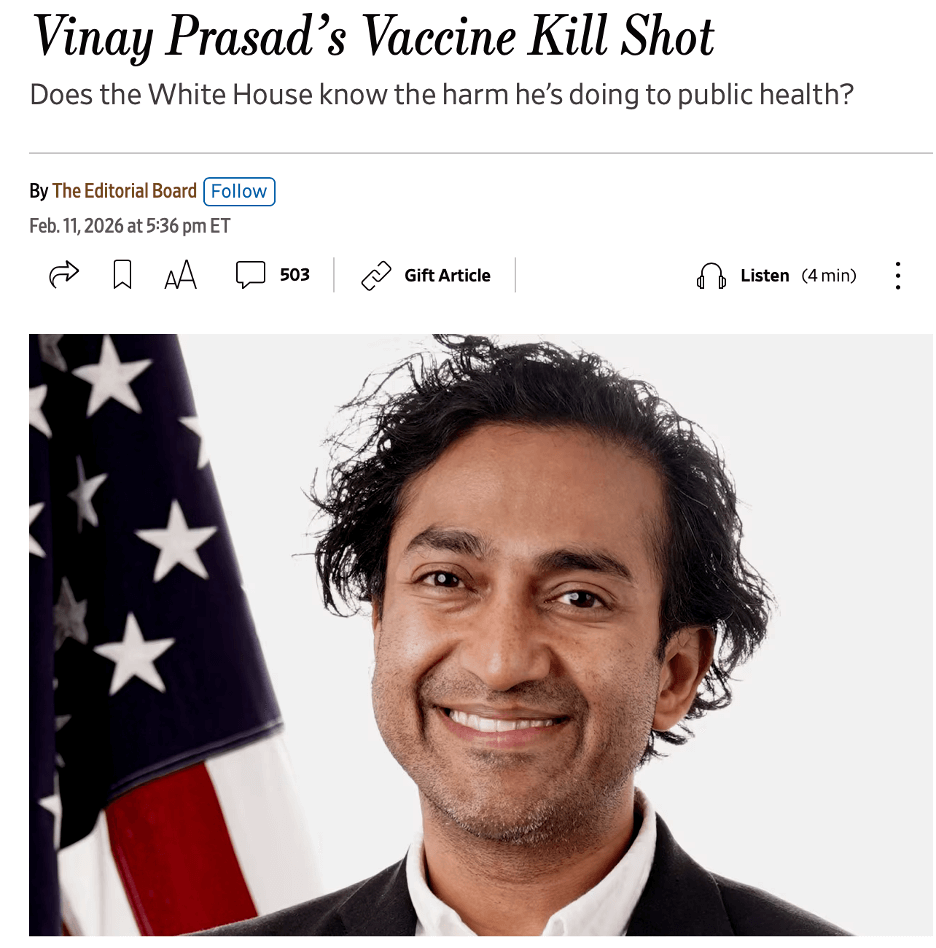
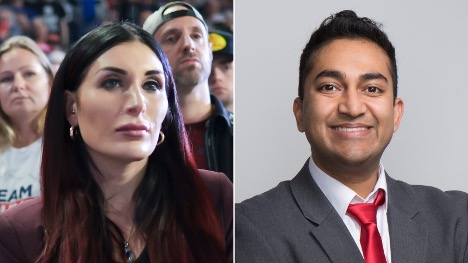
Last year’s chikungunya vaccine controversy offers yet another example of the battle for the soul of the FDA. In May, the agency advised people aged 60 and older to stop receiving the vaccine after postmarketing reports linked it to neurologic and cardiac adverse events. Vinay Prasad, director of the Center for Biologics Evaluation and Research (CBER), recommended that the vaccine’s approval should be suspended. Senior scientists disagreed, however, maintaining that the more typical and appropriate regulatory response would be to update the warning label to reflect the new safety information. As this internal dispute unfolded, Prasad also faced criticism from far-right influencer Laura Loomer and some rare-disease advocates, who questioned his leadership and past political statements. He was subsequently fired.
Career staff then moved ahead with a revision of the label, warning of increased risk. But two weeks later, Prasad was reinstated and reversed that decision, opting instead to suspend the vaccine’s approval. Such regulatory yo-yoing does not inspire confidence from drugmakers, physicians, or the public.
In August, FDA Commissioner Makary launched ad hoc “expert panels” — bypassing traditional expert advisory committees — focused on politically salient themes (e.g., antidepressants, fluoride, and menopause and hormone replacement), often populated with unorthodox “experts.” These panels raise concerns about both conflicts of interest and scientific bias.
In October, under pressure from Republican senators, the FDA pledged new safety reviews of the abortifacient mifepristone, even though the scientific community sees no need. The push came alongside a sweeping GOP letter urging the agency to freeze new generic approvals and revisit the drug’s dispensing rules — potentially reviving in-person requirements and tightening telehealth/mail access. Major medical groups have repeatedly said mifepristone is safe and effective and that layering on new restrictions would be medically unwarranted, but the Trump administration appears immune to science.
Necessary safeguards
If the FDA is to remain a credible and effective guardian of public health, political interference must be reined in. Here’s how:
- Convert the FDA from a component of HHS into a stand-alone, independent regulatory body with multi-year, bipartisan leadership terms (akin to the SEC and FCC). This structural insulation would limit direct political micromanagement. The Government Accountability Office has identified this as a possible reform.
- Statutory guardrails could be introduced to bar political appointees from intervening in substantive regulatory decisions (e.g., compelling relabeling without scientific review, forcing product approvals, or withdrawal of approvals). Legal mandates could require that all significant labeling or approval decisions must be accompanied by peer-reviewed justification and published scientific analysis.
- The voice of career scientists must be institutionally protected. Mechanisms such as “science advisory layers” with due process shielding Agency experts (so they cannot be reassigned for dissent) and transparency reports on internal disagreements could help to preserve internal integrity.
- The revival of traditional, well-vetted advisory committees — with strict conflict-of-interest and transparency rules and populated by genuine experts — is essential. Ad hoc panels that skirt conflict rules undermine legitimacy.
- Decisions involving new drug approvals or label changes should be accompanied by mandatory public disclosure of the full scientific rationale, dissenting opinions, and proposed counterarguments. Independent audit units within FDA, reporting externally, could help to assure that decisions are driven by science, not politics.
These controversies are more than curious, isolated aberrations — they are symptoms of a shift in institutional character. The FDA risks being pulled into political combat, rather than serving as a bulwark of independent, evidence-based judgments. Each time political imperatives override methodological discipline, the Agency’s technical credibility and public legitimacy are eroded. Over time, public health suffers, litigation proliferates, and trust dissolves.
The subordination of science to politics is dangerous. The prototypic historical example is the malevolent influence of Trofim Lysenko, Joseph Stalin’s agricultural advisor, whose ideologically driven rejection of genetics helped produce catastrophic agricultural failures and mass famine in the authoritarian Soviet Union in the 1930s and 40s.
The FDA is not just another regulatory agency — it is the central gatekeeper for Americans’ drugs, biologics, medical devices, and much of the food supply on which millions depend. If the Agency is to survive as a credible, functional institution, restoring scientific independence and procedural discipline must be an urgent national priority. The alternative is a regulatory culture where “evidence” becomes negotiable, alternative facts dictate policies — and protection becomes an afterthought.
Henry I. Miller, a physician and molecular biologist, is the Glenn Swogger Distinguished Scholar at the Science Literacy Project. An official at the FDA for 15 years, he was the founding director of its Office of Biotechnology. Find him on his website: henrymillermd.org