What is CRISPR? And why should you care?

crispr

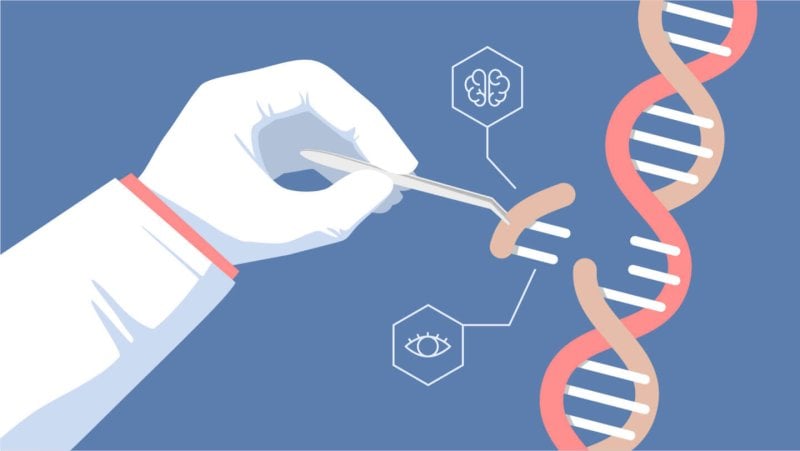
If you haven’t heard of CRISPR yet, the short explanation goes like this: In the past six years, scientists have figured out how to exploit a quirk in the immune systems of bacteria to edit genes in other organisms — plants, mice, even humans. With CRISPR, they can now make these edits quickly and cheaply, in days rather than weeks or months.

Let that sink in. We’re talking about a powerful new tool to control which genes get expressed in plants, animals, and even humans; the ability to delete undesirable traits and, potentially, add desirable traits with more precision than ever before.

But there are real limits to what CRISPR can do, at least right now. Scientists have recently learned that the approach to gene editing can inadvertently wipe out and rearrange large swaths of DNA in ways that may imperil human health.

As scientists work to overcome these limitations, much of the hype around CRISPR has focused on whether we might engineer humans with specific genetic traits (like heightened intelligence). But in some ways, that’s a sideshow. “Designer babies” are still far off, and there are enormous obstacles to making those sorts of complex genetic modifications. The stuff that’s closer at hand — from new therapies to fighting malaria — is what’s most exciting.

Read full, original post: A simple guide to CRISPR, one of the biggest science stories of the decade.


{{ reviewsTotal }}{{ options.labels.singularReviewCountLabel }}
{{ reviewsTotal }}{{ options.labels.pluralReviewCountLabel }}
{{ options.labels.newReviewButton }}
{{ userData.canReview.message }}

Related Articles

Infographic: Global regulatory and health research agencies on whether glyphosate causes cancer

Infographic: Global regulatory and health research agencies on whether glyphosate causes cancer

Does glyphosate—the world's most heavily-used herbicide—pose serious harm to humans? Is it carcinogenic? Those issues are of both legal and ...

Most Popular

ChatGPT-Image-Mar-10-2026-01_39_01-PM
Viewpoint—“Miracle molecule” debunked: Why acemannan supplements don’t work
DtAieAIkCZy-uchn-oqg
Viewpoint: In the science misinformed grifter game plan, the organic-food-is-healthier myth might be the worst.
ChatGPT-Image-Jun-15-2026-01_04_14-PM
Viewpoint: How politicized science became a political religion 
Screenshot-2026-07-06-at-11.30.08-AM
AI is making even its founders uneasy: ‘We find evidence of introspection, joy, satisfaction, fear, grief and unease.’
eu-farming-policy
EU bureaucrats are finally catching up to the gene editing revolution in food and agriculture
chjpdmf zs sci pbwfnzxmvd vic l zs ymdiylta l zsmtu nty otkwmtetaw hz uta a dzjyy euanbn
Technical milestone or designer baby obsession: Latest gene-editing advance reignites a familiar ethical debate
Food+as+Medicine
Viewpoint: Treat food as medicine
Picture1
The Lackland flu outbreak is fading but Hegseth’s military anti-vaccine fiasco is not
ChatGPT-Image-Jun-25-2026-12_23_17-PM
No, Bill Gates did not secretly engineer ticks to promote veganism
Screenshot-2026-07-02-at-11.22.28-AM
Is Ebola a hoax created by fake humanitarians to steal African land and resources? Disinformation sweeps through the Congo. 
Screenshot-2026-07-02-at-10.03.56-AM
‘Trust, access, and equity’: After billions of doses worldwide, yet another review of COVID vaccine confirms its safety and effectiveness
full
Misnamed ‘medical freedom’ movement stalls in Florida as Republicans fail to advance legislation ending school vaccine mandates
Screenshot-2026-06-15-at-1.50.43-PM
Viewpoint—Gutting the CDC: Survey of current and past CDC workforce accuses RFK, Jr. and Trump of destroying the agency and endangering public health
glp menu logo outlined

Get news on human & agricultural genetics and biotechnology delivered to your inbox.