Beyond GM crops: Climate-friendly sheep and biofactory goats expand horizons of genetic engineering

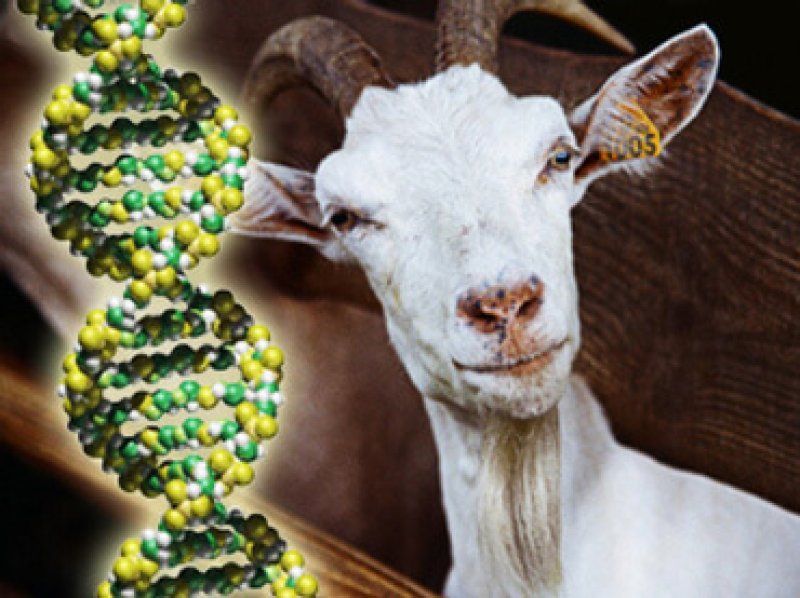
goat DNA

If GMO plants now occupy 11% of cultivated areas in the world, only one genetically modified animal is currently authorized for consumption in Canada and the United States: a salmon with a gene producing a hormone of growth. An authorization which took more than 20 years to be granted.

The progress made in genetic engineering nevertheless offers, for those who consume it, dizzying prospects in terms of breeding: welcome to the farm of the future.

A sheep emits 8 kilograms of methane a year, a powerful greenhouse gas that contributes to climate change. Many scientists have tackled the problem of pollution from livestock, for example by modifying the diet of animals or their microbiota in order to reduce the bacteria that produce fermentation in the stomach.

The New Zealand public company AGResearch, for example, makes genetic selections for sheep that reduce methane emissions by up to 40%.

In 2006, the European Medicines Agency authorized the first drug developed using transgenic technology. The latter, antithrombin (an anticoagulant), is not made in a test tube but in the udder of a goat. The human gene encoding the antithrombin protein is inserted into the animal’s genome, which then produces milk containing the molecule.

According to the laboratory rEVO Biologics, which markets the drug under the name ATryn , one can thus obtain a large quantity of antithrombin (several grams per liter) at lower cost (30% to 50% savings compared to human plasma).

This article was published in French and has been translated and edited for clarity.

Read the original post

{{ reviewsTotal }}{{ options.labels.singularReviewCountLabel }}
{{ reviewsTotal }}{{ options.labels.pluralReviewCountLabel }}
{{ options.labels.newReviewButton }}
{{ userData.canReview.message }}

Related Articles

Infographic: Global regulatory and health research agencies on whether glyphosate causes cancer

Infographic: Global regulatory and health research agencies on whether glyphosate causes cancer

Does glyphosate—the world's most heavily-used herbicide—pose serious harm to humans? Is it carcinogenic? Those issues are of both legal and ...

Most Popular

Screen Shot at AM
Facts & Fallacies Podcast: Right-wing politics bad for your health? Separating speculation from science
ChatGPT-Image-Jun-13-2026-11_51_39-AM
Viewpoint: COVID lab leak? Misguided backers of the lab leak theory refuse to give up
ChatGPT Image Jun 3, 2026, 03_54_37 PM
Viewpoint: “Turn on, tune in, drop out”—Kennedy embraces the Timothy Leary psychedelic revolution
drug look like ozempic
Six key health insights from taking weight-loss drugs
ChatGPT-Image-Jun-11-2026-01_15_03-PM
Selective Pressure, Selective Silence
Screenshot-2026-06-14-at-9.14.26-AM
‘Humanitarian catastrophe’: Trump’s USAID shutdown could help drive nearly 23 million deaths — including 5.4 million children — by 2030, Lancet study warns
ChatGPT Image Jun 3, 2026, 03_14_43 PM
Viewpoint: How Earthjustice became the poster child for the abuse of special interest activist funding
ChatGPT-Image-Jun-14-2026-09_41_44-AM-2
Viewpoint—‘The gleeful efficiency of an arsonist’: Administration’s health and science research cuts are ‘sabotaging’ America’s future
ChatGPT-Image-Mar-10-2026-01_39_01-PM
Viewpoint—“Miracle molecule” debunked: Why acemannan supplements don’t work
Screenshot-2026-06-14-at-9.53.54-AM
Is the World Cup a perfect storm for the spread of infectious diseases?
ChatGPT Image Jun 12, 2026, 02_32_14 PM
‘Have you asked your doctor?’: AMA launches campaign to counter health misinformation
Screenshot-2026-06-05-at-2.12.30-PM
Some plants can poison you. So how did humans figure out what is safe to eat?
Screenshot 2026-05-26 at 10.15
Viewpoint: Double standard—Why does the wellness industry get a free pass while Big Healthcare is treated as morally suspect?
glp menu logo outlined

Get news on human & agricultural genetics and biotechnology delivered to your inbox.