How plastic-eating bacteria could help us make a dent in massive Pacific trash vortex

How plastic-eating bacteria could help us make a dent in massive Pacific trash vortex
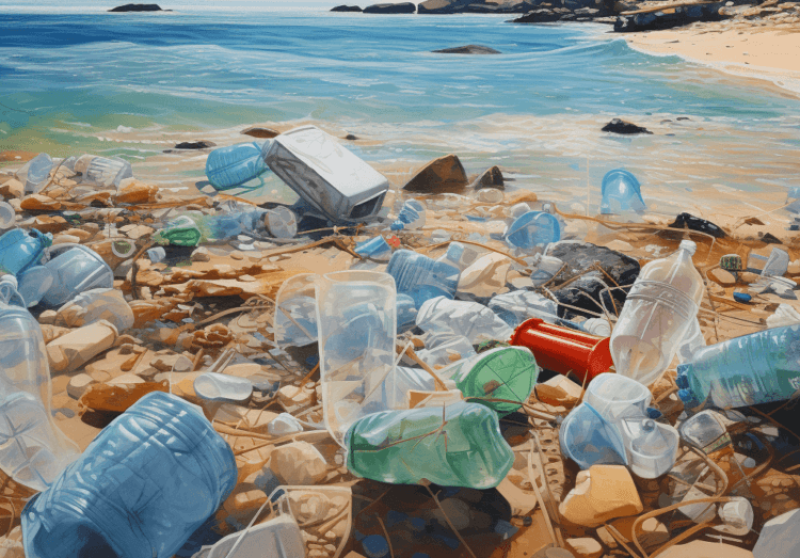
Credit: Midjourney/ Heenan

From straws to trash bags, we use an astonishing amount of plastic—which often ends up in delicate ocean (and other) ecosystems. According to the Center for Biological Diversity, a nonprofit organization for protecting endangered species based in Arizona, at current rates plastic is set to outweigh all fish in the ocean by 2050.

A new study wants to turn the tide with synthetic biology. By engineering genetic circuits into a bacterial “consortium,” the team reprogrammed two strains to not only destroy polluting plastics—but to also transform the toxic waste into useful biodegradable material. Environmentally friendly and versatile, these upcycled plastics can be used to manufacture foams, adhesives, or even nylon—all without further taxing the environment.

Follow the latest news and policy debates on sustainable agriculture, biomedicine, and other ‘disruptive’ innovations. Subscribe to our newsletter.

The strategy isn’t just limited to the polyethylene terephthalate (PET)—one of the most common types of plastics—tested in the study, said the authors. “The underlying concept and strategies are potentially applicable…to other types of plastics” and could begin lighting the way toward  “a sustainable bioeconomy.”

This is an excerpt. Read the full article here

{{ reviewsTotal }}{{ options.labels.singularReviewCountLabel }}
{{ reviewsTotal }}{{ options.labels.pluralReviewCountLabel }}
{{ options.labels.newReviewButton }}
{{ userData.canReview.message }}

Related Articles

Infographic: Global regulatory and health research agencies on whether glyphosate causes cancer

Infographic: Global regulatory and health research agencies on whether glyphosate causes cancer

Does glyphosate—the world's most heavily-used herbicide—pose serious harm to humans? Is it carcinogenic? Those issues are of both legal and ...

Most Popular

ChatGPT-Image-Apr-20-2026-11_17_18-AM-2
10,000 scientists gone: Trump’s cuts create an unprecedented brain drain
Screenshot-2026-04-22-at-4.10.32-PM
Viewpoint — ‘Completely unethical’: RFK, Jr.’s medical ignorance deprives melanoma cancer-sufferers of a life-saving therapy
ChatGPT-Image-Apr-22-2026-04_31_20-PM
‘Irresponsible decision’? On mandatory military flu shots, Hegseth chooses ‘freedom’ over health
ChatGPT-Image-Apr-20-2026-12_28_36-PM
Vaccine skepticism is a growing global problem
Screenshot-2026-04-15-at-1.22.58-PM
Anti-biotechnology activists smear hybrid wheat breakthrough that could surge yields in poorer countries
ChatGPT-Image-Apr-17-2026-03_30_52-PM
Food labels, decoded: What they really mean
images
The never-ending GMO debate: Pros and cons
ChatGPT-Image-Mar-2-2026-03_22_54-PM
Why ‘support supplements’ for GLP-1 users are mostly a waste of money
ChatGPT-Image-Mar-11-2026-11_58_46-AM
The Trump administration has run out more than 4,000 National Institutes of Health employees. Here are the consequences
Screenshot-2026-04-22-at-1.14.34-PM
Latest fevered, right-wing conspiracy: Fox, New York Post, and kooky GOP legislators push ‘Dead Scientists’ scare
Screenshot-2026-04-12-135256
Bixonimania: The fake disease scam that AI swallowed whole
glp menu logo outlined

Get news on human & agricultural genetics and biotechnology delivered to your inbox.