Grazing sheep under solar panels? How ‘intercropping’ livestock and clean energy boosts animal wellfare and farmer incomes

Credit: Wikimedia Commons

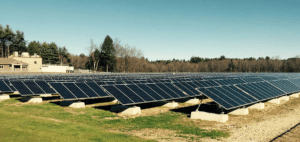
As a flock of about 2,000 sheep graze between rows of solar panels, grazier Tony Inder wonders what all the fuss is about. “I’m not going to suggest it’s everyone’s cup of tea,” he says. “But as far as sheep grazing goes, solar is really good.”

Inder is talking about concerns over the encroachment of prime agricultural land by ever-expanding solar and windfarms, a well-trodden talking point for the loudest opponents to Australia’s energy transition.

Follow the latest news and policy debates on sustainable agriculture, biomedicine, and other ‘disruptive’ innovations. Subscribe to our newsletter.

But on Inder’s New South Wales property, a solar farm has increased wool production. It is a symbiotic relationship that the director of the National Renewables in Agriculture Conference, Karin Stark, wants to see replicated across as many solar farms as possible as Australia’s energy grid transitions away from fossil fuels.

“It’s all about farm diversification,” Stark says. “At the moment a lot of us farmers are reliant on when it’s going to rain, having solar and wind provides this secondary income.”
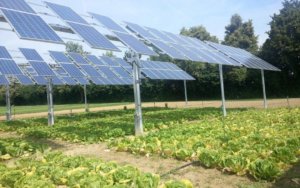
By keeping the grass trimmed, which can otherwise pose a fire risk during dry summer months, sheep save the developer the cost of slashing it themselves.

In exchange, the panels provide shelter for the sheep, encourage healthier pasture growth under the shade of the panels and create “drip lines” from condensation rolling off the face of the panels.


This is an excerpt. Read the original post here

Related Articles

Infographic: Global regulatory and health research agencies on whether glyphosate causes cancer

Infographic: Global regulatory and health research agencies on whether glyphosate causes cancer

Does glyphosate—the world's most heavily-used herbicide—pose serious harm to humans? Is it carcinogenic? Those issues are of both legal and ...

Most Popular

ChatGPT-Image-Mar-10-2026-01_39_01-PM
Viewpoint—“Miracle molecule” debunked: Why acemannan supplements don’t work
Screenshot-2026-09-10-at-11.50.46-AM
Did COVID vaccines kill 2,500 service members? RFK Jr. hires an investigator who compares vaccine promoters to Nazi doctors
ChatGPT-Image-Sep-13-2026-10_24_17-AM
Bayer urges court to approve $7.25 billion Monsanto Roundup settlement that could limit its future liabilities
ChatGPT-Image-Sep-15-2026-06_05_13-PM
CRISPR fine-tuning unlocks vitamin C-rich potatoes without yield loss
Screenshot-2026-09-11-at-2.26.23-PM
Newly approved GMO chestnut trees planted across from the White House are stirring debate
ChatGPT-Image-Sep-15-2026-05_59_18-PM
RFK Jr. spent two years distancing himself from Children’s Health Defense. Now he’s keynoting its anti-vaccine DC conference.
Screenshot-2026-09-10-at-12.20.19-PM
'Jet fuel didn't melt the steel': 9/11 conspiracy theories debunked
ChatGPT-Image-Aug-28-2026-03_33_46-PM
Viewpoint: Bad science—Five bogus Trump administration claims about vaccines and autism
Screenshot-2026-09-15-at-11.04.54-AM
Viewpoint: Childhood deaths in dispute: Why the CDC vs Pennsylvania conflict over measles vaccines matters
Screenshot 2026-09-10 at 11.28
A meaty problem: How to make cell-grown protein taste like steak, chicken, and seafood
ChatGPT-Image-Sep-2-2026-10_30_14-PM
Zero: That is the official American measles death toll for 2026. Here is what RFK Jr.’s CDC leaves out.
ChatGPT-Image-Aug-14-2026-11_16_47-AM
Fibermaxxing: Latest Instagram diet craze raises hope that a fiber-rich diet can improve health
glp menu logo outlined

Get news on human & agricultural genetics and biotechnology delivered to your inbox.